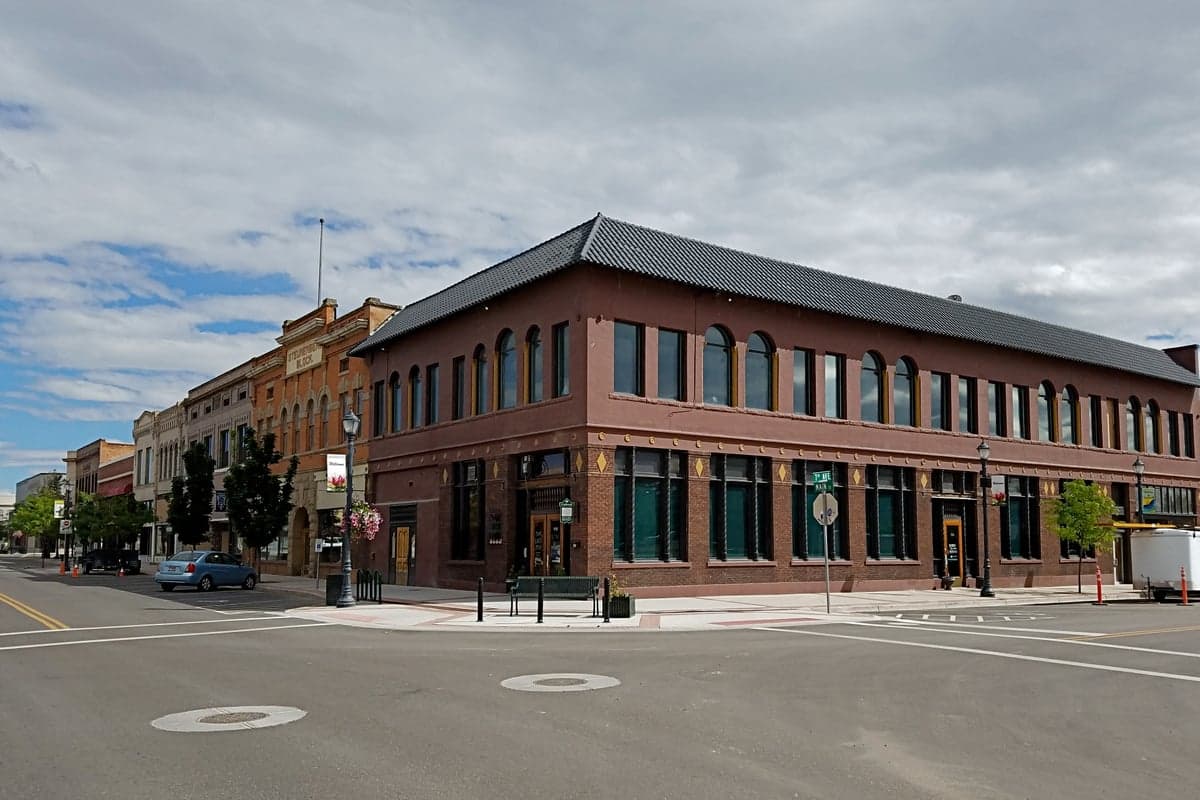
Photo: Wikipedia
Political ClimatePolitical Climate in Caldwell, ID
District shown is the primary district for this city’s centroid. Cities may span multiple districts.
Local Political AnalysisPolitical Analysis of Caldwell, ID
Caldwell, Idaho, sits deep in ruby-red territory, with a Cook PVI of R+22 that puts it among the most reliably conservative small cities in the Pacific Northwest. That number isn't just a statistic—it's a reflection of a community where traditional values, limited government, and personal responsibility still carry real weight. For decades, Caldwell has been the kind of place where folks wave at neighbors they don't know and leave their doors unlocked, and the politics here have largely backed that up. But if you've been around long enough, you can feel the ground shifting under your feet, and not all of it is for the better.
How it compares
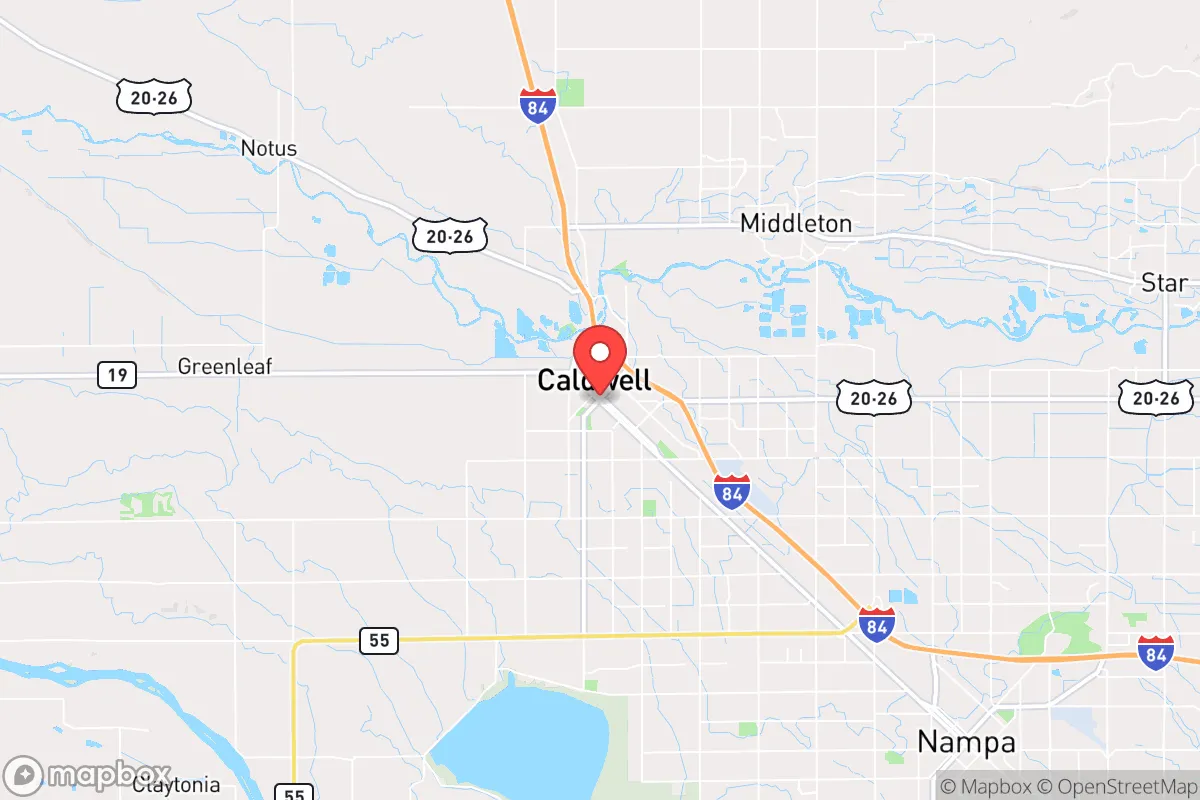
Drive twenty minutes east to Boise, and you're in a different world entirely—Ada County has been trending purple for years, with the city itself leaning increasingly progressive on everything from zoning to public spending. Nampa, just a few miles up the road, is more conservative than Boise but still feels the pull of urban growth and the politics that come with it. Caldwell, by contrast, has held the line better than most. Canyon County as a whole voted heavily Republican in the last two cycles, and Caldwell's rural roots keep it grounded. But the comparison that stings is with places like Meridian, where rapid development has brought in newcomers who don't always share the local mindset. Caldwell's advantage is that it's still small enough that a bad city council decision gets noticed at the coffee shop, not buried in a planning commission report.
What this means for residents
For the people who actually live here, the political climate translates into a few concrete realities. Property taxes are lower than in Ada County, and the county commission has been generally resistant to the kind of bond-heavy spending that drives up levies elsewhere. The school board, while not immune to controversy, has kept curriculum decisions local and hasn't bowed to the kind of state-level pressure you see in more progressive districts. On the flip side, the recent push for a "livability" ordinance in downtown Caldwell raised eyebrows among longtime residents who saw it as the first step toward the kind of overregulation that chokes small businesses. The concern is real: once the city starts telling you what color your storefront can be or how many parking spots you need, it's a short walk to telling you what you can sell or who you can hire. So far, those efforts have been beaten back, but the fight isn't over.
Culturally, Caldwell still feels like a place where the Second Amendment isn't debated, where church attendance is assumed rather than questioned, and where the idea of "government knows best" gets a well-deserved side-eye. The local rodeo and the annual Caldwell Night Rodeo draw crowds that reflect the community's agricultural backbone, and the Basque Block in nearby Boise is about as exotic as the food scene gets for most folks. But the long-term trend is what keeps people up at night. As Boise's housing costs push families west into Canyon County, Caldwell is absorbing more transplants who bring their voting habits with them. If the city council flips in the next decade, it won't be because locals changed their minds—it'll be because the newcomers outvoted them. For now, Caldwell remains a pocket of sanity in a region that's slowly losing its way, but the clock is ticking. Keep an eye on the next school board election; that's where the real battle lines are drawn.

State Political ClimatePolitical Climate in Idaho
State Political AnalysisPolitical Environment in the State
Idaho has been a reliably Republican state for decades, with a partisan lean that has only deepened in recent cycles. The state voted +31 points for Donald Trump in 2024, up from +25 in 2020, and no Democratic presidential candidate has carried it since 1964. The dominant coalition is a mix of rural conservatives, Mormon cultural conservatives in the southeast, and a growing wave of out-of-state transplants fleeing progressive policies in California, Oregon, and Washington. Over the past 10-20 years, Idaho has shifted from a moderate-red state to a deep-red stronghold, driven by both native population growth and a steady influx of freedom-minded newcomers.
Urban vs. rural divide
The political map of Idaho is starkly divided between its few urban centers and vast rural expanse. The Treasure Valley, anchored by Boise, Meridian, and Nampa, is the state’s population hub and the only region where Democrats are competitive. Ada County (Boise) voted for Joe Biden in 2020 by a slim margin, but swung back to Trump in 2024 by about 4 points, reflecting a broader rightward shift even in the state’s most liberal county. Canyon County (Nampa, Caldwell) is reliably red, voting +25 for Trump in 2024. The rest of the state is overwhelmingly conservative: Idaho Falls and Rexburg in the east are among the most Republican cities in the nation, with Rexburg’s Madison County voting +80 for Trump in 2024. Coeur d’Alene in the north has seen an influx of Californians and Washingtonians, but remains solidly red, though its local politics have become more contested as new residents bring moderate suburban views. The rural counties—like Lemhi, Custer, and Clark—routinely vote 80-90% Republican. The urban-rural gap is widening: Boise’s growth is making it more purple, but the rest of the state is getting redder.
Policy environment
Idaho’s policy environment is aggressively conservative, with a focus on low taxes, limited regulation, and cultural traditionalism. The state has a flat income tax of 5.8% (reduced from 6% in 2023), no corporate income tax on pass-through entities, and property taxes that are among the lowest in the West. The legislature has passed a series of school choice measures, including the 2023 expansion of charter schools and a $50 million education savings account program for private school tuition. Education policy is a flashpoint: the state banned critical race theory in public schools in 2021 and passed a Parents’ Bill of Rights in 2022, giving parents explicit authority over their children’s education and medical decisions. Healthcare is largely free-market, with no state Medicaid expansion beyond the 2018 voter-approved initiative (which the legislature has tried to restrict). Election laws are strict: voter ID is required, same-day registration is not allowed, and the state has a closed primary system. In 2023, the legislature passed a law banning ranked-choice voting, a preemptive strike against progressive electoral reforms. The regulatory environment is business-friendly, with no state-level minimum wage above the federal $7.25 and a right-to-work law that weakens union power.
Trajectory & freedom
Idaho is becoming more free in many respects, but with some concerning caveats. On the positive side, the state expanded gun rights in 2023 with a permitless carry law, allowing any adult to carry a concealed firearm without a license. Parental rights were strengthened in 2022 with the Parents’ Bill of Rights, which requires school districts to notify parents of any curriculum involving sexuality or gender identity and to obtain parental consent before a child can change their name or pronouns at school. Medical freedom was bolstered by a 2023 law banning COVID-19 vaccine mandates for private employers and a 2024 law prohibiting mask mandates in schools. Property rights were reinforced with a 2023 law limiting the use of eminent domain for private economic development. However, there are red flags: the state’s strict abortion ban (triggered in 2022, with no exceptions for rape or incest) has driven some women to seek care out of state, and the legislature has shown interest in regulating medical decisions beyond abortion, including a 2024 bill that would have restricted gender-affirming care for adults (it failed, but similar efforts are expected). The state’s tax burden, while low, has increased slightly due to property tax hikes in fast-growing areas like Boise and Kuna. Overall, Idaho is trending toward greater personal liberty on most fronts, but the government’s willingness to intervene in private medical decisions is a concern for those who value bodily autonomy.
Civil unrest & political movements
Idaho has seen relatively little civil unrest compared to coastal states, but there are notable flashpoints. The most visible is the anti-government movement in the north, centered around Sandpoint and Bonners Ferry, where groups like the Idaho Liberty Watch and the Three Percenters have a strong presence. In 2023, a standoff between a local militia and law enforcement over a proposed housing development in Boundary County drew national attention. On the left, Boise has seen periodic protests over abortion rights and LGBTQ issues, including a 2023 rally that drew about 2,000 people to the state capitol. Immigration politics are less heated than in border states, but the legislature passed a 2024 law requiring local law enforcement to cooperate with ICE, and there is a growing movement to declare Idaho a “sanctuary state” for the unborn—a symbolic but politically charged stance. Election integrity controversies have been minimal, though a 2022 audit of the 2020 election found no widespread fraud, and the state’s voter ID laws are widely accepted. The most visible political movement is the “Greater Idaho” secession proposal, which would move rural Oregon counties into Idaho; it has gained traction in 13 Oregon counties but faces long odds. New residents should expect a politically engaged but generally civil atmosphere, with the occasional flare-up over cultural issues.
Projection
Over the next 5-10 years, Idaho will likely become even more conservative, but with a more libertarian flavor. The influx of new residents—mostly from California, Washington, and Oregon—is accelerating, and these transplants tend to be fiscally conservative but socially moderate. This could create tension with the native population, which is more culturally traditional. The Boise metro area will continue to purple, but the rest of the state will remain deep red. The legislature is likely to pass further school choice expansions, additional gun rights (including constitutional carry for out-of-state permit holders), and more restrictions on abortion and gender-affirming care. The state’s tax burden may rise slightly as infrastructure costs grow, but overall, Idaho will remain one of the most free states in the nation. The biggest wildcard is the housing crisis: if affordability deteriorates, it could slow in-migration and shift the political balance. Someone moving in now should expect a state that is fiercely independent, culturally conservative, and increasingly skeptical of federal overreach.
For a new resident, the bottom line is this: Idaho offers a high degree of personal freedom, low taxes, and a political environment that respects individual rights—especially for gun owners, parents, and those who value limited government. However, the state’s willingness to regulate private medical decisions (abortion, gender care) and its growing cultural conservatism may be a concern for those who prioritize bodily autonomy. If you’re looking for a place where your voice matters and the government stays out of your life, Idaho is a strong choice—just be prepared for a community that expects you to live by its values.
* Values derived from national, state, county, city and local statistics and may differ in a specific area. Last updated: 2026-04-19T09:41:32.000Z
Narrative content on this page is AI-generated and may contain mistakes. Verify any details that matter before acting on them.
ReloMaps may earn a commission from affiliate links at no extra cost to you.

