Photo: Wikipedia
Demographics of Burkittsville, MD
Affluence Level in Burkittsville, MD
An upper-middle-class area. Household wealth, education levels, and homeownership run ahead of national benchmarks.
People of Burkittsville, MD
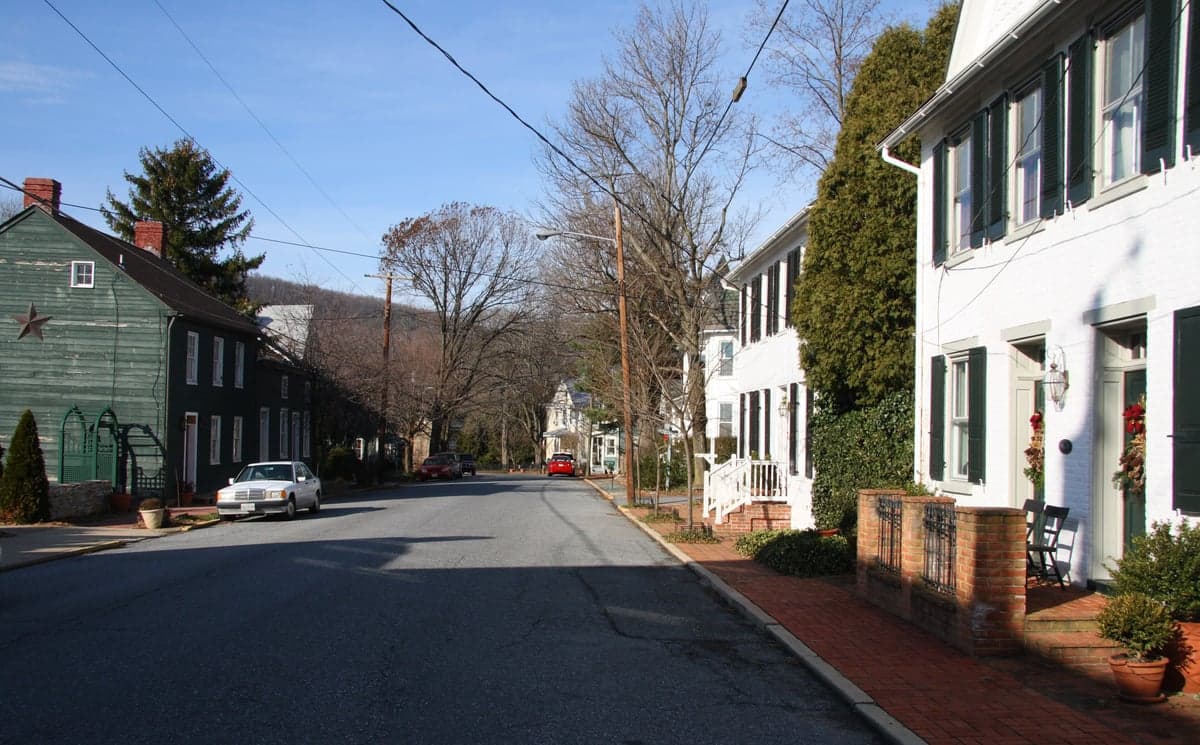
The 143 residents of Burkittsville, Maryland form one of the smallest incorporated communities in the state, a remarkably homogeneous and stable population that is 91.6% White and 48.7% college-educated. With a foreign-born share of just 0.7% and zero recorded Hispanic, Black, or Asian residents, the town’s character is defined by deep generational roots, a quiet rural identity, and a strong sense of local heritage tied to its 19th-century origins. Burkittsville is not a place of rapid demographic change; it is a tight-knit, historically white village where nearly half of adults hold a college degree, a figure that stands out for a town of this size and signals a population of professionals, retirees, and commuters who value seclusion and history over diversity or growth.
How the city was settled and grew
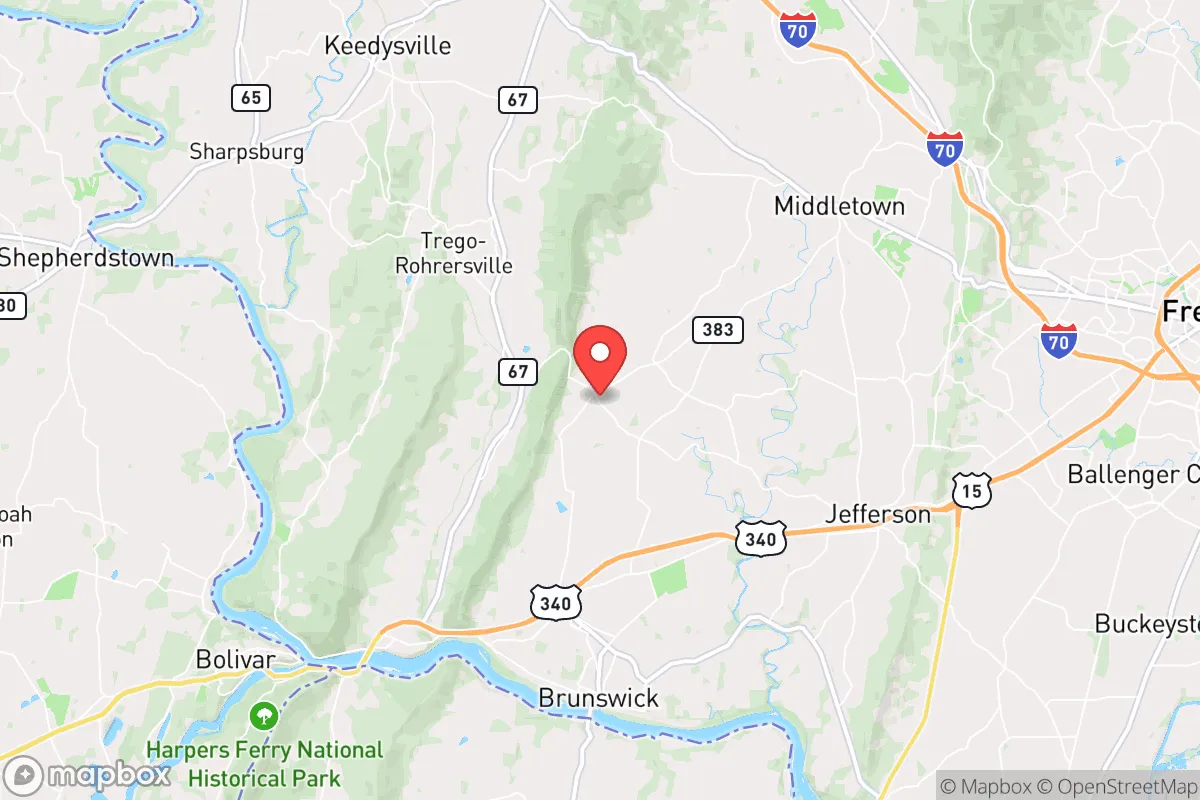
Burkittsville was founded in 1824 by Henry Burkitt, a local landowner who subdivided his farm into lots along the newly laid road between Jefferson and Petersville. The town’s original population was entirely of British and German stock, drawn by the fertile limestone soils of the Middletown Valley and the promise of small-scale commerce. The earliest settlers clustered around what is now Main Street, building the stone and brick houses that still line the road today. By the 1850s, a second wave of German immigrants—many from Pennsylvania—arrived to work the area’s thriving grain and livestock farms, settling in the West End district near the old mill race. The town’s growth stalled after the Civil War, as the railroad bypassed Burkittsville in favor of nearby Brunswick. The population never exceeded 300, and the Church Hill neighborhood, centered on the 1830s Reformed Church, became the social and spiritual anchor for a community that remained overwhelmingly white, Protestant, and agrarian through the 1940s.
Modern era (post-1965)
After the 1965 Hart-Cellar Act, Burkittsville saw virtually no immigration-driven change. The foreign-born share has never risen above 1%, and the town’s racial composition has remained static: 91.6% White in the most recent data, with zero Black, Hispanic, or Asian residents. The modest population decline from a 1950 peak of around 200 to today’s 143 reflects a broader rural outmigration of younger adults, not an influx of new groups. The Mill Pond area, a small cluster of mid-century ranch homes built on former orchard land, absorbed the few newcomers who arrived in the 1970s and 1980s—mostly white professionals from Frederick and Washington, D.C., seeking weekend retreats. The Schoolhouse Lane district, named for the now-closed Burkittsville School, became home to a handful of retirees and telecommuters. No new subdivisions or apartment complexes were built; the town’s housing stock remains almost entirely pre-1900 single-family homes. The population today is older than the county average, with a median age near 50, and the 48.7% college-educated rate reflects the influx of educated remote workers and retirees rather than any organic demographic shift.
The future
Burkittsville’s population is heading toward further contraction and aging, not diversification. The town has no developable land zoned for new housing, and the Frederick County comprehensive plan designates it as a “rural village” with no growth targets. The 0.0% Hispanic and 0.0% Asian shares are unlikely to change meaningfully in the next decade, as the town offers no rental stock, no employment base, and no ethnic institutions to attract new populations. The Old Mill District, a small cluster of historic industrial buildings along Catoctin Creek, has been proposed for adaptive reuse as artist studios and event space, but such projects tend to draw the same demographic—white, college-educated, culturally conservative—rather than broadening the town’s diversity. The most likely scenario is a slow decline from 143 to roughly 120 residents by 2040, with the remaining population skewing even older and more homogeneous. The handful of children who remain attend school in the Brunswick zone, further weakening the town’s sense of a self-sustaining community.
For someone moving in now, Burkittsville offers a deeply rooted, historically preserved environment with virtually no crime, excellent air quality, and a pace of life that has not changed in a century. But it is not a place for those seeking diversity, young families, or a growing job market. The town is becoming a quiet enclave of educated, older white residents who value privacy and heritage over community dynamism. If you are looking for a stable, low-change rural village where your neighbors will likely share your background and values, Burkittsville fits that description precisely—and will continue to do so for the foreseeable future.

* Values derived from national, state, county, city and local statistics and may differ in a specific area. Last updated: 2026-08-11T03:13:33.000Z
Narrative content on this page is AI-generated and may contain mistakes. Verify any details that matter before acting on them.
ReloMaps may earn a commission from affiliate links at no extra cost to you.

