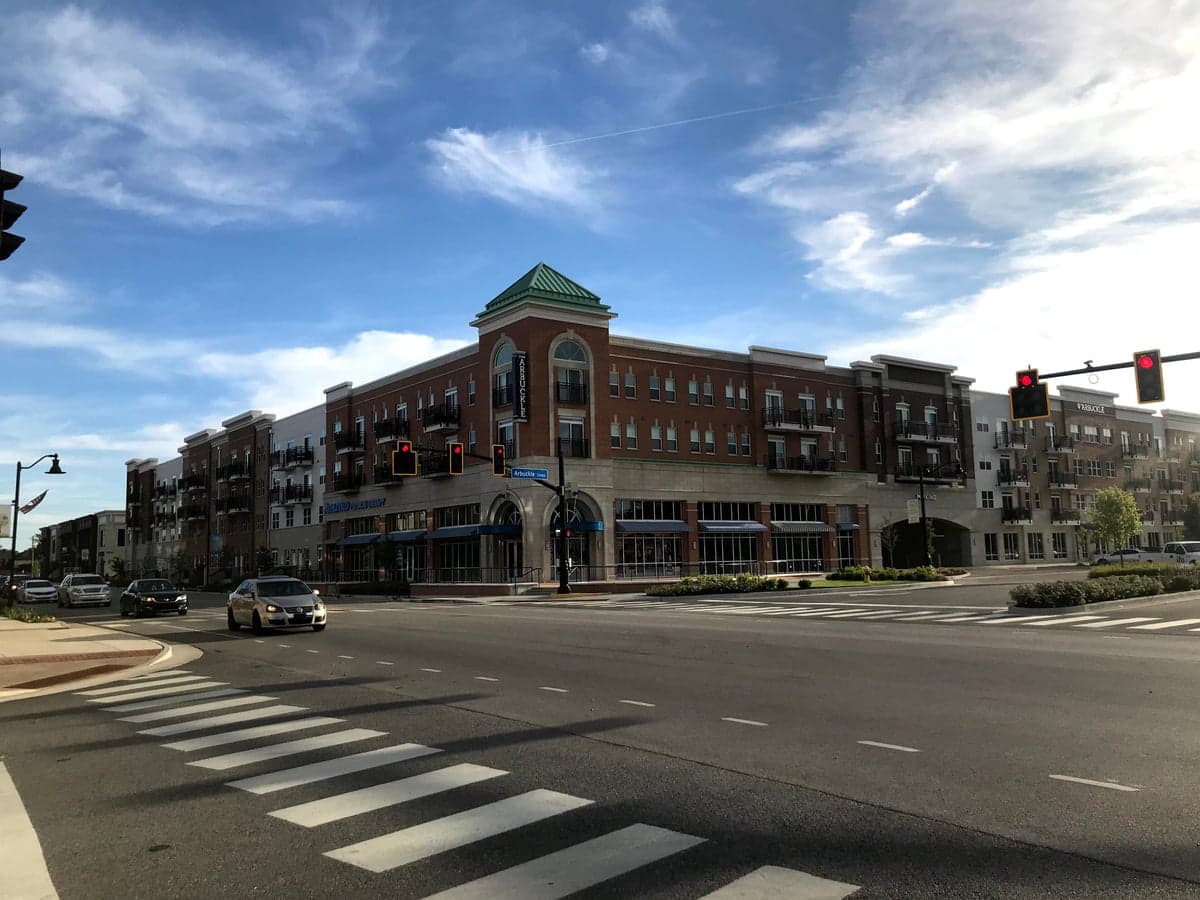
Photo: Wikipedia
Political ClimatePolitical Climate in Brownsburg, IN
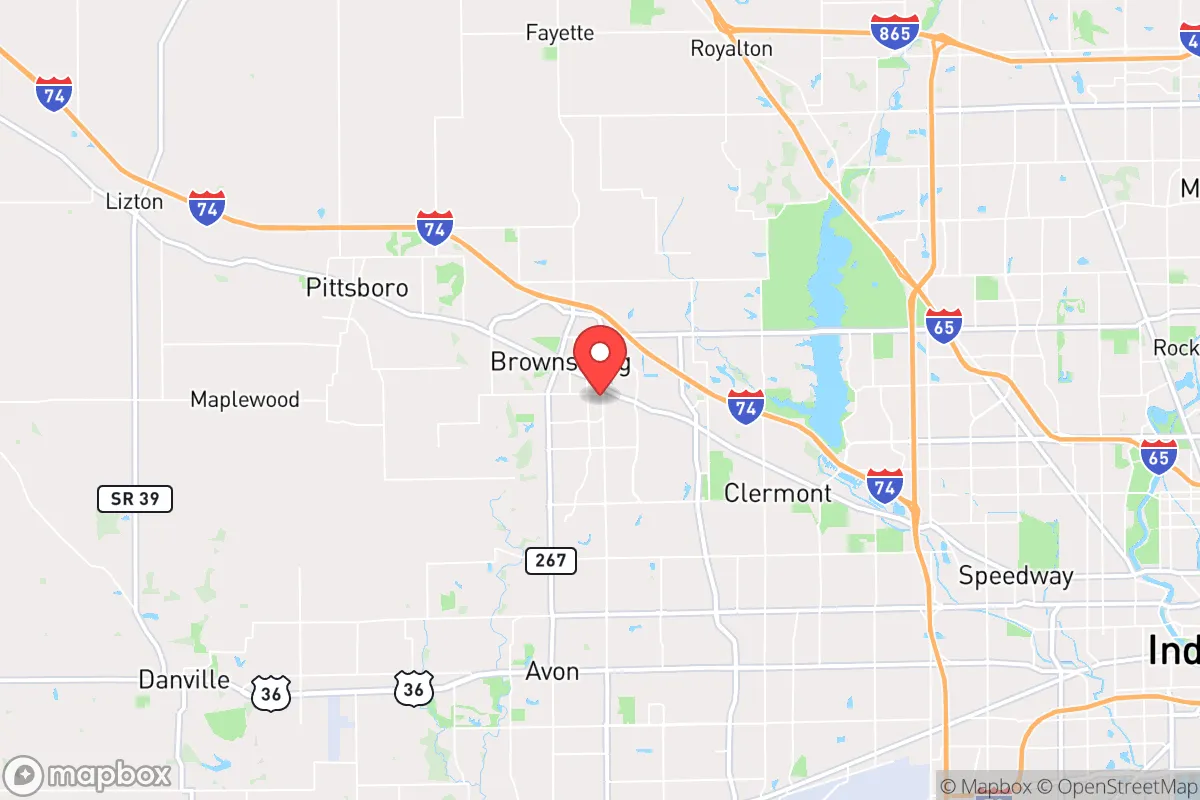
District shown is the primary district for this city’s centroid. Cities may span multiple districts.
Local Political AnalysisPolitical Analysis of Brownsburg, IN
Brownsburg, Indiana, sits solidly in the red, with a Cook PVI of R+15 that reflects a deeply conservative community where traditional values and limited government are the norm. You can feel it in the way folks talk at the local coffee shops or the hardware store—there’s a strong, unspoken agreement that personal freedoms and local control matter more than whatever the state or federal government is pushing down from on high. Over the last decade, the town has grown fast, but the political lean hasn’t budged much; if anything, the influx of families from more liberal areas like Indianapolis or even nearby Zionsville has actually reinforced the conservative backbone here, as many moved specifically to escape the overreach they saw elsewhere.
How it compares
Drive ten miles east to Indianapolis, and you’re in a completely different world—a blue dot in a red state, where progressive policies on taxes, zoning, and public spending are the norm. Brownsburg, by contrast, feels like a quiet holdout. Compared to Avon to the south or Plainfield to the west, Brownsburg is noticeably more traditional; those towns have seen some drift toward moderate positions on issues like school funding and development, but Brownsburg’s leadership has kept a firm line on keeping government out of your backyard and your wallet. The surrounding Hendricks County as a whole leans conservative, but Brownsburg is often the most vocal about pushing back against state-level mandates that feel like overreach—whether it’s vaccine requirements, mask mandates, or property tax hikes disguised as “improvements.”
What this means for residents
For someone living here, the political climate means you can generally trust that your local government won’t meddle in your daily life. Property taxes stay low, zoning laws are straightforward, and there’s little appetite for the kind of progressive social engineering you see in bigger cities. That said, the growth has brought some tension—newer subdivisions and chain stores sometimes bring with them a push for more “community planning” that can feel like a foot in the door for bigger government. The school board, for instance, has stayed focused on core academics and parental rights, but there’s always a quiet worry that outside groups might try to push in with diversity initiatives or curriculum changes that don’t reflect local values. Long-term, the concern is that as Brownsburg continues to attract new residents from more liberal areas, the political balance could shift—but for now, the old guard holds firm, and most folks are happy to keep it that way.
Culturally, Brownsburg stands out for its strong sense of self-reliance. You won’t find many city-style programs or handouts here; instead, neighbors help neighbors through churches, volunteer fire departments, and local sports leagues. The town’s policy on things like gun rights and property use is straightforward: the government stays out unless absolutely necessary. There’s a quiet pride in that, a feeling that Brownsburg is one of those rare places where you can still live your life without someone in an office telling you how to do it. If that changes—if the progressive creep that’s infected so many other Indiana towns starts to take hold here—you’ll hear about it at the town hall meetings, and it won’t be pretty. For now, though, Brownsburg remains a place where conservative values aren’t just tolerated; they’re the foundation.

State Political ClimatePolitical Climate in Indiana
State Political AnalysisPolitical Environment in the State
Indiana has been a reliably red state for decades, but it’s not the deep-red monolith outsiders imagine. The state leans Republican by about 10-15 points in most statewide races, with the GOP holding supermajorities in both legislative chambers and the governor’s mansion since 2005. Over the past 20 years, the shift has been subtle but real: the Indianapolis suburbs have drifted rightward, while the urban core of Marion County and a few college towns have become more Democratic. The result is a state that feels solidly conservative on paper but has real internal friction, especially around education and local control.
Urban vs. rural divide
The political map of Indiana is a study in contrasts. The Indianapolis metro area, home to nearly 2 million people, is the state’s blue anchor, with Marion County voting Democratic by double digits in recent presidential elections. But the surrounding counties—Hamilton, Hendricks, Johnson, and Boone—are among the fastest-growing and most Republican in the Midwest. Hamilton County, anchored by Carmel and Fishers, voted +20 R in 2024 and is a national model of affluent suburban conservatism. Fort Wayne (Allen County) is a Republican stronghold, while Evansville (Vanderburgh County) leans red but with a working-class Democratic remnant. The rural counties—think Kosciusko, Dubois, and Rush—are deep red, often voting +40 to +50 R. The only real blue pockets outside Indianapolis are Bloomington (Monroe County, home to Indiana University) and West Lafayette (Tippecanoe County, Purdue), both of which are increasingly progressive but small in population. The divide isn’t just urban vs. rural; it’s suburban vs. everything else, with the suburbs consolidating GOP power while the rural vote remains reliable but shrinking.
Policy environment
Indiana’s policy environment is broadly conservative, but with some notable exceptions. The state has a flat income tax rate of 3.05% (down from 3.23% in 2023, with a scheduled phase-down to 2.9% by 2027), and no inheritance or estate tax. Property taxes are capped at 1% of assessed value for owner-occupied homes, which keeps housing costs manageable. The regulatory posture is business-friendly, with a right-to-work law (passed in 2012) and a low corporate income tax rate of 4.9%. Education policy is a flashpoint: Indiana has a robust school choice program, including vouchers and charter schools, but the state also mandates a controversial “science of reading” curriculum that has drawn criticism from both sides. Healthcare is a mixed bag—Medicaid expansion was accepted under Pence in 2015, but the state has not expanded abortion access post-Dobbs, with a near-total ban (exceptions for rape, incest, and life of the mother) passed in 2023. Election laws are moderately restrictive: voter ID is required, early voting is available for 28 days, and no-excuse absentee voting was eliminated in 2021. The state also passed a law in 2023 requiring all ballots to be hand-counted in counties with fewer than 50,000 residents—a move that has caused logistical headaches but is popular among election integrity advocates.
Trajectory & freedom
Indiana’s trajectory on personal freedom is a mixed bag, and that’s where the rubber meets the road for a conservative relocating here. On the plus side, the state has expanded gun rights significantly: permitless carry was signed into law in 2022 (Senate Enrolled Act 1), and the state preempts local gun ordinances, meaning cities like Indianapolis cannot pass their own restrictions. Parental rights in education got a boost with the 2023 “Parents’ Bill of Rights” (House Enrolled Act 1447), which requires schools to notify parents of any changes to a student’s health or well-being and prohibits instruction on sexual orientation or gender identity in K-3. On the concerning side, the state has seen a creep of government overreach in medical freedom: the 2023 ban on gender-affirming care for minors (Senate Enrolled Act 480) is popular with conservatives, but the same legislature also expanded the state’s emergency powers during public health crises, which some see as a slippery slope. Property rights are generally strong, with no statewide rent control and limited zoning restrictions outside of Indianapolis. However, the state’s annexation laws allow cities to forcibly absorb unincorporated areas, which has sparked fights in Noblesville and Greenwood. Overall, Indiana is moving in a freer direction on guns and education, but the trend on medical autonomy and local control is more ambiguous.
Civil unrest & political movements
Indiana has a relatively low profile on civil unrest compared to coastal states, but there have been flashpoints. The 2020 George Floyd protests in Indianapolis turned violent, with several buildings damaged and a state of emergency declared. Since then, the city has seen a rise in organized left-wing activism, particularly around housing and police reform, but it hasn’t reached the level of Portland or Seattle. On the right, the “Indiana Freedom Coalition” and local Moms for Liberty chapters have been active in school board races, especially in Hamilton County and Johnson County. Immigration politics are relatively quiet—Indiana has no sanctuary cities, and the state passed a law in 2011 (Senate Enrolled Act 590) requiring local law enforcement to cooperate with federal immigration authorities. There was a brief secessionist movement in 2021 when several rural counties (including Pulaski and Fulton) voted to explore leaving Indiana to join Illinois, but it was largely symbolic and fizzled out. Election integrity remains a hot topic: the 2023 hand-counting law has led to delays in some rural counties, but no major controversies have emerged. A new resident would notice that political signs are common in yards, but actual political violence is rare—Indiana is more of a “fight at the ballot box” state than a “fight in the streets” state.
Projection
Over the next 5-10 years, Indiana is likely to remain red but with a growing suburban-libertarian flavor. The in-migration pattern is key: people are moving to Hamilton County and Boone County from Illinois, California, and the Northeast, and they tend to be fiscally conservative but socially moderate. This could push the state toward a more “live and let live” posture on issues like marijuana (medical use is already decriminalized in some cities) and housing deregulation. The demographic shift is slow but real: the Indianapolis metro is growing, while rural counties are aging and shrinking. This means the GOP will need to hold the suburbs while not alienating the rural base—a balancing act that has already led to intraparty fights over school funding and property taxes. The most likely outcome is a state that stays Republican but becomes less culturally conservative, more focused on economic freedom and local control. A new resident moving in now should expect to find a state that is politically stable but not static, with a growing tension between the old-guard rural conservatives and the new suburban arrivals who want lower taxes but also better schools and more personal autonomy.
For a conservative relocating to Indiana, the bottom line is this: you’ll find a state that largely respects your gun rights, your parental authority, and your wallet. The tax burden is low and getting lower, the school choice system is robust, and the political culture is generally civil. But don’t expect a libertarian paradise—the state still has a heavy hand in medical decisions, local control is eroding in some areas, and the urban-rural divide means you’ll need to pick your county carefully. If you want deep-red rural living, head to Kosciusko or Dubois. If you want a suburban mix of conservative values and modern amenities, Carmel or Fishers are your best bets. Just know that the political winds are shifting, and the Indiana of 2035 will look different than the Indiana of today—but it’s still likely to be a place where freedom is the default, not the exception.
* Values derived from national, state, county, city and local statistics and may differ in a specific area. Last updated: 2026-04-22T10:35:35.000Z
Narrative content on this page is AI-generated and may contain mistakes. Verify any details that matter before acting on them.
ReloMaps may earn a commission from affiliate links at no extra cost to you.

