Political ClimatePolitical Climate in Braintree Town, MA
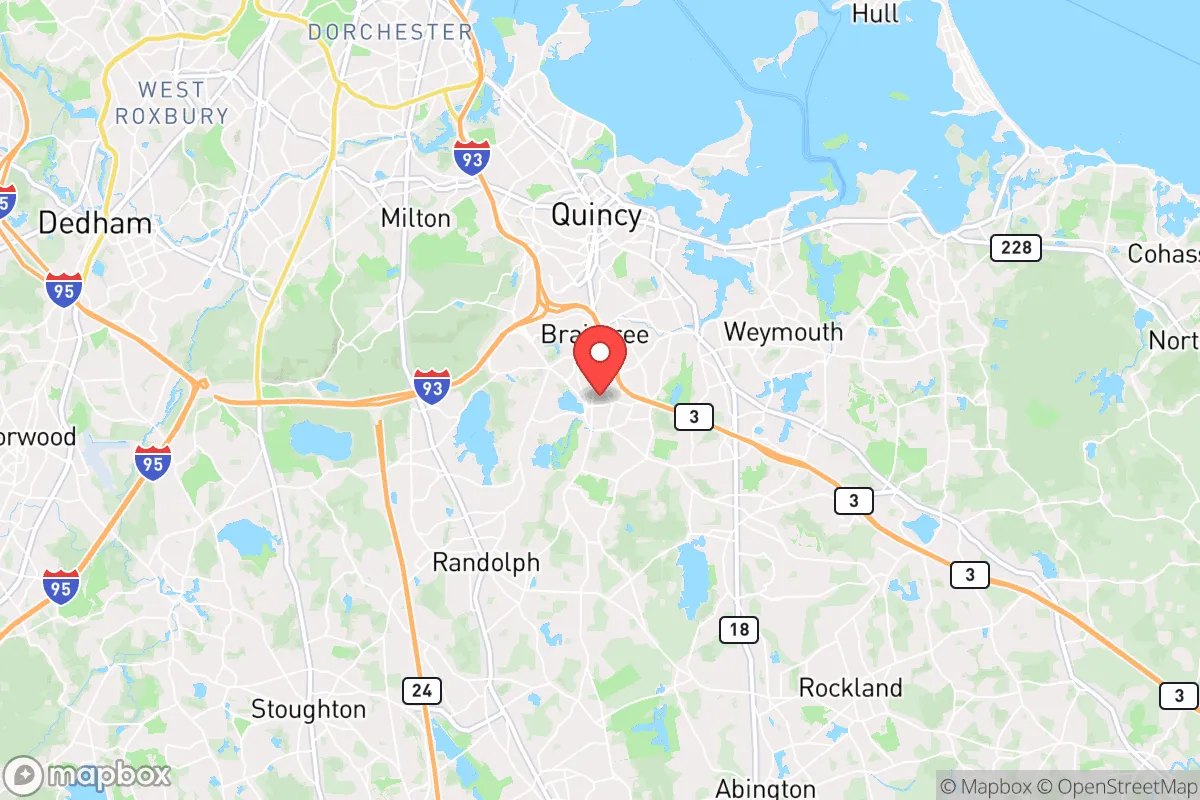
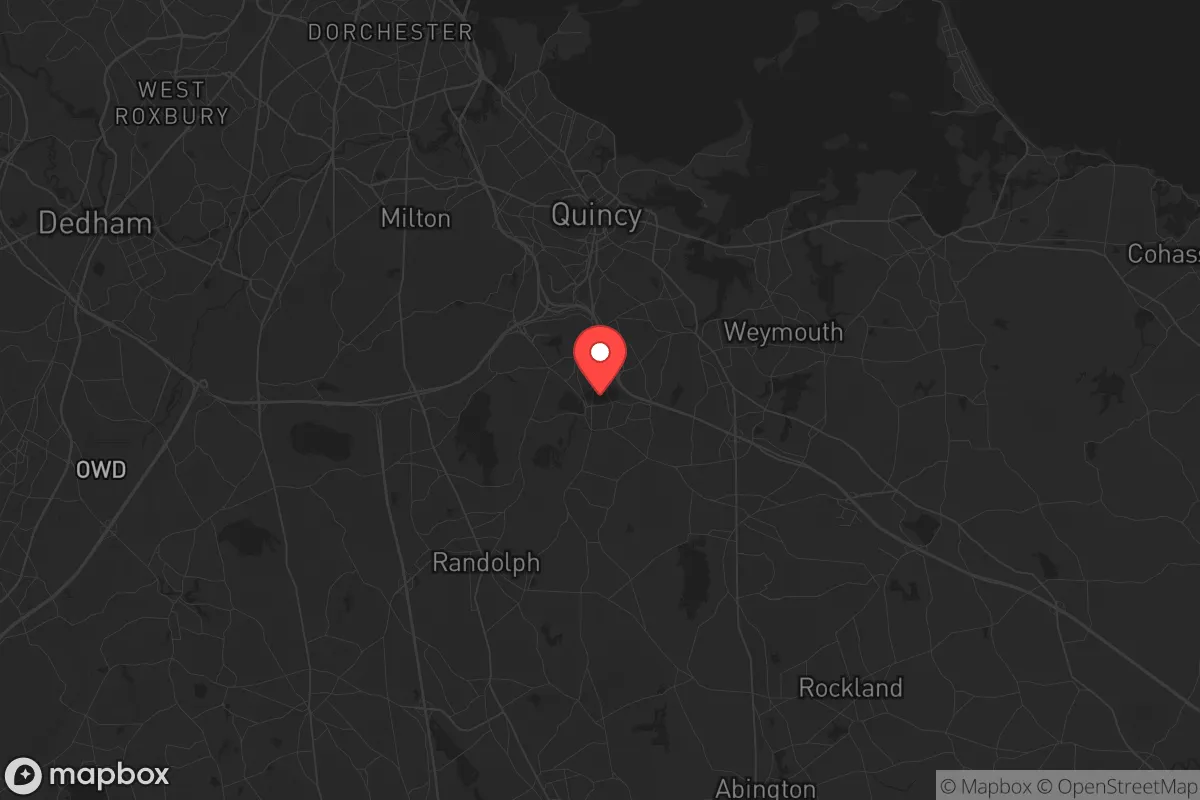
District shown is the primary district for this city’s centroid. Cities may span multiple districts.
Local Political AnalysisPolitical Analysis of Braintree Town, MA
Braintree Town, Massachusetts, has a Cook PVI of D+15, meaning it leans heavily Democratic in federal elections, but that number doesn’t tell the whole story for a longtime resident like me. This town used to be a classic working-class, union Democrat stronghold—think your neighbors who worked construction, drove trucks, or ran small shops, and voted for fiscal responsibility and local control. Over the last decade or so, you’ve seen a slow but steady shift toward more progressive policies, especially on taxes, housing mandates, and school curriculum, which has a lot of us feeling like the government is getting too cozy with telling us how to live our lives. The trajectory is concerning: each election cycle brings more candidates pushing state-level agendas that override local preferences, and the old-school, live-and-let-live vibe is getting squeezed out.
How it compares
If you drive ten minutes north to Milton or fifteen minutes west to Dedham, you’ll find towns that still have a stronger independent streak—Milton’s school committee fights over critical race theory and Dedham’s resistance to the MBTA Communities Act show they’re pushing back harder than Braintree. Quincy, right next door, is more of a mixed bag: it’s also D+15 territory, but its large Asian-American population tends to vote more moderate on economic issues, so you don’t see the same level of progressive overreach on zoning or school policies. Compare that to Brookline or Cambridge, which are D+30 or worse—those places are a whole different world, with rent control, sanctuary city policies, and school boards that prioritize social justice over reading and math. Braintree sits in the middle, but it’s drifting toward that progressive orbit, and the state legislature in Boston keeps passing laws that tie our hands, like the 2024 MBTA Communities Act that forces us to rezone single-family neighborhoods for high-density apartments, whether we want them or not.
What this means for residents
For folks who value personal freedoms—like deciding what your kids learn in school, how your property is used, or how much of your paycheck goes to taxes—the trend here is a red flag. The town government has been increasingly willing to adopt state mandates without a fight, and the local school committee has pushed for more progressive curriculum elements, like gender identity lessons in elementary grades, without much parent input. Property taxes have crept up faster than inflation, partly to fund new affordable housing projects and social programs that many residents didn’t vote for directly. If you’re a small business owner, you’ll notice more regulations on everything from signage to employee benefits, driven by state-level laws that Braintree’s local reps rarely challenge. The long-term outlook? Unless there’s a grassroots push to elect more moderate or conservative candidates in local races—like the town council or school committee—expect more of the same: higher costs, less local control, and a government that assumes it knows better than you do.
Culturally, Braintree still has some old-school charm—you’ll find guys at the South Shore Plaza griping about the Red Sox and the Patriots, and the annual July 4th parade is a big deal. But the policy distinctions are where the rubber meets the road. The town has embraced the state’s “sanctuary” policies, meaning local police don’t cooperate with federal immigration enforcement, which rubs some residents the wrong way. There’s also a growing push for “equity” initiatives in town hiring and contracting, which feels like government overreach to many of us who just want the best person for the job, regardless of background. If you’re considering moving here, just know that the political climate is shifting, and the days of “keep your hands off my property and my paycheck” are fading fast. It’s still a good place to raise a family, but you’ll want to get involved in local politics if you want to keep it that way.

State Political ClimatePolitical Climate in Massachusetts
State Political AnalysisPolitical Environment in the State
Massachusetts has long been one of the most reliably Democratic states in the nation, with a partisan lean that has only deepened over the past two decades. In 2024, Kamala Harris carried the state by roughly 25 points, a margin that has held steady since Barack Obama’s 2012 victory. The dominant coalition is a mix of urban progressives, suburban moderates, and union-aligned working-class voters, but the real story is the steady leftward drift: the state has not voted for a Republican presidential candidate since 1984, and the GOP’s presence in the legislature has shrunk to a historical low. For a conservative considering relocation, this is a state where your vote will almost certainly be drowned out, but the political reality on the ground is more nuanced than the statewide numbers suggest.
Urban vs. rural divide
The political map of Massachusetts is a tale of two worlds. Greater Boston, which includes Boston proper, Cambridge, Somerville, and the inner-ring suburbs like Brookline and Newton, is the engine of the state’s progressive tilt. These areas vote 80-90% Democratic and drive turnout. The western part of the state, particularly the Berkshires and the Pioneer Valley around Northampton and Amherst, is also deeply blue, fueled by college towns and a strong arts-and-activism culture. The real conservative pockets are in the central and southeastern regions. Towns like Wrentham, Norfolk, and Franklin in the Boston suburbs have shown surprising Republican strength in local races. Further out, Plymouth County and the Cape Cod towns of Barnstable and Yarmouth have trended redder in recent cycles, with Trump improving his margins there in 2020 and 2024. The most reliably Republican county is Worcester County, where towns like Holden, Paxton, and Rutland regularly elect GOP state representatives. But even there, the urban core of Worcester city itself votes heavily Democratic, so the county as a whole still leans blue. The rural-urban divide is stark: drive 30 minutes west of Boston and you’ll find Trump signs still on lawns, but you’re never more than an hour from a deep-blue city.
Policy environment
The policy landscape in Massachusetts is aggressively progressive, and it’s been that way for decades. The state has a flat income tax rate of 5%, but a 2022 ballot question (the “Millionaires Tax”) added a 4% surcharge on income over $1 million, pushing the top rate to 9%. Property taxes are high, averaging about 1.2% of home value, and sales tax is 6.25%. The regulatory environment is among the most burdensome in the country, especially for small businesses and landlords. Massachusetts has some of the strictest gun laws in the nation, including a ban on “assault weapons,” a strict licensing system, and a 10-round magazine limit. In 2024, the legislature passed a sweeping gun reform bill that further restricted firearm ownership, including a ban on carrying in most public places and a requirement for safe storage. Education policy is dominated by the teachers’ unions, with the state consistently ranking first in K-12 test scores but also having some of the highest per-pupil spending. School choice is limited to charter schools, which are capped, and there is no voucher program. Healthcare is heavily regulated, with the state’s 2006 health reform law serving as a model for the Affordable Care Act. Election laws are among the most liberal: no-excuse mail-in voting, early voting, and same-day registration are all standard. For a conservative, the policy environment feels like a one-party state where your voice on taxes, guns, and education is largely ignored.
Trajectory & freedom
Massachusetts is becoming less free by almost any measure, and the trend has accelerated since 2020. The 2024 gun reform law is a clear example: it expanded the list of prohibited firearms, created a state-level “red flag” law with no due process protections, and banned carrying in “sensitive places” like parks and public transit. On parental rights, the state passed a 2023 law that requires schools to adopt policies supporting transgender students, including allowing them to use preferred names and pronouns without parental notification. This has sparked fierce backlash in conservative towns like Wrentham and Norfolk, where parents have sued the state. On medical freedom, Massachusetts was one of the first states to mandate COVID-19 vaccines for schoolchildren and healthcare workers, and those mandates remain in place. Property rights are constrained by strict zoning laws that limit new construction, driving up housing costs. The state also has a “sanctuary” law (the 2017 Trust Act) that limits local police cooperation with federal immigration enforcement. The trajectory is clear: the legislature, controlled by a supermajority of Democrats, is pushing further left on every front, and there is no serious electoral check in sight.
Civil unrest & political movements
Massachusetts has a long history of political activism, but the flashpoints have shifted. The 2020 Black Lives Matter protests in Boston were large and mostly peaceful, but they also led to calls to defund the police, which the city council debated but ultimately rejected. The state’s sanctuary policy has made it a magnet for immigration activism, with groups like the Massachusetts Immigrant and Refugee Advocacy Coalition pushing for even more protections. On the right, the most visible movement is the “Massachusetts Republican Assembly,” a grassroots group that has organized around school board elections and parental rights. In towns like Franklin and Norfolk, parents have packed school board meetings over curriculum transparency and gender policies. There have been no major election integrity controversies in Massachusetts, as the state’s mail-in voting system has been widely accepted. However, the 2024 election saw a small but vocal group of Trump supporters protesting outside Boston’s city hall, claiming irregularities. The most notable recent flashpoint was the 2022 “Millionaires Tax” campaign, which saw a coalition of progressive groups outspend opponents 10-to-1. For a new resident, the political climate feels like a constant low-grade tension between a dominant progressive machine and a scattered but determined conservative minority.
Projection
Over the next 5-10 years, Massachusetts will likely become even more progressive, driven by demographic trends. The state’s population is aging, but the young, college-educated voters moving into Boston and its suburbs are overwhelmingly liberal. The conservative exodus to New Hampshire and Florida is real: Massachusetts lost about 100,000 residents to other states between 2020 and 2024, many of them families with children. This outflow will further concentrate the remaining population in blue areas, making it harder for Republicans to win even local races. The legislature will likely pass a single-payer healthcare bill, a wealth tax, and stricter rent control measures. The only wild card is the housing crisis: if costs continue to rise, it could trigger a backlash against the progressive establishment, but that’s a long shot. For someone moving in now, expect to see a state where your taxes will go up, your gun rights will shrink, and your children’s schools will be run by a system that prioritizes equity over excellence. The political freedom you have is mostly at the local level, in towns like Holden or Wrentham, where you can still elect conservative school board members and town selectmen.
For a conservative considering Massachusetts, the bottom line is this: you will be a political minority, and the state government will actively work against many of your values. Your best bet is to choose a town like Norfolk, Franklin, or Holden, where local politics still offer some breathing room. But don’t expect the state-level trajectory to change anytime soon. If you value low taxes, gun rights, and school choice, you’ll find Massachusetts a tough place to live. If you’re willing to fight for your values at the local level and can afford the cost of living, it’s possible to carve out a decent life here—but you’ll be swimming against a very strong current.
* Values derived from national, state, county, city and local statistics and may differ in a specific area. Last updated: 2026-05-01T07:00:10.000Z
Narrative content on this page is AI-generated and may contain mistakes. Verify any details that matter before acting on them.
ReloMaps may earn a commission from affiliate links at no extra cost to you.

