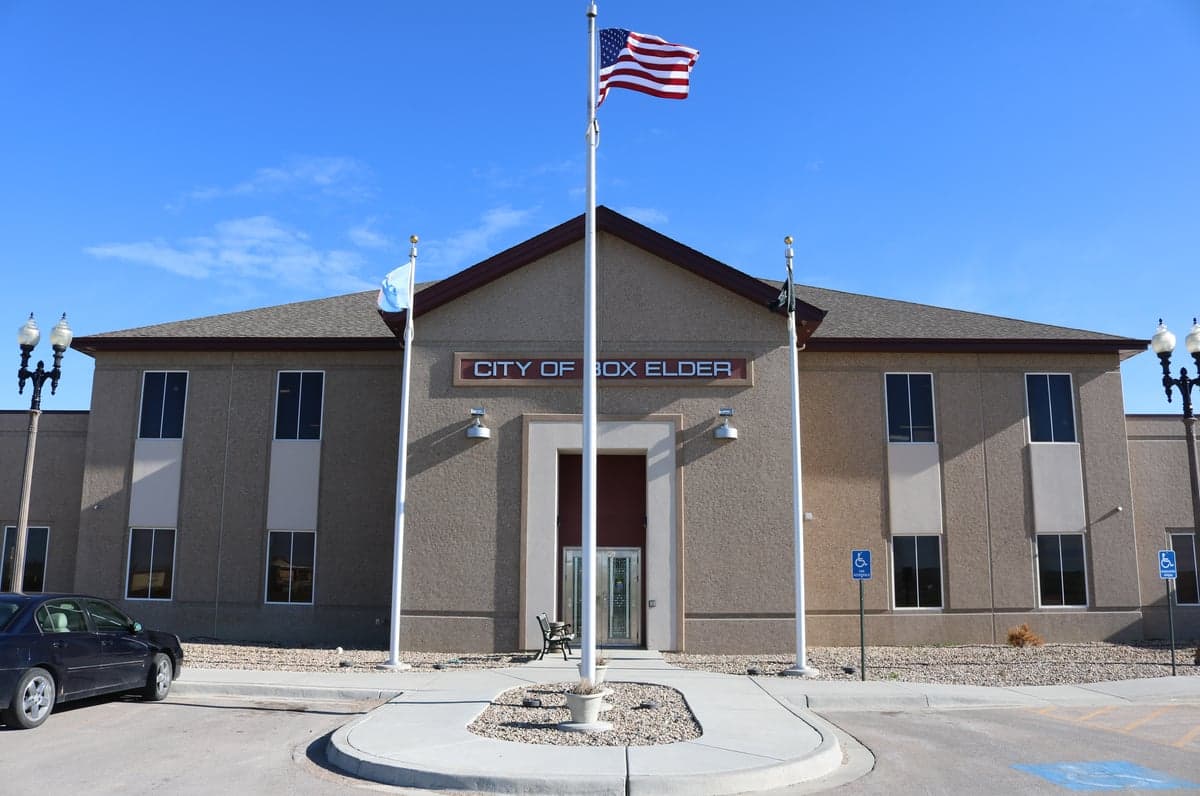
Photo: Wikipedia
Demographics of Box Elder, SD
Affluence Level in Box Elder, SD
A middle-class area roughly in line with national averages across income, home values, education, and employment.
People of Box Elder, SD
The people of Box Elder, South Dakota, today number 12,457 and form a predominantly white (72.7%) community with a growing Hispanic minority (9.9%) and small East/Southeast Asian (1.4%) and Black (1.7%) populations. The city is notably less diverse than the national average, with a foreign-born share of just 1.8% and a college-educated rate of 29.8% that trails the state average. Box Elder’s identity is shaped by its proximity to Ellsworth Air Force Base and its role as a bedroom community for Rapid City, giving it a transient, working-class character with a strong military and conservative tilt. The population is young, family-oriented, and increasingly drawn by affordable housing and base-related employment.
How the city was settled and grew
Box Elder was founded in 1907 as a railroad town along the Chicago and North Western Railway, named for the box elder trees lining the nearby creek. The original settlers were predominantly Northern European homesteaders—Germans, Scandinavians, and Czechs—who took up land under the Homestead Act of 1862. These families built the first residential core around the railroad depot, an area now referred to as Old Town Box Elder, where a handful of early 20th-century homes still stand. The population remained tiny—under 200 people—through the 1940s, sustained by small-scale farming and the railroad. The city’s first major growth spurt came with the establishment of Ellsworth Air Force Base in 1942, just west of town. The base drew a wave of military personnel and civilian contractors, many of whom settled in the Base Housing District along Liberty Boulevard and the adjacent West Box Elder area, which expanded with modest ranch-style homes in the 1950s and 1960s. These newcomers were overwhelmingly white, native-born, and from the Midwest and Great Plains, reinforcing the area’s homogeneous character.
Modern era (post-1965)
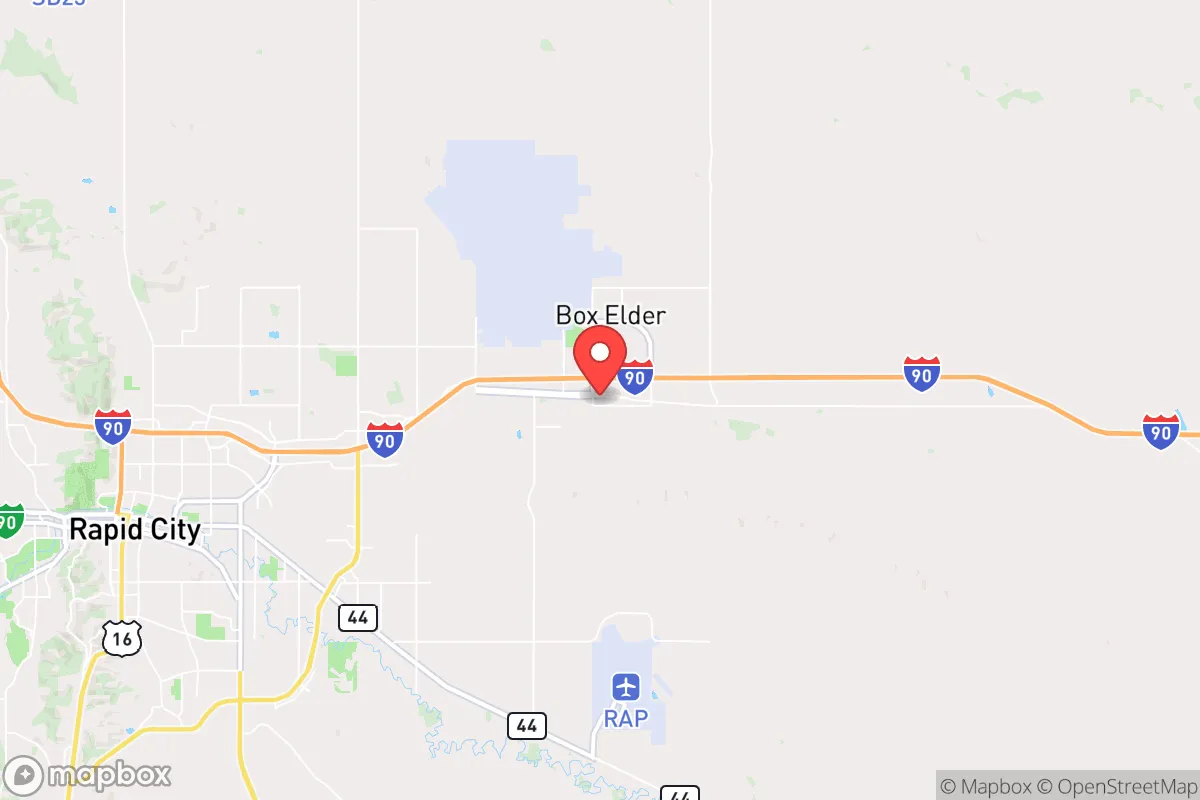
After the 1965 Hart-Cellar Act, Box Elder saw little direct immigration—its foreign-born share remains under 2%—but domestic migration patterns shifted significantly. The closure of Ellsworth’s B-1 bomber mission in the 1990s briefly slowed growth, but the base’s 2007 transition to the B-1B Lancer and later the B-21 Raider program revived in-migration. The Meadowbrook Addition, a subdivision built in the 2000s off Highway 14, absorbed many of the new military families and civilian base workers, who are predominantly white but include a small number of Black and East/Southeast Asian service members. The Hispanic population grew from negligible levels in 1990 to 9.9% by 2024, driven largely by construction and service-sector workers drawn to the region’s housing boom. These families concentrated in the South Box Elder area, near the intersection of Highway 14 and Box Elder Creek, where newer apartment complexes and manufactured-home parks offer affordable entry points. The Black population (1.7%) and East/Southeast Asian population (1.4%) remain small and are almost entirely tied to the base, living in the Ellsworth Housing Area and scattered through West Box Elder. The Indian subcontinent population is effectively zero, reflecting the area’s lack of tech or professional-service sectors that attract such groups elsewhere.
The future
Box Elder’s population is heading toward moderate diversification, but the pace is slow. The Hispanic share is likely to continue rising, possibly reaching 12-15% by 2035, as affordable housing draws more families from the Southwest and as construction work expands with the B-21 program. The white share will decline gradually but remain dominant, likely above 65%. The East/Southeast Asian and Black populations will grow incrementally, tied to base rotations, but are unlikely to form distinct ethnic enclaves—they will remain scattered across the Meadowbrook Addition and West Box Elder. The city is not tribalizing into segregated enclaves; rather, it is homogenizing around a military-suburban lifestyle, with most residents sharing similar income levels and political leanings. The foreign-born share will stay low, under 5%, as the city lacks the industries—tech, academia, healthcare—that attract immigrants. The next decade will see continued infill development in North Box Elder, near the new high school, and along the I-90 corridor, drawing more young families from the base and Rapid City’s spillover market.
For someone moving in now, Box Elder is becoming a more stable, family-oriented suburb with a slowly diversifying but still overwhelmingly white and native-born population. The military connection ensures a steady influx of new residents, but the city remains culturally homogeneous and politically conservative. The lack of immigrant communities or a college-educated professional class means limited ethnic diversity and a workforce tied to the base and local services. It is a practical, affordable choice for those seeking a quiet, safe, and patriotic community, but not for those looking for multicultural urban energy or a globally connected population.

* Values derived from national, state, county, city and local statistics and may differ in a specific area. Last updated: 2026-04-19T08:22:07.000Z
Narrative content on this page is AI-generated and may contain mistakes. Verify any details that matter before acting on them.
ReloMaps may earn a commission from affiliate links at no extra cost to you.

