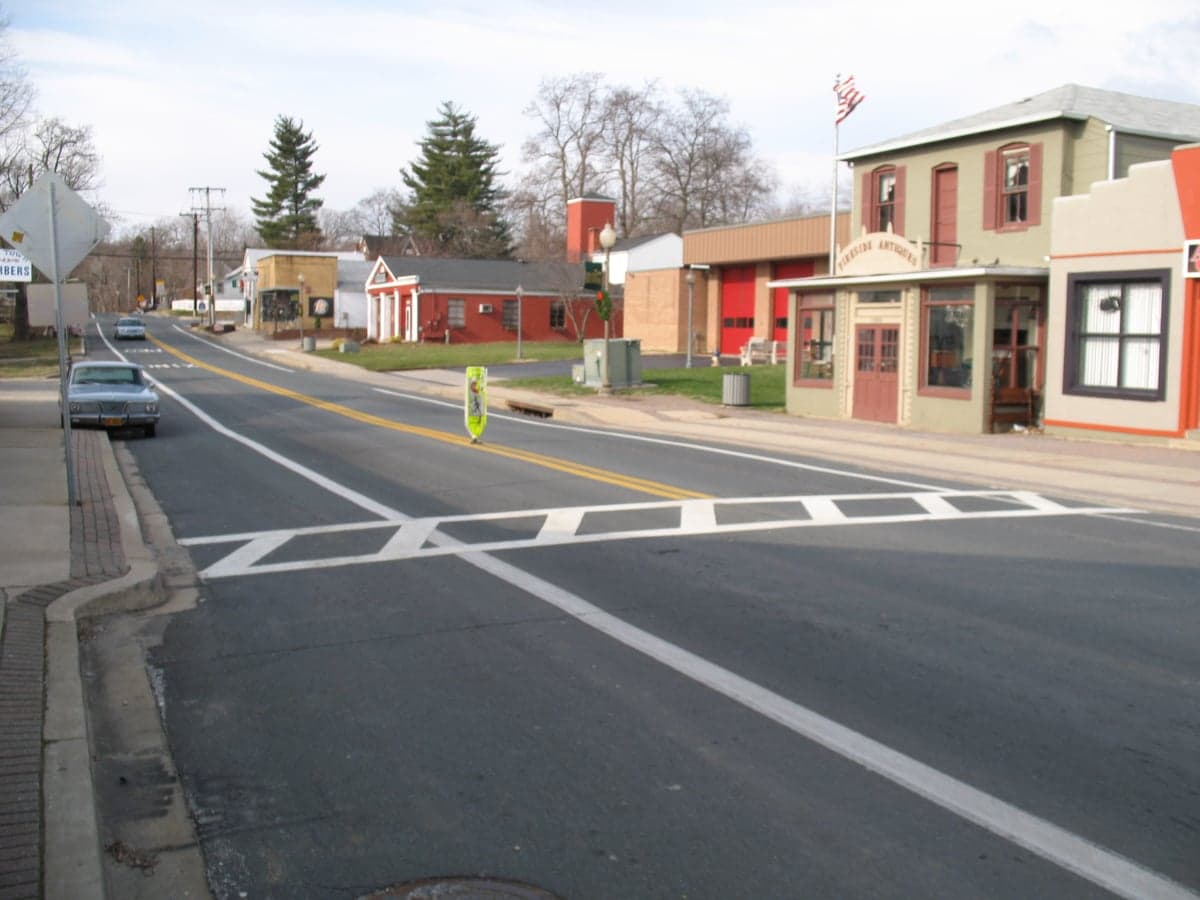
Photo: Wikipedia
Strategic Assessment of Bowie, MD
Multiple tactical vulnerabilities. Population density, target proximity, or disaster risk are likely compounding. A retreat property and exit planning is required.
What does the Strategic Assessment tell us?
Our Strategic Assessment grades tactical survivability of an area. Major population centers, military targets, fallout zones, natural disasters, and border exposure all drive risk — lower exposure means a more defensible position in a crisis.
This is heavily inspired by Joel Skousen's Strategic Relocation book. Highly recommended you checkout the book ($)What does this tell us?
Our Strategic Assessment grades tactical survivability of an area. Major population centers, military targets, fallout zones, natural disasters, and border exposure all drive risk — lower exposure means a more defensible position in a crisis.
This is heavily inspired by Joel Skousen's Strategic Relocation book. Highly recommended you checkout the book ($)Strategic Pillars

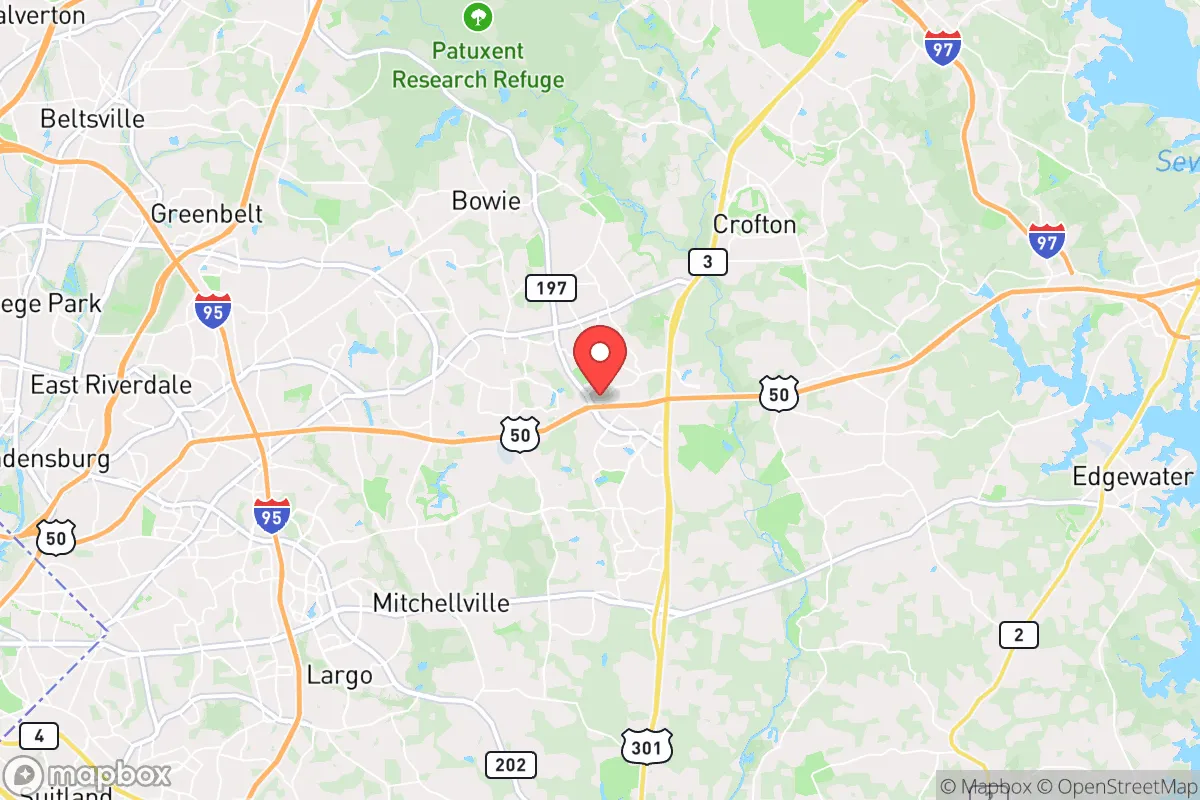
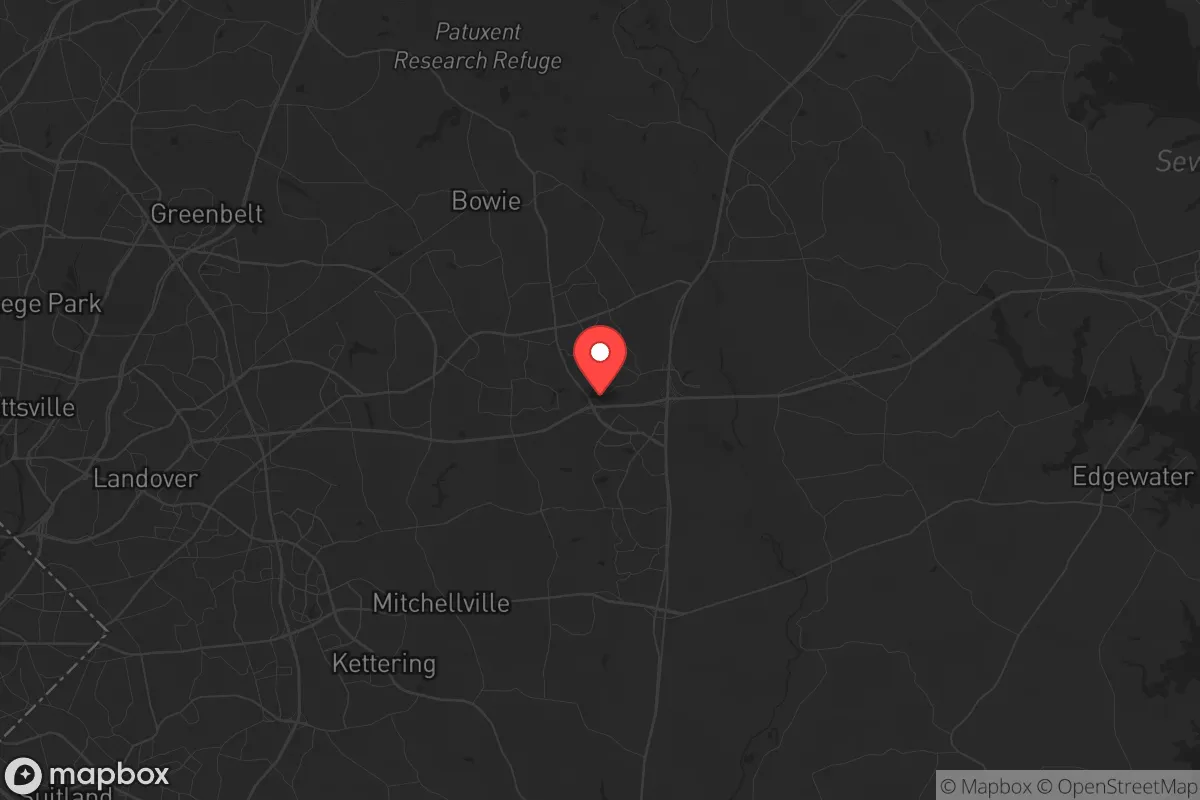
Key Distances
Regional Safe Places
Below is our recommended "safe zones" in Maryland and the surrounding area based on our strategic heuristics. For most people, it's unrealistic to live in a “safe zone” full-time due to work, family or other personal reasons. They tend to be more rural. However, many of these areas are perfect for second homes and retreat properties that double as a vacation home or even a short-term rental.
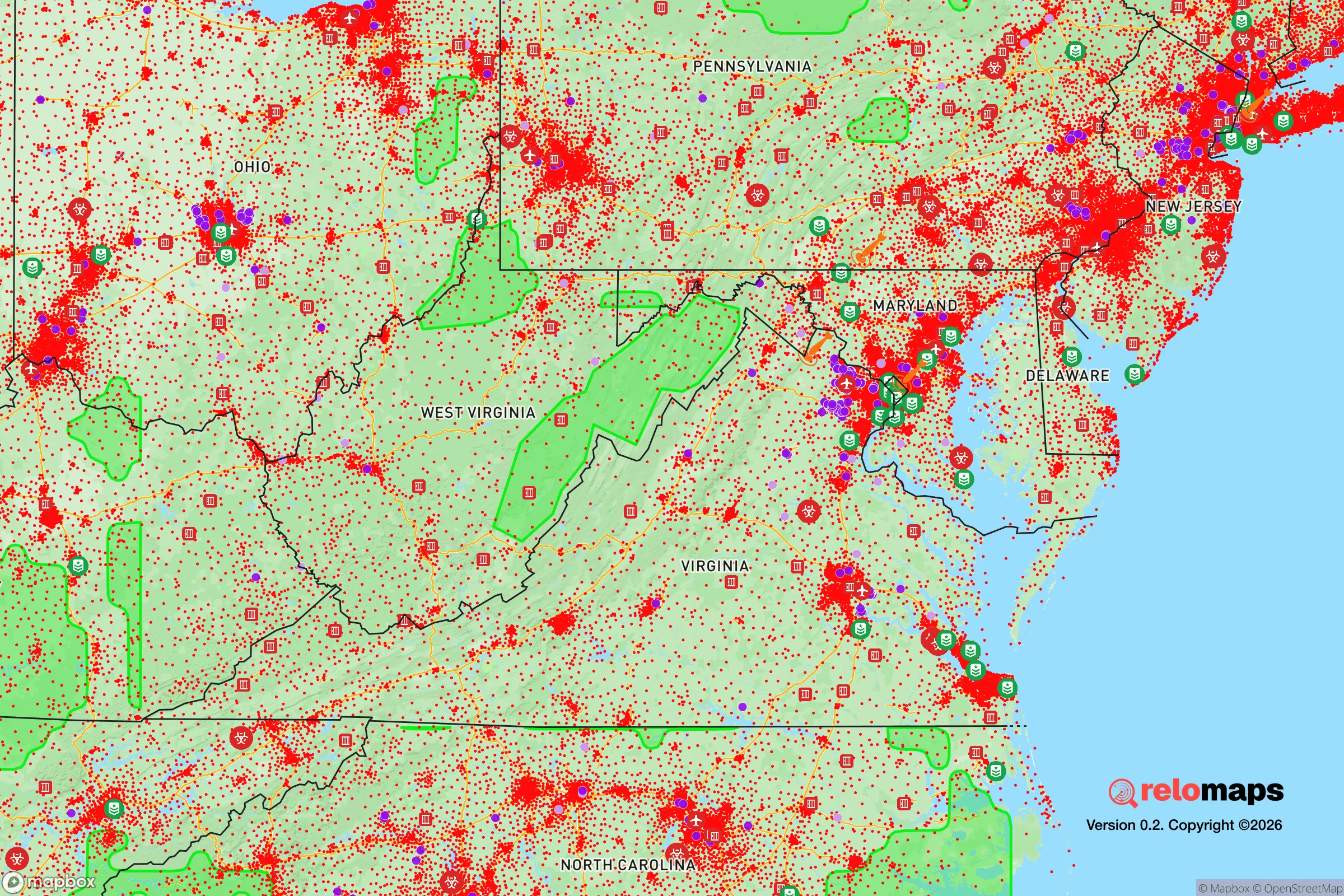
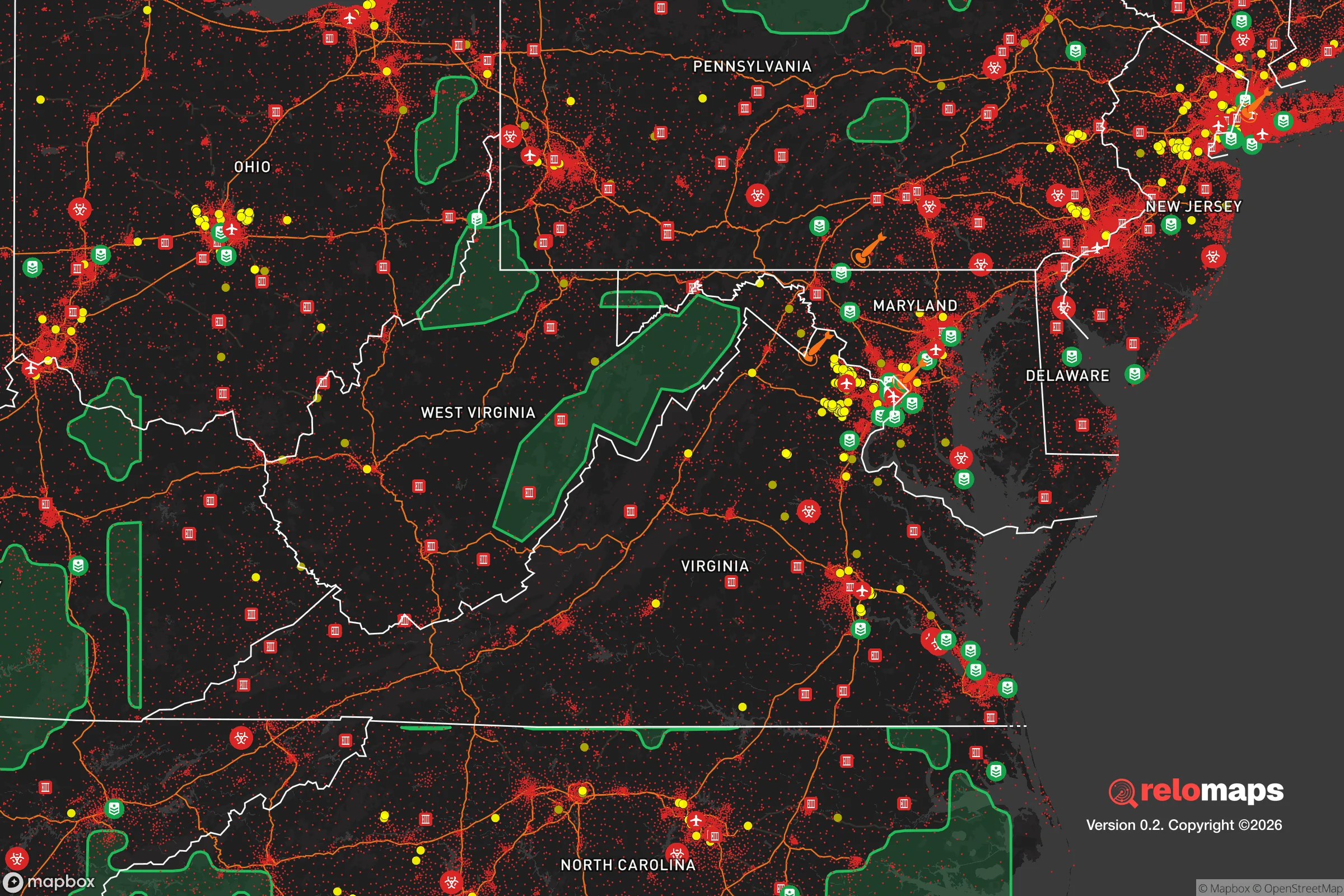


Important Note: For informational purposes only. This does not mean nothing bad ever happens in the green zones. Please use common sense. This is based on public data and modeled with AI. We tried to take a conservative approach but mistakes happen. We update this regularly as new information becomes available.
Solar Generator Recommendations
Backup power matters more here than in safer locations. We've picked three solar generators across budgets and capacity tiers — start with the budget unit if you only need a few essentials, or step up if you want to run a fridge and HVAC for days at a time.

Jackery Portable Power Station Explorer 300
Budget OptionPower on the Go: Weighing only 11 lbs, it's convenient to set up and store with book-sized foldable solar panels

BLUETTI Portable Power Station AC180
Designed for both indoor and outdoor scenarios, AC180 is highly capable as it has a robost capacity and continuous output power.

EF ECOFLOW DELTA Pro Ultra Power Station
Upgraded PickEcoFlow DELTA Pro Ultra is a whole-home energy system designed to grow with your family. Integrated with the Smart Home Panel 2, it scales to meet your evolving energy needs — keeping your home powered, intelligent, and secure through every stage of life.
We earn a commission, at no additional cost to you.
Strategic Assessment Analysis
Bowie, Maryland, sits in a precarious strategic position that demands careful consideration for anyone serious about long-term preparedness. While its location offers some genuine advantages in terms of resource access and community stability, the city’s proximity to Washington, D.C., and its role as a bedroom community for federal employees create a unique set of vulnerabilities that cannot be ignored. For the survival-minded relocator, Bowie presents a mixed bag: a relatively stable suburban environment with decent infrastructure, but one that sits squarely in the shadow of a primary target for any major geopolitical or domestic disruption.
Geographic position and natural advantages for long-term stability
Bowie’s geographic placement offers a few underappreciated benefits for those thinking in terms of decades, not just election cycles. The city sits on the Atlantic Coastal Plain, with relatively stable geology—no significant earthquake risks, no active fault lines, and minimal landslide potential. The area’s temperate climate means four distinct seasons, with average annual rainfall around 45 inches, which supports robust local agriculture and natural water recharge. The Patuxent River flows just west of the city, providing a potential water source, though access is not guaranteed in a crisis. The surrounding landscape is a mix of suburban development and forested patches, offering some natural cover and limited opportunities for small-scale food production. However, the region’s flat terrain and dense suburban sprawl mean that defensible positions are rare; the area is not conducive to the kind of rural redoubt that many preppers seek. The real advantage here is the sheer number of trees and green spaces within the city limits—Bowie has over 1,400 acres of parkland, which could serve as emergency foraging zones or temporary cover in a grid-down scenario. But don’t mistake this for wilderness; it’s a manicured suburban ecosystem, not a survivalist’s paradise.
Risks, exposures, and proximity to high-value fallout targets
This is where the analysis gets sobering. Bowie is approximately 20 miles northeast of Washington, D.C., placing it well within the blast and fallout radius of any major attack on the capital. The city is also less than 10 miles from Joint Base Andrews, a primary military airfield and a likely target for both conventional and unconventional strikes. In a scenario involving a nuclear detonation or a large-scale EMP event, Bowie would be in the immediate danger zone for fallout, civil chaos, and resource scarcity. The city’s population of roughly 60,000 swells during work hours as federal employees commute in from surrounding areas, meaning that any disruption would trigger a massive, panicked exodus from D.C. through Bowie’s main arteries—US Route 50 and Maryland Route 3. These roads would become parking lots in a crisis, trapping residents in their vehicles or homes. Additionally, the city’s reliance on the regional power grid and centralized water systems makes it vulnerable to cascading failures. The nearby Baltimore-Washington International Airport (BWI) and the CSX rail lines that run through the area are additional high-value targets that could draw secondary attacks or cause industrial accidents. For the prepper, the calculus is clear: Bowie’s proximity to the nation’s political and military nerve center makes it a high-risk location for any event that targets the federal government or critical infrastructure.
Practical resilience for a relocator: food, water, energy, and defensibility
On the practical side, Bowie offers some baseline resilience but falls short of what a serious prepper would consider adequate. The city’s water supply comes from the Washington Suburban Sanitary Commission (WSSC), which draws from the Potomac River and the Patuxent reservoirs. In a prolonged grid-down scenario, this system would fail within days, and the city’s well-maintained but limited private wells are not widespread. Rainwater collection is legal in Maryland, but Bowie’s suburban HOA covenants often restrict visible barrels, so you’d need to plan discreetly. Food security is a concern: the city has a handful of grocery stores and a farmers’ market, but no significant local food production. The nearest farmland is in Anne Arundel and Prince George’s counties, but those areas are also vulnerable to the same fallout patterns. Energy-wise, Bowie is served by Pepco and BGE, both of which have aging infrastructure and are prone to outages during storms. Solar panels are permitted, but HOAs can limit placement, and the region’s partly cloudy climate reduces efficiency. Defensibility is the weakest link. Bowie is a suburban grid of cul-de-sacs and arterial roads, offering no natural chokepoints or high ground. The city’s police force is professional but small—around 100 officers—and would be overwhelmed in a mass casualty event. Neighborhood watch programs exist, but they are not organized for armed defense. For a single individual or family, the best strategy would be to harden a single-family home with reinforced doors, window film, and a secure basement, while maintaining a low profile. The city’s diversity of housing stock—from townhomes to larger lots—means you can find a property with some privacy, but don’t expect to hold a perimeter against a determined group.
The overall strategic picture for Bowie is one of calculated risk. It is not a survivalist’s haven, nor is it a complete dead zone. For the conservative-minded relocator who values community stability, decent schools, and a relatively low crime rate (violent crime is below the national average, though property crime is a concern), Bowie offers a temporary safe harbor in a stable political climate. But the city’s fatal flaw is its location: it is a satellite of a primary target, and any major disruption to the federal government would turn Bowie into a pressure cooker of refugees, resource shortages, and potential civil unrest. If you are looking for a place to ride out a long-term collapse, look further west—toward the Appalachians or the Shenandoah Valley. If you need to be near D.C. for work or family but want a base that can withstand a short-term crisis, Bowie is a workable option—provided you have a solid bug-out plan, a well-stocked pantry, and a network of like-minded neighbors. The bottom line: Bowie is a decent place to live, but a risky place to survive. Prepare accordingly, and don’t let the manicured lawns fool you into complacency.

* Values derived from national, state, county, city and local statistics and may differ in a specific area. Last updated: 2026-04-22T01:19:44.000Z
Narrative content on this page is AI-generated and may contain mistakes. Verify any details that matter before acting on them.
ReloMaps may earn a commission from affiliate links at no extra cost to you.

