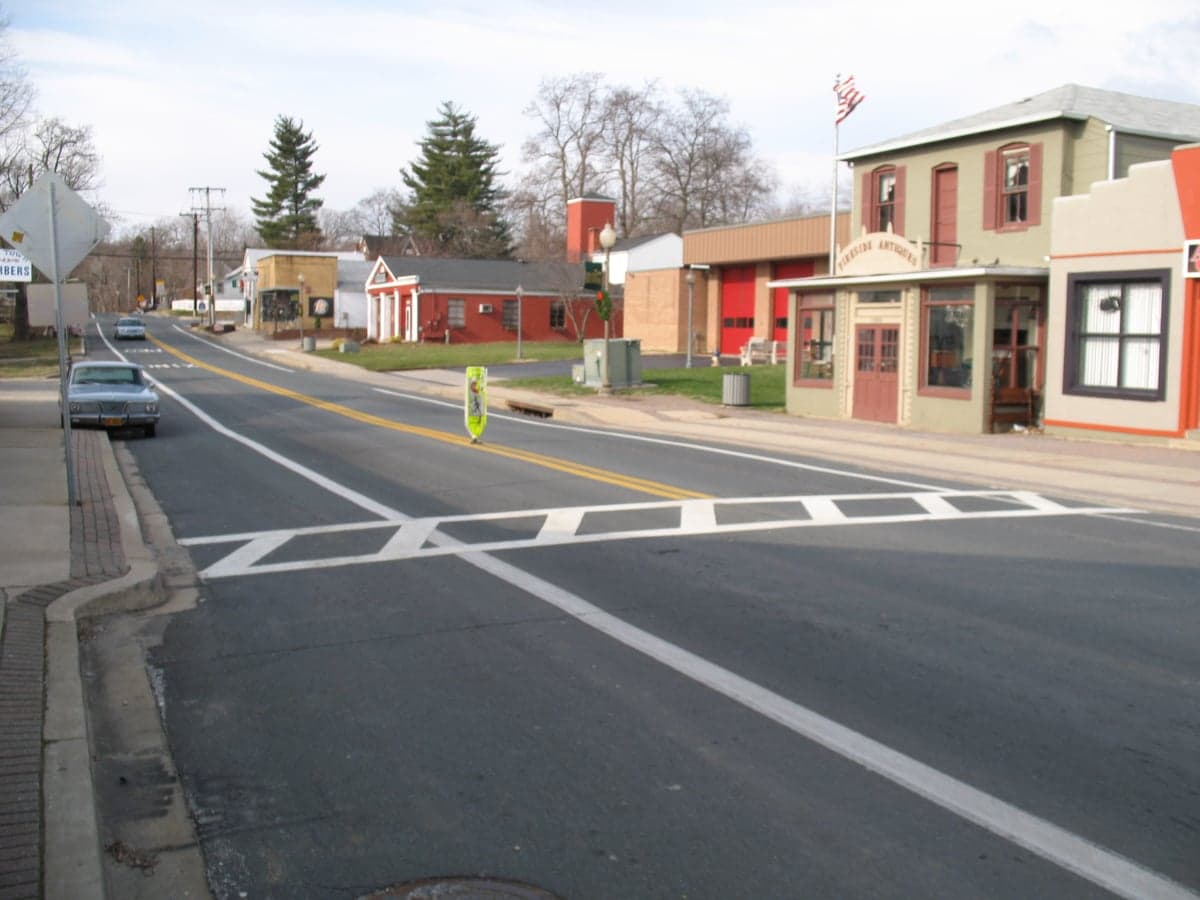
Photo: Wikipedia
Personal Sovereignty in Bowie, MD
Viable for self-reliance. Generally workable, though some barriers may limit total independence.
What does Personal Sovereignty tell us?
Personal Sovereignty measures your capacity for self-reliance and independence with minimal government friction. Higher scores mean fewer barriers between you and the way you want to live... but it assumes you have the space you need and good neighbors.
What does this tell us?
Personal Sovereignty measures your capacity for self-reliance and independence with minimal government friction. Higher scores mean fewer barriers between you and the way you want to live... but it assumes you have the space you need and good neighbors.
State Policy
Energy independence: Importer (8% of energy produced in-state)
Personal Liberty
Homesteading

Personal Liberty Analysis
Bowie, Maryland, presents a complex environment for personal sovereignty, where the state's aggressive regulatory and tax posture often clashes with the individual's desire for autonomy. As a suburban enclave within Prince George's County, Bowie offers a degree of community stability, but residents must navigate a web of state-level controls that significantly constrain self-reliance. For the strategic prepper or conservative-minded individual, the area's appeal lies in its proximity to federal employment and established infrastructure, but the trade-off is a persistent encroachment on personal freedoms that demands careful consideration before relocation.
Tax burden and regulatory posture: How Maryland's fiscal policies affect your autonomy
Maryland's tax structure is a primary obstacle to personal sovereignty in Bowie. The state imposes a progressive income tax with rates reaching 5.75%, and Prince George's County adds a local income tax of 3.2%, creating a combined top marginal rate near 9%. This is among the highest in the nation, directly reducing the capital available for self-reliance investments like land, supplies, or alternative energy systems. Property taxes in Bowie hover around 1.1% of assessed value, which is moderate for the region but still a recurring drain on household wealth. The regulatory environment is equally burdensome: Maryland mandates strict vehicle emissions testing, imposes a 10% sales tax on firearms and ammunition, and enforces some of the nation's most stringent environmental regulations on land use. For the survivalist, every dollar extracted by the state is a dollar not spent on preparedness, and every regulation is a potential barrier to independent action. The state's heavy reliance on income and property taxes means that even a modest lifestyle in Bowie carries a significant fixed cost, reducing the financial buffer needed for true autonomy.
Self-defense and gun law specifics: Navigating Maryland's restrictive firearms framework
Maryland's gun laws are among the most restrictive in the country, directly impacting the right to self-defense. The state requires a Handgun Qualification License (HQL) to purchase a handgun, which involves fingerprinting, a background check, and an approved training course—a process that can take weeks and costs over $100. Additionally, Maryland maintains a ban on "assault weapons" as defined by state law, which includes many popular semi-automatic rifles like the AR-15. Magazine capacity is capped at 10 rounds for long guns and 10 rounds for handguns, severely limiting defensive firepower. Concealed carry is permitted, but only after obtaining a Wear and Carry Permit, which requires demonstrating a "good and substantial reason" beyond general self-defense—a standard that was loosened after the Supreme Court's Bruen decision but still involves a rigorous application process, including a 16-hour training course and a background investigation. For the prepper, this means that building a robust defensive capability is legally constrained and financially burdensome. The state's red flag law also allows for the temporary seizure of firearms based on a court order, a tool that can be abused by overzealous authorities. In Bowie, local law enforcement generally follows state mandates, so there is no municipal buffer against these restrictions. The net effect is that self-reliance in the realm of personal security is heavily regulated, requiring significant time and legal navigation to exercise even basic rights.
Self-reliance and homesteading viability: Lot sizes, zoning, and off-grid feasibility in Bowie
Bowie's suburban character severely limits the viability of homesteading or off-grid living. The city is primarily composed of single-family homes on lots averaging 0.25 to 0.5 acres, with strict zoning codes that prohibit agricultural activities like raising livestock or keeping chickens in most residential areas. The city's zoning ordinance mandates minimum lot sizes of 10,000 to 20,000 square feet for new subdivisions, but these are still too small for meaningful self-sufficiency. Prince George's County enforces a "Critical Area" law near waterways that restricts tree removal, fencing, and construction, further limiting land use. Off-grid systems like solar panels are permitted but must comply with county building codes and utility interconnection requirements, making true energy independence difficult. Rainwater harvesting is allowed for non-potable uses but is regulated by the Maryland Department of the Environment. For the prepper seeking to grow food, store water, or generate power independently, Bowie's zoning and HOA covenants in many neighborhoods create a hostile environment. The area's reliance on municipal water and sewer systems means that a grid-down scenario would quickly become untenable. While some rural pockets exist in northern Prince George's County, Bowie itself offers little opportunity for the kind of self-reliant lifestyle that a survivalist would prioritize. The best option for homesteading within commuting distance would be to look further east into Anne Arundel or Calvert counties, where lot sizes increase and zoning is more permissive.
Personal liberties: Parental rights, medical autonomy, speech, and property in Bowie
Maryland's legal framework presents a mixed bag for personal liberties in Bowie. On parental rights, the state has a strong track record of supporting school choice, with charter schools and private options available, though the public school system in Prince George's County is often criticized for bureaucratic inefficiency. However, Maryland mandates comprehensive sex education in public schools, and parents must actively opt out rather than opt in, which many conservatives view as an overreach. Medical autonomy is heavily constrained: Maryland has strict vaccine mandates for school attendance, and during the COVID-19 pandemic, the state imposed some of the longest-lasting emergency orders in the nation, including mask mandates and business closures. The state also has a "medical aid in dying" law, which some view as a slippery slope, while others see it as an expansion of personal choice. Free speech is generally protected under the First Amendment, but Maryland has a "false light" privacy law that can be used to chill criticism, and the state's hate crime statutes are broadly defined. Property rights are under constant threat from the state's aggressive use of eminent domain for development projects, particularly in Prince George's County, where the "Purple Line" light rail project has led to numerous property seizures. For the prepper, the ability to make independent medical decisions, control what children are taught, and speak freely without government retaliation is paramount. In Bowie, these liberties exist but are constantly tested by a state government that favors collective mandates over individual choice.
Overall, personal sovereignty in Bowie, Maryland, is a fragile concept. The area offers the stability of a well-established suburban community with access to federal jobs and infrastructure, but the price is a heavy regulatory and tax burden that erodes the financial and legal foundations of self-reliance. Compared to states like Texas, Florida, or Tennessee, where gun laws are more permissive, taxes are lower, and zoning is less restrictive, Bowie falls short for the serious prepper. For those who must remain in the D.C. metro area for employment, Bowie is a compromise—a place where one can build a life but must constantly fight to preserve the autonomy that is increasingly rare in the Mid-Atlantic. The strategic relocation decision hinges on whether the benefits of proximity to power and resources outweigh the costs of living under a government that views personal sovereignty as a privilege to be granted, not a right to be exercised.

* Values derived from national, state, county, city and local statistics and may differ in a specific area. Last updated: 2026-04-22T01:19:44.000Z
Narrative content on this page is AI-generated and may contain mistakes. Verify any details that matter before acting on them.
ReloMaps may earn a commission from affiliate links at no extra cost to you.

