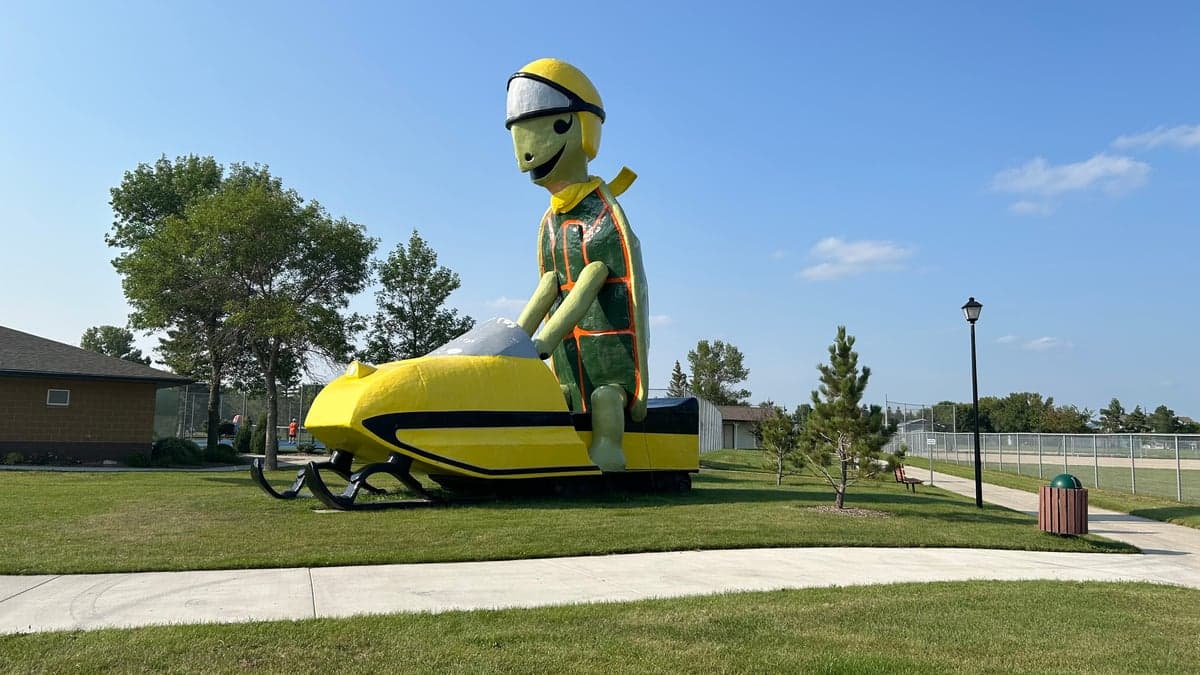
Photo: Wikipedia
Political ClimatePolitical Climate in Bottineau, ND
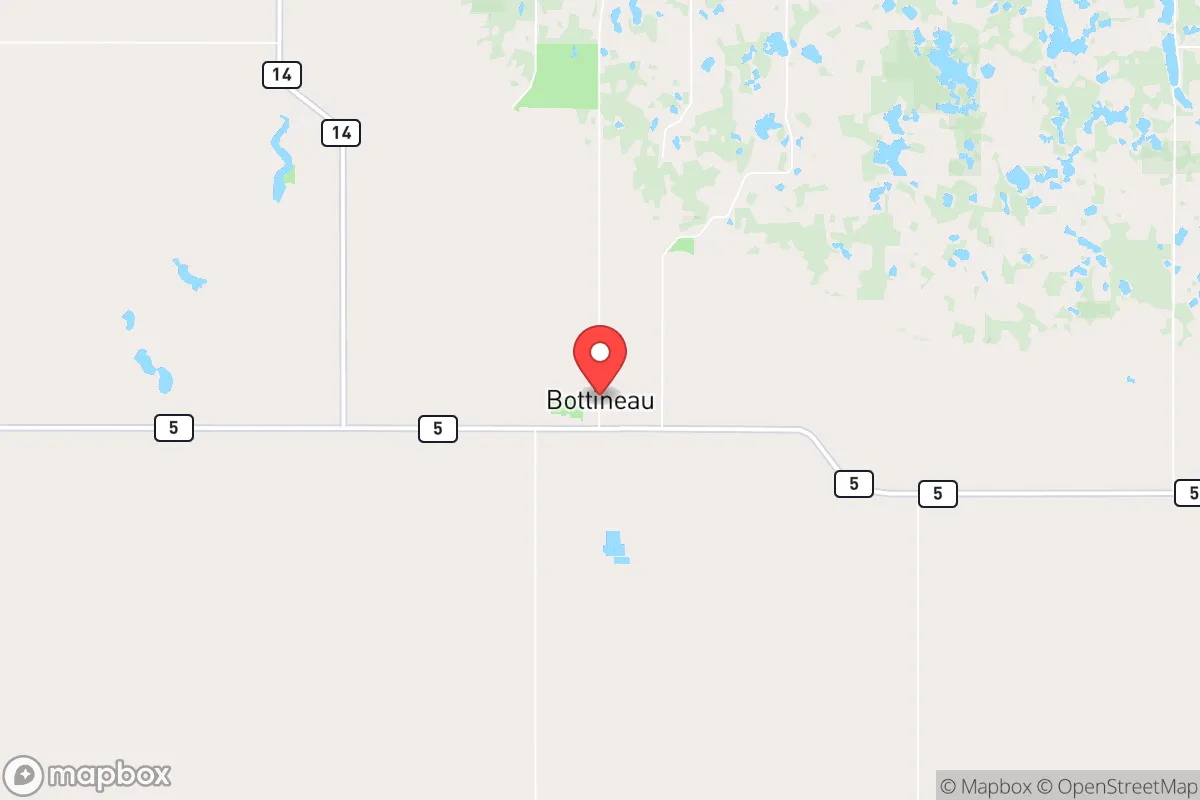
District shown is the primary district for this city’s centroid. Cities may span multiple districts.
Inherited from parent state — no local data available.
Local Political AnalysisPolitical Analysis of Bottineau, ND
Bottineau, North Dakota, is about as reliably conservative as they come, with a Cook PVI of R+18 that puts it deep in the red column. That’s not just a number on a map—it reflects a community where folks have long valued personal responsibility, limited government, and the freedom to live their lives without a bunch of bureaucratic red tape. If you’re looking at the political trajectory here, it’s been steady for decades, though you can feel a bit of a shift in the air as younger families move in from places like Minot or even out-of-state, bringing some more progressive ideas that don’t always sit well with the old guard.
How it compares
Compared to nearby towns, Bottineau holds its conservative ground pretty firmly. Roll down to Minot, about 90 miles south, and you’ll find a similar R+18 vibe, but with a bit more of a military and oil-patch influence that can lean libertarian on economic issues. Head west to Williston, and it’s even more conservative, driven by the energy sector’s hands-off ethos. The real contrast comes if you go east to Grand Forks or south to Fargo—those places are still red, but they’ve got a stronger progressive undercurrent, especially in the university areas. Bottineau’s small-town character means you don’t see the same kind of activist push for things like stricter gun laws or expansive social programs that you might catch in those bigger cities. It’s a place where the local county commission and school board races still get decided on common-sense principles, not party-line squabbles.
What this means for residents
For the folks living here, the conservative tilt means a lighter touch from government in daily life. Property taxes are manageable, there’s no state income tax to speak of, and the local zoning is pretty relaxed—you can run a small business out of your garage without jumping through a dozen hoops. That’s a big deal for anyone who values personal freedom over government overreach. But there’s a growing concern among long-time residents that the progressive drift we’re seeing in other parts of the country could creep in here, especially as the state pushes for more renewable energy mandates or federal dollars that come with strings attached. The recent push for diversity initiatives in some state agencies has raised eyebrows, with many feeling it’s a step toward the kind of top-down social engineering that Bottineau has always resisted.
On the cultural side, Bottineau still holds onto its hunting, fishing, and snowmobiling traditions without a lot of fuss from regulators. The local churches and community events are the backbone of social life, and there’s a strong sense that your neighbor’s business is their own—as long as it doesn’t hurt anyone. The biggest policy distinction here is the near-total absence of the kind of progressive zoning or housing mandates you see in places like Minneapolis or even Bismarck. If you’re looking for a place where you can raise a family, keep your guns, and not have the government breathing down your neck about every little thing, Bottineau is still that spot. But keep an eye on the school board and city council elections—that’s where the real battles over the future of this community are going to be fought.

State Political ClimatePolitical Climate in North Dakota
State Political AnalysisPolitical Environment in the State
North Dakota has long been one of the most reliably Republican states in the nation, with a deep-rooted conservative culture that has only hardened over the past two decades. The state hasn’t voted for a Democratic presidential candidate since Lyndon Johnson in 1964, and in 2024, Donald Trump carried it by over 20 points. The dominant coalition is a mix of rural agricultural producers, energy sector workers from the Bakken oil fields, and a growing number of conservative-leaning transplants fleeing higher-tax states. While the state’s small population means its politics can feel personal and insular, the overall trajectory has been a steady march rightward, with the legislature passing some of the most aggressive conservative policies in the country on taxes, guns, and parental rights.
Urban vs. rural divide
The political map of North Dakota is starkly divided between a handful of small urban centers and the vast, deeply conservative rural expanse. The largest city, Fargo, is the state’s most moderate area, with Cass County often being the only competitive county in statewide races. In 2024, Trump still won Cass County, but by a narrower 12-point margin, reflecting the influence of North Dakota State University and a growing professional class. Grand Forks, home to the University of North Dakota, leans Republican but with a libertarian streak—voters there tend to support fiscal conservatism but are more skeptical of social engineering from either party. The real conservative strongholds are the small towns and rural counties. Minot, anchored by the Air Force base and oil activity, is reliably red, while Williston and Dickinson in the western oil patch are among the most conservative areas in the state, routinely delivering 80%+ margins for GOP candidates. The divide isn’t just urban vs. rural—it’s also east vs. west, with the eastern Red River Valley being more moderate and the western Badlands and prairie counties being rock-ribbed Republican. There are no politically distinct suburbs in the traditional sense; even the bedroom communities around Fargo, like West Fargo, vote solidly Republican.
Policy environment
North Dakota’s policy environment is a conservative’s dream, with low taxes, minimal regulation, and a government that actively stays out of your way. There is no state income tax on individuals, and the corporate income tax rate was slashed to a flat 1.5% in 2023. Property taxes are relatively low, though they vary by county, and the state has a robust oil tax fund that keeps the budget flush without squeezing residents. The regulatory posture is business-friendly, with no state-level minimum wage law (federal $7.25 applies) and a right-to-work law that weakens union influence. On education, the state has embraced school choice, with a 2023 law creating education savings accounts for families, allowing public funds to follow the child to private or homeschool settings. Healthcare is a mixed bag: the state expanded Medicaid under the Affordable Care Act in 2013, a move that still rankles some conservatives, but it also passed a 2025 law banning gender transition procedures for minors and restricting abortion to the first six weeks. Election laws are among the most secure in the nation—voter ID is required, same-day registration is not allowed, and the state uses paper ballots. There are no sanctuary city policies; in fact, the legislature passed a law in 2023 requiring local law enforcement to cooperate with federal immigration authorities.
Trajectory & freedom
North Dakota is becoming more free by any conservative measure, with recent legislation expanding personal liberty in key areas. The 2023 permitless carry law, known as House Bill 1340, allows any legal gun owner to carry a concealed firearm without a permit, eliminating a previous infringement on the Second Amendment. Parental rights were strengthened in 2025 with the “Parents’ Bill of Rights,” which requires schools to notify parents of any curriculum involving sexuality or gender identity and prohibits schools from hiding a child’s gender transition from parents. On medical autonomy, the state passed a 2024 law banning mRNA vaccine mandates by private employers, a direct response to federal overreach during the pandemic. Property rights were bolstered by a 2023 law limiting the use of eminent domain for carbon pipeline projects, a major issue in the state after the Dakota Access Pipeline protests. Taxation freedom improved with the elimination of the individual income tax in 2024, making North Dakota one of nine states with no wage tax. The only concerning trend is the state’s continued reliance on federal oil and gas subsidies, which some conservatives argue creates a dependency that could be exploited by future administrations.
Civil unrest & political movements
North Dakota has seen its share of political flashpoints, most notably the Standing Rock protests in 2016-2017, where thousands of activists from across the country descended on the state to oppose the Dakota Access Pipeline. The protests turned violent at times, with clashes between demonstrators and law enforcement, and left a lasting scar on the state’s politics. Many locals still resent the federal government’s initial hesitation to enforce the law, and the incident galvanized conservative voters to support stronger state sovereignty measures. On the right, the Bismarck-based “North Dakota Republican Party” has been a hotbed of grassroots activism, with the state party passing resolutions in 2024 calling for a convention of states to propose constitutional amendments on term limits and fiscal restraint. There is no significant secession movement, but nullification rhetoric is common—the 2023 “Second Amendment Preservation Act” declared that federal gun laws are unenforceable in the state, though it has not been tested in court. Immigration politics are relatively quiet, as the state’s small foreign-born population (around 4%) means few flashpoints, though the 2023 law requiring local cooperation with ICE was a clear statement. Election integrity controversies are minimal; the state’s paper ballot system and strict voter ID laws have kept fraud allegations at bay, even as neighboring Minnesota has seen turmoil.
Projection
Over the next 5-10 years, North Dakota is likely to become even more conservative, driven by two key demographic trends. First, the state is seeing a slow but steady influx of conservative-leaning migrants from blue states like California, Illinois, and Minnesota, drawn by low taxes, gun rights, and a slower pace of life. These new arrivals tend to settle in the larger towns like Fargo and Bismarck, but they are often more ideologically pure than native-born residents, pushing the state further right. Second, the rural population continues to shrink, which could paradoxically strengthen the conservative vote as the remaining rural voters become more politically active. The oil industry in the Bakken will remain a wildcard—if energy prices stay high, the state’s budget will be flush and taxes can stay low; if they crash, the state may face pressure to raise revenue. The biggest risk to freedom is the potential for federal overreach on energy and environmental policy, which could cripple the state’s economy and force a confrontation with Washington. Expect the legislature to continue passing preemptive laws on vaccine mandates, gun rights, and parental control, and don’t be surprised if North Dakota becomes a test case for a national school choice movement.
For a new resident, the bottom line is this: North Dakota offers one of the most freedom-friendly environments in the country, with low taxes, strong gun rights, and a government that respects parental authority. The trade-off is a harsh climate, a small population, and a political culture that can feel insular and resistant to change. If you’re looking for a place where your personal liberties are respected and your tax dollars aren’t wasted on progressive social experiments, you’ll find a home here. Just be prepared for long winters and a strong sense of community that expects you to pull your own weight.
* Values derived from national, state, county, city and local statistics and may differ in a specific area. Last updated: 2026-04-19T05:46:48.000Z
Narrative content on this page is AI-generated and may contain mistakes. Verify any details that matter before acting on them.
ReloMaps may earn a commission from affiliate links at no extra cost to you.

