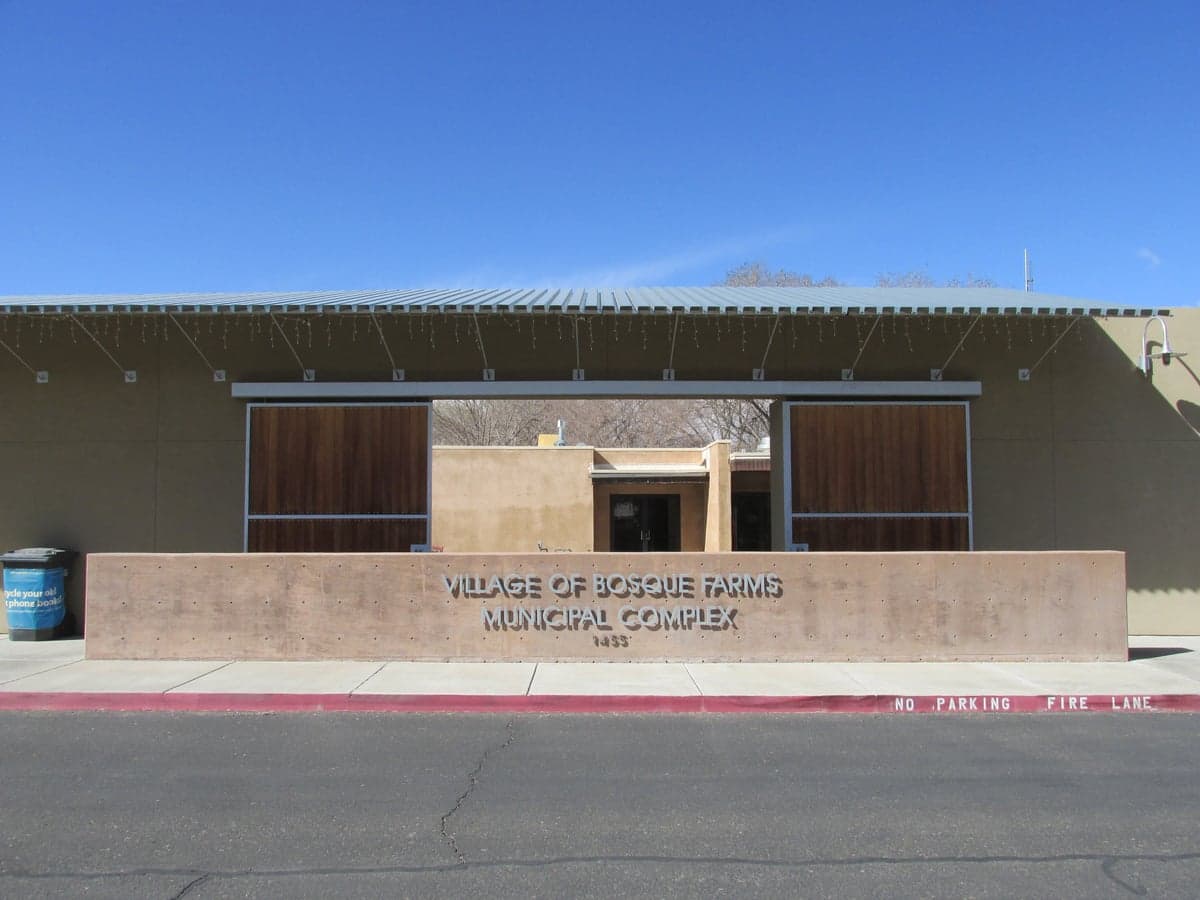
Photo: Wikipedia
Political ClimatePolitical Climate in Bosque Farms, NM
District shown is the primary district for this city’s centroid. Cities may span multiple districts.
Local Political AnalysisPolitical Analysis of Bosque Farms, NM
Bosque Farms has always been a place where folks value their independence and don't take kindly to being told what to do, but the political winds have shifted noticeably over the last decade. While the area's Cook PVI of D+7 might suggest a reliably Democratic lean, that number masks a growing unease among long-time residents who feel the local government is increasingly cozy with progressive policies that chip away at personal freedoms. The trajectory here is concerning: what was once a quiet, live-and-let-live community is now seeing more zoning restrictions, higher property taxes, and a creeping sense that the county seat in Los Lunas is more interested in Santa Fe's agenda than in what locals actually want.
How it compares
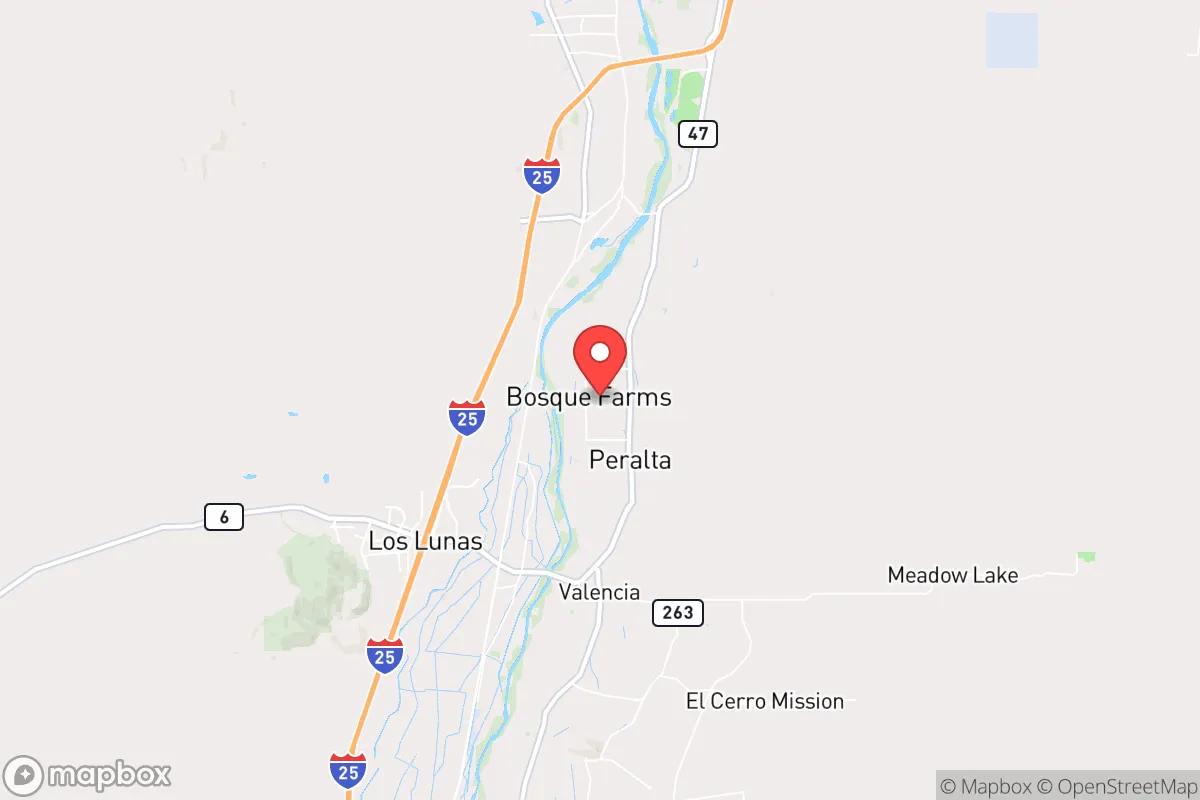
Drive ten miles north to Albuquerque's West Side or fifteen miles east to the East Mountains, and you'll find communities that lean more conservative, with folks who openly grumble about the same overreach. Bosque Farms sits in a weird middle ground—it's not as reliably red as Belen or Los Lunas proper, but it's also not as blue as the core of Albuquerque. The D+7 rating feels like a compromise that's been slowly breaking down. In the 2020 and 2024 cycles, you could see the shift: more yard signs for local candidates who talked about property rights and Second Amendment protections, but the actual votes still tilted blue because of newer residents moving in from out of state, bringing big-government ideas with them. Compared to Valencia County's overall lean, Bosque Farms is a bellwether that's starting to ring alarm bells for anyone who values local control over their own land and business.
What this means for residents
For the people who actually live here, the political climate translates into real headaches. The village council has pushed through stricter building codes and water-use regulations that feel less about conservation and more about control—telling you what you can do on your own acreage. Property taxes have crept up, and there's talk of a local option gross receipts tax that would hit small businesses hardest. If you're a rancher, a mechanic running a shop out of your garage, or just someone who wants to keep a few chickens without a permit, you're feeling the squeeze. The school board has also become a battleground, with debates over curriculum transparency and parental rights that mirror the national fights. Long-time residents worry that the next few years will bring more of the same: more mandates, more fees, and less say in how we raise our kids and run our lives.
Culturally, Bosque Farms still holds onto its rural roots—the annual Fourth of July parade and the volunteer fire department are community anchors—but the policy direction is unmistakable. The push for "equity" initiatives in county planning and the quiet adoption of state-level housing mandates feel like a slow erosion of the independent spirit that made this place worth living in. If you're considering a move here, keep an eye on the next village council election. That's where the real fight for the soul of Bosque Farms is happening, and it's not looking good for those who want to keep government out of their backyard.

State Political ClimatePolitical Climate in New Mexico
State Political AnalysisPolitical Environment in the State
New Mexico has long been a reliably blue state in presidential elections, voting Democratic by margins of 10-11 points in 2020 and 2024, but that top-line number hides a deeply fractured political landscape. The state’s dominant coalition is a mix of urban progressives in Albuquerque and Santa Fe, combined with a large Hispanic electorate that historically leaned conservative but has shifted left on immigration and social programs over the past two decades. Over the last 10-20 years, the state has moved from a moderate swing state—it voted for George W. Bush in 2004—to a solidly Democratic one, driven by rapid growth in the Albuquerque metro and an influx of out-of-state transplants to places like Santa Fe and Las Cruces.
Urban vs. rural divide
The political map of New Mexico is a textbook case of urban-rural polarization. Bernalillo County, home to Albuquerque and its sprawling suburbs like Rio Rancho, casts roughly a third of the state’s votes and leans Democratic by about 15 points, powered by government workers at Sandia National Labs, university faculty at UNM, and a growing tech sector. Santa Fe County is the bluest in the state, voting +40 points Democratic, driven by a high concentration of artists, retirees from California, and state government employees. Las Cruces in Doña Ana County is another Democratic stronghold, though more moderate, thanks to its large military and agricultural base. Meanwhile, the eastern plains—places like Clovis, Portales, and Hobbs—vote Republican by 30-40 points, fueled by oil and gas workers and conservative ranchers. The northwest corner, including Farmington and the Navajo Nation, is a wildcard: the tribal vote leans Democratic, but the surrounding Anglo and Hispanic communities are reliably red. The rural-urban gap has widened dramatically since 2016, with rural counties like Lea and Eddy flipping harder red as urban centers consolidate blue power.
Policy environment
New Mexico’s policy environment has shifted sharply left in the last decade, and the consequences are tangible. The state has a progressive income tax with rates up to 5.9%, and a gross receipts tax that can hit 8-9% in cities like Albuquerque—a heavy burden on small businesses and families. In 2021, the legislature passed a sweeping tax increase on capital gains and high earners, which critics argue drives out entrepreneurs. Education policy is a flashpoint: the state has some of the lowest test scores in the nation, yet the 2023 “Yazzie-Martinez” court ruling forced the state to pour billions into underperforming schools, with little accountability for results. School choice is virtually nonexistent—charter schools are capped, and there’s no voucher program. Healthcare is dominated by the state’s Medicaid expansion under the Affordable Care Act, which covers over 40% of residents, but private insurance costs are high. Election laws are a concern for conservatives: New Mexico has no voter ID requirement, same-day registration, and automatic mail-in ballots for all registered voters, which has led to persistent allegations of fraud in close races like the 2020 CD-2 contest. The state also passed a 2023 law banning firearms at polling places and government buildings, a move gun rights advocates see as an infringement.
Trajectory & freedom
On personal freedom, New Mexico is moving in a troubling direction for conservatives. The 2021 Energy Transition Act effectively killed coal-fired power plants in the state, costing jobs in places like Farmington and threatening the reliability of the grid. In 2023, the legislature passed a “red flag” law allowing courts to temporarily seize firearms from individuals deemed a threat, without a criminal conviction—a direct challenge to Second Amendment rights. Parental rights took a hit with the 2023 “Safe Haven” law, which expanded access to abortion and gender-affirming care for minors without parental consent, overriding local ordinances in conservative towns like Hobbs and Clovis. Property rights are under pressure from the state’s 2022 “Housing First” law, which mandates that cities cannot enforce camping bans on public land, leading to visible homeless encampments in Albuquerque and Santa Fe. On the tax front, the 2024 “Gross Receipts Tax Simplification” bill actually lowered rates slightly for small businesses, but it was paired with new taxes on online sales. Overall, the trend is toward more regulation, higher taxes, and less local control—a recipe that’s driving many families to consider Texas or Arizona.
Civil unrest & political movements
New Mexico has seen its share of political flashpoints. In 2020, Albuquerque experienced weeks of protests following the murder of George Floyd, with some turning violent and leading to property damage downtown. The state’s sanctuary policies—enacted in 2019 under the “New Mexico Values Act”—prohibit state and local law enforcement from cooperating with federal immigration authorities, which has created tension with border communities like Sunland Park and Las Cruces. In 2023, a proposed “oil and gas moratorium” in the Permian Basin sparked massive protests from workers in Lea and Eddy counties, with thousands of trucks circling the state capitol in Santa Fe. Election integrity remains a hot-button issue: the 2020 CD-2 race was decided by just 1,300 votes, and the 2022 Secretary of State race saw allegations of ballot harvesting in Native American precincts. The “New Mexico Civil Guard,” a militia group, has been active in the southern border region, conducting citizen patrols and clashing with activists. A new resident would notice the palpable divide between the progressive urban centers and the conservative rural areas, with little middle ground left.
Projection
Over the next 5-10 years, New Mexico is likely to become even more Democratic as Albuquerque and Santa Fe continue to grow, driven by remote workers and retirees from blue states. The Hispanic vote, which once kept the state competitive, is trending left on cultural issues, and the rural conservative population is aging and shrinking. In-migration from California and Colorado is accelerating, particularly to Santa Fe and the Albuquerque foothills, bringing progressive voting habits. The oil and gas industry in the southeast will remain a redoubt, but automation and the green energy transition may reduce its political clout. A new resident moving in now should expect higher taxes, more gun restrictions, and a state government that prioritizes urban interests over rural ones. The best bet for conservatives is to look at towns like Rio Rancho, Los Lunas, or Edgewood, where the political climate is more balanced, or consider the eastern plains if they can handle the isolation.
For a conservative family or individual, New Mexico offers stunning landscapes and a low cost of living, but the political trajectory is clear: the state is moving left, and fast. If you value gun rights, school choice, low taxes, and local control, you’ll find yourself increasingly at odds with the state government. The practical takeaway is to choose your location carefully—stick to the conservative enclaves in the east or the growing suburbs of Albuquerque—and be prepared to fight for your freedoms at the ballot box and in the courts. It’s not Texas, but it’s not California either—yet.
* Values derived from national, state, county, city and local statistics and may differ in a specific area. Last updated: 2026-05-01T07:10:09.000Z
Narrative content on this page is AI-generated and may contain mistakes. Verify any details that matter before acting on them.
ReloMaps may earn a commission from affiliate links at no extra cost to you.

