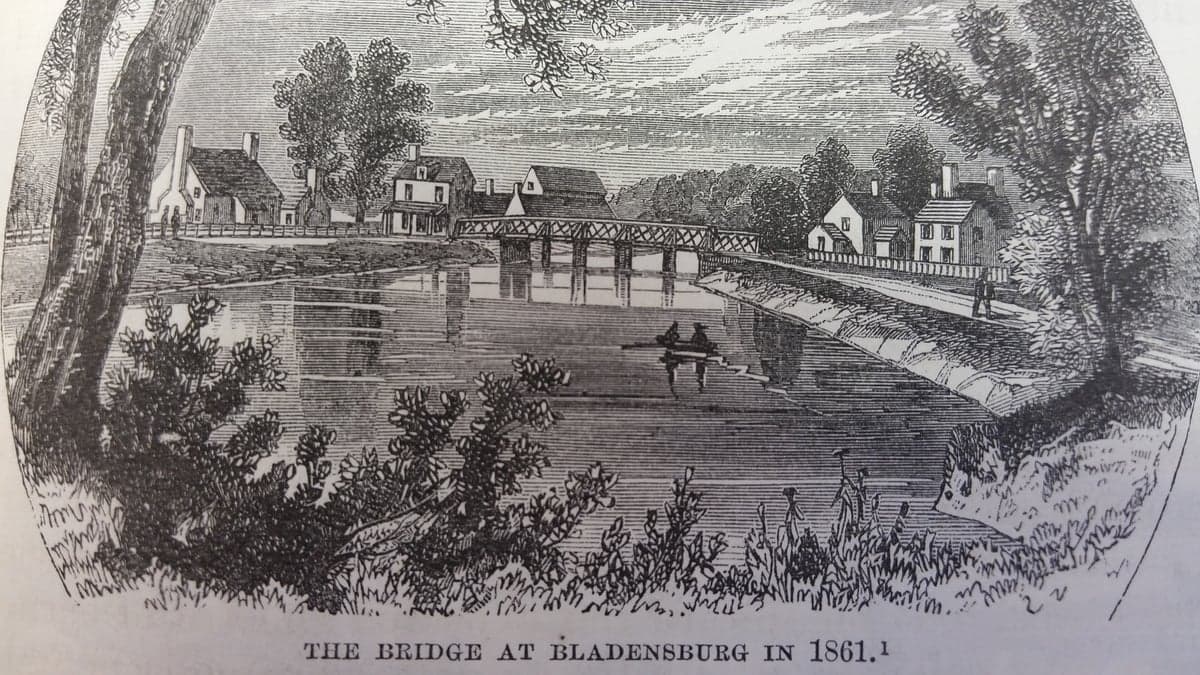
Photo: Wikipedia
Personal Sovereignty in Bladensburg, MD
Viable for self-reliance. Generally workable, though some barriers may limit total independence.
What does Personal Sovereignty tell us?
Personal Sovereignty measures your capacity for self-reliance and independence with minimal government friction. Higher scores mean fewer barriers between you and the way you want to live... but it assumes you have the space you need and good neighbors.
What does this tell us?
Personal Sovereignty measures your capacity for self-reliance and independence with minimal government friction. Higher scores mean fewer barriers between you and the way you want to live... but it assumes you have the space you need and good neighbors.
State Policy
Energy independence: Importer (8% of energy produced in-state)
Personal Liberty
Homesteading

Personal Liberty Analysis
Bladensburg, Maryland, presents a challenging environment for personal sovereignty, where state-level policies significantly constrain individual autonomy despite the town's modest scale. As a Prince George's County suburb within the Washington, D.C. orbit, residents face a dense web of regulations, high taxation, and restrictive gun laws that limit self-reliance and preparedness. For those prioritizing maximum personal freedom—especially survivalists, preppers, and conservative families—Bladensburg requires careful navigation of Maryland's assertive government posture, which often prioritizes collective mandates over individual choice. The autonomy landscape here is less about what you can do and more about what the state permits, making it a location where strategic compliance is necessary for those who choose to stay.
Tax burden and regulatory climate for residents and small businesses
Maryland's tax burden is among the highest in the nation, and Bladensburg residents feel this acutely. The state imposes a progressive income tax with rates up to 5.75%, and Prince George's County adds its own local income tax of 3.2%, pushing the combined top marginal rate near 9%. Property taxes are also steep, with the county's effective rate around 1.1% of assessed value, and Bladensburg itself levies a separate town property tax. For small business owners or self-employed individuals—common among those seeking autonomy—the regulatory climate is dense. Maryland requires extensive licensing, environmental permits, and labor law compliance that can stifle independent ventures. The state's energy policies, including aggressive renewable portfolio standards and building code mandates, add costs for homeowners who might want to install generators, solar panels, or alternative heating systems. Maryland's overall tax burden ranks among the top five states nationally, and Prince George's County adds layers of bureaucracy that make Bladensburg a high-cost, low-flexibility environment for those seeking to minimize government entanglement.
Self-defense rights and gun law specifics in Bladensburg
Maryland's firearm laws are among the most restrictive in the country, and Bladensburg residents must comply with a stringent regulatory framework that severely limits self-defense options. The state requires a Handgun Qualification License (HQL) to purchase a handgun, which involves fingerprinting, a background check, and an approved training course. Maryland also bans "assault weapons" by name and feature, including popular semi-automatic rifles like the AR-15, and limits magazine capacity to 10 rounds. Concealed carry is permitted only after obtaining a Wear and Carry Permit, which requires demonstrating "good and substantial reason"—a standard that, while loosened after the Bruen decision, still involves a lengthy application process and a 16-hour training course. Open carry is effectively prohibited without a permit. For preppers, this means stockpiling standard-capacity magazines or owning certain defensive firearms is illegal. Prince George's County has its own additional restrictions, including a ban on firearm possession in county parks. Self-defense in Bladensburg is heavily mediated by state permission, and any defensive use of force carries significant legal risk, especially given Maryland's lack of a "Stand Your Ground" law—residents have a duty to retreat before using deadly force in most situations.
Self-reliance and homesteading viability: lot sizes, zoning, and off-grid feasibility
Bladensburg is a densely developed inner suburb, with most residential lots averaging less than a quarter-acre. Zoning is predominantly R-55 (single-family residential) with strict limits on accessory structures, livestock, and agricultural activities. Keeping chickens, goats, or bees requires a special permit from the town, and many lots are too small to support meaningful food production. Off-grid living is effectively impossible: Maryland mandates grid connection for new construction, and the county enforces building codes that require permits for solar panels, rainwater collection systems, and composting toilets. The town's water and sewer are municipally provided, and disconnecting from them is not permitted. For those seeking homesteading or self-sufficiency, Bladensburg offers little room. The nearest viable land for rural living is in southern Prince George's County or adjacent Charles County, where lot sizes increase to 1-5 acres and zoning allows limited agriculture. Within Bladensburg itself, self-reliance is limited to container gardening, small-scale composting, and energy efficiency upgrades—all subject to town approval. The regulatory environment discourages the kind of independent infrastructure that preppers value.
Personal liberties: parental rights, medical autonomy, speech, and property
Maryland's approach to personal liberties is expansive in some areas and restrictive in others, creating a mixed picture for conservatives. Parental rights are notably constrained: the state mandates comprehensive sex education in public schools, and parents cannot opt their children out of lessons on sexual orientation or gender identity. Maryland also has a "medical aid in dying" law and broad vaccine mandates for school attendance, limiting medical autonomy for families. During the COVID-19 pandemic, the state imposed some of the longest-lasting emergency orders in the nation, including mask mandates and business closures. Speech is generally protected, but Maryland has a "hate crime" statute that can enhance penalties for speech deemed threatening or harassing, and the state's anti-SLAPP law is weak, leaving critics vulnerable to lawsuits. Property rights are constrained by strict zoning, historic preservation overlays in parts of Bladensburg, and the state's ability to condemn land for public use via eminent domain. For those prioritizing parental control over education and medical decisions, Bladensburg's alignment with state mandates is a significant drawback. The town's proximity to D.C. also means federal policies—such as gun control and environmental regulations—have outsized influence.
Overall, Bladensburg ranks low on the personal sovereignty scale compared to more rural or less regulated areas in the region. The combination of high taxes, restrictive gun laws, dense zoning, and state-level mandates on education and health creates an environment where individual autonomy is secondary to government directives. For survivalists and preppers, the town's location offers strategic access to D.C. and federal resources, but the cost is constant negotiation with a regulatory state that views self-reliance with suspicion. Those who value maximum personal freedom would find better options in West Virginia, Virginia's Shenandoah Valley, or even rural parts of Maryland's Eastern Shore, where tax burdens are lower, gun laws are more permissive, and zoning allows for genuine self-sufficiency. Bladensburg is best understood as a place to work and engage with the system, not as a sanctuary for those seeking to live outside it.

* Values derived from national, state, county, city and local statistics and may differ in a specific area. Last updated: 2026-04-22T02:45:51.000Z
Narrative content on this page is AI-generated and may contain mistakes. Verify any details that matter before acting on them.
ReloMaps may earn a commission from affiliate links at no extra cost to you.

