Strategic Assessment of Benbrook, TX
Multiple tactical vulnerabilities. Population density, target proximity, or disaster risk are likely compounding. A retreat property and exit planning is required.
What does the Strategic Assessment tell us?
Our Strategic Assessment grades tactical survivability of an area. Major population centers, military targets, fallout zones, natural disasters, and border exposure all drive risk — lower exposure means a more defensible position in a crisis.
This is heavily inspired by Joel Skousen's Strategic Relocation book. Highly recommended you checkout the book ($)What does this tell us?
Our Strategic Assessment grades tactical survivability of an area. Major population centers, military targets, fallout zones, natural disasters, and border exposure all drive risk — lower exposure means a more defensible position in a crisis.
This is heavily inspired by Joel Skousen's Strategic Relocation book. Highly recommended you checkout the book ($)Strategic Pillars

Key Distances
Regional Safe Places
Below is our recommended "safe zones" in Texas and the surrounding area based on our strategic heuristics. For most people, it's unrealistic to live in a “safe zone” full-time due to work, family or other personal reasons. They tend to be more rural. However, many of these areas are perfect for second homes and retreat properties that double as a vacation home or even a short-term rental.

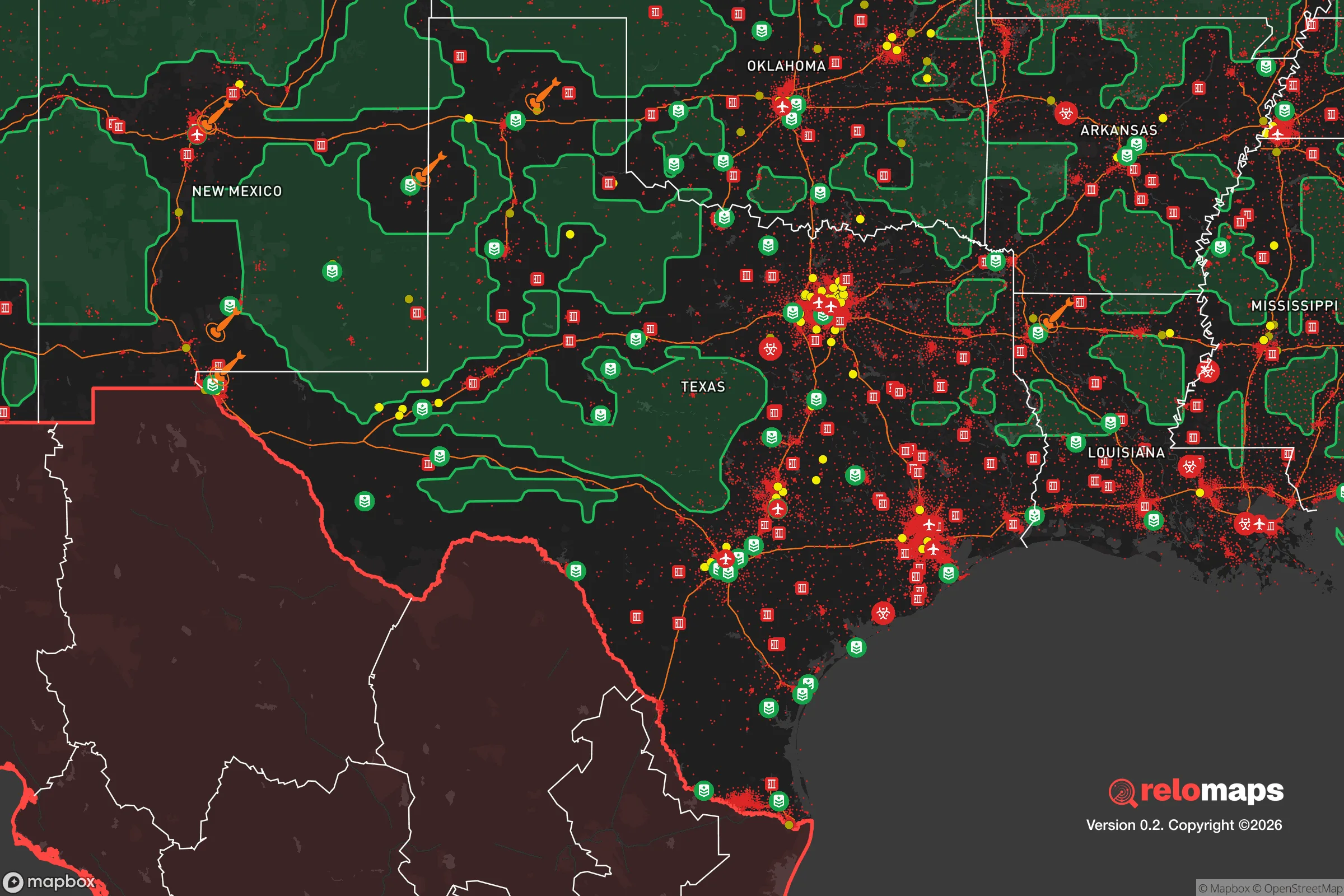


Important Note: For informational purposes only. This does not mean nothing bad ever happens in the green zones. Please use common sense. This is based on public data and modeled with AI. We tried to take a conservative approach but mistakes happen. We update this regularly as new information becomes available.
Solar Generator Recommendations
Backup power matters more here than in safer locations. We've picked three solar generators across budgets and capacity tiers — start with the budget unit if you only need a few essentials, or step up if you want to run a fridge and HVAC for days at a time.

Jackery Portable Power Station Explorer 300
Budget OptionPower on the Go: Weighing only 11 lbs, it's convenient to set up and store with book-sized foldable solar panels

BLUETTI Portable Power Station AC180
Designed for both indoor and outdoor scenarios, AC180 is highly capable as it has a robost capacity and continuous output power.

EF ECOFLOW DELTA Pro Ultra Power Station
Upgraded PickEcoFlow DELTA Pro Ultra is a whole-home energy system designed to grow with your family. Integrated with the Smart Home Panel 2, it scales to meet your evolving energy needs — keeping your home powered, intelligent, and secure through every stage of life.
We earn a commission, at no additional cost to you.
Strategic Assessment Analysis
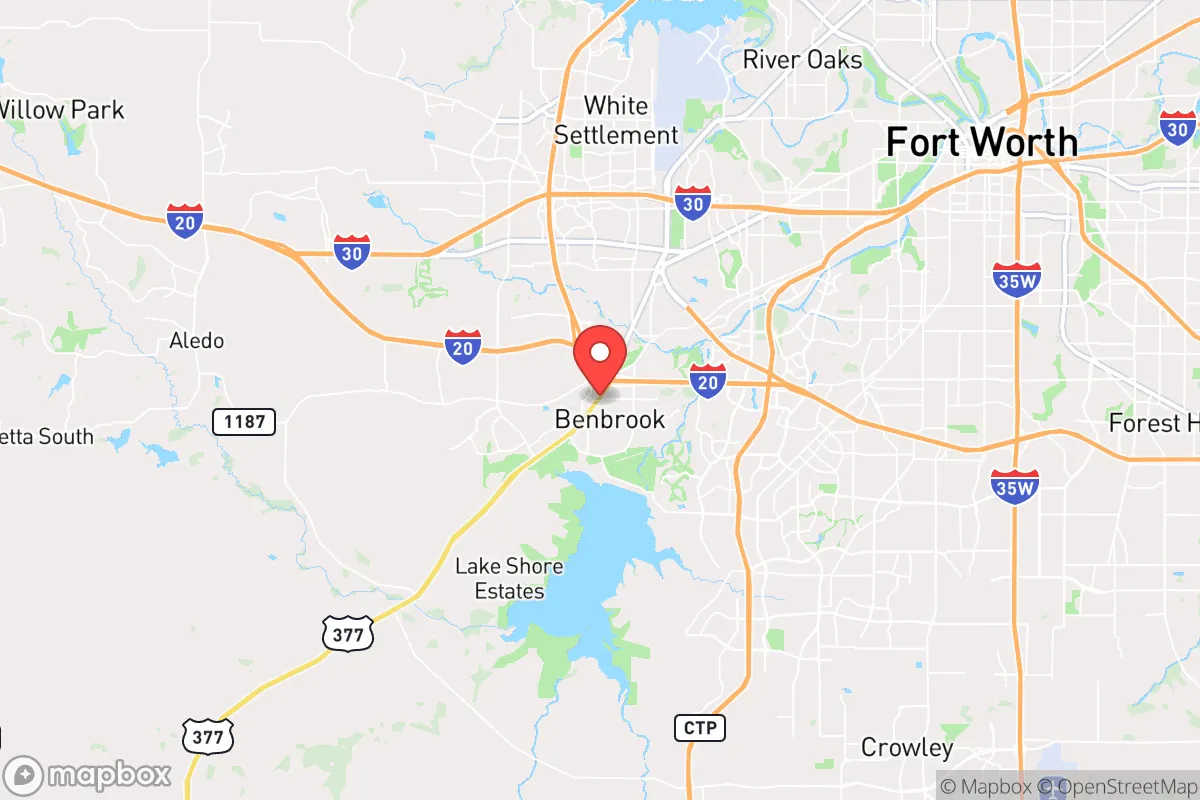
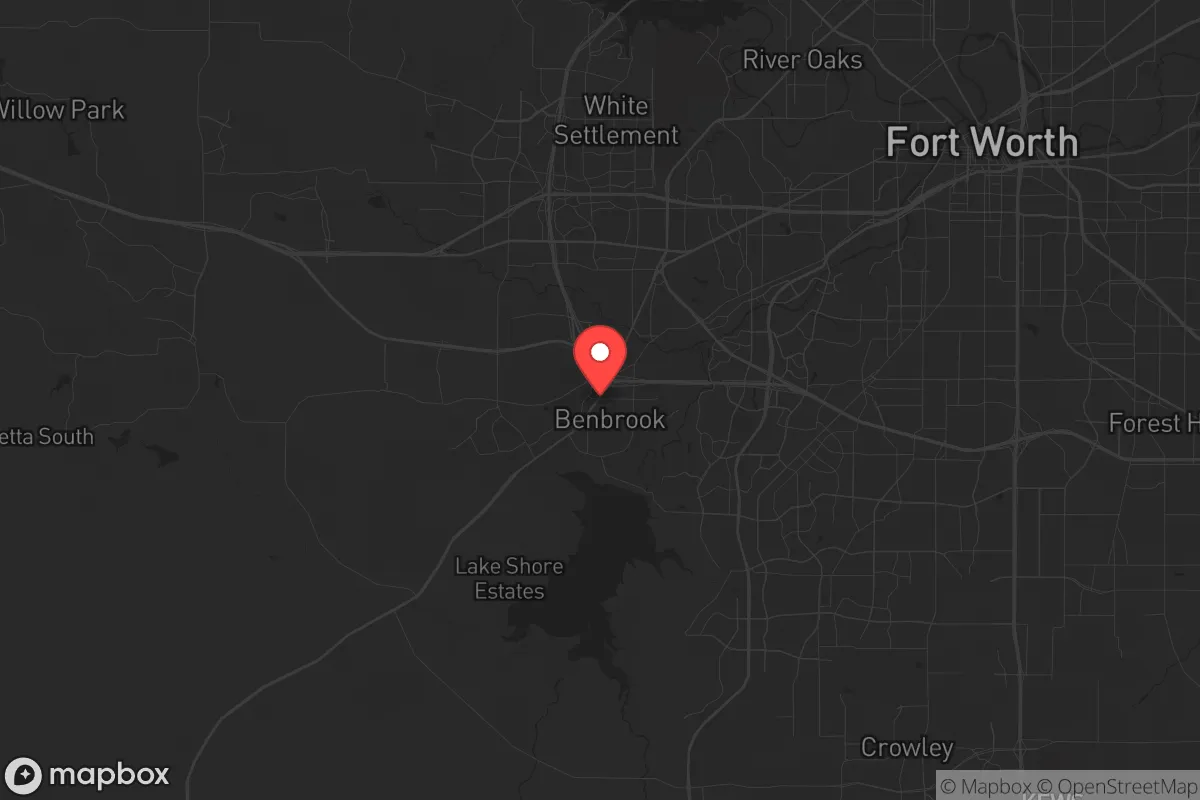
Benbrook, Texas, offers a surprisingly strong strategic position for those prioritizing resilience and self-sufficiency, but it comes with a critical trade-off: proximity to a major metropolitan target. Located just southwest of Fort Worth, this city of roughly 25,000 residents sits in a sweet spot—close enough to access resources and infrastructure, yet far enough from the urban core to avoid the worst of a collapse scenario. Its location along the Clear Fork of the Trinity River and its position on the western edge of the Dallas-Fort Worth metroplex provide natural buffers and escape routes that many suburban areas lack. For a relocator with a prepper mindset, Benbrook is a location that demands careful planning, not blind optimism.
Geographic position and natural advantages for a strategic relocation
Benbrook's geography is its primary asset. The city is anchored by Benbrook Lake, a 3,770-acre reservoir managed by the U.S. Army Corps of Engineers, which provides a reliable freshwater source—a non-negotiable for long-term survival. The lake also creates a natural barrier to the south and east, funneling potential threats and giving residents defensible terrain. The surrounding area is a mix of rolling hills, limestone bluffs, and oak woodlands, offering cover and concealment that flat prairie towns cannot match. The city sits on the Western Cross Timbers ecoregion, which supports hardwood forests and native game like white-tailed deer and wild turkey, making subsistence hunting a viable option. Elevation here averages around 700 feet, providing a slight vantage over the lower-lying areas to the east. For a relocator, the key takeaway is that Benbrook is not a floodplain or a wind tunnel; it's a naturally defensible pocket with water, wood, and wildlife within a short radius.
Risks, exposures, and proximity to fallout-relevant landmarks
The biggest liability for Benbrook is its location within the Dallas-Fort Worth (DFW) metroplex, home to over 7.5 million people. In a major civic unrest or mass casualty event, this population density becomes a liability. DFW is a Tier 1 target for any adversary due to its concentration of military installations—Naval Air Station Joint Reserve Base Fort Worth (home to the F-35 and F-16 training wings) is less than 10 miles northeast of Benbrook. The Lockheed Martin Aeronautics plant in west Fort Worth, which builds the F-35, is roughly 8 miles away. In a conflict scenario, these are high-value targets that could draw precision strikes or secondary effects like electromagnetic pulse (EMP) disruptions. Additionally, the Dallas-Fort Worth International Airport (DFW) is about 30 miles east, a likely choke point for evacuation or supply lines during a crisis. Benbrook's proximity to these assets means that a relocator must plan for the possibility of fallout—both literal radioactive debris and figurative fallout like refugee flows, supply chain breakdowns, and martial law. The city's position on the western edge of the metroplex does offer a slight advantage: prevailing winds in North Texas blow from the south-southeast, meaning fallout from a strike on Fort Worth would likely push northeast, away from Benbrook. But that's a thin margin. The Trinity River corridor also acts as a natural funnel for displaced populations moving west from Dallas, so Benbrook could see significant foot traffic during an evacuation.
Practical resilience for a relocator: food, water, energy, and defensibility
For a relocator serious about self-sufficiency, Benbrook's practical resilience is a mixed bag. Water is the strongest point: Benbrook Lake is a Corps of Engineers reservoir with a conservation pool of 37,000 acre-feet. In a grid-down scenario, a manual pump or solar-powered well on your property could tap into the Trinity Aquifer, which lies about 200-400 feet deep in this area. The city's municipal water supply is treated from the lake, but a prepper should have a backup filtration system (e.g., Berkey or Sawyer) and a plan for rainwater catchment—annual rainfall here averages 34 inches, enough to sustain a household with proper storage. Food security is moderate. The surrounding farmland is mostly cattle ranches and hay fields, not row crops, so you won't find the corn-and-soy abundance of the Midwest. However, the growing season is long (March to November), and the soil in the Cross Timbers is sandy loam that drains well. Community gardens and local farms like Benbrook Farmers Market (seasonal) offer some local food infrastructure, but a relocator should plan to establish a private garden and secure a source of heirloom seeds. Energy resilience is a weak point. The Texas grid (ERCOT) is notoriously fragile, as the 2021 winter storm showed. Benbrook is served by Oncor, which has a history of rolling blackouts. Solar is viable—the area gets about 220 sunny days per year—but a grid-tied system without battery backup is useless during a blackout. A generator with a 50-amp inlet and a 500-gallon propane tank is a baseline recommendation. Defensibility is decent. The city's layout includes several gated communities and rural subdivisions with acreage, particularly west of I-20 and along the lake. The terrain—hills, trees, and winding roads—creates natural chokepoints. However, the presence of I-20 and US 377 as major thoroughfares means that any collapse in Fort Worth will push traffic through Benbrook. A relocator should choose a property with a single access point, preferably off a county road rather than a state highway. The Benbrook Police Department is small (about 40 officers), so in a prolonged crisis, law enforcement will be stretched thin. Neighbors in the area tend to be conservative and self-reliant, which is a social asset—forming a neighborhood watch or mutual assistance group is realistic here.
The overall strategic picture for Benbrook is one of calculated risk. It is not a remote bug-out location like the Texas Hill Country or the Panhandle, but it offers a defensible, resource-rich base within striking distance of a major urban center. For a relocator who wants to maintain a professional career in DFW while having a prepared home, Benbrook is a viable compromise. The key is to treat it as a layered defense: harden your home against grid failure, stockpile supplies for a 90-day window, and have a secondary retreat plan for a full-scale collapse. The lake provides water, the terrain provides cover, and the conservative community provides a cultural buffer against the chaos of the cities. But never forget that you are living in the shadow of a Tier 1 target. Benbrook is a place to ride out a storm, not to survive a war. If you accept that limitation and plan accordingly, it can be a solid anchor for a strategic relocation. If you ignore it, you're just another suburbanite waiting for the grid to fail.

* Values derived from national, state, county, city and local statistics and may differ in a specific area. Last updated: 2026-04-27T02:21:47.000Z
Narrative content on this page is AI-generated and may contain mistakes. Verify any details that matter before acting on them.
ReloMaps may earn a commission from affiliate links at no extra cost to you.

