Quality of Life in Bayside, WI
A high quality of life with strong walkability, manageable living costs, healthy neighborhood signals, and solid amenity access.
What does Quality of Life tell us?
Quality of Life blends cost of living, nearby amenities, socioeconomic signals, and neighborhood character. City-level scores represent the whole municipality; individual neighborhoods can differ.
What does this tell us?
Quality of Life blends cost of living, nearby amenities, socioeconomic signals, and neighborhood character. City-level scores represent the whole municipality; individual neighborhoods can differ.
Cost of Living
38% above national average
The Real Cost of Living in Bayside, WI for 2026
| Tier | Individual | Family (4) |
|---|---|---|
| Survival | $24k | $45k |
| Comfortable | $81k | $120k |
| Luxury | $252k+ | $390k+ |
| Elite (Top 5%) | $296k+ | $459k+ |
121%
The Area Signal
A metric tracking the socioeconomic signals of the area.
Hobbies
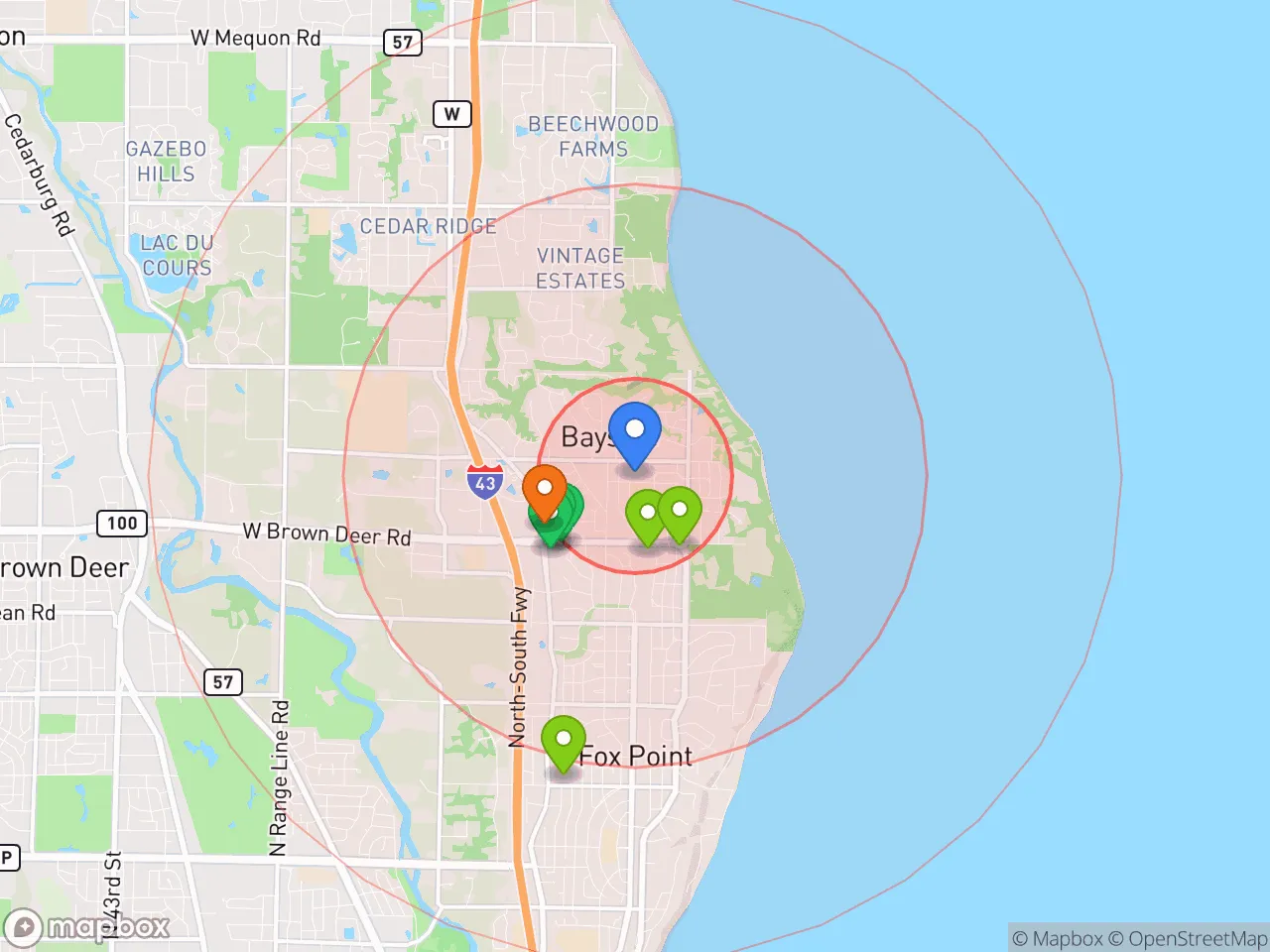
Explore the areaGroceries
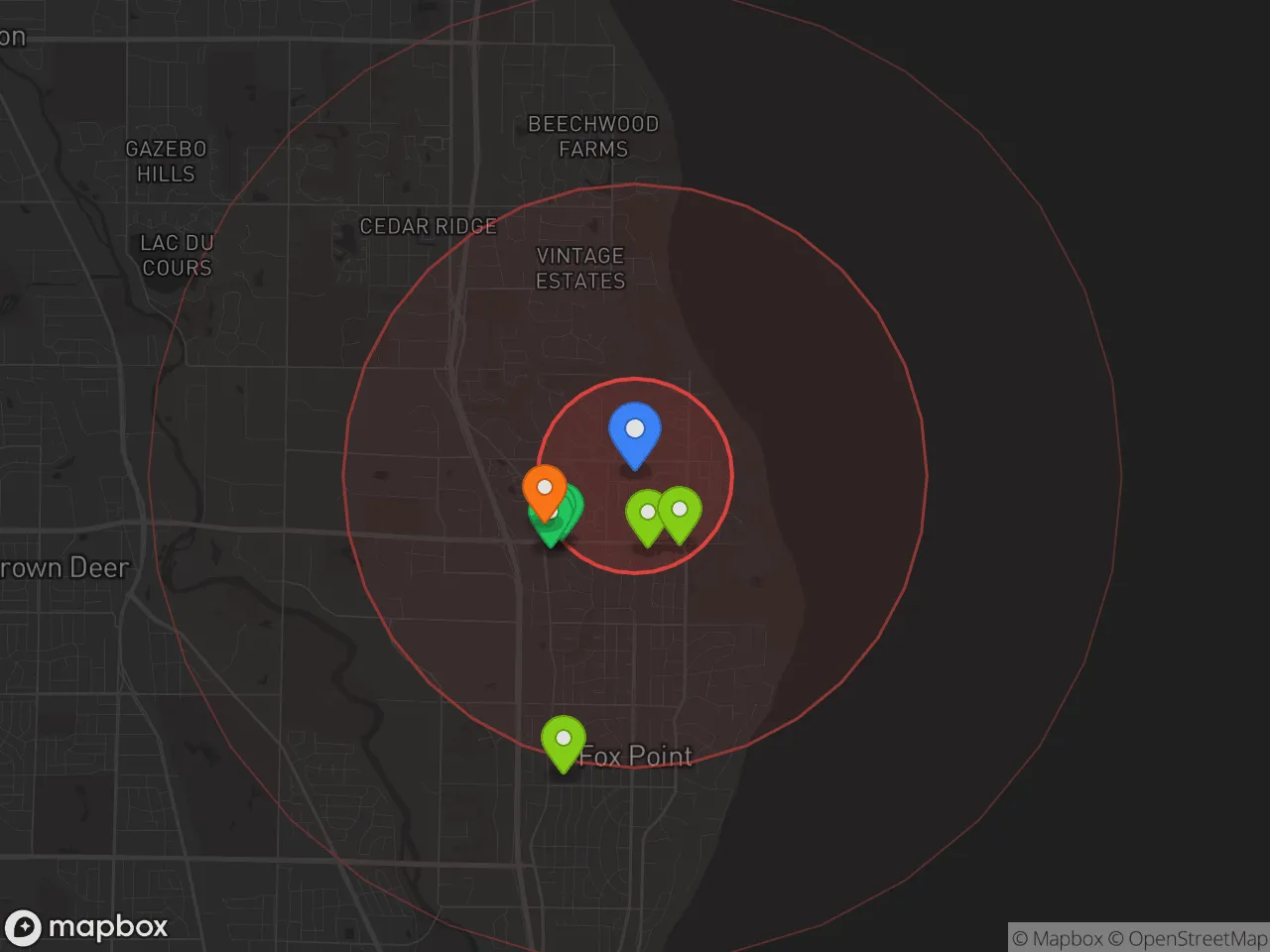
6 within 10 miles
Gas
20 within 10 miles
Hospital
20 within 20 miles
Airport
ORD — O'Hare International
Post Office
USPS — Glendale, WI
Critical Amenities
Quality-of-Life Analysis
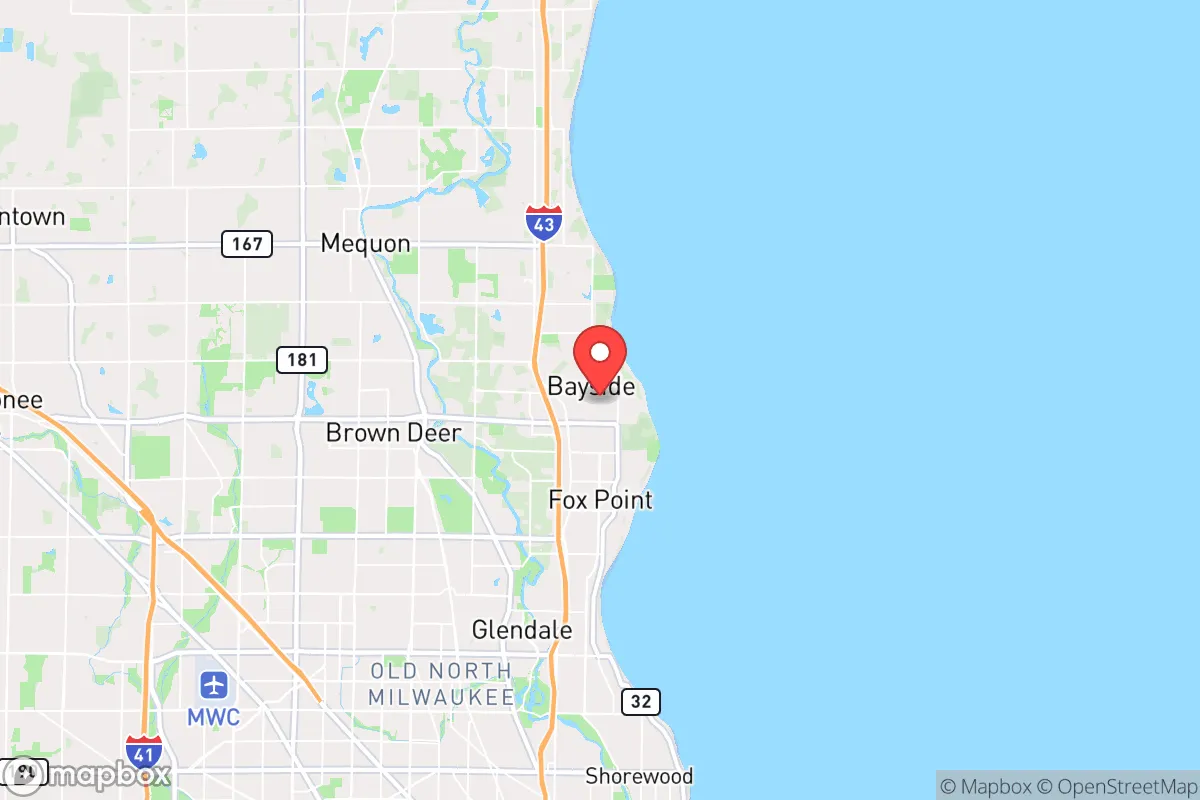
Bayside, Wisconsin, is a small, affluent village of roughly 1,300 residents perched on a Lake Michigan bluff in Milwaukee County. The community is overwhelmingly composed of professionals, executives, and empty-nesters drawn by the village's exceptional school system, large lakefront estates, and a quiet, low-crime atmosphere that feels far removed from the urban core just 15 miles south. With a cost of living index of 138 (38% above the national average), Bayside is one of the pricier suburbs in the Milwaukee metro, but residents pay a premium for privacy, space, and a highly curated suburban lifestyle.
Cost of living, housing prices, and affordability compared to nearby suburbs
Bayside's housing market is the primary driver of its elevated cost of living. The median home value sits at $419,400, significantly higher than the Milwaukee metro median of roughly $280,000 and well above neighboring villages like Brown Deer (median ~$210,000) or Glendale (~$250,000). This premium reflects Bayside's large lots, lakefront access, and the cachet of the Nicolet High School District, which serves Bayside and parts of Glendale and Fox Point. Renters face a median rent of $1,516, which is competitive for the North Shore corridor but still about 15% higher than the metro average. The average commute of 22.6 minutes is notably shorter than the national average of 26 minutes, thanks to easy access to I-43 and the fact that many residents work in the northern Milwaukee suburbs or commute to downtown in under 25 minutes. For buyers seeking value, the trade-off is clear: you pay a Bayside premium for the school district and lake proximity, but you get significantly more land and lower property tax rates than in comparably wealthy suburbs like River Hills or Mequon.
What daily life is like for families: schools, amenities, and local rhythm
Daily life in Bayside revolves around the Nicolet Union High School District, consistently ranked among Wisconsin's top public high schools, and the village's extensive park system, which includes the lakefront Bayside Park and the wooded trails of the Bayside Nature Center. The village has no downtown commercial core; instead, residents drive five minutes to the shops and restaurants of Fox Point's Port Washington Road corridor or to the Bayshore Town Center in Glendale. The local rhythm is quiet and family-oriented: weekend mornings see families at the Bayside Farmers Market (seasonal), afternoons on the beach at Doctor's Park, and evenings at school sporting events. Crime is virtually nonexistent—Bayside consistently reports fewer than 10 violent crimes per year—and the village's strict zoning codes preserve its leafy, estate-like character. For daily errands, the nearby Whole Foods in Glendale and the Sendik's Food Market in Fox Point serve as de facto community hubs.
Bayside is best suited for families who prioritize top-tier public schools and a serene, low-maintenance lifestyle over walkable urban amenities. Empty-nesters and retirees also thrive here, drawn by the lake views, the quiet streets, and the easy commute to downtown Milwaukee's cultural institutions. Professionals who work in the northern suburbs or downtown will find the commute manageable, but singles and young renters may find the social scene too subdued and the housing costs prohibitive. For those who value space, safety, and a nationally ranked school district above all else, Bayside delivers a premium suburban experience that justifies its price tag.

Crime in Bayside, WI
Lower crime rates than 93% of comparable U.S. locations.
Violent CrimeViolent Crime Analysis
Property CrimeProperty Crime Analysis
Crime Analysis
Bayside, Wisconsin, is one of the safest communities in the Milwaukee metropolitan area, with crime rates that are a fraction of both state and national averages. The village's violent crime rate of 92.9 incidents per 100,000 residents and property crime rate of 302 per 100,000 place it well below the thresholds that typically raise concern for relocating families and professionals. However, as a small, affluent suburb within a large metro area, Bayside is not immune to the broader criminal justice trends that affect the region, particularly those influenced by progressive prosecutorial policies in Milwaukee County.
Crime in context
Bayside's violent crime rate is roughly 75% lower than the national average of approximately 380 per 100,000, and its property crime rate is about 60% below the U.S. median. Compared to the City of Milwaukee, which recorded over 1,200 violent crimes per 100,000 in recent years, Bayside is an outlier of safety. The village benefits from its own dedicated police department and a high degree of community vigilance. However, readers should be aware that Bayside falls under the jurisdiction of Milwaukee County courts, where progressive district attorneys and judges have implemented policies such as cash bail reform, reduced charging for low-level offenses, and diversion programs for repeat property offenders. These policies, while intended to reduce incarceration, have been linked to higher recidivism and a revolving-door effect for criminals who commit property crimes across suburban boundaries.
What residents experience
Daily life in Bayside is characterized by a low fear of crime, with most incidents being non-violent and opportunistic. The 302 property crimes per 100,000 translate to roughly 20-25 reported thefts, burglaries, or vehicle break-ins per year in a village of about 1,000 households. Residents report that unlocked cars and packages left on porches are the primary targets. Violent crime is rare, with the 92.9 rate equating to fewer than 10 incidents annually, typically domestic in nature rather than random attacks. The village's location near Interstate 43 does make it a potential corridor for criminals from Milwaukee, but proactive policing and neighborhood watch programs have kept spillover crime minimal.
Neighborhood-level variation in Bayside is modest, as the village is compact and uniformly affluent. The area east of Green Bay Road, closer to Lake Michigan, sees slightly lower crime due to higher property values and fewer through streets. The western portion, near the Bayside Town Center and I-43 access, experiences marginally more property crime, particularly vehicle break-ins. Overall, Bayside's safety profile is excellent for the region, but the progressive criminal justice environment in Milwaukee County means that residents should remain vigilant about property security and support local law enforcement efforts to counter regional crime trends.
* Values derived from national, state, county, city and local statistics and may differ in a specific area. Last updated: 2026-04-27T14:46:13.000Z
Narrative content on this page is AI-generated and may contain mistakes. Verify any details that matter before acting on them.
ReloMaps may earn a commission from affiliate links at no extra cost to you.

