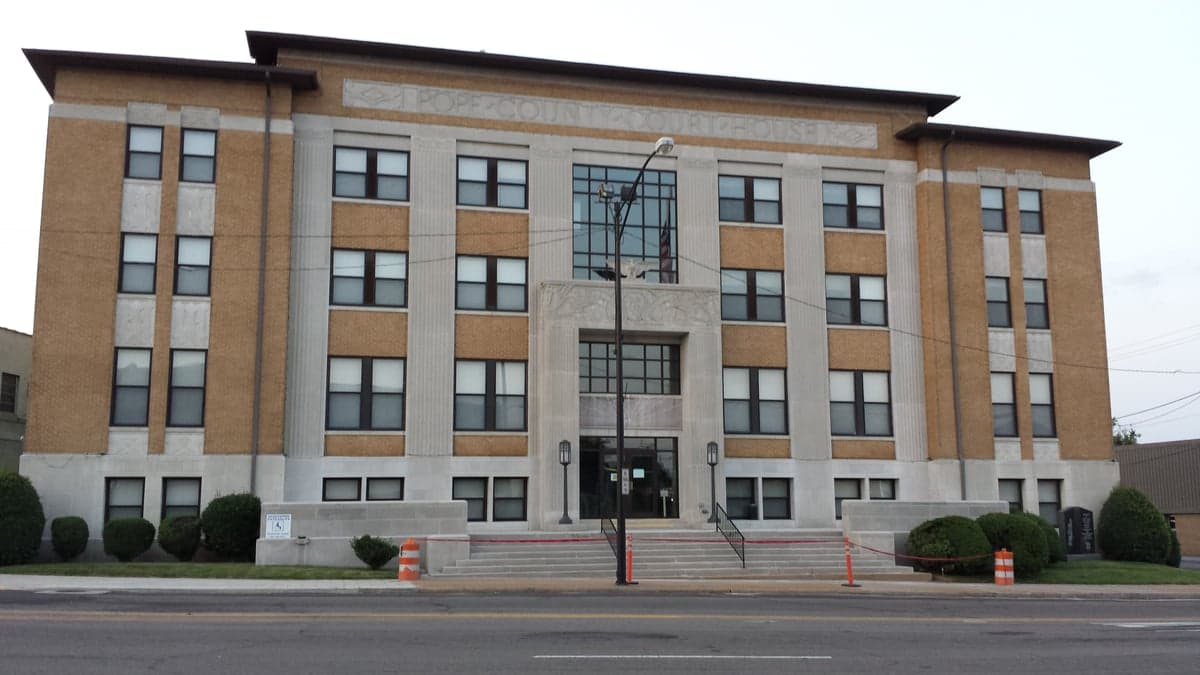
Photo: Wikipedia
Political ClimatePolitical Climate in Pope County
Showing district-level results — no local-only data available.
Local Political AnalysisPolitical Analysis of Pope County
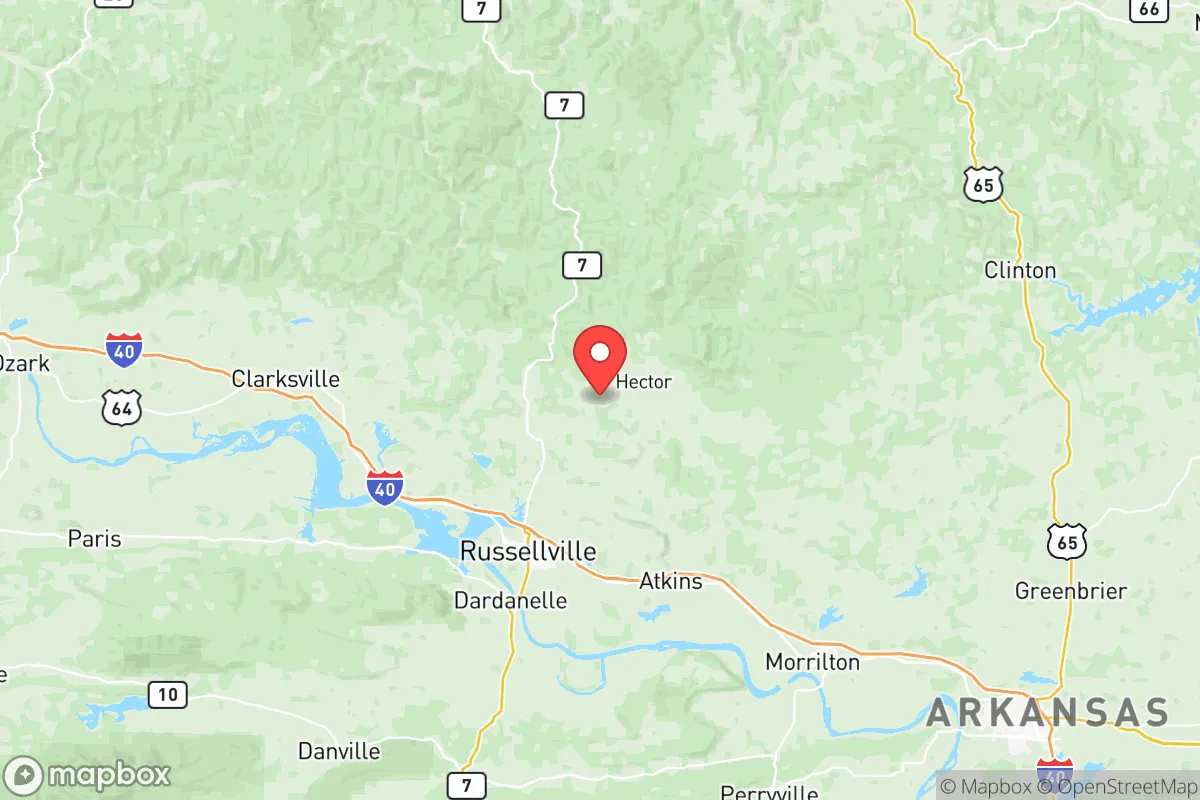
Pope County, Arkansas, is a reliably Republican stronghold with a Cook Partisan Voting Index (PVI) of R+20, making it significantly more conservative than the state of Arkansas as a whole, which sits at R+16. This isn't a new development; the county has been trending red for decades, but the shift has accelerated since the 2010s, driven by population growth in the Russellville metro area and the influx of retirees and families seeking a lower cost of living. While the county as a whole votes overwhelmingly Republican, there are noticeable pockets of blue, particularly in the college town of Russellville, home to Arkansas Tech University, and in the more rural, historically Democratic-leaning areas around Pottsville and Atkins that have only recently shifted hard to the right.
How it compares
Compared to the rest of Arkansas, Pope County is about 4 points more conservative on the Cook PVI scale, which is a meaningful gap in a state that is already deeply red. The county's Republican tilt is most pronounced in the rural precincts outside of Russellville, such as those around Dover and London, where GOP candidates routinely win by 70-80% margins. In contrast, the precincts within Russellville city limits, especially those near the university, are more competitive; Democratic candidates can sometimes pull 40-45% of the vote in those areas, though they rarely win outright. The swing precincts are largely in the unincorporated areas along the Arkansas River valley, where economic concerns like farming and manufacturing often outweigh social issues, making them more susceptible to moderate or populist candidates. This dynamic is less common in the rest of Arkansas, where the rural-urban divide is sharper and the college towns (like Fayetteville or Jonesboro) are more reliably blue than Russellville.
What this means for residents
For conservative residents, Pope County offers a deeply comfortable political environment where local offices, school boards, and county commissions are almost entirely held by Republicans. The county's strong conservative lean means that policies around gun rights, tax cuts, and limited government are broadly popular, and residents can expect their representatives in the state legislature and Congress to align closely with their views. For liberal residents, the reality is more isolating but not impossible. The presence of Arkansas Tech University provides a small but active progressive community, and there are local Democratic clubs and advocacy groups that meet regularly. However, liberal residents should expect to be in the minority in most social and civic settings, and they may find that their political views are not reflected in local governance or public discourse. The county's political climate is generally civil, but the ideological gap between the university precincts and the rural areas can create tension during election cycles.
One of the most distinctive cultural features of Pope County's political climate is the strong influence of the local manufacturing and agricultural sectors, which tend to prioritize economic pragmatism over social conservatism. This means that while the county votes heavily Republican, there is a notable streak of populism that can sometimes put local Republicans at odds with the national party, particularly on trade and immigration issues. The county is also home to a significant number of retirees from other states, which has introduced a more suburban, country-club Republicanism that contrasts with the older, more rural conservative tradition. This mix creates a political landscape that is reliably red but not monolithic, with enough internal variation to keep things interesting for political observers and residents alike.

State Political ClimatePolitical Climate in Arkansas
State Political AnalysisPolitical Environment in the State
Arkansas is a deeply red state with a Cook PVI of R+16, meaning it votes about 16 points more Republican than the national average in presidential elections. The state has shifted sharply rightward over the past 20 years, driven by the realignment of rural white voters and the collapse of the old conservative Democratic "Blue Dog" tradition that once dominated local politics. While Democrats still hold some county-level offices in the Delta and a few urban pockets, the state legislature, congressional delegation, and statewide offices are overwhelmingly Republican, and that dominance has only solidified since 2010.
Urban vs. rural divide
The political map of Arkansas is a classic story of a few blue islands in a deep red sea. Little Rock (Pulaski County) is the state's largest Democratic stronghold, reliably voting blue in statewide races, though its suburbs like Conway and Benton are more mixed or lean Republican. Fayetteville and Springdale in Northwest Arkansas form another blue-leaning cluster, driven by the University of Arkansas and a growing professional class tied to Walmart and Tyson Foods. Outside these metros, the state is overwhelmingly Republican. The Arkansas Delta, once a Democratic bastion due to Black voters and unionized plantation workers, has seen white voters flee the party, while the Ozarks and the River Valley are among the most conservative regions in the country. Fort Smith and Jonesboro are reliably red, with Jonesboro's growth as a regional hub doing little to shift its partisan lean. The rural-to-urban migration pattern has only deepened the divide, as younger, more liberal residents concentrate in Little Rock and Fayetteville while the rest of the state ages into deeper conservatism.
Policy environment
Arkansas's policy environment is among the most conservative in the nation. The state has a flat income tax rate of 4.4% (down from 7% a decade ago), with further cuts scheduled, and no state-level property tax on vehicles or business inventory. Sales tax rates are high, averaging over 9.5% in many cities, which makes the tax burden regressive. The state is a right-to-work state with weak labor unions and a regulatory posture that favors business, particularly in agriculture, timber, and manufacturing. Education policy has been a flashpoint: the state passed the LEARNS Act in 2023, which created a school voucher program, banned "critical race theory" in classrooms, and restricted transgender students' participation in sports. Healthcare is a mixed bag: Arkansas expanded Medicaid under the private option model, but the state has some of the strictest abortion laws in the country, with a near-total ban in effect since the Dobbs decision. Election laws have tightened, with voter ID requirements and restrictions on absentee ballot drop boxes, though early voting remains popular and accessible.
Recent policy direction
The last five years have seen Arkansas move aggressively on a range of liberty-related issues. On gun rights, the state enacted permitless carry in 2021, allowing any law-abiding adult to carry a concealed firearm without a license. On parental rights and education, the LEARNS Act (2023) created a universal school voucher program and restricted classroom discussions of gender identity and sexual orientation. On speech and privacy, the state passed a social media age-verification law in 2023, requiring parental consent for minors to create accounts, though it faces legal challenges. On medical and bodily autonomy, Arkansas was one of the first states to ban gender-affirming care for minors (2021), and the abortion ban (triggered in 2022) has no exceptions for rape or incest. Property rights remain strong, with no statewide zoning mandates and low property taxes, though the state has been active in using eminent domain for infrastructure projects. On voting and ballot access, the state has tightened absentee ballot rules and shortened the voter registration deadline, but early voting remains robust. The overall direction is toward a more assertive, culturally conservative state government that is willing to use its power to shape social policy.
Civil unrest & political movements
Arkansas has not seen the large-scale protests or civil unrest common in larger states, but there have been notable flashpoints. The 2020 Black Lives Matter protests in Little Rock and Fayetteville were relatively small and peaceful, though they drew counter-protests from armed groups. The state has been a battleground over Confederate monuments, with the state legislature passing a 2019 law that made it harder to remove them, though the monument on the Capitol grounds was eventually relocated. Immigration politics are less heated than in border states, but Springdale and Rogers have seen tensions over the growing Marshallese and Hispanic populations, with local ordinances targeting undocumented immigrants. There is no sanctuary city movement in Arkansas; in fact, the state passed a law in 2019 requiring local law enforcement to cooperate with federal immigration authorities. Election integrity controversies have been minimal, though the 2020 election saw some local GOP officials question the security of mail-in ballots. The most visible political movement in recent years has been the rise of the "Moms for Liberty" and other parental rights groups, which have been active in school board races in Bentonville and Cabot.
Projection
Over the next 5-10 years, Arkansas is likely to remain solidly Republican, but the nature of that conservatism may shift. The state's population is growing slowly, with most growth concentrated in Northwest Arkansas, which is becoming more diverse and more suburban. This could moderate the state's politics slightly, as the business-friendly, Chamber of Commerce Republicans of Bentonville and Rogers may clash with the more populist, culturally conservative wing that dominates the legislature. The Delta will continue to lose population, further reducing the Democratic base. The biggest wildcard is the state's education and healthcare policies: if the voucher system leads to a decline in rural public schools, or if the abortion ban drives away young professionals, the state could see a slow bleed of its more moderate and educated residents. Conversely, if the state's low taxes and business climate attract enough newcomers, the political center of gravity could shift toward the more libertarian, less culturally interventionist wing of the GOP. For now, expect the state to remain a reliable Republican vote in presidential elections, with the primary action happening in intra-party fights rather than general elections.
For a new resident, the bottom line is straightforward: Arkansas is a state where conservative policies are the norm and are likely to stay that way. If you align with that, you'll find a government that is actively working to lower taxes, expand school choice, and protect gun rights. If you don't, you'll find a state where your vote in statewide races is unlikely to change the outcome, but where local elections in Little Rock or Fayetteville can still matter. The practical takeaway is that Arkansas offers a stable, predictable political environment for conservatives, while liberals will need to be comfortable living in a state where their views are a distinct minority. The state's trajectory is toward more of the same, with the only real debate being which flavor of Republicanism will dominate.
* Values derived from national, state, county, city and local statistics and may differ in a specific area. Last updated: 2026-08-08T18:33:51.000Z
Narrative content on this page is AI-generated and may contain mistakes. Verify any details that matter before acting on them.
ReloMaps may earn a commission from affiliate links at no extra cost to you.

