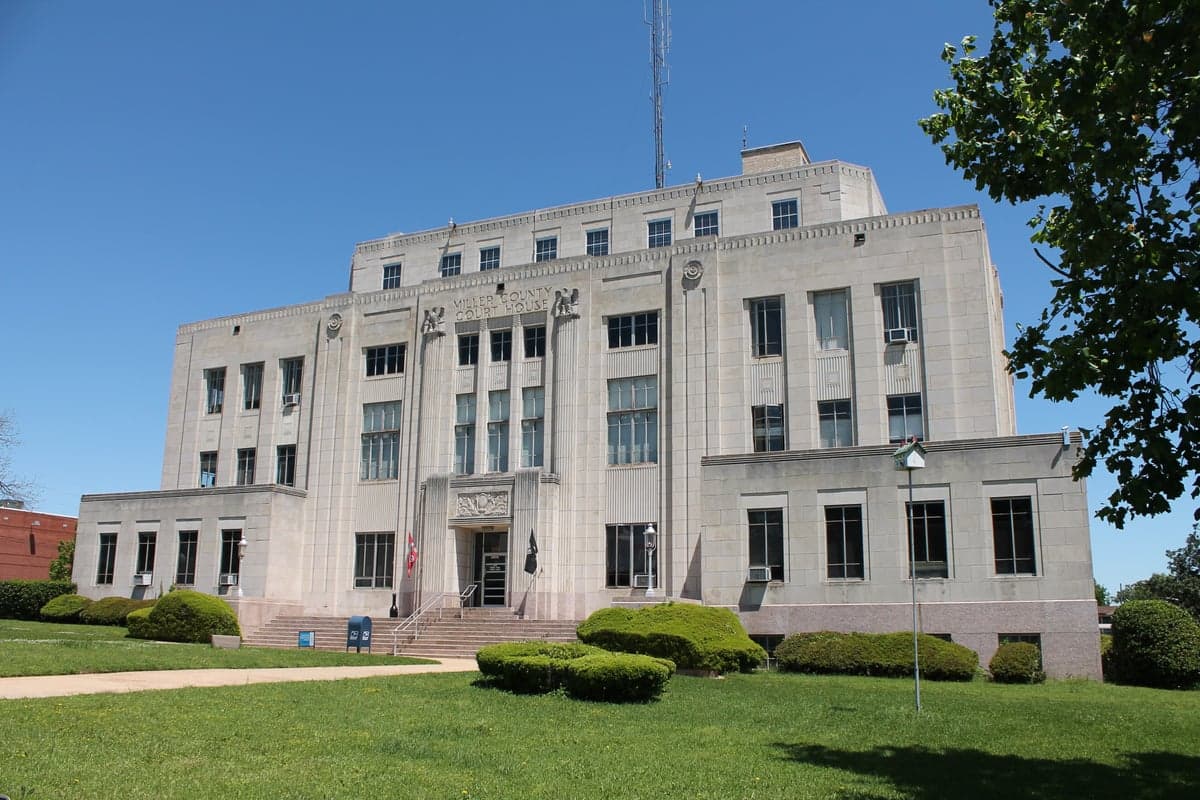
Photo: Wikipedia
Quality of Life in Miller County
A livable area that tracks near national norms for affordability, walkability, and neighborhood health.
What does Quality of Life tell us?
Quality of Life measures an area by evaluating factors like cost of living, nearby amenities, country club access, airport proximity, socioeconomic signals and neighborhood character. For large states, this is a general average — quality of life can vary dramatically between metro areas, suburbs, and rural communities within the same state.
What does this tell us?
Quality of Life measures an area by evaluating factors like cost of living, nearby amenities, country club access, airport proximity, socioeconomic signals and neighborhood character. For large states, this is a general average — quality of life can vary dramatically between metro areas, suburbs, and rural communities within the same state.
Cost of Living
33% below national average
118%
The Real Cost of Living in Miller County for 2026
| Tier | Individual | Family (4) |
|---|---|---|
| Survival | $14k | $26k |
| Comfortable | $29k | $42k |
| Luxury | $90k+ | $140k+ |
| Elite (Top 5%) | $115k+ | $178k+ |
Quality-of-Life Analysis
Miller County, Arkansas, offers a spectrum of quality-of-life options that range from the modest urban amenities of its county seat, Texarkana, to the quiet, low-density living of unincorporated communities like Garland and Doddridge. With a cost of living index of 67—well below the national average of 100—the county attracts a mix of budget-conscious families, retirees seeking affordability, and workers who commute to the larger Texarkana metro area. The county’s character is defined by this contrast: a small city with regional services on one end and deeply rural, agricultural pockets on the other.
Largest town(s) & population centers
The primary population center in Miller County is Texarkana, Arkansas, which, together with its twin city Texarkana, Texas, forms a single metropolitan area of roughly 150,000 people. On the Arkansas side, daily life revolves around local government employment, healthcare at facilities like Wadley Regional Medical Center, and retail along the State Line Avenue corridor. The Arkansas side is notably quieter and more residential than its Texas counterpart, with neighborhoods such as the Beverly area offering older, established homes. The average commute in the county is just under 21 minutes, making it feasible for residents to work in either state. While Texarkana, AR provides essential shopping, dining, and a regional airport, it lacks the density and cultural amenities of a major city, which suits those who prefer a slower pace with basic conveniences nearby.
Smaller towns & rural pockets
Outside of Texarkana, Miller County is dotted with small, unincorporated communities that offer a distinctly different lifestyle. Fouke, known locally for the "Fouke Monster" legend, is a tight-knit community of roughly 800 people with a single school and a few local businesses. Garland, located along U.S. Highway 71, is even smaller, functioning primarily as a residential and agricultural crossroads. Doddridge and Genoa are rural hamlets where residents often live on acreage and commute into Texarkana for work and shopping. These areas have no stoplights, limited retail, and a strong reliance on well water and septic systems. The trade-off is significant: extremely low property costs and a quiet, private lifestyle that appeals to those seeking to escape suburban density entirely.
Cost & lifestyle range
The cost of living in Miller County varies noticeably between its urban and rural extremes. In Texarkana, AR, the median home value is $148,200 and median rent is $882, which is affordable by national standards but represents the high end for the county. Homes in established Texarkana neighborhoods or newer subdivisions near the interstate command higher prices. In contrast, rural properties in areas like Fouke or Garland can often be found for under $100,000, with some older mobile homes and fixer-uppers selling for well below $50,000. Rentals in these outlying areas are scarce and typically informal. Utility costs can be higher in rural pockets due to reliance on propane and private wells, while Texarkana residents benefit from municipal water and natural gas. The overall cost of living index of 67 means that even the priciest parts of the county remain a bargain compared to the U.S. average, but the lifestyle trade-off is clear: urban-adjacent living with amenities versus deep rural seclusion with fewer services.
Miller County is best suited for individuals and families who prioritize affordability and space over urban excitement. Retirees on fixed incomes, remote workers who need only a reliable internet connection, and young families looking to buy their first home without taking on crushing debt will find the county appealing. Those who require frequent access to specialized healthcare, high-end dining, or a vibrant cultural scene will likely find the options limited, even in Texarkana. For anyone comfortable with a slower, quieter life and a 20-minute drive to basic necessities, Miller County offers a compelling and extremely low-cost place to live.

Crime in Miller County
Crime rates similar to the national median for U.S. locations.
Violent CrimeViolent Crime Analysis
Property CrimeProperty Crime Analysis
Crime Analysis
Miller County, Arkansas, reports a violent crime rate of 525.4 per 100,000 residents and a property crime rate of 1,639 per 100,000, placing it above national averages for violent offenses but near the middle of the pack for property crime. The county's largest city, Texarkana, AR, drives much of this crime volume, while smaller communities like Fouke, Garland, and Doddridge experience significantly lower incident rates. Residents considering relocation should weigh these figures carefully, as the county's proximity to the Texas state line and its status as a regional commercial hub contribute to elevated crime patterns compared to more rural parts of southwest Arkansas.
Crime in context
Miller County's violent crime rate of 525.4 per 100,000 is roughly 50% higher than the national average of approximately 370 per 100,000 and significantly above the Arkansas state average of around 540 per 100,000. Property crime, at 1,639 per 100,000, sits slightly below the state average of roughly 2,100 per 100,000 but remains a concern for homeowners and businesses. The county's crime profile is heavily influenced by Texarkana, AR, which accounts for the majority of reported offenses. By contrast, the town of Fouke, with a population under 1,000, reports negligible violent crime and property crime rates below 500 per 100,000. The disparity between the urbanized Texarkana area and the rural southern and eastern parts of the county is stark, making location within Miller County a critical factor in personal safety.
What residents experience
Residents in Texarkana, AR, face the highest likelihood of encountering crime, particularly property offenses like burglary and vehicle theft, which are concentrated near commercial corridors such as State Line Avenue and the I-30 interchange. Violent crime, including aggravated assault and robbery, occurs most frequently in lower-income neighborhoods east of downtown Texarkana. The Bowie County (TX) and Miller County (AR) judicial districts share jurisdiction over the Texarkana metro area, and the progressive policies of the local district attorney's office in recent years have raised concerns among residents. A focus on diversion programs and reduced sentencing for repeat offenders has led to faster release cycles for property criminals, contributing to a perception that the justice system prioritizes offender rehabilitation over public safety. In contrast, residents in Garland and Doddridge report feeling safe walking at night, with law enforcement response times under 10 minutes in most cases. The Miller County Sheriff's Office maintains a visible presence in unincorporated areas, but staffing levels in Texarkana have not kept pace with population growth since 2020.
Neighborhood-level variation
Crime in Miller County is not evenly distributed. The Texarkana city limits contain roughly 80% of all reported offenses, while the county's rural precincts see crime rates comparable to the safest counties in Arkansas. Specific neighborhoods to note include the area around the Texarkana Regional Airport, which has seen a 15% increase in property crime since 2022, and the residential zones near the Arkansas-Texas border crossing at I-30, where vehicle thefts are common. Safer pockets include the gated communities along North Kings Highway in Texarkana and the entirety of Fouke, where the violent crime rate is below 100 per 100,000. For families, the school zones around Miller County's rural elementary schools in Garland and Doddridge report virtually no violent incidents. Prospective residents should prioritize properties in the county's southern half or within Texarkana's newer subdivisions west of U.S. Highway 71 to minimize exposure to the crime patterns that plague the city's older core.
* Values derived from national, state, county, city and local statistics and may differ in a specific area. Last updated: 2026-08-08T19:11:00.000Z
Narrative content on this page is AI-generated and may contain mistakes. Verify any details that matter before acting on them.
ReloMaps may earn a commission from affiliate links at no extra cost to you.

