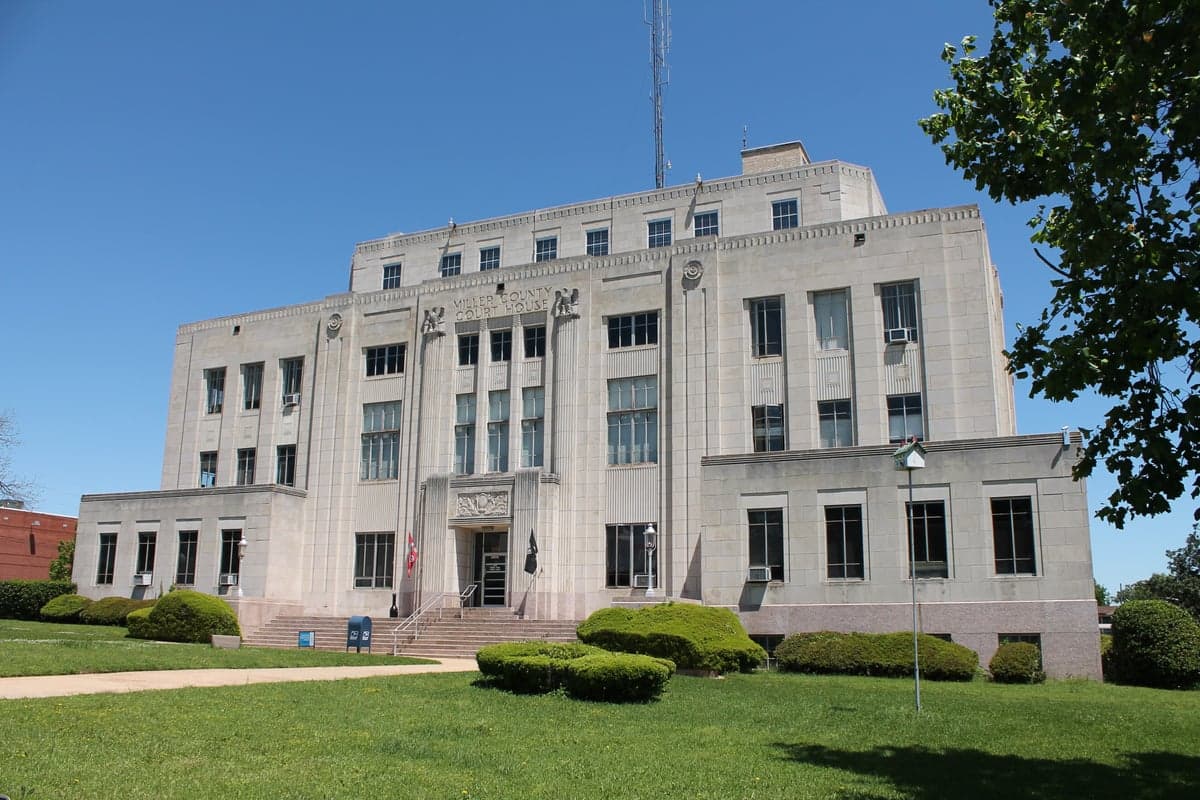
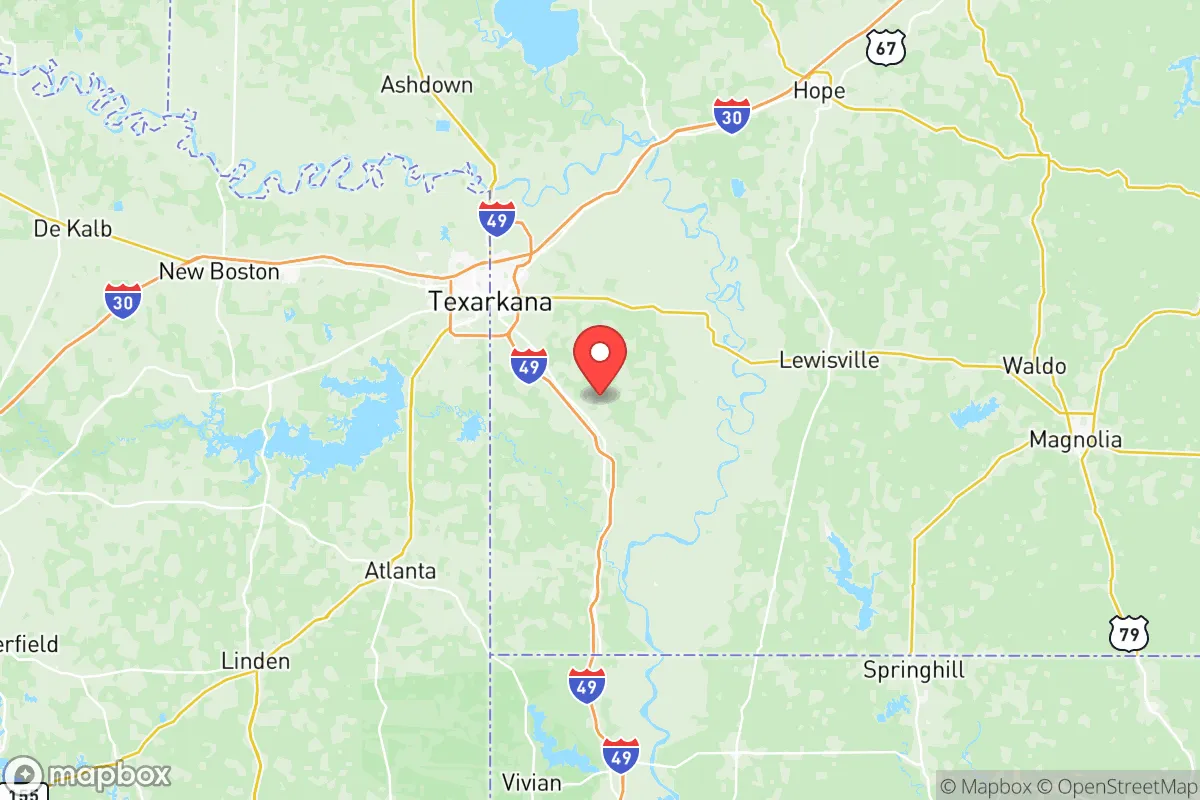
Photo: Wikipedia
Demographics of Miller County
Affluence Level in Miller County
A below-average socioeconomic profile. Incomes, home values, and educational attainment trail the U.S., with higher poverty and unemployment.
People of Miller County
Miller County, Arkansas, is home to 42,588 residents who form a community shaped by deep Southern roots, a significant African American presence, and a notably low rate of foreign-born immigration. The county's population is 66.3% White and 25.5% Black, with a small Hispanic community of 4.0% and minimal Asian or Indian populations, reflecting a demographic profile that has remained relatively stable compared to the rapid diversification seen in other parts of the Sun Belt. The county seat of Texarkana, AR, anchors the region, and the population is characterized by a strong sense of local identity, a lower-than-average college attainment rate of 16.0%, and a cultural fabric woven from generations of families who have lived in the area for decades. For those considering a move, Miller County offers a community where the past is still present, and where the population's history is written in the land and the people who have worked it.
Settlement & growth (pre-1960)
Long before European settlement, the area that is now Miller County was part of the traditional territory of the Caddo Confederacy, a group of Native American tribes who lived in settled agricultural villages along the Red River. The Caddo people were known for their complex social structure and trade networks, but their presence was dramatically reduced by disease and displacement following European contact. By the early 19th century, the region was a contested borderland between the United States, Spain, and later Mexico, with few permanent settlers until after the Louisiana Purchase of 1803.
American settlement began in earnest in the 1820s and 1830s, primarily by Scots-Irish and English migrants moving west from the older Southern states of Tennessee, Kentucky, and the Carolinas. These early settlers were drawn by the promise of fertile bottomland along the Red River and the opportunity to establish cotton plantations. The town of Fulton, established in the 1830s, became an early river port and trading post, serving as a gateway for goods and people moving into the region. The county itself was formed in 1820 and named for James Miller, the first governor of Arkansas Territory, but its boundaries shifted multiple times before settling into their modern form.
The arrival of enslaved African Americans was the single most transformative demographic event of the 19th century. By 1860, enslaved people made up a substantial portion of the county's population, working the cotton fields that dominated the local economy. After the Civil War and Emancipation, many freedmen remained in the area, establishing communities such as Genoa and the Rondo area, where they built schools, churches, and independent lives despite the challenges of Jim Crow segregation. The legacy of this era is directly visible in the county's modern 25.5% Black population, one of the highest percentages in Arkansas.
The late 19th and early 20th centuries brought the railroad, which reshaped settlement patterns. The town of Texarkana, founded in 1873 at the junction of the Texas and Arkansas state lines, quickly eclipsed older river towns like Fulton as the commercial and population center of the county. The railroad connected Miller County to national markets, and the timber and agriculture industries boomed, attracting additional White settlers from the Deep South. Small farming communities like Garland and Doddridge grew up around rail stops, serving as local trade centers for cotton and livestock farmers.
The Dust Bowl and Great Depression of the 1930s brought a modest influx of displaced farmers from Oklahoma and the Texas Panhandle, though Miller County's economy was already struggling. World War II and the subsequent post-war period saw a gradual shift away from agriculture toward manufacturing and service industries, but the county did not experience the explosive growth seen in other parts of the Sun Belt. The population remained predominantly rural and Southern, with families staying close to their ancestral homes and the county's demographic character solidifying around its White and Black communities.
Modern era (post-1965)
The 1965 Hart-Cellar Act, which dramatically reshaped American immigration, had a minimal impact on Miller County. With a foreign-born population of just 0.6%, the county remains one of the least immigrant-dense areas in the United States. The small Hispanic community, at 4.0%, is the most notable post-1965 change, with families settling primarily in Texarkana and working in construction, poultry processing, and service industries. This community, while still small, has grown steadily since the 1990s and has established a presence in local churches and schools.
The most significant demographic shift of the modern era has been domestic rather than international: the continued suburbanization of Texarkana and the slow out-migration of younger, college-educated residents. The city of Texarkana, AR, has seen its population stabilize while unincorporated areas and smaller towns like Fouke have experienced modest growth. Fouke, famous for the "Fouke Monster" legend, has attracted some families seeking a rural lifestyle within commuting distance of Texarkana's jobs and services. The county's college attainment rate of 16.0% is well below the national average, reflecting the limited number of white-collar jobs and the pull of larger metropolitan areas for educated young adults.
The African American community, while still a substantial 25.5% of the population, has experienced a gradual decline in its share since the mid-20th century, as some families have moved to larger cities like Dallas or Little Rock for better economic opportunities. Those who remain are concentrated in Texarkana, particularly in historically Black neighborhoods, and in rural communities like Rondo, where family roots run deep. The East/Southeast Asian population (0.6%) and Indian subcontinent population (0.1%) are negligible, consisting of a handful of professionals working in healthcare or at local manufacturing plants.
Suburbanization has been modest compared to national trends. Newer housing developments have spread south and east of Texarkana, along the state line, but the county has not seen the master-planned communities or large-scale exurban growth common in other parts of the South. The population has remained relatively stable, with the county's total growing only slightly from 40,443 in 2000 to 42,588 in 2020, a rate of growth that lags behind both Arkansas and the nation.
The future
Miller County's population is projected to remain relatively stable over the next 10-20 years, with modest growth driven by natural increase and limited domestic in-migration. The county is unlikely to become significantly more diverse, as the low foreign-born population and the absence of major immigrant-attracting industries suggest that the Hispanic and Asian shares will remain small. The African American population share may continue to decline slowly as younger residents move to larger cities, though the community's deep roots in the area will ensure it remains a significant presence.
The most likely demographic trend is a gradual aging of the population, as younger adults leave for educational and career opportunities elsewhere and older residents age in place. This could put pressure on local services and housing markets, particularly in Texarkana, where the demand for senior housing and healthcare is likely to increase. The county's cultural identity will likely remain firmly rooted in its Southern heritage, with the White and Black communities continuing to shape the region's politics, religion, and social life.
For new residents, particularly those from more diverse or urban areas, Miller County will feel like a place where time has moved more slowly. The low cost of living, strong community ties, and access to outdoor recreation along the Red River and in the nearby timberlands are draws, but the limited economic opportunities and lack of demographic diversity may be a challenge for some. The county's future is one of stability rather than transformation, a place where the past continues to inform the present.
Miller County is becoming a quieter, older, and slightly less diverse version of its 20th-century self, a community where family history and local identity matter more than rapid change. For someone moving in now, the county offers a deep sense of place and belonging, but also the reality of limited economic mobility and a population that is not growing or diversifying quickly. It is a good fit for those seeking a traditional, slow-paced Southern lifestyle, but less so for those looking for a dynamic, multicultural environment or a booming job market.

* Values derived from national, state, county, city and local statistics and may differ in a specific area. Last updated: 2026-08-08T19:11:00.000Z
Narrative content on this page is AI-generated and may contain mistakes. Verify any details that matter before acting on them.
ReloMaps may earn a commission from affiliate links at no extra cost to you.

