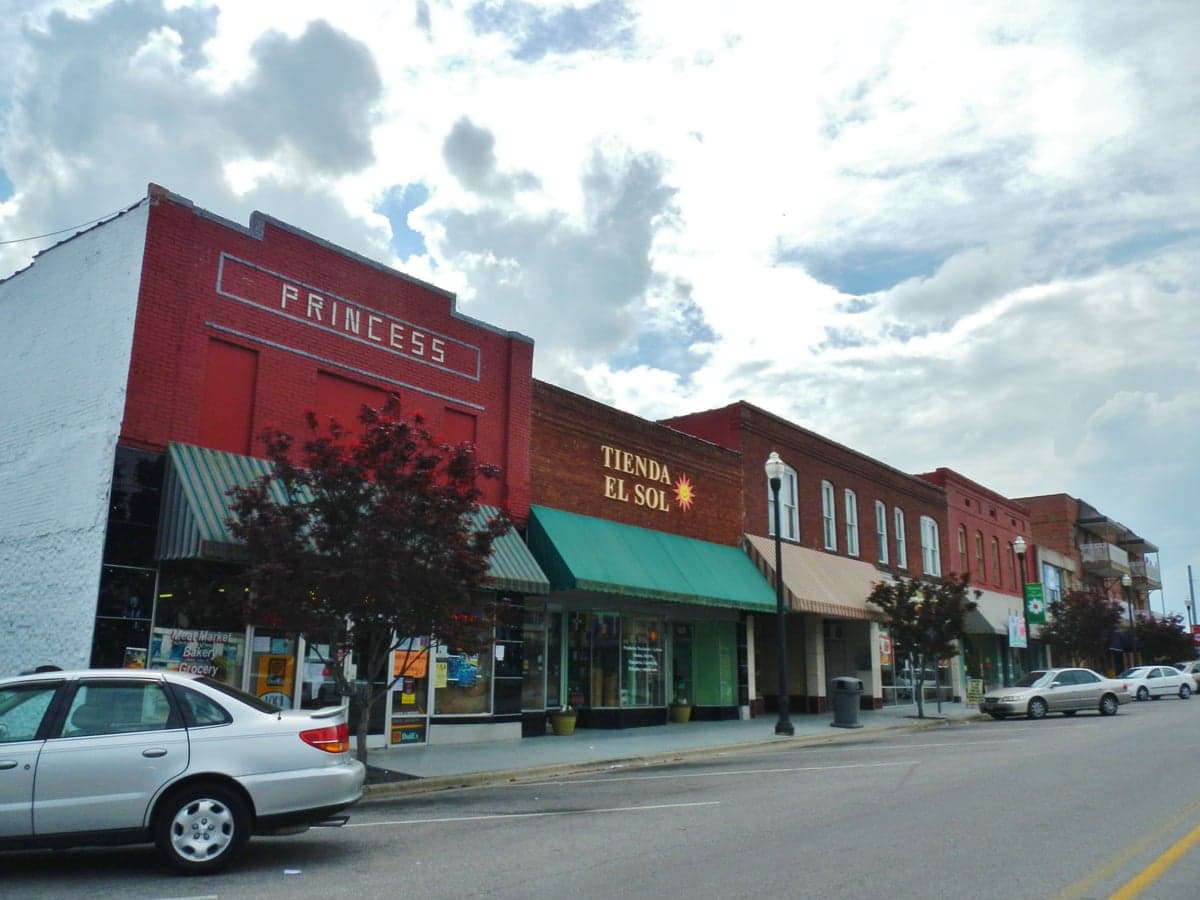
Photo: Wikipedia
Political ClimatePolitical Climate in Albertville, AL
District shown is the primary district for this city’s centroid. Cities may span multiple districts.
Local Political AnalysisPolitical Analysis of Albertville, AL
Albertville, Alabama, sits in the heart of Marshall County, and if you’ve been around here long enough, you know the political landscape is about as steady as the Appalachian foothills. The area’s Cook Partisan Voting Index (PVI) of R+33 tells you everything you need to know upfront: this is deep-red territory, and it has been for generations. While the rest of the country seems to swing back and forth, Albertville has held its conservative line, with local elections and national votes alike consistently favoring limited government, traditional values, and a healthy skepticism of federal overreach. The trajectory here isn’t toward some progressive pivot; if anything, the past few years have seen folks dig in harder, especially as they watch nearby cities like Huntsville or Birmingham drift leftward on cultural and economic issues.
How it compares
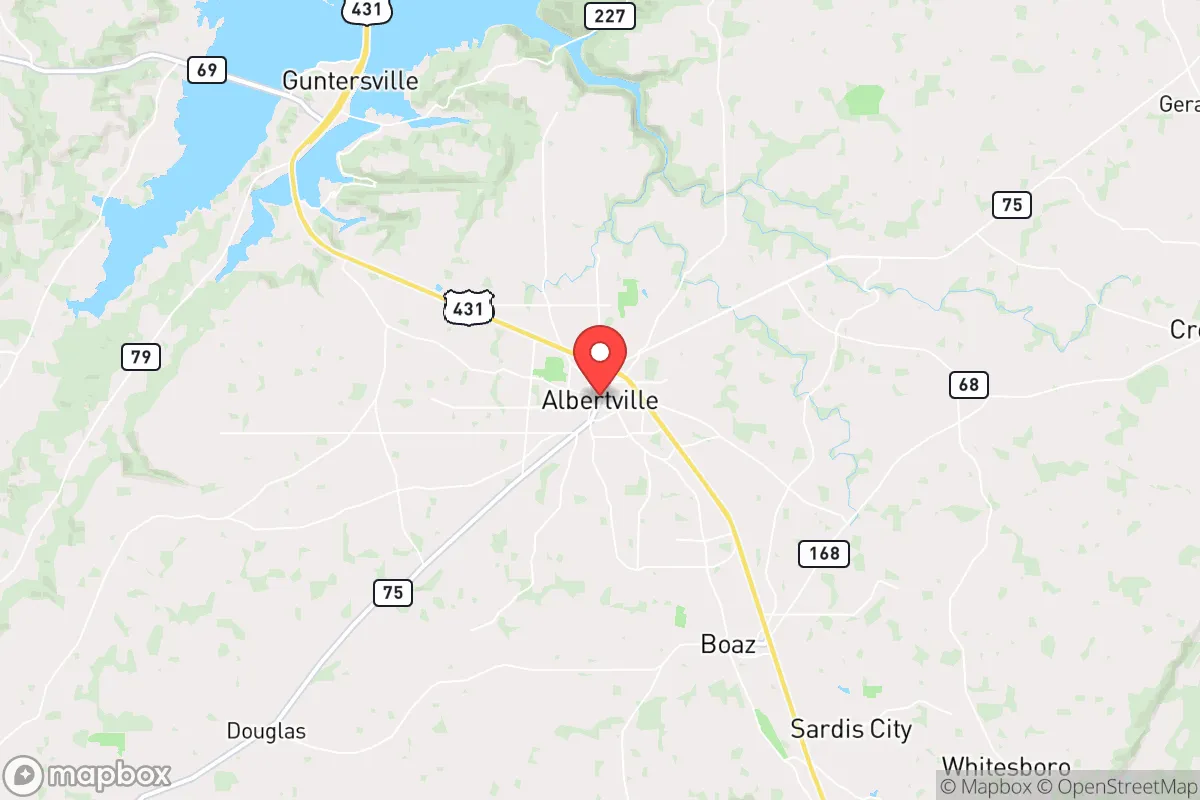
Drive thirty minutes north to Huntsville, and you’ll find a different animal entirely. That city’s tech boom has brought in a wave of out-of-state transplants, and with them, a noticeable shift toward moderate-to-liberal politics in Madison County. Albertville, by contrast, feels like a time capsule of old-school Alabama values. The contrast is even sharper with Guntersville, just ten miles east, which leans conservative but has a more tourist-driven, lake-town vibe that sometimes softens its edges. Down in Boaz, you’ll find a similar blue-collar conservatism, but Albertville stands out for its sheer consistency—there’s no real progressive foothold here. The county commission, school board, and city council are all reliably conservative, and local ballot measures that hint at higher taxes or expanded government oversight tend to get voted down hard. It’s not just about party labels; it’s about a deep-seated belief that the folks in Montgomery and Washington ought to stay out of local business.
What this means for residents
For someone living here, the political climate translates into a pretty straightforward daily reality. You’re not going to see mask mandates or vaccine passports being pushed by the city, and the local schools aren’t experimenting with critical race theory or gender ideology curricula—that stuff gets shut down fast at school board meetings. Property taxes stay low, zoning is minimal, and the Second Amendment isn’t just respected; it’s woven into the culture. If you’re the type who values personal freedom and hates the idea of government sticking its nose into your family’s business, Albertville feels like a refuge. But there’s a flip side: the same resistance to change means infrastructure and public services can lag behind. Roads don’t get widened as fast as they might in a more progressive area, and economic development moves at a cautious pace. Most residents see that as a fair trade-off—they’d rather keep their liberties than get a new bike lane funded by higher taxes.
One cultural distinction worth noting is the strong influence of local churches and civic clubs, which quietly shape policy more than any political party does. The Albertville City Schools system, for example, still opens meetings with a prayer, and the city’s annual festivals—like the Albertville First Friday events—are family-focused and faith-friendly. There’s a palpable wariness of national trends, especially around issues like immigration and federal land management, given the area’s agricultural roots and proximity to the Sand Mountain region. If you’re looking for a place where the government stays small and the community holds its ground, Albertville delivers. But if you’re hoping for a shift toward progressive policies, don’t hold your breath—this town knows what it believes, and it’s not changing anytime soon.

State Political ClimatePolitical Climate in Alabama
State Political AnalysisPolitical Environment in the State
Alabama is a deeply conservative state, with Republicans holding every statewide elected office and supermajorities in both legislative chambers, a position they've solidified over the past 20 years. The state voted for Donald Trump by +25 points in 2024, a margin that has grown steadily since 2008, driven by a coalition of rural white evangelicals, suburban families, and a growing number of conservative-leaning transplants from the Midwest and Northeast. The Democratic Party's influence has collapsed outside of the Black Belt and a few urban pockets, making Alabama one of the most reliably red states in the country for the foreseeable future.
Urban vs. rural divide
The political map of Alabama is starkly divided between its rural, deeply red interior and its few blue-leaning urban islands. The state's largest metro, Birmingham (Jefferson County), is a Democratic stronghold, voting for Joe Biden by +15 in 2020, but its suburbs—like Hoover and Vestavia Hills—are reliably Republican, often voting +20 to +30 points red. Montgomery and Mobile are more competitive but lean Democratic in their cores, while their surrounding counties (Elmore, Baldwin) are overwhelmingly conservative. The real engine of the state's red tilt is the rural expanse: counties like DeKalb in the northeast, Marengo in the west, and Covington in the south routinely vote +40 to +60 points Republican. The Black Belt, a swath of counties like Lowndes and Greene with majority-Black populations, votes heavily Democratic, but these areas have shrinking populations and low turnout, limiting their statewide influence. The fastest-growing parts of the state—the Gulf Coast around Baldwin County and the Huntsville metro in Madison County—are both solidly red, with Huntsville's tech and defense boom attracting a mix of military families and engineers who lean conservative.
Policy environment
Alabama's policy environment is among the most conservative in the nation, with a low-tax, low-regulation posture that appeals to freedom-minded residents. The state has no income tax on retirement income, a flat 5% income tax on wages, and a state sales tax of 4% (though local add-ons can push it to 10% in cities like Birmingham). Property taxes are among the lowest in the country, averaging about 0.4% of assessed value, which keeps housing affordable. The regulatory climate is business-friendly, with right-to-work laws and minimal zoning restrictions outside major metros. Education policy has shifted toward school choice: the Alabama Accountability Act provides tax credits for private school tuition, and the 2024 CHOOSE Act created Education Savings Accounts (ESAs) worth up to $7,000 per child for families leaving failing public schools. Healthcare is a mixed bag—the state rejected Medicaid expansion, keeping government out of healthcare decisions, but rural hospital closures remain a concern. Election laws are strict: voter ID is required, early voting is limited, and absentee ballots require a notary or two witnesses, which conservatives view as protecting election integrity. The state also passed a 2019 abortion ban (the Human Life Protection Act) that took effect after Dobbs, making abortion illegal at conception with no exceptions for rape or incest—a policy that aligns with the state's strong pro-life majority.
Trajectory & freedom
Alabama has been moving decisively toward greater personal freedom in the areas conservatives care about most, while tightening restrictions on progressive priorities. On gun rights, the state passed constitutional carry in 2022, allowing permitless carry of handguns, and has preempted local gun ordinances, meaning Birmingham and Mobile cannot enact their own restrictions. Parental rights were strengthened by the 2022 "Don't Say Gay" style law (the Alabama Parental Rights Act), which prohibits classroom instruction on sexual orientation or gender identity in K-5, and the 2023 law banning gender-affirming care for minors—one of the strictest in the nation. Medical autonomy was expanded via a 2021 law protecting healthcare workers who refuse to participate in procedures they object to on religious or moral grounds. Property rights were bolstered by a 2023 law limiting the use of eminent domain for private economic development. On taxation, the state has gradually cut the grocery tax (from 4% to 3% in 2024) and is debating a full phase-out. The trajectory is clearly toward more freedom for individuals and families to live as they see fit, with government staying out of the way on guns, education, and medical choices—but actively enforcing conservative social norms on abortion and transgender issues.
Civil unrest & political movements
Alabama has seen relatively little civil unrest compared to other states, but there are visible flashpoints. The most notable recent protests were in 2020 in Birmingham and Montgomery following George Floyd's death, which included some property damage and clashes with police, but were smaller and shorter-lived than in cities like Portland or Atlanta. The state has a strong, organized conservative grassroots movement, particularly around the Alabama Citizens for Life and the Alabama Parents for Educational Freedom groups, which have been effective at pushing legislation. Immigration politics are less heated than in border states, but Albertville and Russellville in the north have seen tensions over growing Hispanic populations in poultry processing plants, leading to local debates about language access and law enforcement cooperation. There is no sanctuary city movement—every county cooperates with ICE. Election integrity remains a hot topic: the 2020 election saw Trump win Alabama easily, but conservative activists continue to push for tighter absentee ballot rules and paper ballot mandates, which were strengthened in 2021. Secessionist rhetoric is rare but not absent—some local GOP groups have floated nullification resolutions on federal gun laws, though none have passed. Overall, the political climate is calm but vigilant, with conservatives feeling their values are reflected in state law and working to keep it that way.
Projection
Over the next 5-10 years, Alabama will likely become even more conservative, driven by demographic trends and in-migration. The Huntsville metro is projected to grow by 15-20% by 2035, attracting tech workers and military retirees who tend to vote Republican. The Gulf Coast is also booming, with Baldwin County growing at 3% annually, drawing conservative retirees from the Midwest. Meanwhile, the Black Belt's population continues to decline, reducing the Democratic base. The state's Republican supermajority is expected to hold, with potential for further rightward shifts on education (expanded ESAs, school choice for all), taxation (flat income tax reduction to 4% or lower), and gun rights (possible permitless carry expansion to include loaded firearms in vehicles). The biggest wildcard is whether in-migration from blue states will bring a small but growing liberal minority to Birmingham and Auburn, but the state's cultural and political inertia is so strong that even a 5% shift would leave it deeply red. A new resident moving in now should expect to find a state that is stable, predictable, and increasingly aligned with conservative values—with no sign of a blue wave on the horizon.
For a conservative individual or family considering relocation, Alabama offers a policy environment that respects personal freedom on guns, education, and taxes, while maintaining traditional social values. The practical takeaway is that you can expect low taxes, minimal government interference in your daily life, and a political culture that supports your right to raise your children as you see fit. The trade-offs are a weaker social safety net and limited urban amenities, but for those prioritizing freedom and community, Alabama is a solid bet that will only get better over the next decade.
* Values derived from national, state, county, city and local statistics and may differ in a specific area. Last updated: 2026-04-19T18:41:35.000Z
Narrative content on this page is AI-generated and may contain mistakes. Verify any details that matter before acting on them.
ReloMaps may earn a commission from affiliate links at no extra cost to you.

