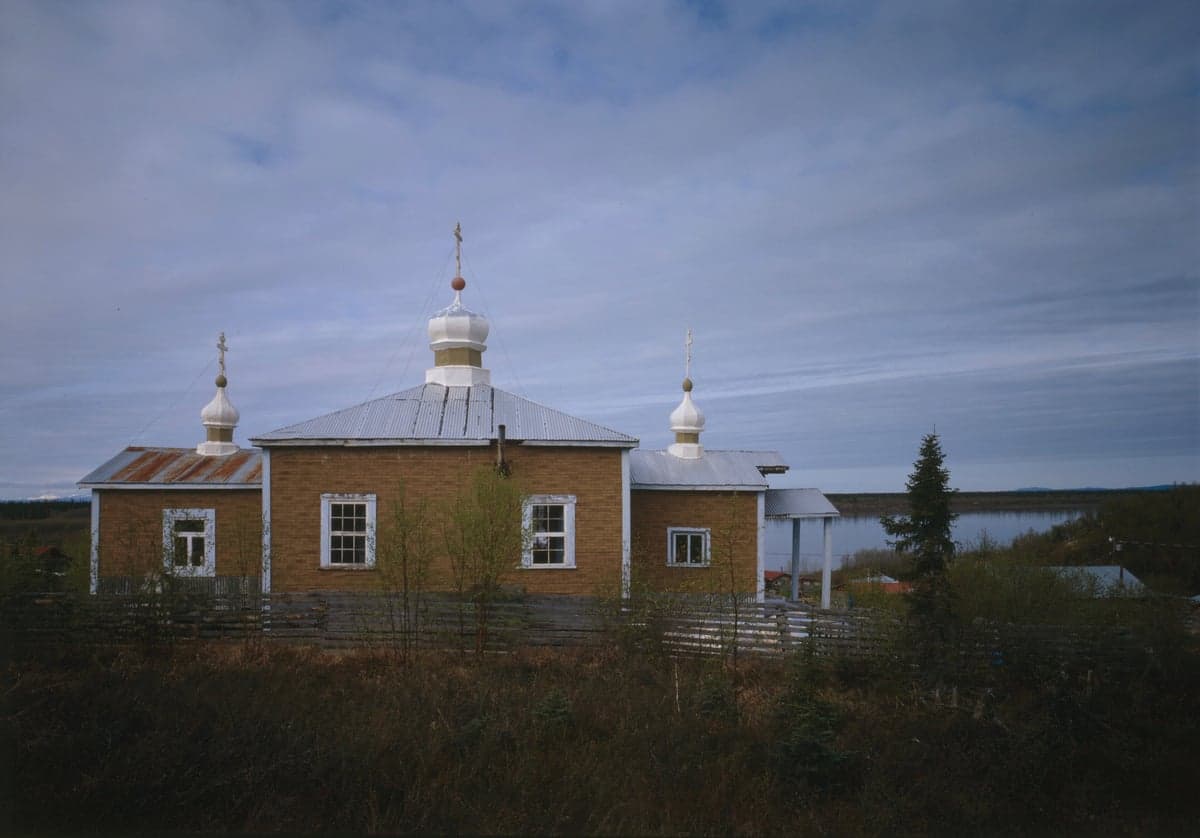
Photo: Wikipedia
Demographics of Bethel County
Affluence Level in Bethel County
A below-average socioeconomic profile. Incomes, home values, and educational attainment trail the U.S., with higher poverty and unemployment.
People of Bethel County
The people of Bethel County, Alaska, are overwhelmingly Alaska Native, primarily Yup’ik, with a population of 18,487 that is 8.7% White, 1.4% Hispanic, 1.1% Black, 1.3% East/Southeast Asian, and 0.1% Indian (subcontinent). Only 0.8% of residents are foreign-born, and just 10.4% hold a college degree, reflecting a rural, subsistence-based economy far removed from urban Alaska. The county’s identity is defined by its remote villages along the Kuskokwim River and Bering Sea coast, where Yup’ik language and culture remain dominant, and where modern life blends traditional hunting and fishing with cash-sector employment in healthcare, education, and tribal governance.
Settlement & growth (pre-1960)
The human history of Bethel County begins thousands of years ago with the Yup’ik people, who have inhabited the Yukon-Kuskokwim Delta for at least 3,000 years. Their semi-nomadic lifestyle revolved around seasonal fish camps, seal hunting, and berry gathering, with permanent winter villages like Napaskiak and Kwethluk serving as ancestral hubs. Russian colonization in the 19th century had minimal direct settlement here—unlike coastal areas—but introduced Orthodox Christianity, which blended with Yup’ik spirituality. The Alaska Purchase of 1867 brought American traders and missionaries, but the region remained largely untouched by non-Native settlement until the early 20th century.
The first major non-Native influx came with the 1906 discovery of gold in the Iditarod River, which spurred a brief rush. Miners established supply points along the Kuskokwim, and the village of Bethel—originally a Yup’ik fish camp called Mamterillermiut—grew as a trading post and riverboat stop. By the 1920s, the U.S. government built schools and a hospital in Bethel, drawing Alaska Native families from outlying villages for education and medical care. The 1940s saw the construction of military airfields during World War II, including the Bethel Airport, which connected the region to Anchorage and Fairbanks. However, the population remained overwhelmingly Yup’ik, with fewer than 500 non-Native residents in the entire county by 1950.
The 1950s and 1960s brought the Alaska Native Claims Settlement Act (ANCSA) era, which established village corporations in places like Tuluksak and Eek. These corporations formalized land ownership and created a new layer of tribal governance, but did not spark significant in-migration. The population grew slowly through natural increase, with Yup’ik families continuing to live in dispersed villages along the Kuskokwim River and its tributaries.
Modern era (post-1965)
The post-1965 period saw little of the immigration-driven diversification that reshaped urban America. The 1965 Hart-Cellar Act had negligible impact on Bethel County, as the region’s remote location and lack of industrial jobs offered no draw for international migrants. Instead, the county’s demographic story since 1970 has been one of Alaska Native population growth and modest in-migration of non-Native professionals—teachers, healthcare workers, and government employees—who serve the Yup’ik majority.
Bethel, the county seat and only incorporated city, grew from about 2,400 residents in 1970 to over 6,000 by 2020. This growth was driven by the expansion of the Yukon-Kuskokwim Health Corporation (YKHC), which built a regional hospital and clinics, and by the University of Alaska Fairbanks’ Kuskokwim Campus. Non-Native workers, mostly White and a small number of East/Southeast Asian healthcare professionals, settled in Bethel’s newer subdivisions like Bethel Heights and Airport Heights. Meanwhile, Yup’ik families from villages like Aniak and St. Mary’s moved to Bethel for better access to schools, healthcare, and jobs, creating a dynamic where the city’s population is roughly 60% Alaska Native and 40% non-Native.
Outside Bethel, the county’s 50+ villages—including Kongiganak, Kipnuk, and Chefornak—remain 95-100% Alaska Native. These communities have experienced population growth through high birth rates (the county’s fertility rate is roughly double the national average) but also out-migration of young adults to Bethel or Anchorage for education and employment. The Hispanic and Black populations, at 1.4% and 1.1% respectively, are almost entirely concentrated in Bethel, where they work in retail, construction, or seasonal fish processing. The East/Southeast Asian population (1.3%) includes a small number of Filipino healthcare workers and Korean-American teachers, while the Indian subcontinent population (0.1%) is negligible.
The future
Bethel County’s population is projected to grow slowly, reaching roughly 20,000 by 2040, driven almost entirely by Alaska Native natural increase. The county will likely become slightly more diverse in Bethel itself, as YKHC and the school district continue to recruit non-Native professionals from outside Alaska. However, the villages will remain overwhelmingly Yup’ik, with little change in their ethnic composition. The foreign-born share (0.8%) is unlikely to rise significantly, as the region offers no economic pull for international immigrants.
The cultural identity of Bethel County is evolving in two directions. In villages, Yup’ik language use remains strong—over 80% of residents speak it at home—and subsistence activities like salmon fishing and moose hunting continue to define daily life. In Bethel, a hybrid culture is emerging, where Yup’ik traditions coexist with modern American consumer culture, and where non-Native residents often adopt local customs. The county’s low college attainment rate (10.4%) reflects the limited economic opportunities outside tribal and government jobs, but also the value placed on traditional knowledge over formal education.
Climate change is reshaping settlement patterns. Coastal villages like Newtok (technically in neighboring Kusilvak Census Area) are already relocating due to erosion, and several Bethel County villages—including Kwigillingok and Quinhagak—face similar threats. This may accelerate migration to Bethel, where higher ground and infrastructure offer more stability. The county’s population will likely become more concentrated in Bethel and a few larger villages, while smaller, more vulnerable communities may depopulate.
For someone moving to Bethel County now, the region offers a unique blend of traditional Yup’ik culture and modern rural Alaska life. The population is stable, young (median age ~28), and deeply rooted, with little of the ethnic or economic churn seen in urban Alaska. New residents—almost always coming for work in healthcare, education, or tribal administration—will find a tight-knit, community-oriented society where subsistence skills are valued and where the pace of life is dictated by the river and the seasons, not by the clock. The county is not becoming more diverse in the conventional sense, but it is becoming more connected, as Bethel’s growth pulls the region’s human history into a single, evolving story.

* Values derived from national, state, county, city and local statistics and may differ in a specific area. Last updated: 2026-06-12T19:53:16.000Z
Narrative content on this page is AI-generated and may contain mistakes. Verify any details that matter before acting on them.
ReloMaps may earn a commission from affiliate links at no extra cost to you.

