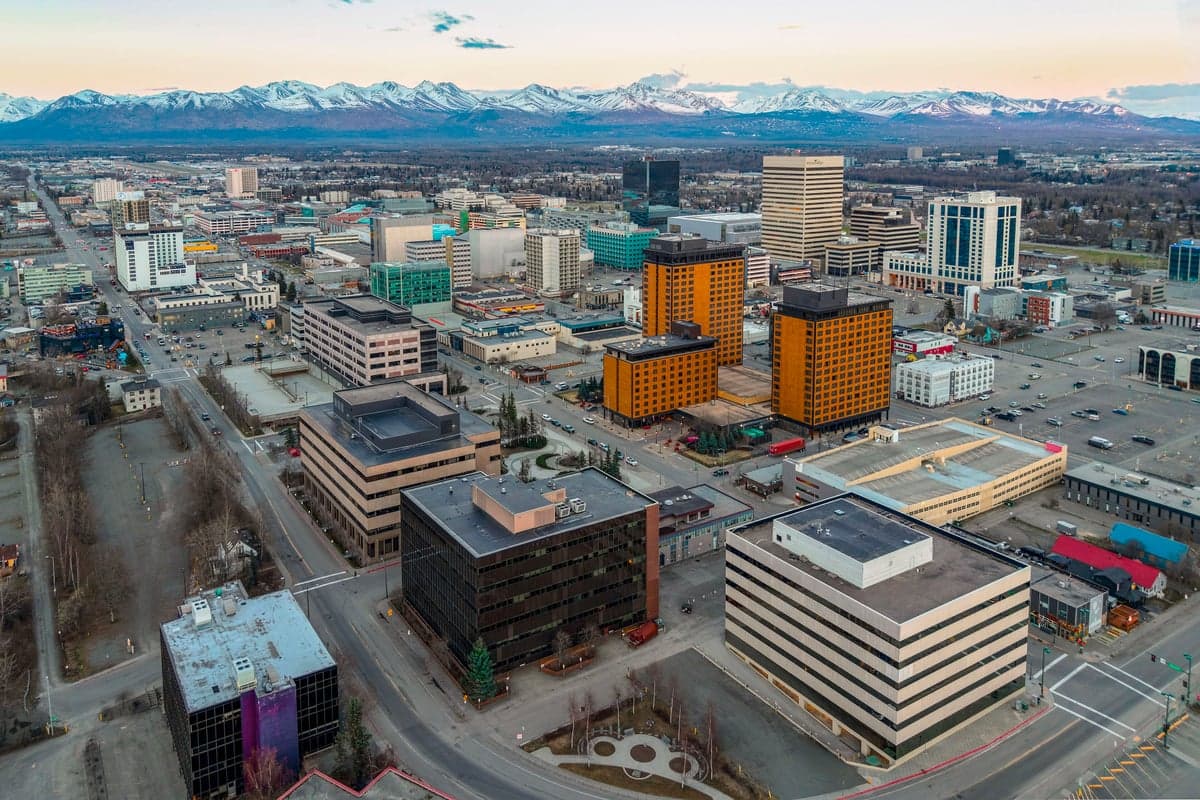
Photo: Wikipedia
Personal Sovereignty in Anchorage County
Viable for self-reliance. Generally workable, though some barriers may limit total independence.
What does Personal Sovereignty tell us?
Personal Sovereignty measures your capacity for self-reliance and independence with minimal government friction. Higher scores mean fewer barriers between you and the way you want to live... but it assumes you have the space you need and good neighbors.
What does this tell us?
Personal Sovereignty measures your capacity for self-reliance and independence with minimal government friction. Higher scores mean fewer barriers between you and the way you want to live... but it assumes you have the space you need and good neighbors.
State Policy
Energy independence: Net exporter (350% of energy produced in-state)
Personal Liberty
Homesteading

Personal Liberty Analysis
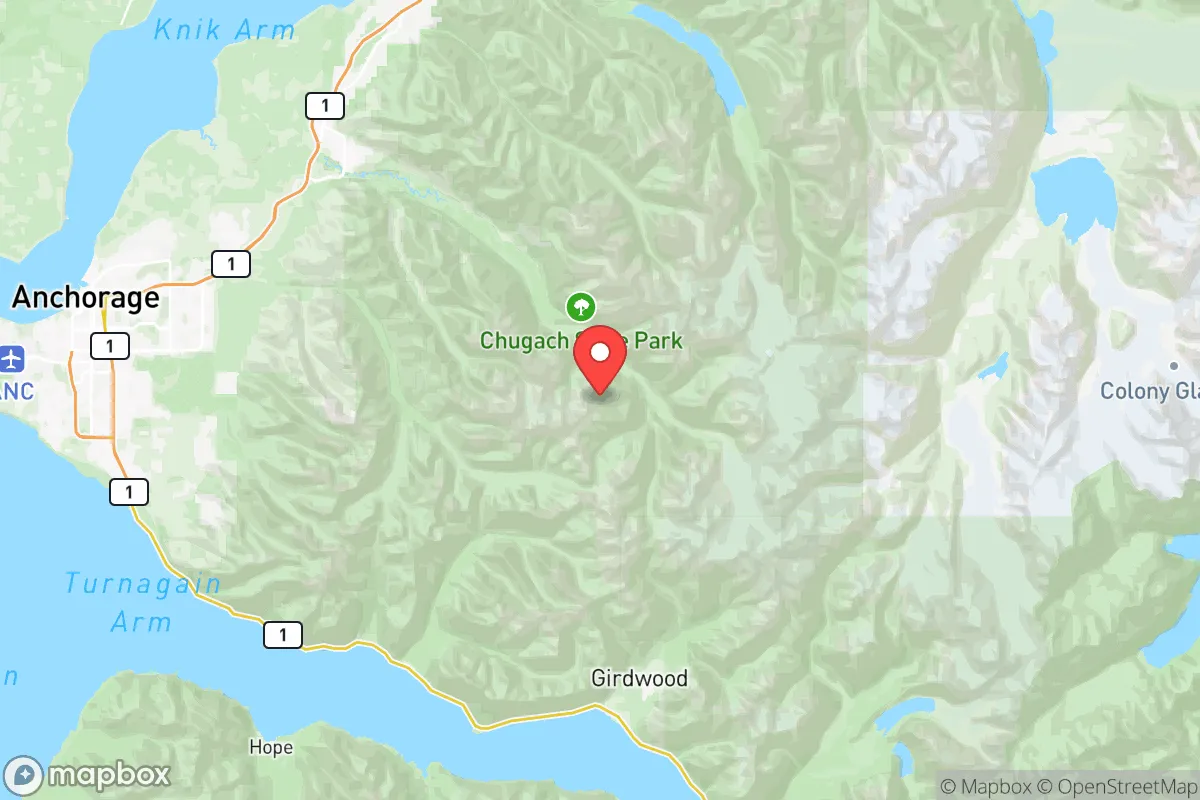
Anchorage County, Alaska, offers an autonomy environment that is distinctly different from the Lower 48, shaped by Alaska’s constitutional mandate for minimal government intrusion and a frontier ethos that prizes self-reliance. The county, which encompasses the Municipality of Anchorage and its surrounding communities, operates within a state that has no state sales tax or personal income tax, and its regulatory posture is generally light-touch compared to urban centers in the Pacific Northwest or Northeast. However, the degree of personal sovereignty varies significantly between the urban core of Anchorage proper, the suburban bedroom communities of Eagle River and Chugiak, and the more remote, unincorporated areas like Girdwood and the Turnagain Arm region. For a conservative-leaning individual or family, the key trade-offs involve balancing access to urban amenities with the practical realities of Alaska’s unique legal and geographic landscape.
Tax burden and regulatory posture in Anchorage County
Alaska’s absence of a state income tax and state sales tax is a foundational advantage for personal sovereignty, but Anchorage County imposes its own municipal sales tax of 2.5% on most goods and services, with exemptions for unprepared food and prescription drugs. Property taxes in Anchorage are moderate by national standards, with a mill rate of approximately 12.5 mills for 2025, translating to roughly $1,250 annually per $100,000 of assessed value. The regulatory environment is notably lighter than in states like California or Washington, but the Municipality of Anchorage enforces building codes, zoning ordinances, and business licensing requirements that are more stringent than in the Matanuska-Susitna Borough to the north. For example, Eagle River and Chugiak, while part of the municipality, have a more permissive feel for small-scale home-based businesses and accessory dwelling units than downtown Anchorage. The state’s Permanent Fund Dividend (PFD) program, which pays annual dividends to residents from oil revenues, effectively reduces the net tax burden further, though it is subject to legislative adjustments. Overall, the tax and regulatory posture is favorable for those seeking to keep more of their earnings, but the municipal layer adds a moderate compliance cost that is absent in more rural Alaska boroughs.
Self-defense and gun law specifics in Anchorage County
Alaska is a constitutional carry state, meaning no permit is required to carry a concealed firearm for anyone 21 or older who is legally allowed to possess a firearm. Anchorage County fully respects this state preemption, and local ordinances do not impose additional restrictions beyond state law. The county has no waiting periods, no firearm registration, and no magazine capacity limits. Open carry is legal without a permit. Girdwood, a mountain town within the municipality, has a notably gun-friendly culture, with local shooting ranges and hunting access integrated into daily life. The primary practical consideration for residents is that Anchorage’s urban density means that discharging a firearm within city limits is heavily restricted, so target practice and hunting require travel to designated ranges or rural areas. The state’s Stand Your Ground law is robust, with no duty to retreat in any place where a person has a legal right to be. For self-defense-minded individuals, Anchorage County offers one of the most permissive legal environments in the United States, though the urban core’s density creates practical constraints that are absent in more remote areas like Indian or Bird Creek along the Seward Highway.
Self-reliance and homesteading viability across the county
Homesteading and off-grid living are viable in Anchorage County, but the feasibility depends heavily on location. Within the urbanized Anchorage Bowl, minimum lot sizes are typically 6,000 to 7,500 square feet, and zoning codes require connection to municipal water and sewer, making true off-grid living impractical. However, in the Hillside area of South Anchorage, larger lots of one to five acres are common, and some properties have private wells and septic systems, allowing for a semi-self-sufficient lifestyle with gardens, chickens, and small livestock. In Eagle River and Chugiak, zoning is more permissive, with many properties on five-acre minimums and fewer restrictions on accessory structures, greenhouses, and animal husbandry. The most off-grid-friendly areas within the county are the unincorporated communities along the Turnagain Arm, such as Girdwood and Portage, where properties often lack municipal utilities and residents rely on solar, generator, or micro-hydro power. Alaska’s long daylight hours in summer and extreme cold in winter make off-grid systems challenging but feasible with proper design. The state’s Right to Farm law provides some protection for agricultural activities, though Anchorage’s municipal code does impose noise and nuisance regulations that can limit certain operations near residential areas. For those serious about self-reliance, the Matanuska-Susitna Borough, just north of Anchorage County, offers larger parcels and fewer restrictions, but within the county itself, the Hillside and Chugiak areas provide the best balance of access to Anchorage’s services and genuine homesteading potential.
Personal liberties: parental rights, medical autonomy, speech, and property
Alaska’s constitution provides strong protections for personal liberties, and Anchorage County generally respects these rights in practice. Parental rights are robust, with state law affirming parents’ authority over their children’s education, healthcare, and upbringing. The state has no mandatory vaccination laws for school attendance, and parents can opt out of standardized testing and curriculum elements with relative ease. Medical autonomy is similarly strong: Alaska has no state-level vaccine mandates for adults, and the state’s Health Insurance Portability and Accountability Act (HIPAA) protections are enforced rigorously. The Alaska Medical Board has historically taken a permissive stance on alternative and complementary medicine, though practitioners must be licensed. Free speech protections are among the strongest in the nation, with the Alaska Supreme Court consistently interpreting the state constitution’s free speech clause more broadly than the First Amendment. Property rights are well-protected, with the state’s eminent domain laws requiring just compensation and a demonstrated public purpose. The Municipality of Anchorage does enforce zoning and land use regulations, but property owners have strong due process protections and can appeal decisions through a quasi-judicial board. Eagle River and Chugiak residents often report a more hands-off approach from code enforcement compared to the urban core, reflecting the area’s more libertarian culture. Overall, personal liberties in Anchorage County are among the strongest in the United States for a metropolitan area, with the state constitution providing a legal framework that prioritizes individual autonomy over government convenience.
Compared to other U.S. metropolitan areas, Anchorage County offers an unusually high degree of personal sovereignty, particularly in the areas of taxation, gun rights, and medical autonomy. The absence of state income tax and the constitutional carry environment place it in the top tier of freedom-oriented jurisdictions, alongside states like Texas, New Hampshire, and Idaho. However, the municipal layer of Anchorage proper introduces moderate regulatory friction that is absent in more rural Alaska boroughs. For a conservative-leaning individual or family, the strategic choice is between living within the urban core for job access and accepting some regulatory oversight, or choosing the Hillside, Eagle River, or Girdwood areas for a more self-reliant lifestyle with fewer municipal constraints. The overall sovereignty environment is strong enough that most residents feel a genuine sense of personal control over their lives, but the practical realities of Alaska’s climate and geography mean that true self-reliance requires significant preparation and investment. For those willing to adapt, Anchorage County provides a legal and cultural foundation that supports a high degree of personal freedom, with the caveat that the urban core’s density and municipal code create a more regulated environment than the county’s rural fringes.

* Values derived from national, state, county, city and local statistics and may differ in a specific area. Last updated: 2026-08-04T14:15:39.000Z
Narrative content on this page is AI-generated and may contain mistakes. Verify any details that matter before acting on them.
ReloMaps may earn a commission from affiliate links at no extra cost to you.

