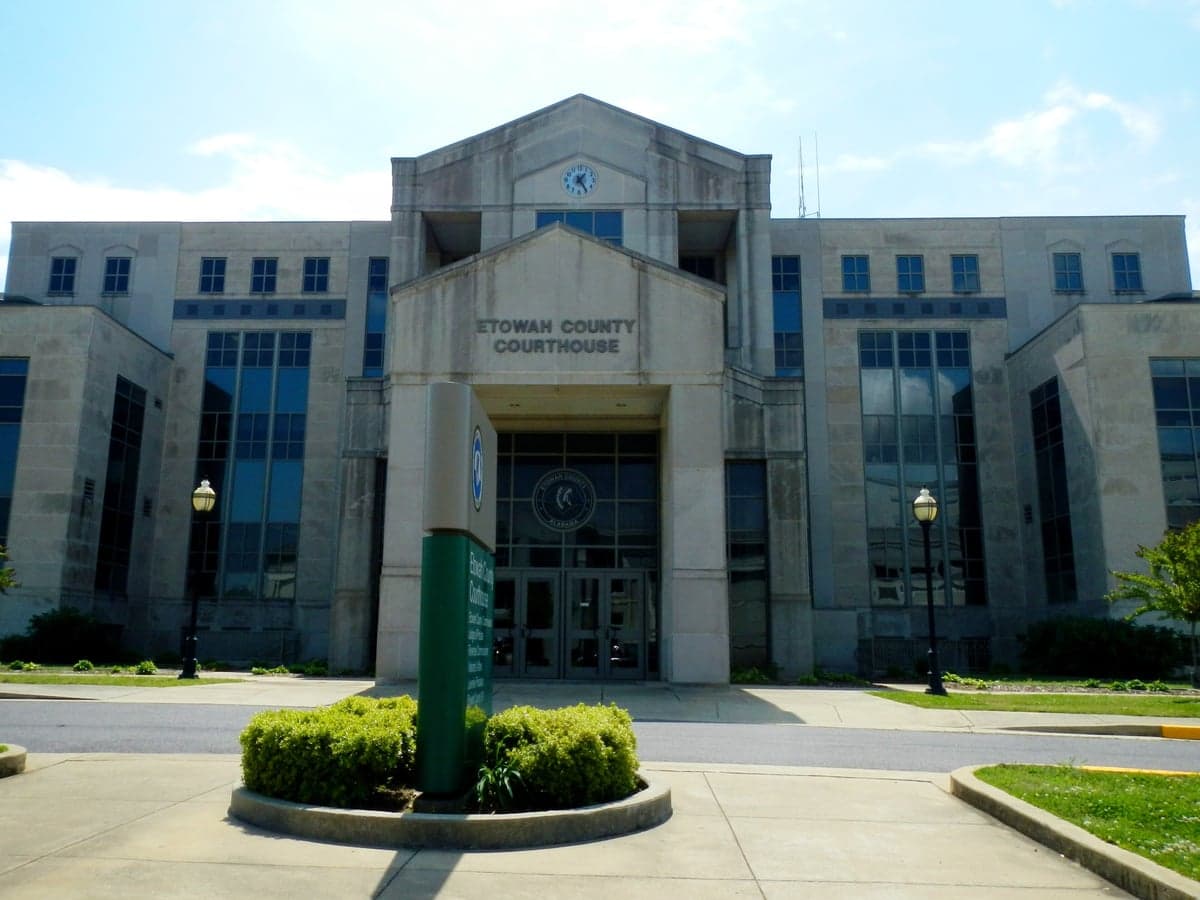
Photo: Wikipedia
Political ClimatePolitical Climate in Etowah County
Showing state-level results — no local-only data available.
Local Political AnalysisPolitical Analysis of Etowah County
Look, I’ve lived in Etowah County my whole life, and I can tell you straight up: this area has always been a rock-ribbed conservative stronghold. We’re talking about a place where the Cook PVI for the surrounding state of Alabama is R+14, and Etowah County itself leans even redder than that. In the 2024 presidential race, Donald Trump carried the county with over 72% of the vote, and that’s not a fluke—it’s been trending that way for decades. The real story, though, is how the political winds are shifting inside the county lines, and not always for the better if you value personal freedom and limited government.
How it compares
Compared to the rest of Alabama, Etowah County is actually a bit more conservative than the state average. While Alabama as a whole votes about 64% Republican in presidential races, Etowah consistently hits 70-75%. But here’s the kicker: the county isn’t a monolith. You’ve got Gadsden, the county seat, which is the most purple area—some precincts around downtown and the riverfront lean blue, especially in local races. Then you’ve got Rainbow City and Southside, which are deep red, no question. The swing precincts are actually in the rural parts like Altoona and Walnut Grove, where you’ll see a mix of old-school Democrats (the kind who vote pro-life and pro-gun) and newer conservative transplants. That’s where the real battle is, and it’s a battle for the soul of the county. The progressive creep you see in Birmingham or Huntsville hasn’t taken hold here yet, but I’ve watched Gadsden’s city council flirt with zoning ordinances and mask mandates that felt like government overreach. That’s the kind of thing that makes me nervous—when local leaders start thinking they know better than you about your own property or health.
What this means for residents
For folks living here, the political climate means you can generally expect low taxes, minimal regulation, and a government that stays out of your business—at least for now. The county commission is solidly Republican, and the sheriff’s office is pro-Second Amendment. But you’ve got to keep an eye on the school board and city councils. In Gadsden, there’s been a push for “equity” initiatives in the schools that sound an awful lot like critical race theory dressed up in new clothes. That’s a red flag for anyone who believes parents should have the final say in their kids’ education. The good news is that the rural towns like Hokes Bluff and Glencoe are fighting back, holding town halls and voting out incumbents who get too cozy with progressive agendas. The long-term trend? If the state keeps its R+14 lean and the county stays vigilant, we’ll hold the line. But if the Gadsden city council keeps drifting left, you might see a real split between the urban core and the rest of the county.
Culturally, Etowah County is still a place where people wave at each other on the road and church potlucks are a big deal. The policy distinctions are clear: we’ve got no income tax (state level), low property taxes, and a strong local push for school choice. The biggest fight right now is over property rights—some folks in the county want more zoning to control development, but that’s a slippery slope. Once you let the government tell you what color you can paint your barn or how many chickens you can keep, you’ve lost a piece of your freedom. I’ve seen it happen in other counties, and I hope we don’t go down that road. For now, Etowah County is a good place to live if you value your independence, but you’ve got to stay involved. The moment you stop paying attention, that’s when the overreach starts.

State Political ClimatePolitical Climate in Alabama
State Political AnalysisPolitical Environment in the State
Alabama is about as reliably red as it gets — a solid R+14 on the Cook PVI, meaning the state votes about 14 points more Republican than the national average. That hasn't changed much in the last twenty years, but the coalitions underneath it have shifted. The old-school Dixiecrat influence is long gone, replaced by a durable conservative majority that runs on low taxes, gun rights, and cultural traditionalism. What you'll notice if you move here is that the politics feel less like a fight and more like a settled consensus — at least for now. The real action is in the margins: which suburbs are drifting, which rural counties are doubling down, and how the state government is using its power to push back against federal overreach.
Urban vs. rural divide
The political map of Alabama is a textbook case of the urban-rural split. The big metros — Birmingham, Montgomery, Mobile, and Huntsville — all lean Democratic, but they're surrounded by deep-red suburbs and countryside that swamp their votes. Birmingham's Jefferson County is the bluest urban core, but it's hemmed in by Shelby County, one of the most reliably Republican counties in the state. Montgomery's population is majority black and votes heavily Democratic, but the surrounding Elmore and Autauga counties are rock-ribbed red. Mobile is a bit more purple, with a strong working-class Democratic tradition that's been fading. Huntsville is the interesting one: it's growing fast thanks to aerospace and defense, and while the city itself has trended purple, the surrounding Madison County is still solidly Republican. The rural Black Belt counties — like Greene, Sumter, and Lowndes — vote overwhelmingly Democratic, but their populations are small and shrinking. Meanwhile, the booming coastal areas like Baldwin County (Gulf Shores, Orange Beach) are among the fastest-growing and most conservative in the state. If you're looking for a place where your vote will feel like it counts, the suburbs of Birmingham or the Gulf Coast are your best bet.
Policy environment
Alabama's policy environment is designed to keep government small and taxes low. There's no state property tax to speak of — the average effective rate is around 0.4%, one of the lowest in the country. Income tax is a flat 5%, which is moderate, but there's no tax on Social Security benefits, a big draw for retirees. The regulatory posture is business-friendly: right-to-work state, minimal zoning in most rural areas, and a tort reform system that caps damages. On education, the state has expanded school choice through the Alabama Accountability Act, which provides tax credits for private school tuition, and the new CHOOSE Act (2024) created education savings accounts for families. That's a big win for parents who want options. Healthcare is a mixed bag: Alabama did not expand Medicaid, so the uninsured rate is higher than average, but the state has also pushed back against federal vaccine mandates and kept COVID restrictions minimal. Election laws are solid: voter ID is required, no-excuse absentee voting is available, and the state has purged inactive voter rolls regularly. The legislature passed a law in 2021 banning ballot drop boxes and curbside voting, which some see as common-sense security and others as suppression — you'll hear both sides, but the system has run smoothly in recent cycles.
Trajectory & freedom
On the freedom front, Alabama has been moving in the right direction for conservatives. The biggest win was permitless carry (constitutional carry) signed into law in 2022 — you can now carry a concealed firearm without a permit. That's a tangible expansion of Second Amendment rights. The state also passed a near-total abortion ban in 2019 (the Human Life Protection Act), which took effect after Dobbs. Parental rights got a boost with the 2022 law requiring schools to notify parents of any medical or counseling services offered to minors, and the 2024 law banning transgender procedures for minors. On medical autonomy, Alabama was one of the first states to ban COVID vaccine mandates for state employees and contractors. Property rights are strong: the state has a homestead exemption and limits on eminent domain. The only area where you might feel some overreach is in the alcohol laws — Alabama is still a control state in some counties, with dry areas and state-run liquor stores. But that's slowly loosening. Overall, the trajectory is toward more personal liberty, especially on guns and parental rights, and less tolerance for federal intrusion.
Civil unrest & political movements
Alabama hasn't seen the kind of sustained civil unrest you'd find in Portland or Seattle, but there have been flashpoints. The Black Lives Matter protests in 2020 were large in Birmingham and Montgomery, with some property damage and clashes with police, but they fizzled out quickly. The state's immigration politics are shaped by the legacy of HB 56 (2011), which was one of the toughest anti-illegal immigration laws in the country at the time. Most of its provisions were struck down in court, but the political sentiment remains: no sanctuary cities, and local law enforcement cooperates with ICE. There's been a small but vocal secessionist movement — the "Alabama Secession Convention" group — but it's fringe. Election integrity was a hot topic after 2020, with the state legislature passing tighter rules on absentee ballots and banning private funding of election administration. You won't see the kind of election chaos you hear about in Georgia or Arizona; Alabama's elections are low-drama. The most visible political movement right now is the growth of conservative grassroots groups like the Alabama Citizens for Life and the Alabama Parents Coalition, which have real influence in local school board races.
Projection
Over the next 5-10 years, Alabama is likely to stay red, but the map will shift. The big demographic story is in-migration: people from California, Illinois, and New York are moving to Huntsville, Baldwin County, and Auburn-Opelika. These newcomers tend to be more moderate or even libertarian-leaning — they want low taxes and freedom, but they may not share all the cultural conservatism of native Alabamians. That could make the suburbs of Huntsville and the Gulf Coast slightly more purple over time. Meanwhile, the rural counties will continue to hemorrhage population and become even more Republican. The Black Belt will shrink further, reducing the Democratic base. The state legislature will likely remain supermajority Republican, so expect more school choice expansion, further tax cuts, and continued resistance to federal mandates. The wildcard is the growing influence of the Huntsville defense and aerospace sector, which brings in a highly educated, more secular workforce. If that group starts voting like their counterparts in Northern Virginia, you could see a slow drift. But for now, Alabama is a safe bet for anyone who wants a state that respects gun rights, parental authority, and limited government.
Bottom line for a new resident: If you move to Alabama, you're moving to a place where conservative values are the norm, not the exception. Your taxes will be low, your gun rights will be strong, and your kids' education will be in your hands — not the government's. The biggest practical consideration is where you land: the suburbs of Birmingham or Huntsville offer the best mix of opportunity and political alignment, while the Gulf Coast gives you a slower pace and a growing conservative community. Just be aware that the state's politics are stable, but not static — the growth corridors are where the future is being written. Come for the freedom, stay for the sweet tea.
* Values derived from national, state, county, city and local statistics and may differ in a specific area. Last updated: 2026-05-09T19:29:35.000Z
Narrative content on this page is AI-generated and may contain mistakes. Verify any details that matter before acting on them.
ReloMaps may earn a commission from affiliate links at no extra cost to you.

