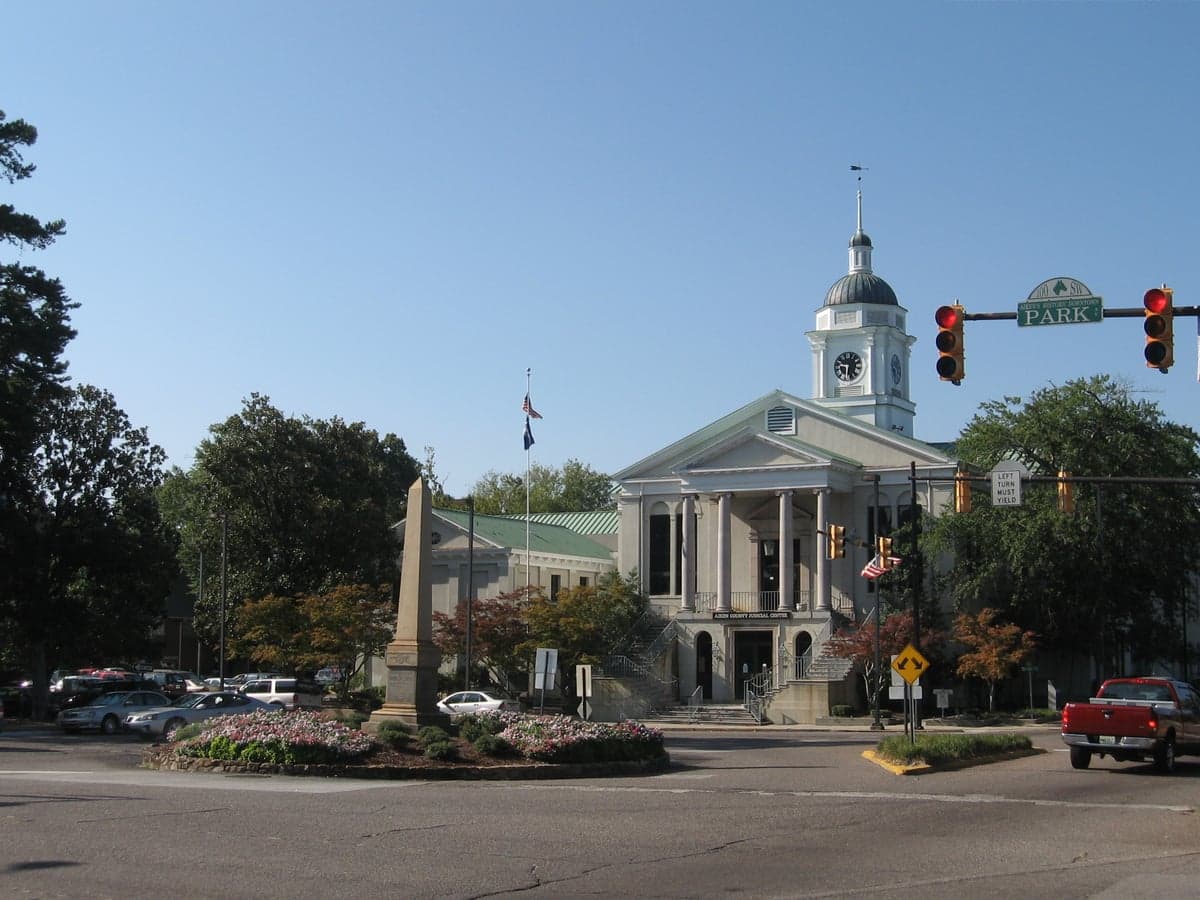
Photo: Wikipedia
Strategic Assessment of Aiken, SC
Meaningful friction. Expect exposure to either population pressure, blast zones, or natural disaster risk. Consider buying a retreat property.
What does the Strategic Assessment tell us?
Our Strategic Assessment grades tactical survivability of an area. Major population centers, military targets, fallout zones, natural disasters, and border exposure all drive risk — lower exposure means a more defensible position in a crisis.
This is heavily inspired by Joel Skousen's Strategic Relocation book. Highly recommended you checkout the book ($)What does this tell us?
Our Strategic Assessment grades tactical survivability of an area. Major population centers, military targets, fallout zones, natural disasters, and border exposure all drive risk — lower exposure means a more defensible position in a crisis.
This is heavily inspired by Joel Skousen's Strategic Relocation book. Highly recommended you checkout the book ($)Strategic Pillars

Key Distances
Regional Safe Places
Below is our recommended "safe zones" in South Carolina and the surrounding area based on our strategic heuristics. For most people, it's unrealistic to live in a “safe zone” full-time due to work, family or other personal reasons. They tend to be more rural. However, many of these areas are perfect for second homes and retreat properties that double as a vacation home or even a short-term rental.
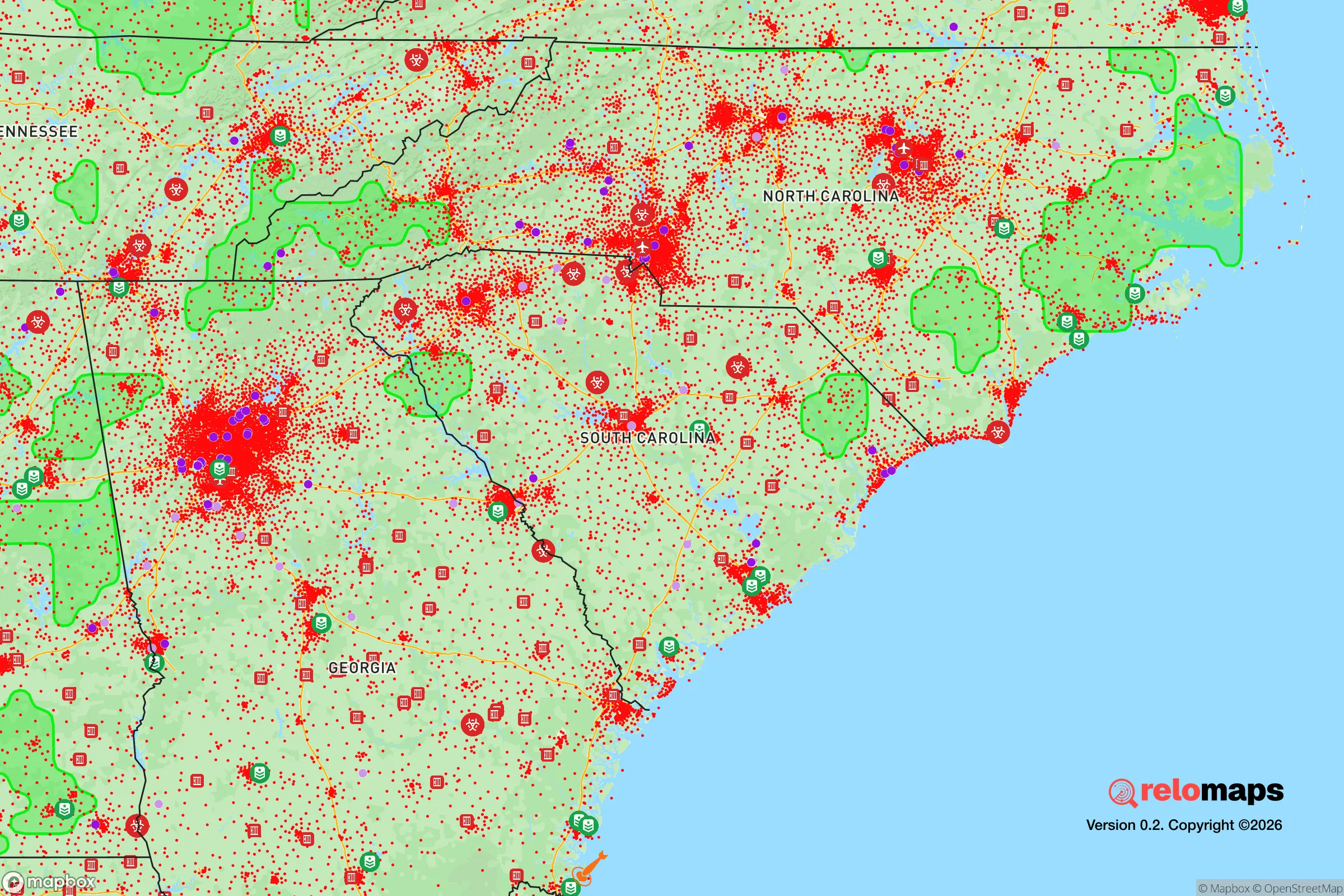
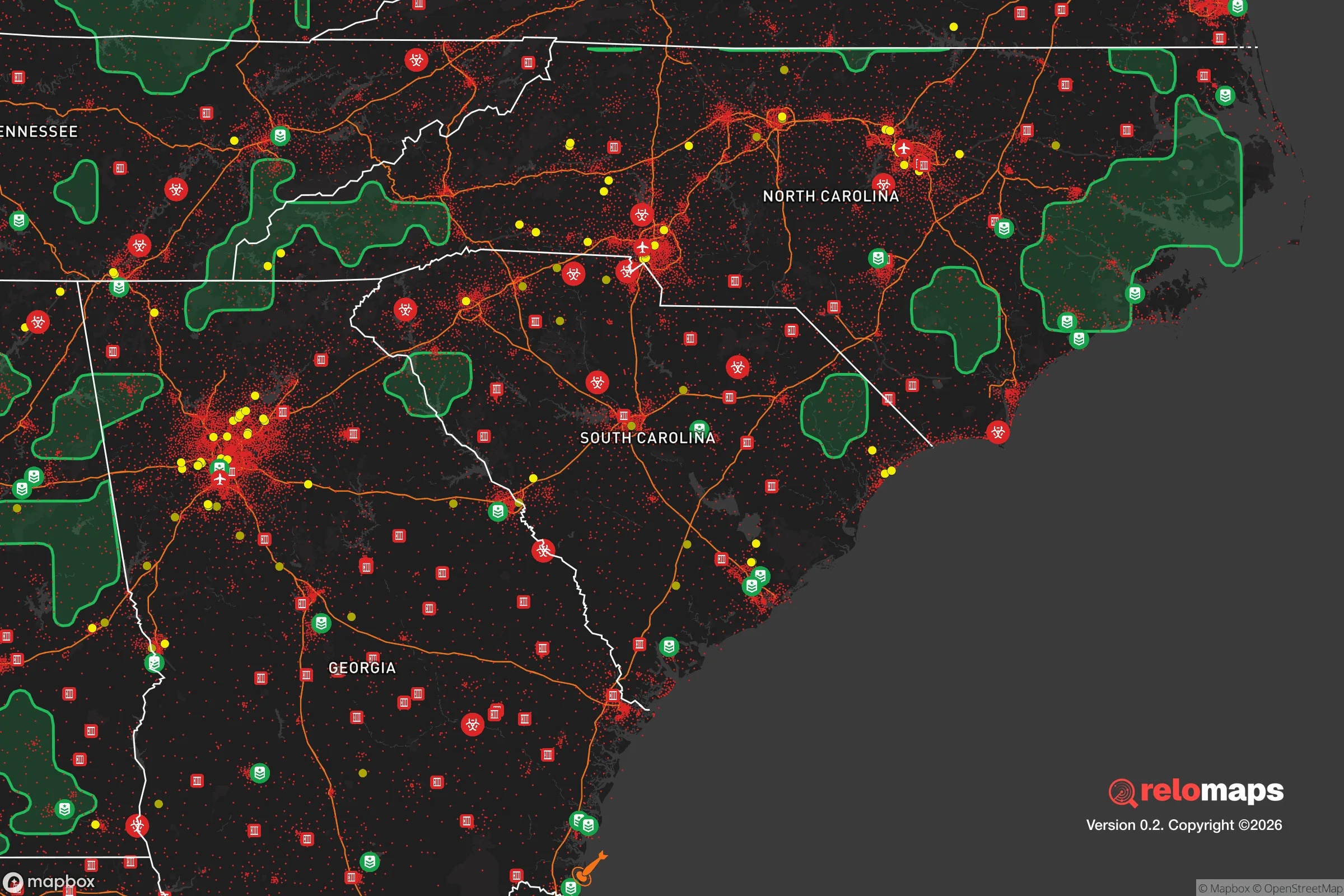


Important Note: For informational purposes only. This does not mean nothing bad ever happens in the green zones. Please use common sense. This is based on public data and modeled with AI. We tried to take a conservative approach but mistakes happen. We update this regularly as new information becomes available.
Solar Generator Recommendations
Backup power matters more here than in safer locations. We've picked three solar generators across budgets and capacity tiers — start with the budget unit if you only need a few essentials, or step up if you want to run a fridge and HVAC for days at a time.

Jackery Portable Power Station Explorer 300
Budget OptionPower on the Go: Weighing only 11 lbs, it's convenient to set up and store with book-sized foldable solar panels

BLUETTI Portable Power Station AC180
Designed for both indoor and outdoor scenarios, AC180 is highly capable as it has a robost capacity and continuous output power.

EF ECOFLOW DELTA Pro Ultra Power Station
Upgraded PickEcoFlow DELTA Pro Ultra is a whole-home energy system designed to grow with your family. Integrated with the Smart Home Panel 2, it scales to meet your evolving energy needs — keeping your home powered, intelligent, and secure through every stage of life.
We earn a commission, at no additional cost to you.
Strategic Assessment Analysis
Aiken, South Carolina, sits in a sweet spot that few people outside the region fully appreciate: close enough to the economic muscle of Augusta and Columbia to matter, but far enough from their urban cores to avoid the worst of any civic unraveling. The city’s resilience isn’t accidental—it’s baked into its geography, its infrastructure, and the quiet, self-reliant culture of the surrounding Sandhills region. For someone thinking about where to plant roots when the world gets shaky, Aiken offers a rare combination of strategic depth and everyday livability that’s hard to beat in the Southeast.
Geographic position and natural advantages for long-term stability
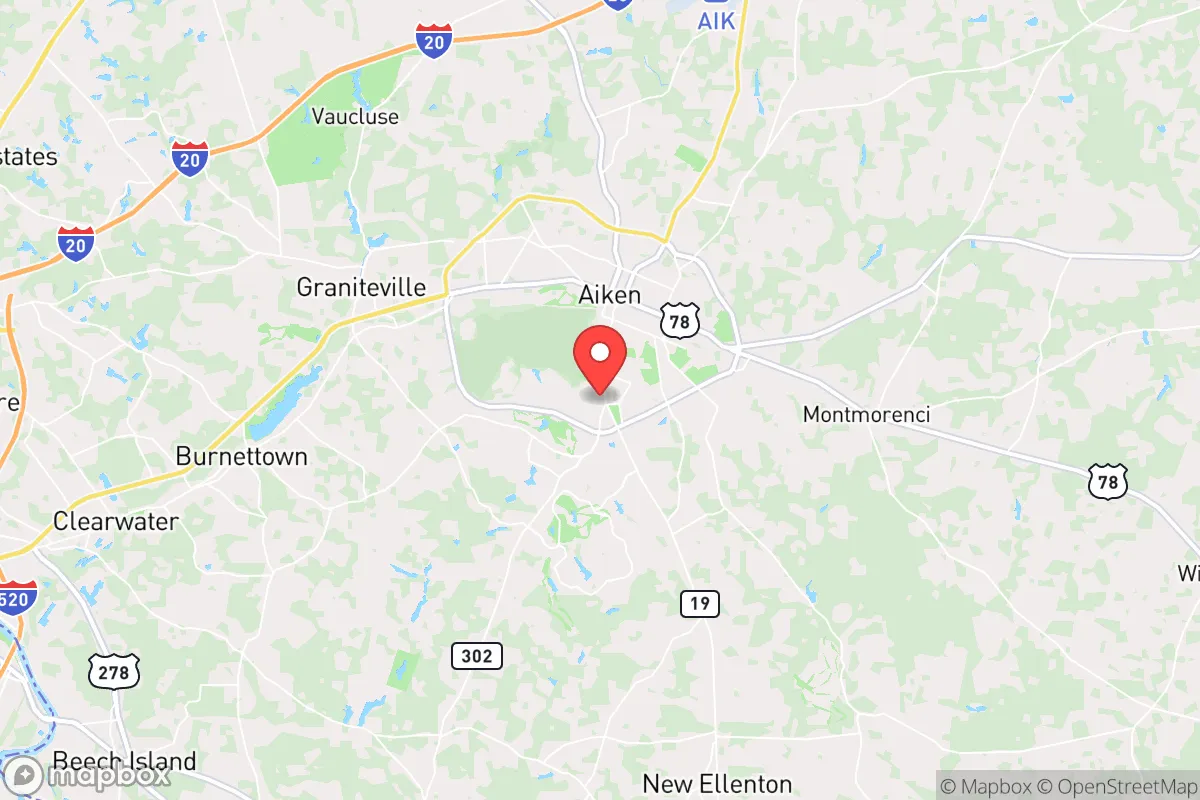
Aiken’s location is its first and strongest card. It sits roughly 15 miles east of the Savannah River, which forms the border with Georgia, and about 50 miles southwest of Columbia. That puts it outside the immediate blast radius of any major metropolitan target, yet within a comfortable drive for supply runs or medical care when things are normal. The city itself is built on the Aiken Plateau, part of the Sandhills region—elevated, well-drained land that doesn’t flood like the coastal plain to the east. Hurricane storm surge is a non-issue here, and the area’s sandy soils mean heavy rain drains fast, not into your basement. The climate is humid subtropical, but summers are tempered by elevation and the region’s pine forests. Winters are mild, rarely dropping below freezing for long stretches, which means heating fuel demands stay manageable and outdoor work is possible year-round. The natural water table is high, and the area is dotted with small creeks and ponds; the Savannah River is a reliable backup for large-scale water needs, though you’d want your own well for true independence. The surrounding landscape is a mix of longleaf pine forest, farmland, and horse country—open enough to see trouble coming, wooded enough to provide cover and resources.
Risks, exposures, and proximity to fallout-relevant landmarks
No place is a fortress, and Aiken has its share of vulnerabilities that a serious relocator needs to weigh. The most obvious is the Savannah River Site (SRS), a 310-square-mile Department of Energy nuclear reservation located about 20 miles southeast of downtown Aiken. SRS has been a major employer for decades, but it’s also a high-consequence target. In a major conflict or terrorist scenario, a strike on SRS could release radioactive material that would make large swaths of the region uninhabitable for years. The prevailing winds in this area blow from the southwest to the northeast, meaning fallout from a SRS incident would likely push toward Columbia and the coast, not directly over Aiken—but that’s cold comfort if the wind shifts. You need a solid plan for evacuation or shelter-in-place with HEPA filtration if you live within 30 miles of SRS. Beyond that, Aiken is within 150 miles of Fort Gordon (Augusta), Shaw Air Force Base (Sumter), and the Port of Savannah—all potential military targets. The city itself has no major strategic value, which is actually a plus: it’s unlikely to be a primary target. But the I-20 corridor running through the area could become a chokepoint during mass evacuations from the coast, so avoid living too close to that highway. Crime in Aiken proper is low compared to national averages, but property crime ticks up in the more rural pockets where law enforcement response times stretch. The biggest natural risk is the occasional tornado—this is the edge of Dixie Alley—but the Sandhills terrain reduces the frequency of violent twisters compared to the Deep South.
Practical resilience for a relocator: food, water, energy, and defensibility
This is where Aiken shines for someone serious about self-sufficiency. The local food system is robust: you’re within 30 minutes of dozens of working farms, cattle operations, and poultry houses. The Aiken County Farmers Market runs year-round, and the region’s long growing season (March through November) means you can put in a serious garden. Soil quality varies—the Sandhills are sandy and acidic, so raised beds or heavy amending are necessary—but water is plentiful if you drill a well. The average well depth in Aiken County is around 150 feet, and yields are good. For energy, the grid is served by Dominion Energy and Aiken Electric Cooperative, both of which have decent reliability records, but solar is a no-brainer here: the area gets about 215 sunny days per year, and there are no HOA restrictions on panels in unincorporated parts of the county. A backup propane generator or a small battery bank paired with solar would keep a household running through the typical 1-2 day outages that come with summer thunderstorms. Defensibility is situational. The older neighborhoods near downtown Aiken have dense tree cover and winding streets that make them hard to patrol but also hard to secure. The better bet is a property on the outskirts—say, north of Highway 78 or east of Wire Road—where you can get 5-10 acres with a clear view of approach roads and enough distance from neighbors to avoid unwanted attention. The local gun culture is strong and legal; South Carolina is a shall-issue state for concealed carry, and there’s no state-level red flag law as of 2026. The county sheriff’s office is professional but understaffed for rural coverage, so you are your own first responder in most of the county. Stockpile medical supplies, learn basic trauma care, and have a radio that can pick up the county emergency frequency.
The overall strategic picture for Aiken is one of calculated trade-offs. You get a low-crime, low-cost, high-resilience base in a region that’s politically aligned with conservative values—the county voted +18 points Republican in the last presidential election, and the local culture is built around church, family, and self-reliance. The proximity to SRS is the single biggest wildcard, and it’s not something you can ignore. But if you’re willing to invest in a solid fallout plan and choose your property wisely—away from major highways, with a well, solar, and good sightlines—Aiken offers a foundation that’s hard to match for the price. It’s not a bug-out location; it’s a live-here location that can weather a lot of storms, literal and figurative. The key is to treat it as a long-term base, not a temporary retreat. Build relationships with neighbors, get involved in the local community, and you’ll find that the area’s greatest strength isn’t on any map—it’s the people who’ve already chosen to stay.

* Values derived from national, state, county, city and local statistics and may differ in a specific area. Last updated: 2026-04-29T19:51:31.000Z
Narrative content on this page is AI-generated and may contain mistakes. Verify any details that matter before acting on them.
ReloMaps may earn a commission from affiliate links at no extra cost to you.

