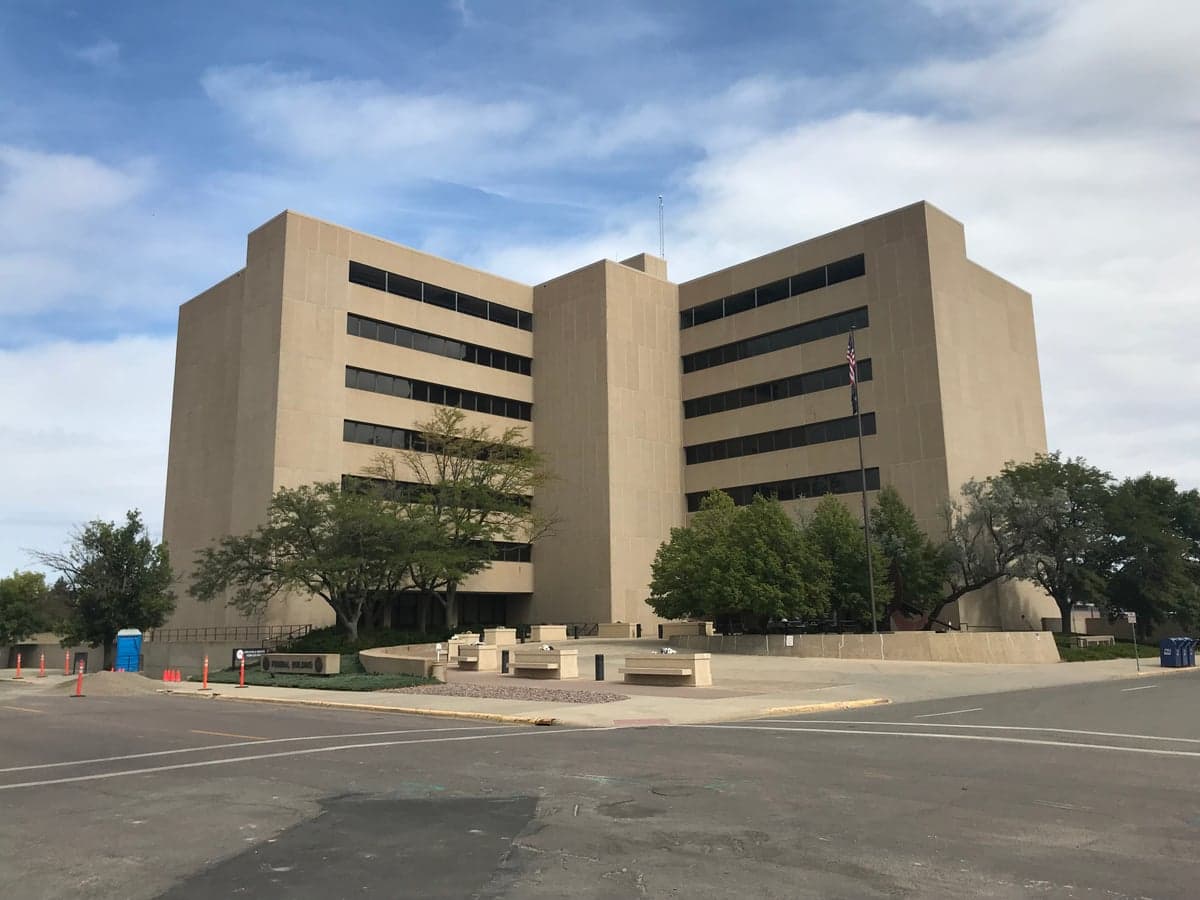
Photo: Wikipedia
Political ClimatePolitical Climate in Aberdeen, SD
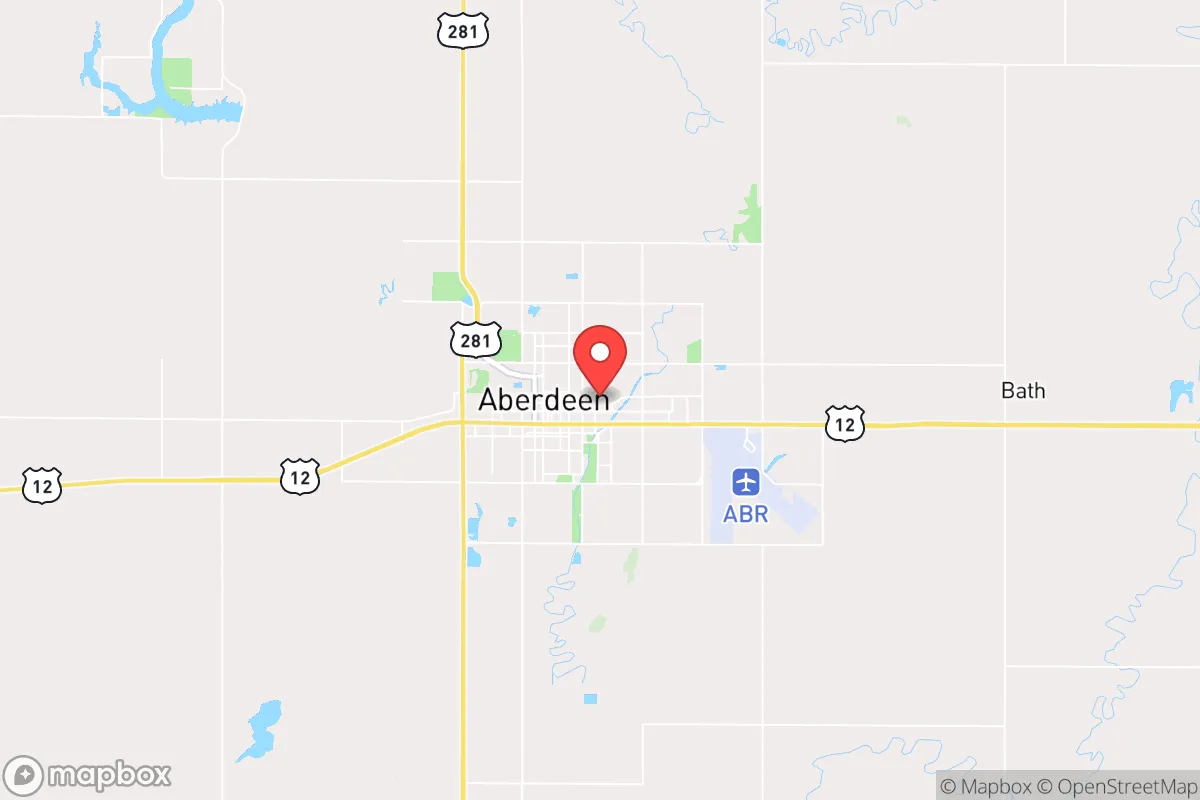
District shown is the primary district for this city’s centroid. Cities may span multiple districts.
Inherited from parent state — no local data available.
Local Political AnalysisPolitical Analysis of Aberdeen, SD
Aberdeen, South Dakota, has long been a solidly conservative stronghold, and that hasn't changed much. The Cook PVI of R+15 tells you the math: this area leans heavily Republican, and that's been the case for as long as anyone can remember. You won't find many folks here who think the government should be running their lives, and that sentiment runs deep. If anything, the political trajectory has been a slow, steady pull to the right, with a growing wariness of the progressive trends seeping in from places like Sioux Falls or even Brookings.
How it compares
Compared to the rest of South Dakota, Aberdeen is a bit of a bellwether for the state's conservative heart. Places like Sioux Falls, with its bigger-city economy and more diverse population, have started to lean a little more purple in recent years, especially in local races. But drive an hour west to Mobridge or north to Britton, and you'll find the same kind of no-nonsense, small-government mindset that defines Aberdeen. The real contrast is with a place like Brookings, home to South Dakota State University, where you see a younger, more transient population that sometimes pushes for progressive policies. Here in Aberdeen, that kind of stuff doesn't get much traction. The local county commission and city council are reliably conservative, and there's a strong sense that the people who live here want to be left alone to live their lives.
What this means for residents
For the people who call Aberdeen home, this political climate means a few concrete things. First, taxes stay low—there's no appetite for big government programs that require a lot of revenue. Second, the local schools and law enforcement are generally well-supported, but there's a strong resistance to any kind of federal overreach into local affairs. You see it in the way the city handles things like zoning or business regulations: it's usually a light touch. The downside, if you can call it that, is that if you're looking for a place with a lot of progressive social programs or a bustling arts scene funded by public money, you might be disappointed. But for most residents, that's a feature, not a bug. The community takes care of its own through churches, charities, and neighborly help, not through government mandates.
One thing that stands out culturally is the strong sense of personal responsibility that runs through the town. People here don't expect the government to solve their problems. There's a real "live and let live" attitude, but it's paired with a firm belief in traditional values. You won't see a lot of push for things like vaccine mandates or strict environmental regulations that would hurt the local ag economy. The biggest concern among long-time residents is that the progressive ideas from the coasts might start to trickle in through state-level policies or federal funding. The hope is that Aberdeen stays true to its roots—a place where your freedom to live your life isn't treated as a suggestion, but as a right. If you're looking for a community that values independence and common sense, you'll feel right at home. If you're looking for a place that's trying to reinvent itself with the latest political trends, you might want to keep driving.

State Political ClimatePolitical Climate in South Dakota
State Political AnalysisPolitical Environment in the State
South Dakota is a deeply red state, with Republicans holding every statewide office and supermajorities in both legislative chambers, but don’t let that fool you into thinking it’s a monolith. The state has shifted rightward over the past 20 years, driven by rural resistance to federal overreach and an influx of conservatives fleeing blue states, though a growing progressive foothold in Sioux Falls and Rapid City is starting to chip away at that dominance. In 2024, Donald Trump carried the state by 30 points, but local races in Minnehaha County (Sioux Falls) and Pennington County (Rapid City) have tightened, signaling a quiet but real urban-rural fracture.
Urban vs. rural divide
The political map of South Dakota is a tale of two worlds. The eastern I-29 corridor, anchored by Sioux Falls (Minnehaha County), is the state’s economic engine and its most politically competitive region. Minnehaha County voted for Trump by only 12 points in 2024, down from 18 in 2020, as tech workers and healthcare professionals move in from Minnesota and California. Brookings, home to South Dakota State University, is a blue dot in a red sea—Biden won it in 2020, and local city council races often split along progressive vs. libertarian lines. Meanwhile, the vast rural expanse—counties like Harding, Perkins, and Ziebach—votes 80%+ Republican, driven by ranching, farming, and a deep distrust of federal land management. The Black Hills region, including Rapid City (Pennington County), is a mixed bag: Rapid City itself leans slightly right but has a vocal libertarian streak, while the surrounding counties like Lawrence (Deadwood, Spearfish) are reliably red but with a strong Second Amendment and property rights focus. The Native American reservations—Pine Ridge (Oglala Lakota County) and Rosebud (Todd County)—vote overwhelmingly Democratic, but their turnout is low and their influence on statewide races is minimal. The divide isn’t just partisan; it’s cultural. Rural residents see urban growth as a threat to their way of life, while city dwellers view rural conservatism as backward. This tension is the state’s defining political fault line.
Policy environment
South Dakota’s policy environment is a conservative dream in many ways, but with some surprising wrinkles. There is no state income tax, and the sales tax is a flat 4.5% (local add-ons can push it to 6.5% in Sioux Falls). Property taxes are moderate, averaging about 1.1% of assessed value, but they’re rising fast in growing areas like Harrisburg and Tea (suburbs of Sioux Falls) due to school construction bonds. The regulatory posture is light—permitting for a new business in Rapid City can take weeks, not months—but the state’s ballot initiative process has been a battleground. In 2022, voters rejected a measure to legalize recreational marijuana (after approving it in 2020, only to have it overturned by the courts), and in 2024, they narrowly passed a measure to expand Medicaid, overriding the legislature’s years of resistance. Education policy is a mixed bag: the state has a school choice program (the “South Dakota Opportunity Scholarship”) but no voucher system, and public schools in Sioux Falls are under pressure from a growing immigrant population (mostly from Central America and Ethiopia). Election laws are strict—voter ID is required, and same-day registration is not allowed—but the state has no early voting by mail without an excuse, which some conservatives see as a safeguard and others as a barrier. Healthcare is a sore spot: the state has a shortage of providers, especially in rural areas, and the Medicaid expansion (effective July 2024) is expected to cover about 50,000 low-income adults, a move that many conservatives opposed as a step toward government dependency.
Trajectory & freedom
South Dakota is becoming more free in some areas and less in others, and the trend is worth watching. On the plus side, the state has expanded gun rights significantly: in 2023, Governor Kristi Noem signed a constitutional carry law (no permit needed to carry a concealed firearm), and in 2024, the legislature passed a “Second Amendment Preservation Act” that prohibits state enforcement of any future federal gun bans. Property rights got a boost with the 2023 “Landowner Protection Act,” which limits the state’s ability to seize land for private development via eminent domain. On the downside, the state has seen a creep of government overreach in the name of public health: during COVID, Noem famously refused lockdowns, but the legislature has since passed laws limiting local health orders, a reaction to Minnehaha County’s brief mask mandate in 2020. Parental rights are strong—the 2023 “Parents’ Bill of Rights” requires schools to notify parents about curriculum changes and medical services—but the state has also banned gender-affirming care for minors (2023), which some see as protecting kids and others as government intrusion. The biggest freedom concern is medical autonomy: South Dakota has one of the most restrictive abortion bans in the country (no exceptions for rape or incest, only to save the mother’s life), passed in 2023 after the Dobbs decision. This has sparked a quiet exodus of women seeking care to Minnesota and Nebraska, and it’s a flashpoint for future ballot initiatives. Overall, the trajectory is toward more personal liberty on guns and property, but less on medical decisions—a trade-off that new residents should weigh carefully.
Civil unrest & political movements
South Dakota is not a hotbed of civil unrest, but there are simmering tensions that a new resident would notice. The Noem administration has been a lightning rod: her 2024 feud with the Pine Ridge Reservation over border security (she sent state troopers to the southern border, then clashed with tribal leaders over a proposed “border wall” on reservation land) inflamed Native American activism, leading to protests in Rapid City and Sioux Falls. The Mni Wiconi movement (water protectors) from the 2016 Dakota Access Pipeline protests still has a presence, with occasional rallies against new pipelines in Harding County. On the right, the South Dakota Freedom Caucus has grown in influence, pushing for nullification of federal gun laws and a state-level “election integrity” task force that investigated the 2020 election (finding no widespread fraud, but recommending tighter voter rolls). Immigration politics are low-key—the state has a small but growing immigrant population in Sioux Falls (meatpacking plants and construction), and there have been no sanctuary city policies—but the 2023 “Anti-Sanctuary” law threatens to withhold state funds from any locality that refuses to cooperate with ICE. The most visible flashpoint is the abortion debate: after the 2023 ban, a group called “Dakotans for Health” gathered enough signatures for a 2024 ballot measure to restore abortion access up to 12 weeks, but it was struck down by the state Supreme Court on procedural grounds. Expect this to be a recurring fight. For a new resident, the political climate is generally calm, but the undercurrents are real—especially if you’re near the reservations or in the growing urban centers.
Projection
Over the next 5-10 years, South Dakota will likely become more polarized, not less. The in-migration from blue states (especially California, Minnesota, and Illinois) is accelerating—Sioux Falls grew by 15% between 2020 and 2025, and Rapid City by 10%—and these newcomers tend to be more moderate or libertarian than the native rural population. This will push the urban areas leftward, while the rural areas dig in harder. The state’s ballot initiative process will be the key battleground: expect repeated attempts to legalize marijuana, expand abortion access, and raise the minimum wage, all of which will face fierce legislative resistance. The Republican supermajority will likely hold, but it may fracture between the establishment wing (pro-business, pro-development) and the Freedom Caucus (anti-tax, anti-government). The biggest wildcard is the Native American vote: if turnout increases (driven by issues like water rights and land sovereignty), it could flip a few legislative seats in western South Dakota. For a conservative moving in now, expect a state that remains red but with growing blue pockets, especially in Sioux Falls and Brookings. The freedom trajectory is positive on guns and property, but negative on medical autonomy and potentially on taxes (as urban growth demands more services). The bottom line: South Dakota is a safe bet for conservatives who value low taxes and gun rights, but it’s not immune to the cultural wars sweeping the nation.
For a new resident, the practical takeaway is this: South Dakota offers a high degree of personal freedom on most fronts, but you’ll need to pick your community carefully. If you want a reliably conservative environment, look at Harrisburg, Tea, or Spearfish. If you’re okay with a more mixed political scene, Sioux Falls and Rapid City offer jobs and amenities but come with progressive activism. The state’s trajectory is toward more urban-rural tension, but the overall conservative lean is likely to hold for at least another decade. Just don’t expect it to be static—the fight over the state’s soul is just beginning.
* Values derived from national, state, county, city and local statistics and may differ in a specific area. Last updated: 2026-04-23T09:18:01.000Z
Narrative content on this page is AI-generated and may contain mistakes. Verify any details that matter before acting on them.
ReloMaps may earn a commission from affiliate links at no extra cost to you.

