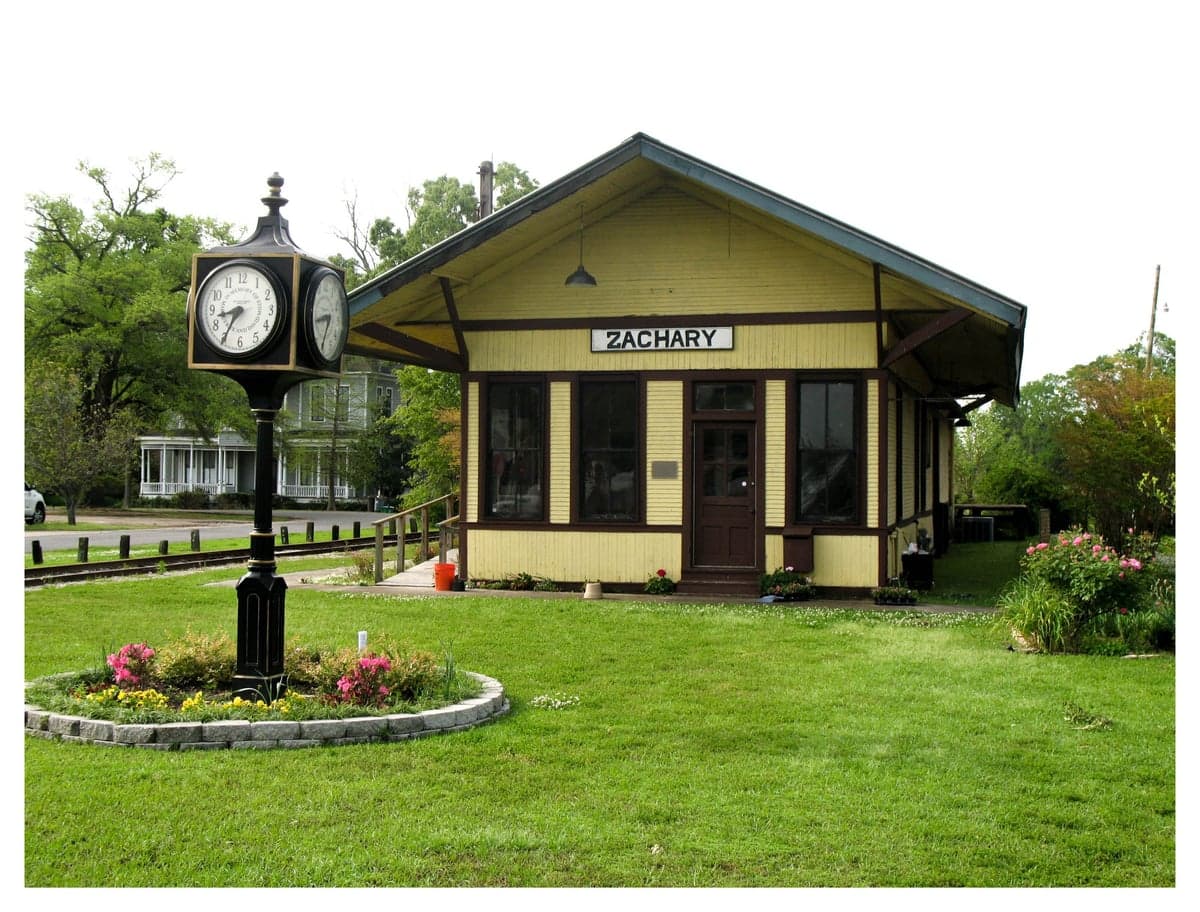
Photo: Wikipedia
Political ClimatePolitical Climate in Zachary, LA
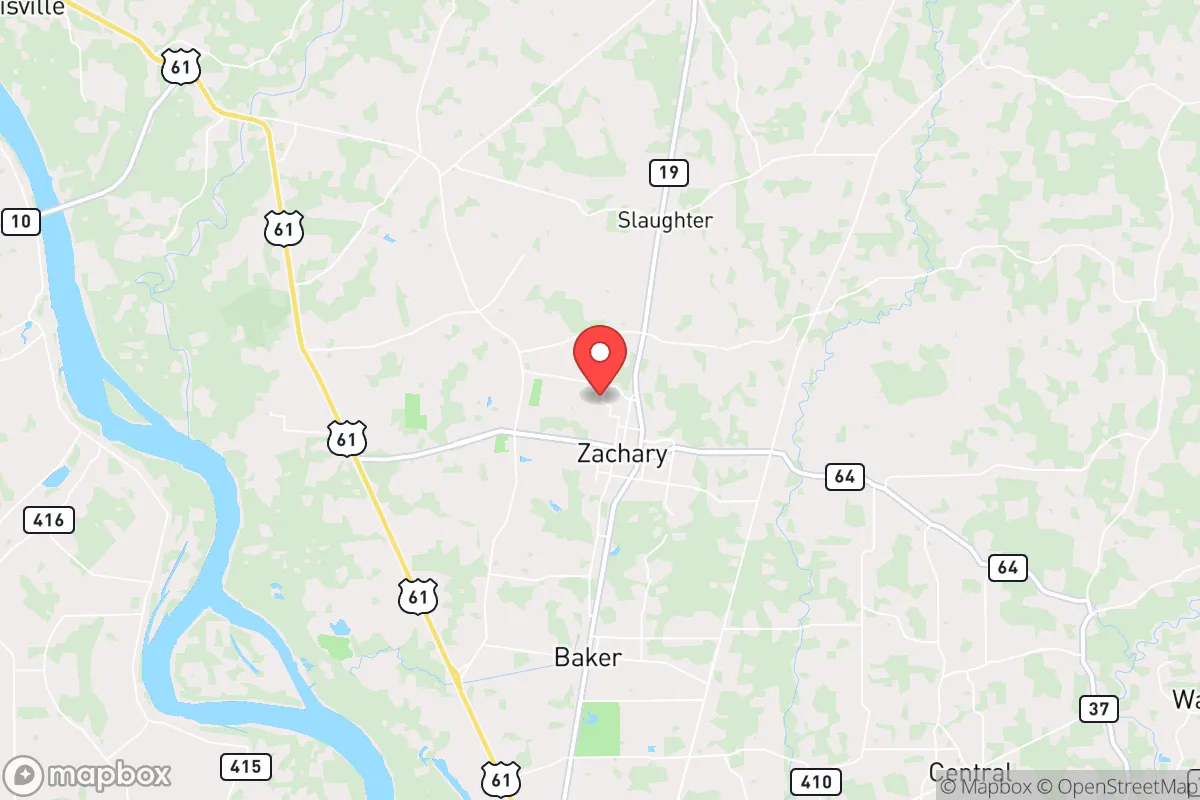
District shown is the primary district for this city’s centroid. Cities may span multiple districts.
Local Political AnalysisPolitical Analysis of Zachary, LA
Zachary, Louisiana, carries a Cook Partisan Voting Index of D+8, which on paper makes it look like a solidly Democratic area, but anyone who’s lived here for more than a few years knows that’s a surface-level read that doesn’t tell the full story. The reality is that Zachary has long been a pocket of conservative-leaning independence within East Baton Rouge Parish, where a lot of folks—especially in the older neighborhoods and among the families who’ve been here for generations—vote their conscience rather than a straight party line. That D+8 number is heavily weighted by the more progressive Baton Rouge city core just south of us, and as you move north into Zachary proper, you start seeing a much more skeptical attitude toward big government and a real preference for local control over personal decisions.
How it compares
Drive ten miles south into downtown Baton Rouge, and you’re in a world where progressive policies on taxes, zoning, and public spending are the norm, with a city council that’s increasingly comfortable with government mandates on everything from housing to business regulations. Head east toward Denham Springs or west toward Port Allen, and you’ll find communities that lean more conservative but still have their own local quirks. Zachary sits in a kind of buffer zone—close enough to the capital to feel the pressure of state-level politics, but far enough that residents here still expect the city to stay out of their personal lives. The contrast is sharpest when you look at school board decisions or local ordinances: Zachary’s leaders have historically resisted the kind of top-down social engineering you see in larger cities, and that’s a big reason why families move here from the more liberal parts of the parish.
What this means for residents
For the people who call Zachary home, the political climate translates into a daily life where you’re mostly left alone to run your household, your business, and your property the way you see fit. There’s a strong undercurrent of “don’t tread on me” here—folks are quick to push back if they feel the city or parish is overstepping on things like property rights, school curriculum, or gun laws. That said, the D+8 rating does mean you’ll see more Democratic candidates winning local offices than you would in, say, Livingston Parish, and that can lead to occasional friction when state or federal policies start creeping into local decisions. The long-term trend is what worries a lot of longtime residents: as Baton Rouge’s population grows and its progressive influence spreads north, there’s a real concern that Zachary’s independent streak could get diluted by transplants who don’t share that same distrust of government overreach.
Culturally, Zachary still holds onto a few distinctions that set it apart from its neighbors. The city has a strong tradition of volunteer-led community events and a school system that’s managed to keep a lot of local control, which is a direct reflection of the political will to keep decision-making close to home. You won’t find the kind of aggressive zoning or business licensing hassles that plague some nearby towns, and there’s a general expectation that the city’s job is to maintain roads and public safety, not to dictate how you live. Looking ahead, the key battleground will be whether Zachary can maintain that hands-off culture as the region grows—if the next wave of newcomers brings a preference for more government involvement, the character of this place could shift in ways that a lot of current residents aren’t ready for.

State Political ClimatePolitical Climate in Louisiana
State Political AnalysisPolitical Environment in the State
Louisiana has long been a reliably conservative state in federal elections, voting for the Republican presidential candidate in every election since 2000, with margins typically exceeding 15 points. However, the state’s political landscape is far more complex than a simple red-state label suggests, driven by a deep urban-rural divide, a unique Cajun and Creole cultural heritage, and a history of populist, often Democrat-leaning, local governance. Over the past two decades, the state has shifted from a competitive, Democrat-heavy environment to a solidly Republican stronghold, but this shift has been uneven, with significant pockets of progressive influence concentrated in New Orleans and Baton Rouge, while the rest of the state has moved decisively rightward.
Urban vs. rural divide
The political map of Louisiana is a stark study in contrasts. The state’s two largest metros, New Orleans and Baton Rouge, are the primary engines of Democratic votes. Orleans Parish consistently delivers margins of 70-80% for Democratic candidates, driven by a diverse, heavily African American population and a strong progressive activist base. Baton Rouge, while more moderate, still leans Democratic, with East Baton Rouge Parish voting blue by about 10 points in recent cycles. In contrast, the rest of the state is overwhelmingly Republican. The rural parishes of north Louisiana, like Ouachita Parish (Monroe) and Caddo Parish (Shreveport), are reliably red, with margins often exceeding 30 points. The Acadiana region, including Lafayette and Lake Charles, has also shifted sharply rightward, with Lafayette Parish now voting Republican by 20+ points. A notable exception is Jefferson Parish, a suburban New Orleans area that has trended Republican but remains a battleground, often flipping between parties in local races. The rural parishes of the Florida Parishes, like St. Tammany Parish (north of Lake Pontchartrain), are among the most conservative in the state, with Republican margins exceeding 40 points. This geographic split means that while the state legislature is heavily Republican, the governor’s office and some local governments can still be competitive, as seen with Governor Jeff Landry’s 2023 victory, which consolidated the rural and suburban vote.
Policy environment
Louisiana’s policy environment is a mixed bag for conservatives. On the positive side, the state has no state income tax on corporate income, and the individual income tax rate was recently cut from a top rate of 6% to a flat 3% under Governor Landry, making it one of the most tax-friendly states in the South. Property taxes are also low, with a homestead exemption that shields the first $75,000 of a home’s value. However, the state’s sales tax is high, averaging over 9.5% in many parishes, which can be a burden on low-income families. Education policy is a bright spot: Louisiana has a robust school choice program, including the Louisiana Scholarship Program and a growing charter school sector, particularly in New Orleans, which has one of the highest rates of charter school enrollment in the nation. Healthcare policy is more complicated. The state expanded Medicaid under the Affordable Care Act in 2016, a move that many conservatives opposed, but it has not led to a full-blown single-payer system. Election laws are generally secure, with voter ID requirements and a closed primary system for state offices, though the state’s use of a jungle primary system for federal offices can sometimes lead to two Republicans facing off in the general election. The state’s regulatory posture is business-friendly, with a right-to-work law and a relatively low minimum wage (federal $7.25), but the legal climate is notoriously litigious, with high insurance costs that can deter new businesses.
Trajectory & freedom
Louisiana is currently on a trajectory of expanding personal freedom in several key areas, but with some concerning caveats. The most significant recent development is the passage of a near-total abortion ban in 2022, with no exceptions for rape or incest, which aligns with the state’s strong pro-life stance. Gun rights are robust: Louisiana is a permitless carry state as of 2021, and there are no state-level restrictions on magazine capacity or assault weapons. The state also passed a parental rights bill in 2023 that requires schools to notify parents of any changes in a student’s mental, emotional, or physical health, a move that has been praised by conservative groups. However, there are areas where freedom is being curtailed. The state’s high incarceration rate, driven by harsh sentencing laws, has led to calls for criminal justice reform, but progress has been slow. Additionally, the state’s reliance on oil and gas revenue has led to a regulatory environment that can be hostile to property rights, particularly in coastal areas where the state has aggressively pursued lawsuits against energy companies. The recent passage of a constitutional amendment to protect the right to hunt and fish is a positive sign for outdoor enthusiasts, but the state’s high sales tax and insurance costs remain a drag on economic freedom.
Civil unrest & political movements
Louisiana has a history of political activism, but it has been relatively quiet compared to other states in recent years. The most visible flashpoint has been the debate over Confederate monuments, particularly in New Orleans, where the removal of four monuments in 2017 sparked both protests and counter-protests. The state has also seen significant activism around police reform, particularly after the 2016 shooting of Alton Sterling in Baton Rouge, which led to protests and a subsequent federal investigation. Immigration politics are less heated than in border states, but there is a growing concern among conservatives about the influx of migrants from Central America, with some parishes passing resolutions declaring themselves “sanctuary cities for the unborn” rather than for illegal immigrants. Election integrity has been a topic of debate, with the state’s use of electronic voting machines and a lack of paper backups raising concerns among some conservatives, though no major scandals have emerged. The state’s unique Cajun and Creole culture has also fostered a strong sense of local identity, which can sometimes manifest as resistance to federal overreach, particularly on environmental regulations. The “Coastal Restoration” movement, which seeks to restore the state’s eroding coastline, has bipartisan support, but it has also been a source of tension between environmentalists and the oil and gas industry.
Projection
Over the next 5-10 years, Louisiana is likely to remain a reliably conservative state, but with some demographic shifts that could make it more competitive. The state’s population is aging and slowly declining, with out-migration to Texas and Florida, particularly among younger, more educated residents. This trend is likely to reinforce the state’s conservative lean, as those leaving are often more moderate or progressive. However, the growth of the New Orleans metro area, driven by the tech and healthcare sectors, could bring in a more diverse and potentially more liberal population. The state’s Republican Party is also likely to become more internally divided, with a growing populist wing that is skeptical of corporate interests and a more traditional, business-friendly wing. The recent passage of a flat income tax and the expansion of school choice are likely to attract some conservative migrants, but the state’s high insurance costs and poor infrastructure may deter others. The biggest wildcard is the state’s vulnerability to hurricanes and coastal erosion, which could lead to significant population shifts and federal intervention. Overall, a new resident moving to Louisiana today should expect to find a state that is politically stable and conservative, but with a unique cultural identity that sets it apart from other Southern states.
Bottom line for a new resident: Louisiana offers a low-tax, pro-gun, and pro-life environment that will appeal to most conservatives, but you’ll need to navigate a high sales tax, a litigious legal climate, and a state government that is still grappling with the legacy of decades of one-party rule. The state’s strong school choice options and low property taxes are major draws for families, but the high insurance costs and infrastructure challenges are real downsides. If you’re looking for a place where your personal freedoms are respected and your vote counts, Louisiana is a solid choice, but don’t expect the same level of economic dynamism or cultural homogeneity as you’d find in Texas or Florida. It’s a state with a rich, unique culture that rewards those who embrace it, but it’s not for everyone.
* Values derived from national, state, county, city and local statistics and may differ in a specific area. Last updated: 2026-05-01T18:28:45.000Z
Narrative content on this page is AI-generated and may contain mistakes. Verify any details that matter before acting on them.
ReloMaps may earn a commission from affiliate links at no extra cost to you.

