Photo: Wikipedia
Political ClimatePolitical Climate in Wyoming, DE
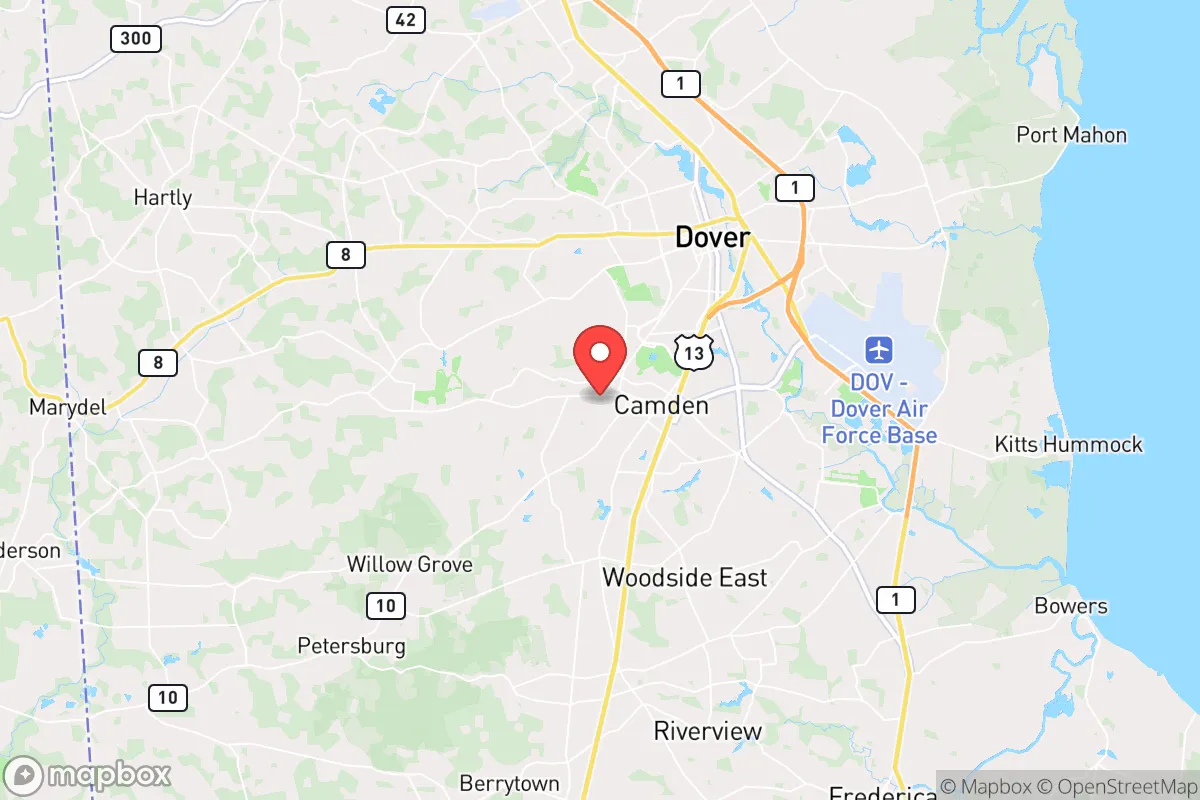
District shown is the primary district for this city’s centroid. Cities may span multiple districts.
Inherited from parent state — no local data available.
Local Political AnalysisPolitical Analysis of Wyoming, DE
Wyoming, Delaware, leans solidly Democratic with a Cook PVI of D+8, and honestly, that’s a number that’s been creeping up over the last decade. It wasn’t always this lopsided—back in the early 2000s, you could still have a real conversation with your neighbor about local taxes or property rights without it turning into a lecture on social justice. But the influx of folks from up north, especially from places like Philadelphia and New York, has shifted the whole vibe. The local elections are now dominated by candidates who talk a big game about “equity” and “inclusion,” which often translates into more regulations, higher fees, and a general feeling that the government knows better than you do about how to run your own life. It’s a far cry from the old days when the town council was mostly about fixing potholes and keeping the sewer rates reasonable.
How it compares
If you drive just 15 minutes west to Dover, you’ll find a much more balanced political scene—Dover’s Kent County is a swing area, and you can actually feel the difference in the air. People there are more likely to push back on state mandates and less likely to roll over for every new program that comes out of Legislative Hall. Head south to Milford or Harrington, and you’re in solidly red territory, where the local paper still runs letters to the editor about Second Amendment rights and school choice. Wyoming, by contrast, feels like a little blue island surrounded by a sea of common sense. The contrast is stark: in Wyoming, you’ll see more “In This House We Believe” signs than American flags, while just a few miles down the road, folks are still flying the Gadsden flag. It’s a reminder that your vote matters a lot less here than it does in those surrounding towns, because the local machine is pretty well locked in.
What this means for residents
For the average family living in Wyoming, the biggest practical impact is on your wallet and your freedoms. Property taxes have been creeping up faster than in neighboring towns, partly because the town council is more willing to approve new spending for “community initiatives” that sound nice but don’t actually fix the roads or improve the schools. You’ll also notice more restrictions on things like short-term rentals and home-based businesses—the kind of small-scale entrepreneurship that used to be a lifeline for families trying to make ends meet. And if you value your privacy or your right to keep and bear arms, well, you’ll want to keep an eye on the state legislature, because Wyoming’s representatives are usually the first to sign onto any gun control or surveillance bill that comes down the pike. It’s not a place where you can just live and let live anymore; the government is increasingly in your business.
Culturally, Wyoming has become a place where the old-school Delaware values of neighborly independence and minding your own business are slowly being replaced by a more activist, “we know what’s best for you” mindset. The local library, for example, now hosts more “diversity workshops” than story hours, and the town’s annual events have become platforms for political messaging rather than just good old-fashioned fun. Looking ahead, I don’t see this trend reversing anytime soon—if anything, the next census will probably push the PVI even further left. My advice to anyone considering a move here: come for the quiet streets and the decent schools, but don’t expect the political climate to respect your personal freedoms. Keep your powder dry and your eyes open, because the government’s reach is only going to get longer.

State Political ClimatePolitical Climate in Delaware
State Political AnalysisPolitical Environment in the State
Delaware has long been a political oddity—a small state with a big blue tilt, but one that still holds onto a surprisingly strong conservative undercurrent in its southern and rural reaches. Over the past 20 years, the state has shifted from a competitive purple battleground to a reliably Democratic stronghold, driven largely by the explosive growth of New Castle County and the Wilmington metro area. While the state legislature and governor’s mansion have been firmly in Democratic hands for over a decade, the political climate is far from monolithic, and the tension between the liberal northern corridor and the more traditional southern counties is the defining feature of Delaware’s politics today.
Urban vs. rural divide
The political map of Delaware is a textbook study in geographic polarization. New Castle County, home to over 55% of the state’s population, is the engine of Democratic power. Wilmington, Newark, and the suburban sprawl around them vote overwhelmingly blue—often by margins of 30 points or more. This is where the corporate headquarters, the University of Delaware, and the bulk of the state’s professional class reside. In contrast, Kent County and Sussex County are the state’s conservative heartland. Dover, the capital, is a bit of a purple island, but the surrounding farm country and beach towns like Lewes and Rehoboth Beach are more nuanced—Lewes leans center-right, while Rehoboth has a strong LGBTQ+ community that pulls it left. The real red strongholds are the inland rural areas: Milford, Harrington, and Seaford reliably vote Republican, often by double digits. The divide is stark: drive 20 minutes south of the C&D Canal, and you’ve left the world of bike lanes and organic co-ops for pickup trucks and “Don’t Tread on Me” flags.
Policy environment
Delaware’s policy environment is a mixed bag for a conservative. On the plus side, there is no state sales tax, which is a huge draw for families and retirees. Property taxes are also among the lowest in the nation—about half the national average. But the trade-off is a high personal income tax, with a top marginal rate of 6.6% that kicks in at just $60,000 of taxable income. The state’s regulatory posture is decidedly pro-business in some areas—Delaware’s Court of Chancery is the gold standard for corporate law—but that doesn’t extend to everyday life. Gun rights are under constant assault: in 2022, the legislature passed a ban on “assault weapons” and high-capacity magazines, along with a permit-to-purchase requirement. Education policy is a flashpoint—the state has a school choice program, but it’s limited, and the teachers’ union wields enormous influence in Dover. Healthcare is heavily regulated, with a state-based insurance exchange and Medicaid expansion under the ACA. Election laws are among the most liberal in the country: no-excuse absentee voting, same-day registration, and universal mail-in ballots were made permanent in 2024. For a conservative, the policy environment feels like a slow, steady creep toward a California-style regulatory state, albeit with lower taxes.
Trajectory & freedom
Delaware is unquestionably becoming less free by any conservative measure. The trajectory over the last decade is unmistakable. In 2013, the state legalized same-day voter registration and expanded early voting. In 2017, it became a “sanctuary state” of sorts, with a law limiting cooperation between local police and federal immigration authorities. The 2022 gun control package was the most aggressive in state history, and in 2023, the legislature passed a law requiring all public schools to adopt “culturally responsive” curriculum standards—a move many conservatives see as a backdoor for critical race theory. Parental rights took a hit in 2024 when the state expanded its “safe and inclusive schools” policy, allowing students to use preferred names and pronouns without parental notification. On the economic freedom front, the state’s minimum wage is set to hit $15 an hour by 2025, and paid family leave was enacted in 2023. The only bright spot for liberty-minded folks is that Delaware has no personal property tax on vehicles or boats, and the state’s zoning laws in rural Sussex County remain relatively lax, allowing for more property rights than in the crowded northern corridor.
Civil unrest & political movements
Delaware is not a hotbed of civil unrest, but it has its flashpoints. The most visible in recent years was the 2020 Black Lives Matter protests in Wilmington, which saw several nights of property damage and clashes with police. The city’s response—including a curfew and National Guard deployment—was criticized by both the left (for being too heavy-handed) and the right (for not being enforced quickly enough). On the right, the Delaware Federation for Children and local Moms for Liberty chapters have been active in school board races, particularly in Sussex County, where they’ve successfully flipped several seats. Immigration politics are a simmering issue: the sanctuary law has made Delaware a destination for some undocumented families, but the state’s small size means the numbers are modest compared to neighboring Maryland or Pennsylvania. Election integrity is a live wire—after the 2020 election, the state’s universal mail-in ballot system was challenged in court, but the Delaware Supreme Court upheld it in 2022. The most visible political movement is the growing libertarian streak in Sussex County, where residents regularly protest new zoning restrictions and environmental regulations they see as federal overreach. You’ll see “Keep Sussex Rural” signs alongside “Thin Blue Line” flags in equal measure.
Projection
Over the next 5-10 years, Delaware is likely to continue its leftward drift, but at a slower pace than its neighbors. The demographic trends are clear: New Castle County is growing faster than the rest of the state, driven by young professionals and remote workers fleeing higher-cost cities like Philadelphia and New York. These newcomers tend to be progressive, and they’re reshaping the political landscape. Sussex County, meanwhile, is seeing an influx of retirees from the Northeast, many of whom are fiscally conservative but socially moderate—they’ll vote for lower taxes but won’t fight gun control or school curriculum battles. The wild card is the growing Hispanic population in the central and southern parts of the state, particularly around Georgetown and Millsboro, which could shift the balance in Kent and Sussex over time. Realistically, a conservative moving to Delaware today should expect that the state will be solidly blue for the foreseeable future, with the legislature likely to pass more gun restrictions, expand paid leave, and tighten environmental regulations. The best bet for a conservative is to settle in Sussex County, where local government remains more responsive to traditional values, and where the fight over property rights and school policy is still winnable.
Bottom line for a new resident: If you’re a conservative looking for a low-tax, low-regulation haven, Delaware is not that—at least not anymore. The lack of sales tax and low property taxes are real benefits, but they come with a high income tax and a regulatory environment that’s increasingly hostile to gun rights, parental autonomy, and economic freedom. The best you can do is pick your county wisely: Sussex County offers the most breathing room, while New Castle County is a lost cause for conservative values. If you’re willing to fight for your freedoms at the local level—school boards, county council, and zoning boards—you can still carve out a good life here. But if you’re looking for a state that’s trending in a conservative direction, you’d be better off looking at Florida or Texas. Delaware is a blue state that’s only getting bluer, and the only question is how fast.
* Values derived from national, state, county, city and local statistics and may differ in a specific area. Last updated: 2026-04-23T03:40:00.000Z
Narrative content on this page is AI-generated and may contain mistakes. Verify any details that matter before acting on them.
ReloMaps may earn a commission from affiliate links at no extra cost to you.

