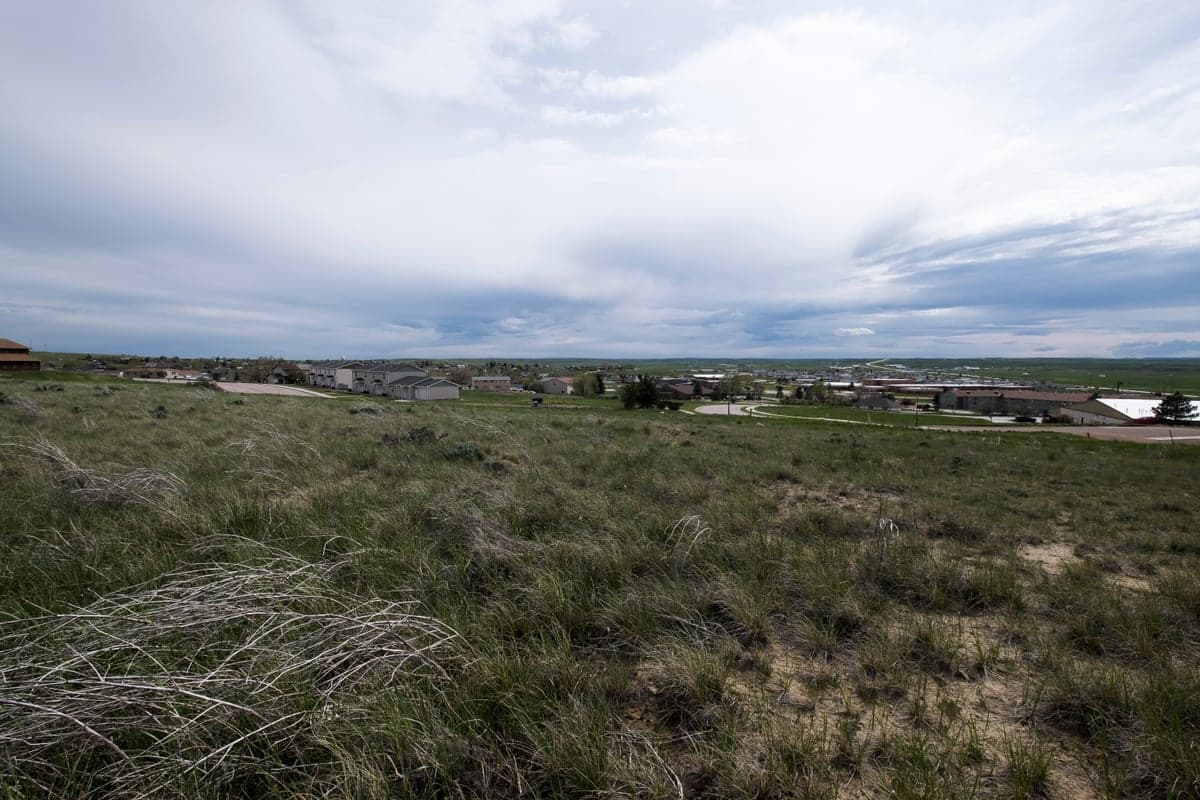
Photo: Wikipedia
Strategic Assessment of Wright, WY
Strong survivability profile. Good buffer from population centers, with manageable environmental and tactical risks.
What does the Strategic Assessment tell us?
Our Strategic Assessment grades tactical survivability of an area. Major population centers, military targets, fallout zones, natural disasters, and border exposure all drive risk — lower exposure means a more defensible position in a crisis.
This is heavily inspired by Joel Skousen's Strategic Relocation book. Highly recommended you checkout the book ($)What does this tell us?
Our Strategic Assessment grades tactical survivability of an area. Major population centers, military targets, fallout zones, natural disasters, and border exposure all drive risk — lower exposure means a more defensible position in a crisis.
This is heavily inspired by Joel Skousen's Strategic Relocation book. Highly recommended you checkout the book ($)Strategic Pillars

Key Distances
Regional Safe Places
Below is our recommended "safe zones" in Wyoming and the surrounding area based on our strategic heuristics. For most people, it's unrealistic to live in a “safe zone” full-time due to work, family or other personal reasons. They tend to be more rural. However, many of these areas are perfect for second homes and retreat properties that double as a vacation home or even a short-term rental.
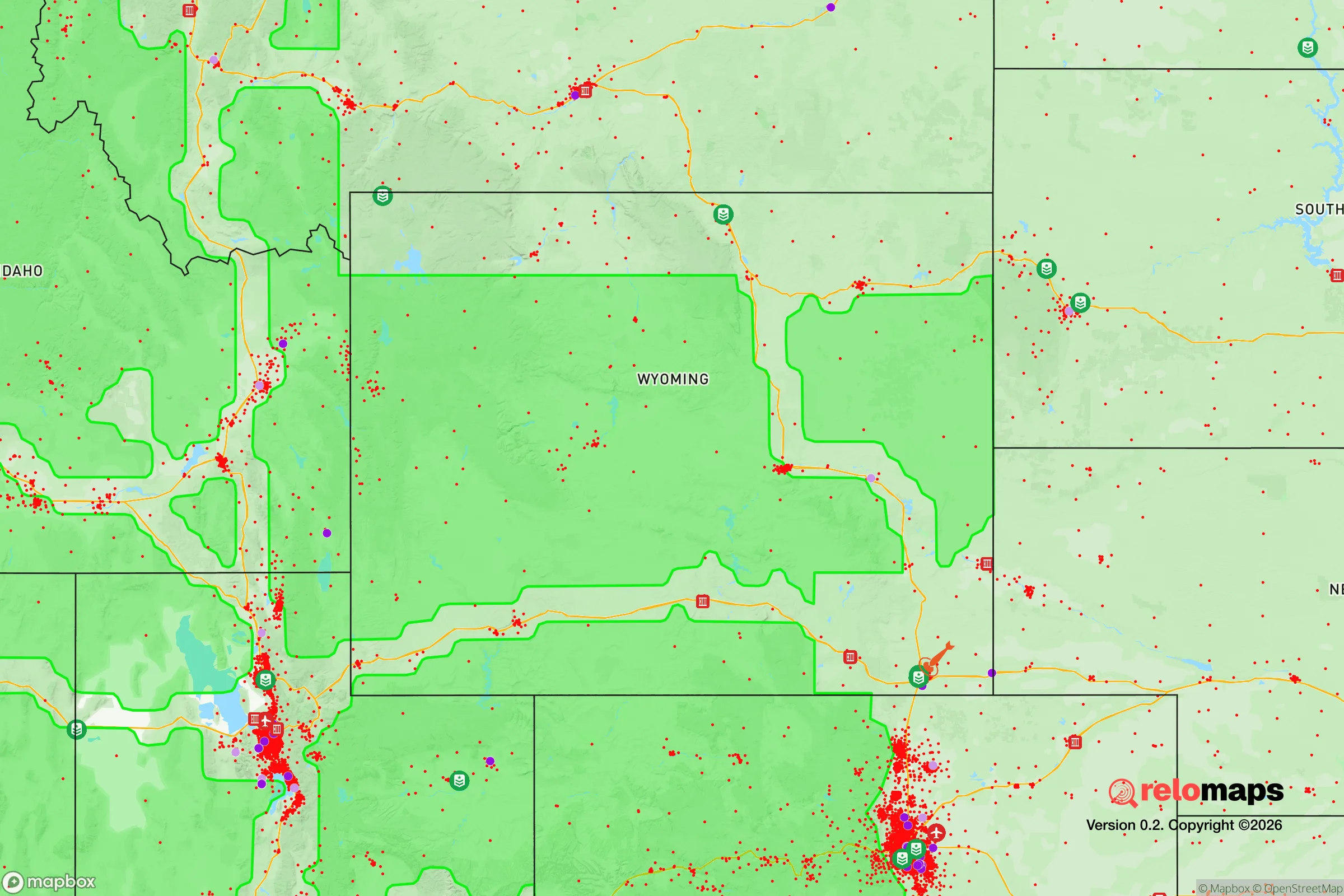
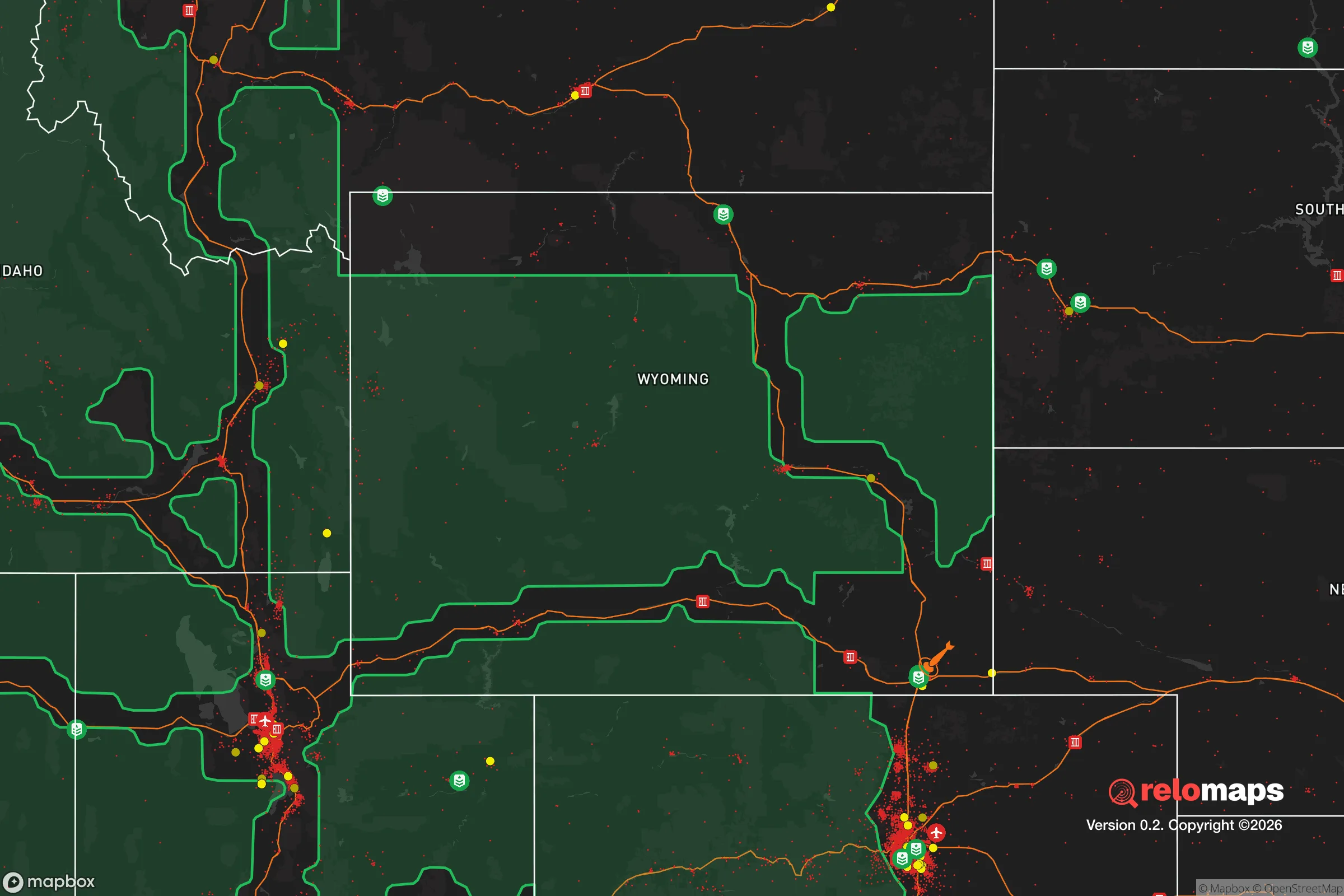


Important Note: For informational purposes only. This does not mean nothing bad ever happens in the green zones. Please use common sense. This is based on public data and modeled with AI. We tried to take a conservative approach but mistakes happen. We update this regularly as new information becomes available.
Solar Generator Recommendations
Backup power matters more here than in safer locations. We've picked three solar generators across budgets and capacity tiers — start with the budget unit if you only need a few essentials, or step up if you want to run a fridge and HVAC for days at a time.

Jackery Portable Power Station Explorer 300
Budget OptionPower on the Go: Weighing only 11 lbs, it's convenient to set up and store with book-sized foldable solar panels

BLUETTI Portable Power Station AC180
Designed for both indoor and outdoor scenarios, AC180 is highly capable as it has a robost capacity and continuous output power.

EF ECOFLOW DELTA Pro Ultra Power Station
Upgraded PickEcoFlow DELTA Pro Ultra is a whole-home energy system designed to grow with your family. Integrated with the Smart Home Panel 2, it scales to meet your evolving energy needs — keeping your home powered, intelligent, and secure through every stage of life.
We earn a commission, at no additional cost to you.
Strategic Assessment Analysis
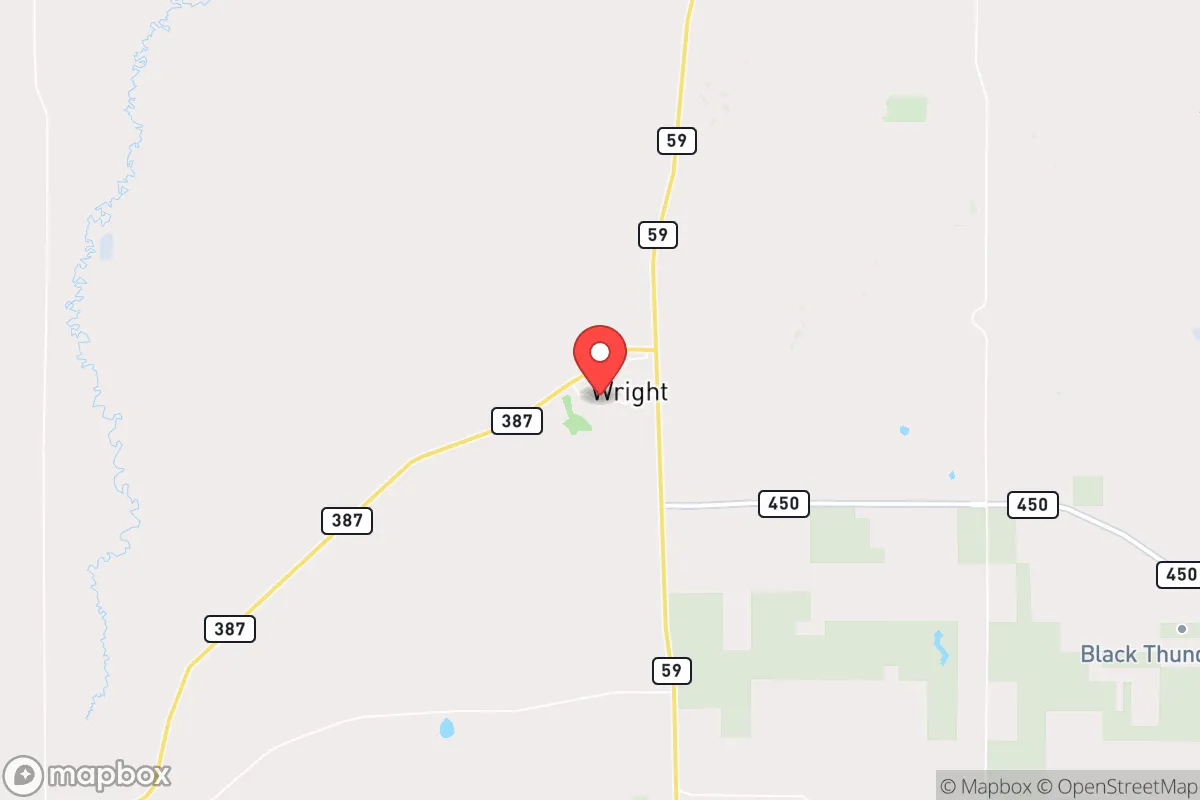
Wright, Wyoming, offers a strategic relocation option for those prioritizing resilience, distance from major population centers, and a self-sufficient lifestyle. Situated in Campbell County, roughly 50 miles south of Gillette and 150 miles from the Montana border, this small town of roughly 1,800 residents sits at the edge of the Thunder Basin National Grassland. Its low population density, harsh but manageable climate, and isolation from major interstate corridors make it a defensible location for individuals and families preparing for civic unrest, supply chain disruptions, or mass casualty events. The area's economic anchor in energy production—primarily coal and natural gas—provides a local resource base that aligns with prepper priorities, though the region's dependence on extractive industries also introduces specific vulnerabilities.
Geographic position and natural advantages for long-term security
Wright’s location in northeastern Wyoming places it in a sparsely populated corridor between the Black Hills to the east and the Bighorn Mountains to the west. The town sits at an elevation of roughly 5,000 feet, offering a high-plains environment with cold winters, moderate summers, and low humidity that limits mold and pest issues. The surrounding Thunder Basin National Grassland provides over 570,000 acres of public land for hunting, foraging, and potential off-grid retreats, though access is regulated by the U.S. Forest Service. The area is far from any major metropolitan area—Denver is over 300 miles south, and Billings is about 200 miles northwest—which reduces exposure to civil unrest, electromagnetic pulse (EMP) effects, or fallout from nuclear events targeting larger cities. The nearest interstate highway (I-90) runs through Gillette, 50 miles north, meaning Wright is not a transit corridor for large-scale evacuation or military movement. This isolation is a double-edged sword: it provides security but also limits rapid resupply or medical evacuation. The Powder River Basin, which underlies the region, contains one of the largest coal deposits in the world, and local water sources include the Cheyenne River and several small reservoirs, though surface water is limited in dry years.
Risks, exposures, and proximity to fallout-relevant landmarks
While Wright’s isolation is a strength, it is not immune to risks. The town is roughly 100 miles from the Wyoming-Montana border and about 120 miles from the Minuteman III missile fields of the 90th Missile Wing at F.E. Warren Air Force Base near Cheyenne. In a nuclear exchange scenario, these missile silos—spread across southeastern Wyoming—are primary targets. Wright sits outside the immediate blast and thermal zones for most of these sites, but prevailing westerly winds could carry fallout across the region depending on detonation altitude and yield. The town is also within 200 miles of the Bakken oil fields in North Dakota, a potential target for infrastructure disruption. Closer to home, the coal-fired power plants and coal mines around Wright—including the Black Thunder and North Antelope Rochelle mines, among the largest in the world—are industrial landmarks that could be targeted for economic warfare or sabotage. The town’s single primary road, WY-59, connects to Gillette and I-90, creating a chokepoint for evacuation or resupply. There are no major hospitals in Wright; the closest trauma center is in Gillette, 50 minutes north. For those concerned with civil unrest, the town’s small population and strong community ties reduce the likelihood of localized chaos, but the lack of a significant law enforcement presence (Campbell County Sheriff’s Office covers the area) means residents must be prepared for self-defense and mutual aid.
Practical resilience for a relocator: food, water, energy, and defensibility
For a relocator focused on self-sufficiency, Wright offers a mixed picture. Water is the most critical vulnerability: the area receives only 12-14 inches of precipitation annually, and the primary municipal water source is the Madison aquifer, which is deep and finite. Private wells are common but can be expensive to drill (often $10,000-$20,000) and may yield low-quality water due to mineral content. Rainwater collection is feasible but limited by low rainfall; snowmelt in winter provides a seasonal supplement. Food production is challenging due to short growing seasons (90-100 frost-free days) and alkaline soils, though cold-hardy crops like potatoes, carrots, and kale can succeed with raised beds and hoop houses. The Thunder Basin area supports deer, antelope, and small game, making hunting a viable protein source. Energy resilience is a strong point: the region is a net energy exporter, and natural gas is abundant. Propane delivery is common, and solar potential is excellent (over 300 sunny days per year), though winter snow cover can reduce panel output. Wood heating is practical given nearby public lands, but firewood permits are required. Defensibility is high due to low population density and wide-open terrain that provides clear sightlines. The town’s layout—a compact grid with few entry points—makes it easier to monitor and control access. However, the lack of natural cover (no forests, few hills) means that any approach is visible, which cuts both ways. For those willing to live outside town limits, acreage is affordable (often under $2,000 per acre), allowing for private gardens, livestock, and secure storage. The nearest major supply hub for prepper gear and bulk goods is Gillette, which has a Walmart, hardware stores, and a regional airport.
The overall strategic picture for Wright is one of trade-offs. It offers genuine advantages for those seeking distance from coastal population centers, nuclear target density, and civil unrest: low population, abundant energy resources, and a community culture that leans heavily toward self-reliance and conservative values. The town’s economic base in coal and gas means local jobs are available, but also ties the area’s future to federal energy policy and global commodity prices. For a relocator willing to invest in water infrastructure, cold-weather gardening, and off-grid energy, Wright provides a defensible base with room to grow. The primary downsides are the water scarcity, the long distance to advanced medical care, and the potential for fallout from missile field strikes. For those who prioritize isolation and resource independence over convenience and climate, Wright is a serious contender—but it demands preparation, not just relocation.

* Values derived from national, state, county, city and local statistics and may differ in a specific area. Last updated: 2026-04-21T11:30:04.000Z
Narrative content on this page is AI-generated and may contain mistakes. Verify any details that matter before acting on them.
ReloMaps may earn a commission from affiliate links at no extra cost to you.

