
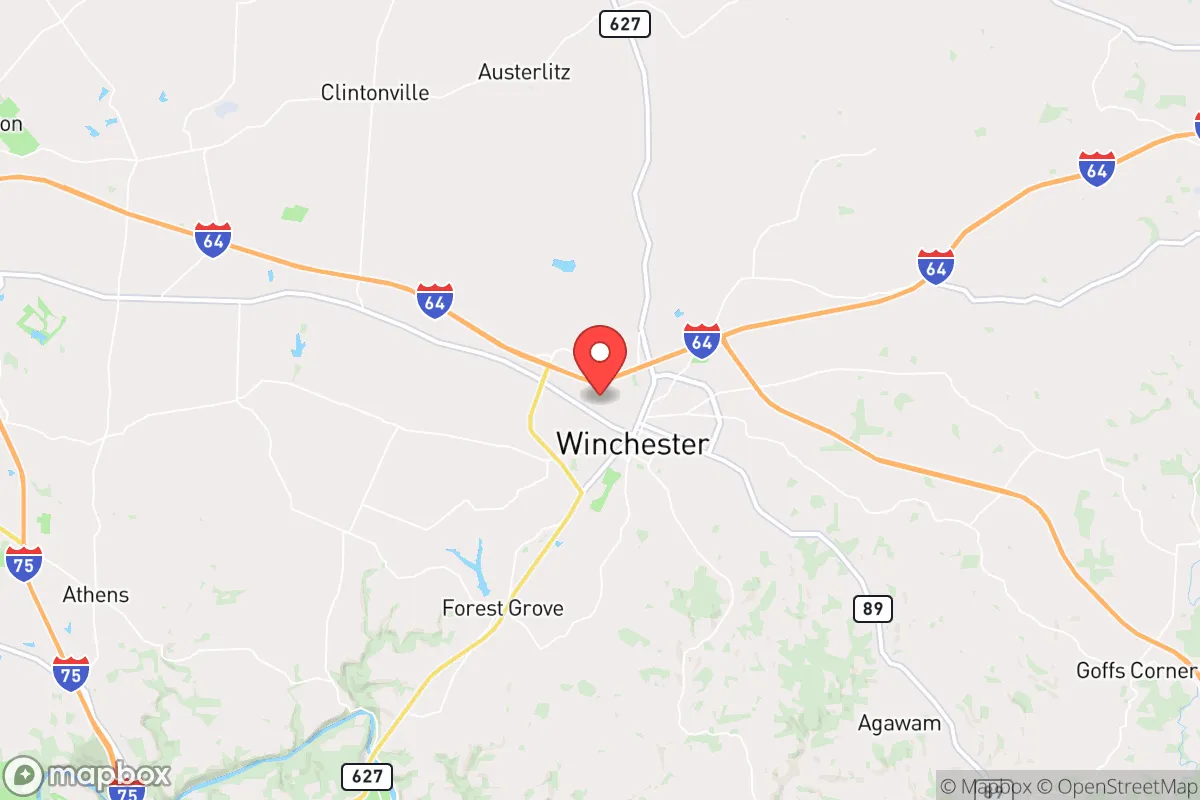
Photo: Wikipedia
Strategic Assessment of Winchester, KY
Meaningful friction. Expect exposure to either population pressure, blast zones, or natural disaster risk. Consider buying a retreat property.
What does the Strategic Assessment tell us?
Our Strategic Assessment grades tactical survivability of an area. Major population centers, military targets, fallout zones, natural disasters, and border exposure all drive risk — lower exposure means a more defensible position in a crisis.
This is heavily inspired by Joel Skousen's Strategic Relocation book. Highly recommended you checkout the book ($)What does this tell us?
Our Strategic Assessment grades tactical survivability of an area. Major population centers, military targets, fallout zones, natural disasters, and border exposure all drive risk — lower exposure means a more defensible position in a crisis.
This is heavily inspired by Joel Skousen's Strategic Relocation book. Highly recommended you checkout the book ($)Strategic Pillars

Key Distances
Regional Safe Places
Below is our recommended "safe zones" in Kentucky and the surrounding area based on our strategic heuristics. For most people, it's unrealistic to live in a “safe zone” full-time due to work, family or other personal reasons. They tend to be more rural. However, many of these areas are perfect for second homes and retreat properties that double as a vacation home or even a short-term rental.
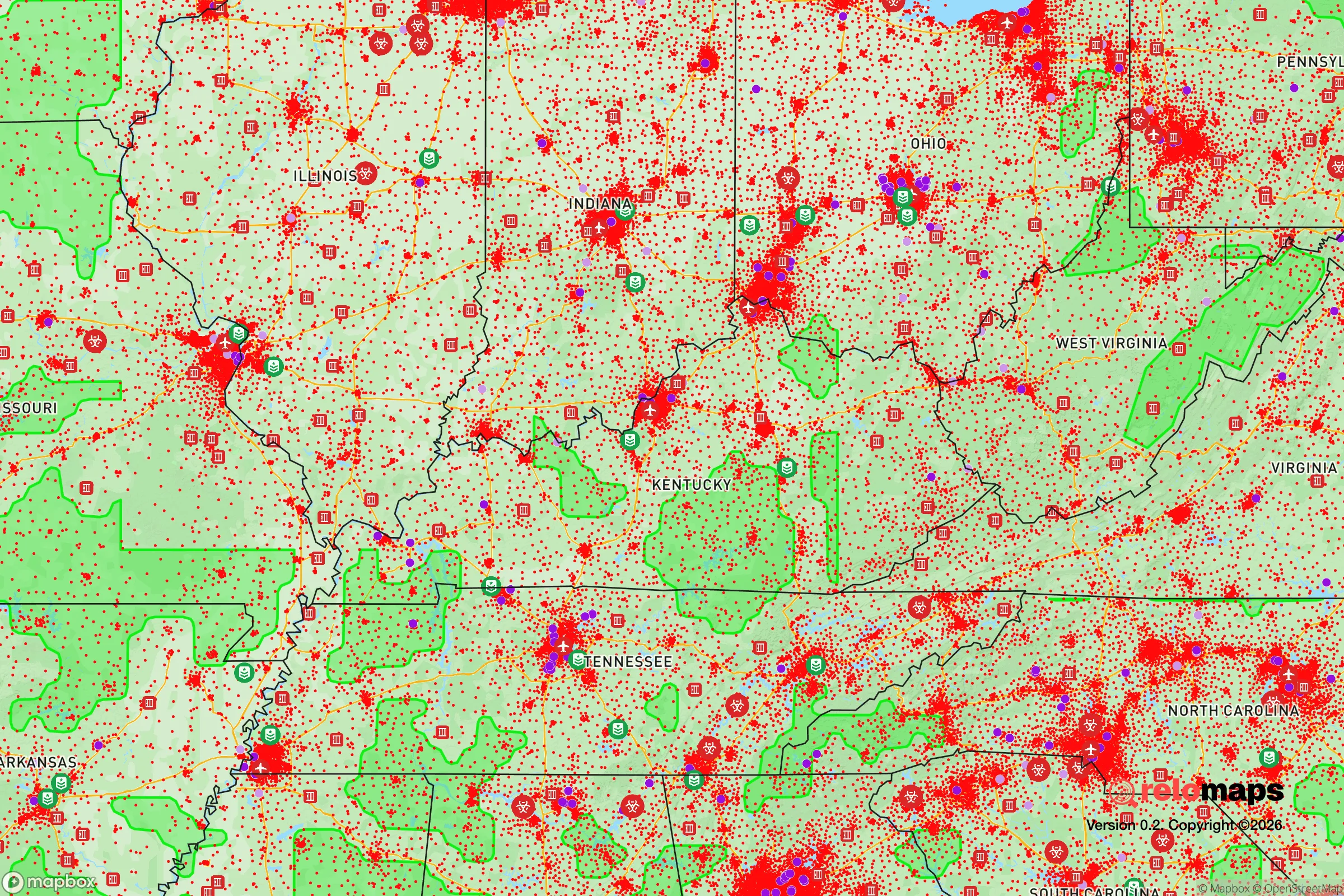


Important Note: For informational purposes only. This does not mean nothing bad ever happens in the green zones. Please use common sense. This is based on public data and modeled with AI. We tried to take a conservative approach but mistakes happen. We update this regularly as new information becomes available.
Solar Generator Recommendations
Backup power matters more here than in safer locations. We've picked three solar generators across budgets and capacity tiers — start with the budget unit if you only need a few essentials, or step up if you want to run a fridge and HVAC for days at a time.

Jackery Portable Power Station Explorer 300
Budget OptionPower on the Go: Weighing only 11 lbs, it's convenient to set up and store with book-sized foldable solar panels

BLUETTI Portable Power Station AC180
Designed for both indoor and outdoor scenarios, AC180 is highly capable as it has a robost capacity and continuous output power.

EF ECOFLOW DELTA Pro Ultra Power Station
Upgraded PickEcoFlow DELTA Pro Ultra is a whole-home energy system designed to grow with your family. Integrated with the Smart Home Panel 2, it scales to meet your evolving energy needs — keeping your home powered, intelligent, and secure through every stage of life.
We earn a commission, at no additional cost to you.
Strategic Assessment Analysis
Winchester, Kentucky, offers a compelling mix of strategic depth and quiet resilience that appeals to those planning for long-term stability in an uncertain future. Situated in Clark County, roughly 20 miles east of Lexington, this town of about 19,000 people sits far enough from major urban centers to avoid the immediate fallout of civic unrest or disaster, yet close enough to access critical resources when needed. Its position along the edge of the Bluegrass Region and the Appalachian foothills provides a natural buffer, with the Kentucky River cutting through the county and offering both water access and a defensible terrain feature. For a relocator thinking about the next decade, Winchester represents a low-profile, high-utility base that doesn't draw attention but can sustain a prepared household.
Geographic position and natural advantages for long-term security
Winchester's location is its strongest card. The city sits at the intersection of the Bluegrass Region's fertile farmland and the more rugged, forested terrain of the Daniel Boone National Forest to the east. This dual geography means you have access to rich agricultural soil for potential food production while also having nearby wooded areas for cover, hunting, and resource gathering. The Kentucky River runs along the county's northern edge, providing a reliable water source that isn't dependent on municipal infrastructure. The area's elevation is moderate, with rolling hills that offer natural observation points and limited line-of-sight for any unwanted visitors. Winchester is also roughly 60 miles from the Ohio River and the major industrial corridor along I-75, which means it's close enough to monitor regional events but far enough to avoid being a primary target. The local climate is temperate, with four distinct seasons that support year-round gardening and livestock management, though winters can be cold enough to require proper heating and food storage planning.
Risks, exposures, and proximity to fallout-relevant landmarks
No location is without vulnerabilities, and Winchester has a few that require honest assessment. The most significant risk is its proximity to Lexington, a city of over 320,000 people that sits just 20 miles to the west. In a mass casualty event or widespread civil unrest, Lexington could become a source of refugee flow eastward along the I-64 and US-60 corridors. Winchester sits directly on US-60, which connects Lexington to the more remote areas of eastern Kentucky, making it a potential chokepoint. The Blue Grass Army Depot, located about 15 miles southwest of Winchester near Richmond, stores chemical weapons and conventional munitions. While the depot has security protocols, any major incident there could create a contamination zone that affects downwind areas, including parts of Clark County. Additionally, the Kentucky River's floodplain is a concern in low-lying areas near the river, though Winchester's core sits on higher ground. The region is also within the New Madrid Seismic Zone's extended impact radius, meaning a major earthquake could disrupt infrastructure for weeks. On the positive side, there are no nuclear power plants within 50 miles, and the nearest major military installation is Fort Knox, roughly 100 miles to the west, which is far enough to avoid direct fallout from a targeted strike.
Practical resilience for a relocator: food, water, energy, and defensibility
For a single individual or family looking to establish a resilient homestead, Winchester offers several practical advantages. The surrounding farmland is some of the most productive in the state, with local farmers' markets and agricultural co-ops providing a network for sourcing seeds, livestock, and equipment. The Clark County Soil and Water Conservation District offers resources for sustainable land management, which is useful for anyone planning to grow their own food. Water access is strong: the Kentucky River is a perennial water source, and the area's groundwater is generally reliable for well drilling, though permits and testing are required. For energy independence, the region has decent solar potential, with about 200 sunny days per year, and the wooded areas provide ample biomass for heating. Winchester's electric grid is served by Kentucky Utilities, which has a mixed record on reliability during storms, so a backup generator or off-grid solar setup is a wise investment. Defensibility is moderate: the rolling hills and scattered woodlots offer natural cover, but the terrain is not mountainous enough to provide significant tactical advantage. A rural property with a long driveway, good sightlines, and a defensible perimeter is achievable within a 10-15 minute drive from downtown. The local population is predominantly conservative and self-reliant, with a strong hunting and firearms culture, which means you're likely to find neighbors who share your mindset rather than view you with suspicion. The Clark County Sheriff's Office maintains a visible presence, but response times in rural areas can exceed 20 minutes, so personal security planning is essential.
The overall strategic picture for Winchester is one of balanced opportunity. It's not a hardened bunker location, nor is it a remote wilderness retreat. Instead, it's a functioning small town with a working economy, decent infrastructure, and a population that largely minds its own business. The risks from Lexington and the Army Depot are real but manageable with proper planning—choosing a property east of town, away from major highways, and with a reliable water source mitigates the most likely threats. For a conservative-leaning relocator who wants to be prepared for civic unrest, economic collapse, or natural disasters without living off-grid in total isolation, Winchester provides a solid middle ground. It's close enough to Lexington for medical care, supply runs, and employment, but far enough to avoid being caught in the worst of any urban crisis. The key is to act before the next wave of migration pushes prices higher and reduces availability of rural properties. Winchester won't stay under the radar forever, but for now, it offers a rare combination of accessibility, natural resources, and community character that aligns well with a prepared mindset.

* Values derived from national, state, county, city and local statistics and may differ in a specific area. Last updated: 2026-04-21T09:55:06.000Z
Narrative content on this page is AI-generated and may contain mistakes. Verify any details that matter before acting on them.
ReloMaps may earn a commission from affiliate links at no extra cost to you.

