Photo: Wikipedia
Demographics of Wilsonville, OR
Affluence Level in Wilsonville, OR
An upper-middle-class area. Household wealth, education levels, and homeownership run ahead of national benchmarks.
People of Wilsonville, OR
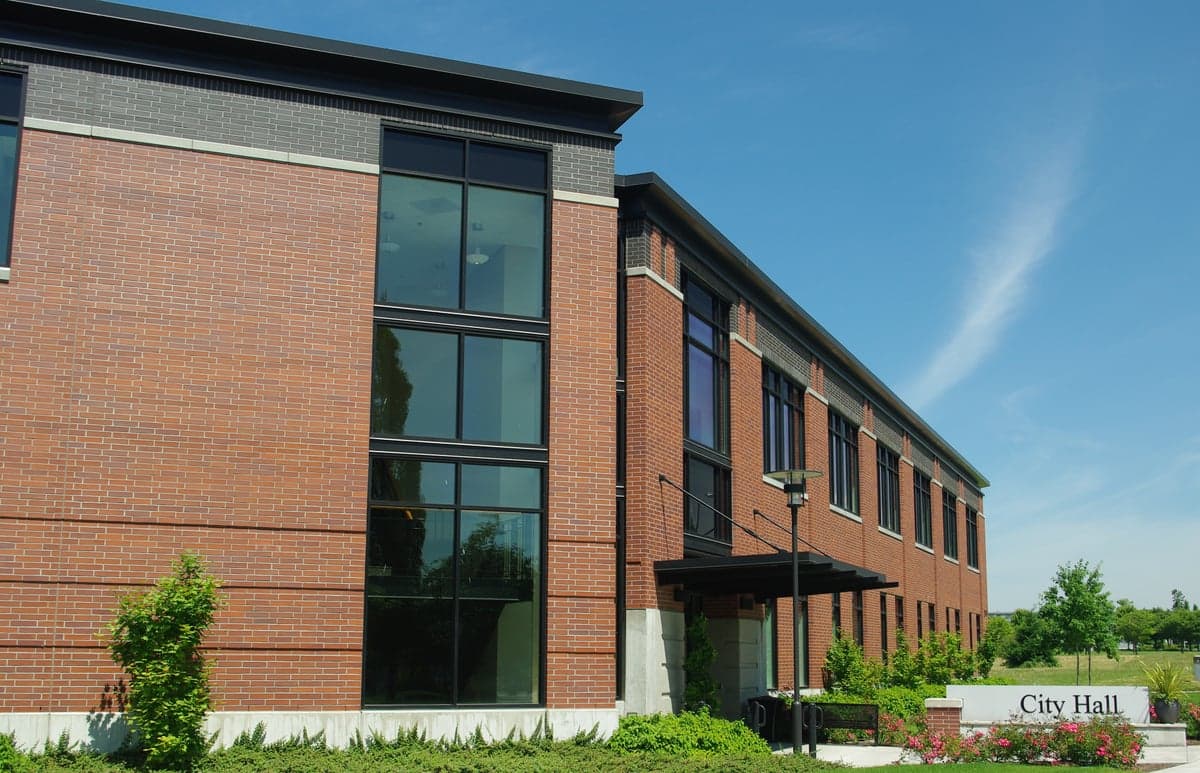
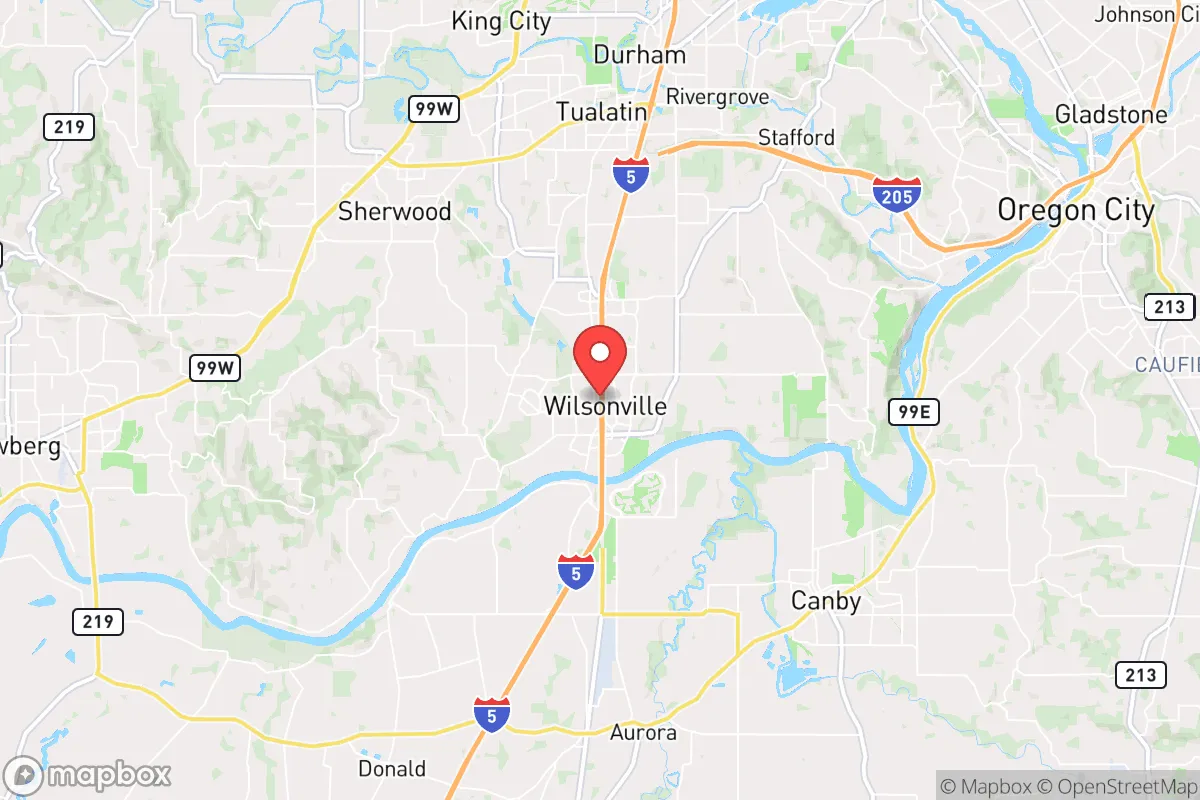
Wilsonville, Oregon, is a predominantly white, family-oriented suburb of Portland with a population of 26,183. The city is characterized by a high proportion of college-educated residents (44.5%) and a low foreign-born share (3.8%), reflecting a stable, largely native-born community. While White residents make up 70.3% of the population, the Hispanic community has grown to 16.0%, and smaller East/Southeast Asian (2.8%) and Indian-subcontinent (1.2%) groups add modest diversity. The overall character is that of a quiet, well-educated, and relatively affluent suburb where long-time farming families mix with newer professionals drawn by employment in technology and manufacturing.
How the city was settled and grew
Wilsonville was originally a farming and logging settlement along the Willamette River, incorporated only in 1968. The earliest residents were white homesteaders who took up land grants in the mid-19th century, establishing small farms and river landings. The historic Old Town district, centered near the original Boones Ferry crossing, became the commercial and social hub for these early families. Through the early 20th century, the population remained small and almost entirely white, with growth limited by the area's rural character. The arrival of Interstate 5 in the 1960s and the subsequent construction of the Charbonneau planned community in the 1970s—originally a retirement and golf-course development—marked the first major wave of in-migration, attracting mostly white retirees and later families from the Portland metro area. The Frog Pond area, historically agricultural, began to see residential development as the city expanded northward.
Modern era (post-1965)
After the Hart-Cellar Act of 1965, Wilsonville did not experience the large-scale immigration seen in many U.S. cities. Its foreign-born population remains low at 3.8%, and the city's growth has been driven primarily by domestic migration from within Oregon and the Pacific Northwest. The Hispanic community, now 16.0% of the population, began to grow in the 1990s and 2000s, largely settling in the Coffee Creek and Frog Pond neighborhoods, where more affordable housing and proximity to agricultural and service jobs attracted families. East/Southeast Asian residents (2.8%) and Indian-subcontinent residents (1.2%) are more recent arrivals, often drawn by professional opportunities at companies like Mentor Graphics (now Siemens) and Boeing. These groups tend to concentrate in the newer master-planned Villebois development, which offers modern townhomes and a walkable design appealing to tech workers. The Charbonneau district remains predominantly white and older, while Old Town retains a mix of long-time white residents and some newer Hispanic families. The city's overall racial composition has shifted only modestly: the White share declined from roughly 80% in 2000 to 70.3% today, with the Hispanic share rising correspondingly.
The future
Wilsonville's population is projected to continue growing, driven by annexations and new housing developments in the Frog Pond and Villebois areas. The Hispanic share is likely to increase further, potentially reaching 20–25% over the next two decades, as younger families move in and birth rates remain higher among Hispanic residents. East/Southeast Asian and Indian-subcontinent communities are expected to grow slowly, primarily through professional in-migration, but will likely remain small (under 5% each). The city is not tribalizing into distinct ethnic enclaves; rather, neighborhoods like Villebois are becoming more diverse, while Charbonneau and Old Town remain predominantly white. The overall trend is toward gradual diversification, but Wilsonville will likely remain a majority-white, middle-to-upper-income suburb with a growing Hispanic minority and a thin layer of Asian and Indian professionals.
For someone moving in now, Wilsonville offers a stable, safe, and well-educated community with good schools and low crime. The population is becoming slightly more diverse but remains overwhelmingly native-born and English-speaking. New residents will find a city that values order, family life, and economic opportunity, with a conservative-leaning political culture that reflects its suburban and agricultural roots. The future points to continued growth and modest diversification, not radical change.

* Values derived from national, state, county, city and local statistics and may differ in a specific area. Last updated: 2026-05-14T20:57:32.000Z
Narrative content on this page is AI-generated and may contain mistakes. Verify any details that matter before acting on them.
ReloMaps may earn a commission from affiliate links at no extra cost to you.

