
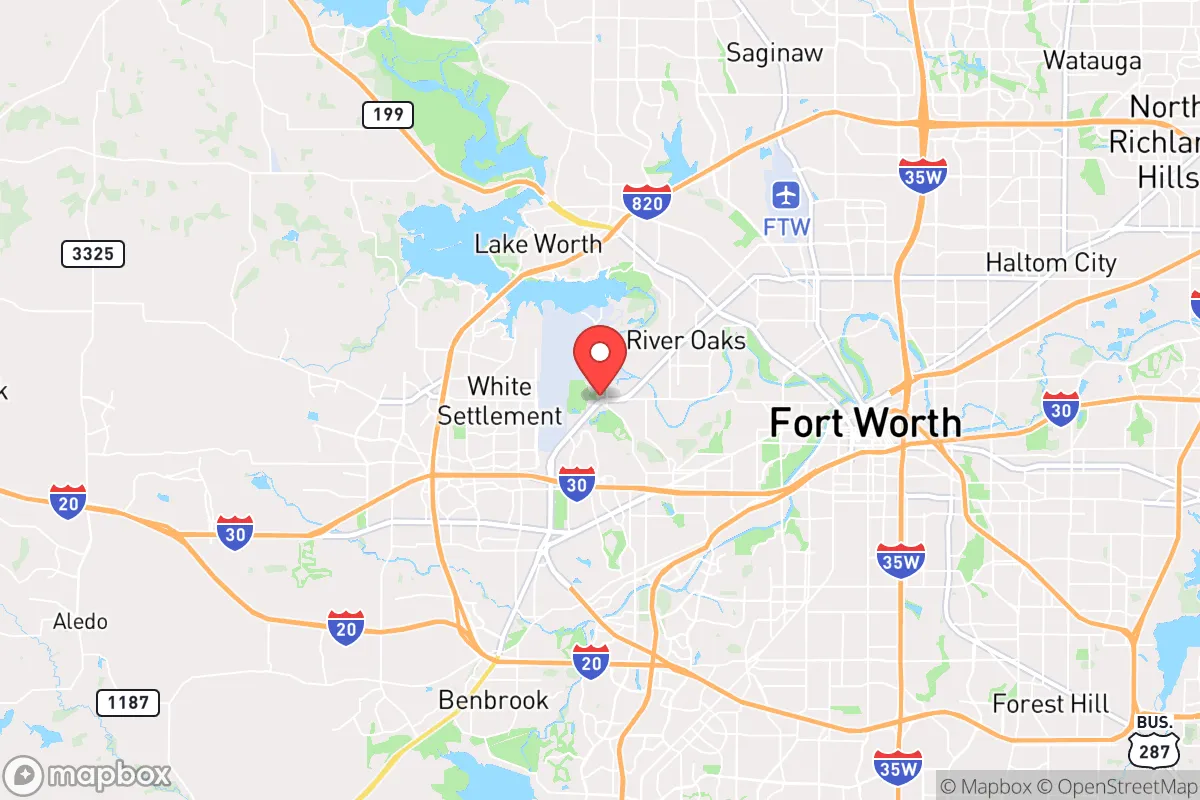
Strategic Assessment of Westworth Village, TX
Multiple tactical vulnerabilities. Population density, target proximity, or disaster risk are likely compounding. A retreat property and exit planning is required.
What does the Strategic Assessment tell us?
Our Strategic Assessment grades tactical survivability of an area. Major population centers, military targets, fallout zones, natural disasters, and border exposure all drive risk — lower exposure means a more defensible position in a crisis.
This is heavily inspired by Joel Skousen's Strategic Relocation book. Highly recommended you checkout the book ($)What does this tell us?
Our Strategic Assessment grades tactical survivability of an area. Major population centers, military targets, fallout zones, natural disasters, and border exposure all drive risk — lower exposure means a more defensible position in a crisis.
This is heavily inspired by Joel Skousen's Strategic Relocation book. Highly recommended you checkout the book ($)Strategic Pillars

Key Distances
Regional Safe Places
Below is our recommended "safe zones" in Texas and the surrounding area based on our strategic heuristics. For most people, it's unrealistic to live in a “safe zone” full-time due to work, family or other personal reasons. They tend to be more rural. However, many of these areas are perfect for second homes and retreat properties that double as a vacation home or even a short-term rental.

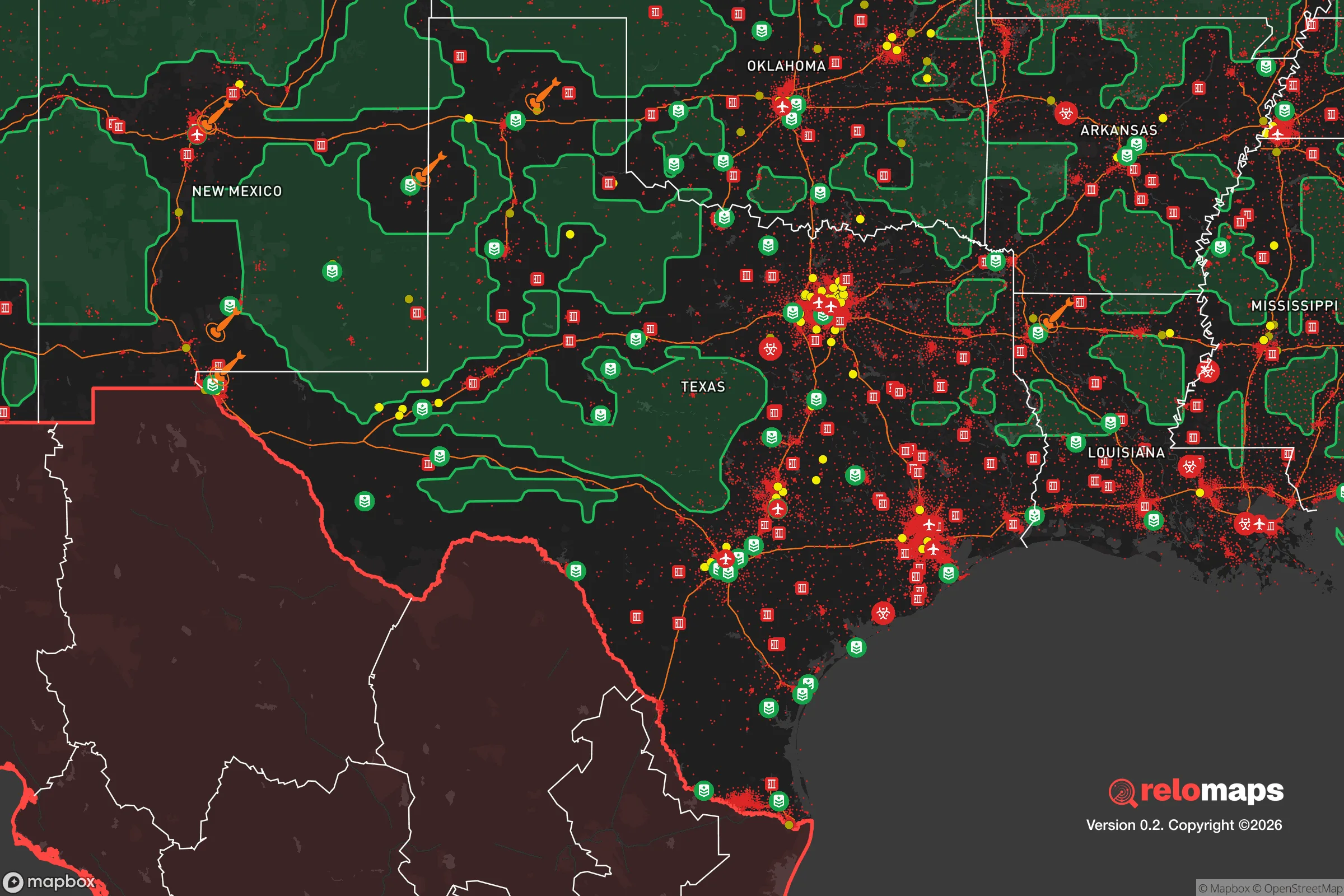


Important Note: For informational purposes only. This does not mean nothing bad ever happens in the green zones. Please use common sense. This is based on public data and modeled with AI. We tried to take a conservative approach but mistakes happen. We update this regularly as new information becomes available.
Solar Generator Recommendations
Backup power matters more here than in safer locations. We've picked three solar generators across budgets and capacity tiers — start with the budget unit if you only need a few essentials, or step up if you want to run a fridge and HVAC for days at a time.

Jackery Portable Power Station Explorer 300
Budget OptionPower on the Go: Weighing only 11 lbs, it's convenient to set up and store with book-sized foldable solar panels

BLUETTI Portable Power Station AC180
Designed for both indoor and outdoor scenarios, AC180 is highly capable as it has a robost capacity and continuous output power.

EF ECOFLOW DELTA Pro Ultra Power Station
Upgraded PickEcoFlow DELTA Pro Ultra is a whole-home energy system designed to grow with your family. Integrated with the Smart Home Panel 2, it scales to meet your evolving energy needs — keeping your home powered, intelligent, and secure through every stage of life.
We earn a commission, at no additional cost to you.
Strategic Assessment Analysis
Westworth Village, Texas, occupies a tight strategic pocket that few relocators fully appreciate: it sits just west of Fort Worth’s urban core yet remains insulated by the Trinity River floodplain and the Naval Air Station Joint Reserve Base Fort Worth to its south. This creates a natural buffer zone that, in a crisis, would slow movement from the denser eastern suburbs and downtown while preserving your own access to major evacuation routes like Interstate 30 and State Highway 183. The village’s low population density—roughly 2,500 residents spread over 2.5 square miles—means you’re not competing with thousands of neighbors for the same limited resources when things go sideways. For a conservative-leaning relocator who values self-sufficiency and wants proximity to regional infrastructure without being swallowed by it, Westworth Village offers a rare blend of concealment and connectivity.
Geographic position and natural defensive advantages
Westworth Village’s location on the western edge of the Fort Worth metroplex gives it a distinct geographic edge. The Trinity River meanders along its eastern boundary, creating a natural obstacle that would complicate any ground approach from the city center. To the south, the Naval Air Station Joint Reserve Base—home to F-16s and C-130s—acts as a de facto no-go zone for civilian traffic, further limiting access points. The village itself sits on a modest rise above the river bottom, offering decent line-of-sight over the surrounding floodplain. This elevation, while not dramatic, provides enough vantage to monitor movement along the major corridors without being exposed yourself. The area’s limestone bedrock beneath the topsoil also means groundwater wells are viable, though most homes here are on municipal supply. For a prepper, the key takeaway is that Westworth Village is not a natural chokepoint—it’s a pocket that can be held with minimal manpower if you control the handful of roads leading in: Westworth Boulevard, Clifford Street, and the access points off I-30.
Risks, exposures, and proximity to fallout-relevant landmarks
The most significant risk for Westworth Village is its proximity to high-value military and industrial targets. The Naval Air Station Joint Reserve Base is less than two miles south—a prime target in any conflict scenario involving strategic bombing or sabotage. A strike on that base would produce a blast wave and potential fallout that could reach the village depending on wind direction and yield. Additionally, the BNSF Railway’s main freight line runs just north of the village, carrying hazardous materials through the region daily. A derailment or intentional attack on that rail corridor could release toxic chemicals or disrupt supply chains for weeks. On the plus side, Westworth Village is far enough from the Dallas-Fort Worth International Airport (roughly 20 miles east) to avoid the immediate blast radius of a major aviation incident, but close enough that a coordinated attack on the airport’s fuel depots could send a plume of burning jet fuel across the metroplex. The village’s position also means it’s not directly in the path of the primary fallout zones from a nuclear detonation downtown Fort Worth—prevailing winds typically carry debris east-northeast—but secondary contamination from fires or industrial releases is a real concern. For the prepper, this means having a robust air filtration system and a plan to seal the home for 48-72 hours is non-negotiable.
Practical resilience for a relocator: food, water, energy, and defensibility
Westworth Village’s practical resilience is a mixed bag that rewards preparation. The village is served by the Trinity River Authority for water, which draws from the nearby Eagle Mountain Lake and Lake Worth. In a prolonged grid-down scenario, those surface water sources would be vulnerable to contamination, so a well-equipped prepper should plan for rainwater catchment or a deep private well—though drilling permits are controlled by the city and the underlying limestone can make drilling expensive. Food options are limited: the village has no grocery store of its own, so you’re reliant on the Kroger and Walmart in nearby River Oaks or the larger stores in Fort Worth proper. That means stockpiling at least a three-month supply of non-perishables is essential, as supply chains could be disrupted for weeks after a major event. Energy-wise, most homes are on the Oncor grid, which has a mixed reliability record during Texas winter storms. Solar with battery backup is a strong play here, given the area’s 220+ sunny days per year, but homeowners’ associations in some parts of the village may restrict panel placement—check the covenants before buying. Defensibility is where Westworth Village shines: the street layout is a mix of cul-de-sacs and short blocks, making it easy to establish perimeter security with a small group. The village’s police department is small (fewer than a dozen officers), so in a prolonged crisis, you’ll be relying on neighborhood watch and your own capabilities. The local gun culture is strong, and the Tarrant County Sheriff’s Office is generally supportive of Second Amendment rights, but the village itself has no specific ordinances that restrict firearms beyond state law.
The overall strategic picture for Westworth Village is one of calculated trade-offs. You get the buffer of a low-density community with natural barriers, but you’re still within the blast radius of a major military base and the disruption zone of a critical rail corridor. For the conservative relocator who wants to be close enough to Fort Worth’s job market and medical infrastructure (the nearest Level I trauma center is John Peter Smith Hospital, 10 minutes east) but far enough to have a fighting chance at self-defense, this village works—provided you treat it as a base camp, not a fortress. The key is to invest in redundancy: backup power, stored water, a deep pantry, and a network of like-minded neighbors. Westworth Village won’t save you from a direct hit, but it gives you the space and the position to ride out the first 72 hours of most scenarios, which is where survival is decided. If you’re looking for a place that balances access with isolation, this pocket of Tarrant County deserves a serious look.

* Values derived from national, state, county, city and local statistics and may differ in a specific area. Last updated: 2026-04-24T06:13:33.000Z
Narrative content on this page is AI-generated and may contain mistakes. Verify any details that matter before acting on them.
ReloMaps may earn a commission from affiliate links at no extra cost to you.

