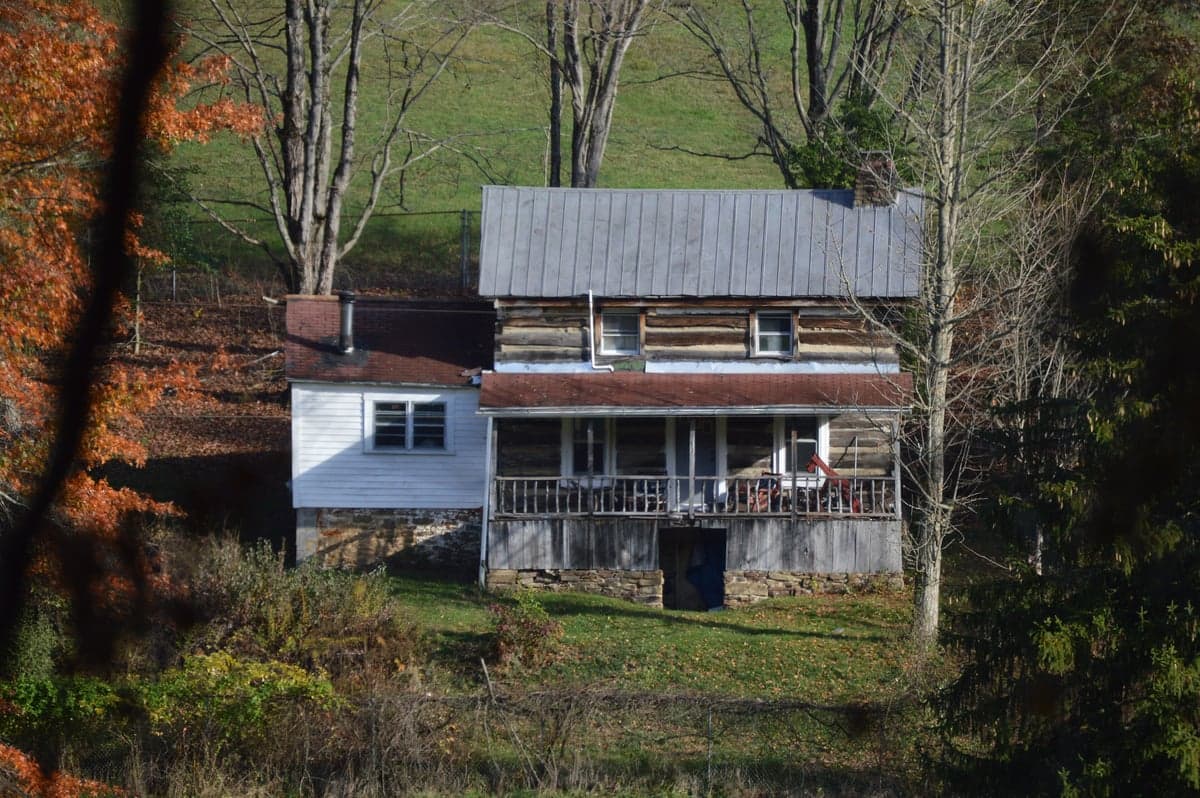
Photo: Wikipedia
Personal Sovereignty in Taylor County
Viable for self-reliance. Generally workable, though some barriers may limit total independence.
What does Personal Sovereignty tell us?
Personal Sovereignty measures your capacity for self-reliance and independence with minimal government friction. Higher scores mean fewer barriers between you and the way you want to live... but it assumes you have the space you need and good neighbors.
What does this tell us?
Personal Sovereignty measures your capacity for self-reliance and independence with minimal government friction. Higher scores mean fewer barriers between you and the way you want to live... but it assumes you have the space you need and good neighbors.
State Policy
Energy independence: Net exporter (200% of energy produced in-state)
Personal Liberty
Homesteading

Personal Liberty Analysis
Taylor County, West Virginia, offers a notably high degree of personal sovereignty, rooted in a state-level culture of limited government and a rural, self-reliant ethos. For individuals and families prioritizing autonomy, the county presents a regulatory environment that is generally light-touch, with low taxes, permissive gun laws, and minimal zoning restrictions outside of its few incorporated towns. This analysis examines the specific factors that shape personal freedom in Taylor County, from tax burden and self-defense rights to homesteading viability and broader personal liberties, providing a concrete picture for relocation decision-making.
Tax burden and regulatory posture: How light is the government footprint?
West Virginia maintains one of the lowest overall tax burdens in the United States, and Taylor County reflects this state-level posture. Property taxes are among the lowest in the nation, with the effective rate on owner-occupied homes typically under 0.5% of assessed value. The state has no estate or inheritance tax, and personal income tax rates are a flat 3.99% as of 2026, with ongoing legislative efforts to reduce or eliminate it. Business regulation is similarly minimal; the state ranks favorably for ease of starting a business and has no statewide building code for single-family homes in unincorporated areas. Within Taylor County, the towns of Grafton (the county seat) and Flemington have modest municipal ordinances, but the vast majority of the county—including areas like Thornton, Pruntytown, and Boothsville—is unincorporated, meaning no local zoning or building permits are required for most residential construction. This creates a regulatory environment where residents can build, renovate, and operate with minimal government interference, a key draw for those seeking maximum autonomy.
Self-defense and gun law specifics: What are the legal protections?
West Virginia is a strong Second Amendment state, and Taylor County reflects this culture. The state has permitless carry for both open and concealed firearms for anyone legally allowed to possess a gun, effective since 2016. There is no state-level firearm registration, no waiting periods, and no magazine capacity restrictions. Stand-your-ground and castle doctrine laws are fully in effect, providing broad legal protection for the use of deadly force in self-defense, with no duty to retreat in any place where a person is lawfully present. Local law enforcement in Grafton and surrounding areas is generally supportive of gun rights, and the county has a strong hunting and sport shooting tradition. For residents of Flemington or Thornton, the practical effect is that carrying a firearm for personal protection is a routine, legally protected choice, with few bureaucratic hurdles.
Self-reliance and homesteading viability: Lot sizes, zoning, and off-grid feasibility
Taylor County is highly conducive to self-reliant living, particularly in its rural unincorporated areas. Lot sizes vary widely, with many parcels available in 1- to 10-acre increments, and larger tracts of 20+ acres are common. There is no county-wide zoning, so residents can keep livestock, build outbuildings, and operate small-scale agriculture without special permits. Off-grid living is legally feasible: West Virginia has no state law prohibiting rainwater collection, and solar panel installation is straightforward, with net metering available for grid-tied systems. Septic systems require a permit from the county health department, but the process is generally simple for standard designs. In Boothsville and Pruntytown, many homes already rely on private wells and septic, and the absence of municipal water or sewer in these areas is seen as a feature, not a drawback, for those seeking independence. The town of Grafton does have municipal utilities and some zoning, but the surrounding countryside offers a near-complete freedom to manage one's own land and resources.
Personal liberties: Parental rights, medical autonomy, speech, and property
West Virginia law strongly supports parental rights in education and healthcare. Parents have the right to opt their children out of any school curriculum or activity, and the state has a robust homeschool and private school choice environment with minimal reporting requirements. Medical autonomy is generally respected, with no state-level vaccine mandates for adults and broad exemptions for children. Free speech protections are strong, and there are no local ordinances in Taylor County that restrict expressive activity beyond standard public safety rules. Property rights are well-protected; eminent domain is rarely used, and the state has a right-to-farm law that shields agricultural operations from nuisance lawsuits. In Grafton, the local government is small and accessible, meaning residents can often engage directly with officials on issues like road maintenance or land use, reinforcing a sense of local control. The overall legal framework in Taylor County leans heavily toward individual choice and limited government intervention in personal and family matters.
Compared to many other parts of the United States, Taylor County offers a notably high degree of personal sovereignty, particularly for those who value low taxes, minimal regulation, strong self-defense rights, and the ability to live self-sufficiently. The combination of a permissive state legal framework and a rural county with little local government creates an environment where individuals and families can exercise substantial control over their lives, property, and resources. For a relocation audience seeking a place where autonomy is the default, Taylor County stands out as a practical and legally supportive choice.

* Values derived from national, state, county, city and local statistics and may differ in a specific area. Last updated: 2026-08-08T15:02:26.000Z
Narrative content on this page is AI-generated and may contain mistakes. Verify any details that matter before acting on them.
ReloMaps may earn a commission from affiliate links at no extra cost to you.

