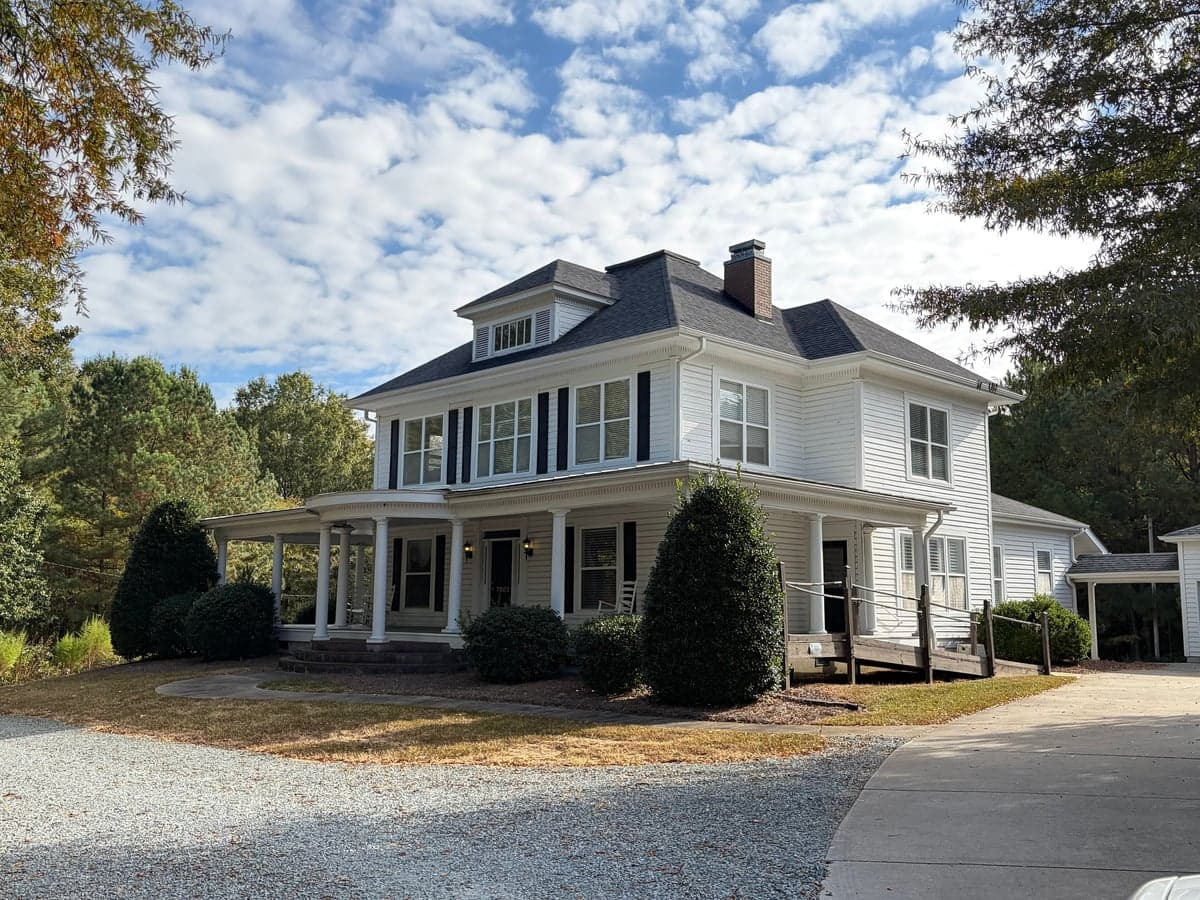
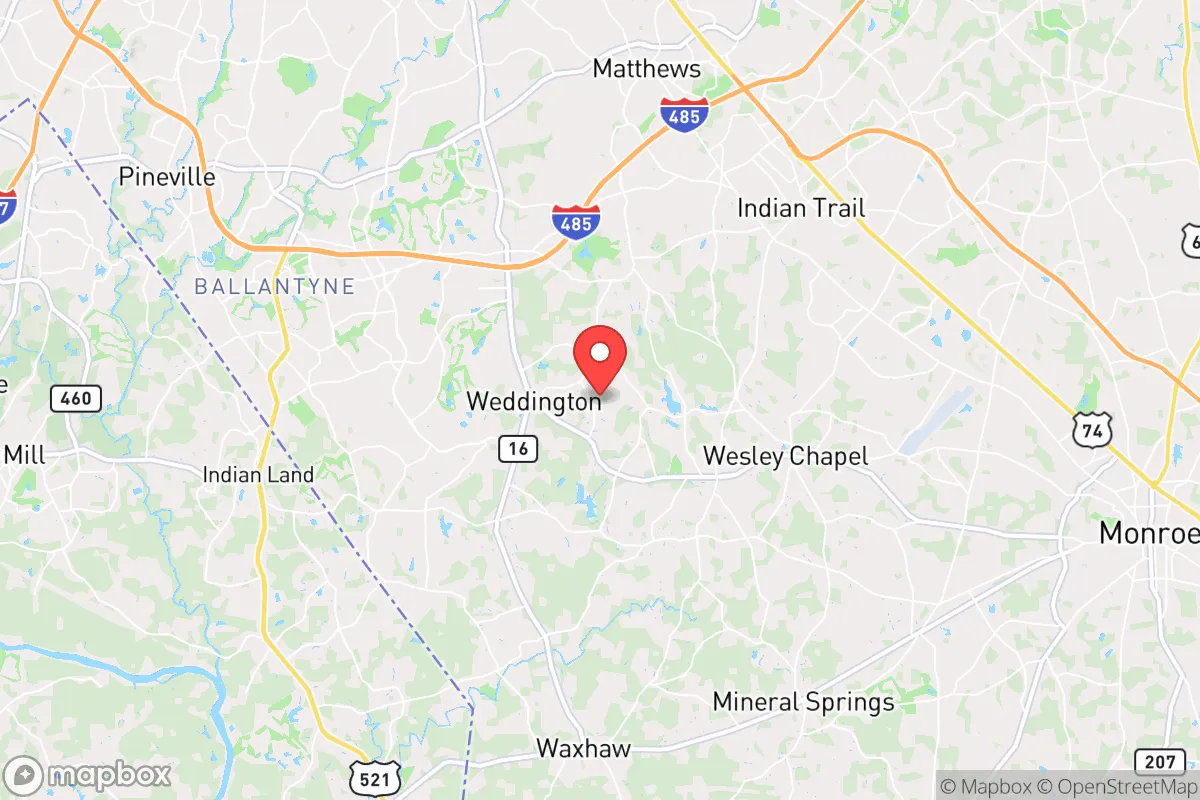
Photo: Wikipedia
Demographics of Weddington, NC
Affluence Level in Weddington, NC
A wealthy area with high-earning, well-educated households. Incomes, home values, and educational attainment meaningfully outpace national averages.
People of Weddington, NC
The people of Weddington, North Carolina, today form a small, affluent, and predominantly family-oriented community of 13,468 residents, characterized by a notably high college attainment rate of 65.9% and a strong concentration of Indian-subcontinent professionals. The city's identity is shaped by its role as a high-end bedroom suburb of Charlotte, with a population that is 79.5% White, 6.8% Indian (subcontinent), 4.5% Black, 4.3% Hispanic, and 0.9% East/Southeast Asian. Weddington is distinctive for its low density, large-lot zoning, and a demographic profile that blends long-standing Southern families with a significant wave of highly educated immigrants drawn to the area's top-ranked schools and executive housing.
How the city was settled and grew
Weddington was not a colonial-era settlement but a post-Revolutionary crossroads community that remained a sparsely populated farming hamlet well into the 20th century. The area was originally part of a large land grant to the Weddington family in the 1750s, but the modern city was not incorporated until 1993. For most of its history, the population consisted of a handful of extended family networks—the Weddingtons, the Howells, and the Belks—who operated cotton and dairy farms. The historic core, now known as Old Weddington around the intersection of Weddington and Providence Roads, held the original farmsteads and the modest Weddington United Methodist Church. A second early cluster formed in the Howell Farm area, where descendants of the original Howell land grant remained through the mid-20th century. These families were uniformly White, Protestant, and tied to the land; the 1950 population of the Weddington township was likely under 500 residents, with no significant immigrant presence.
Modern era (post-1965)
Weddington's transformation began in earnest after the 1965 Hart-Cellar Act, but the domestic migration wave that truly reshaped the city came later, in the 1990s and 2000s, as Charlotte's financial sector boomed. The city's large-lot zoning (minimum 1-2 acres in most areas) and its placement within the highly regarded Union County Public Schools system—particularly Weddington High School—made it a magnet for corporate executives and professionals. The first major wave of newcomers were White domestic migrants from the Northeast and Midwest, who built custom homes in the Weddington Estates and Providence Plantation neighborhoods during the 1990s. These subdivisions, with their brick colonials and wooded lots, established Weddington's reputation as an exclusive enclave.
The second major wave, beginning around 2010, was the arrival of Indian-subcontinent professionals, primarily engineers and physicians employed by Charlotte's banking, tech, and healthcare sectors. This group concentrated in newer developments on the city's western edge, particularly in the Moss Creek and St. Johns Forest neighborhoods, drawn by the proximity to both Weddington High School and the Indian grocery and cultural infrastructure developing in nearby Ballantyne. Today, the 6.8% Indian-subcontinent share is the most distinctive demographic marker of modern Weddington, far exceeding the national average. The East/Southeast Asian population (0.9%) and Black population (4.5%) remain small, with Black residents more likely to live in the older, less expensive housing stock near the Old Weddington corridor. The Hispanic population (4.3%) is largely employed in landscaping, construction, and domestic service for the wealthier households, with many living in adjacent unincorporated areas rather than within Weddington's city limits.
The future
Weddington's population is projected to grow slowly but steadily, constrained by the city's deliberate zoning policies that limit density and multi-family housing. The foreign-born share (3.4%) is likely to increase modestly, driven primarily by continued Indian-subcontinent immigration from the H-1B visa pipeline into Charlotte's financial and tech sectors. These new arrivals will likely continue to concentrate in the western neighborhoods near the Ballantyne border, where the existing Indian community provides a support network. The White population share is expected to decline gradually as the city's housing stock ages and younger, more diverse families replace retiring empty-nesters. The Black and Hispanic shares are likely to remain stable or grow only slightly, as the high cost of entry (median home values exceeding $700,000) limits affordability for most households. No major demographic disruption is expected; Weddington will remain a wealthy, highly educated, and politically conservative suburb with a distinctive Indian-subcontinent minority that is well-integrated into the professional class.
For someone moving in now, Weddington offers a stable, low-crime, and academically elite environment where the population is becoming slightly more diverse at the top of the income scale but remains overwhelmingly defined by affluence and family orientation. The city is not becoming a melting pot in the traditional sense; rather, it is a place where a specific subset of highly educated Indian professionals has joined an already prosperous White majority, creating a community that values school rankings, property values, and quiet suburban life above all else.

* Values derived from national, state, county, city and local statistics and may differ in a specific area. Last updated: 2026-08-16T20:34:13.000Z
Narrative content on this page is AI-generated and may contain mistakes. Verify any details that matter before acting on them.
ReloMaps may earn a commission from affiliate links at no extra cost to you.

