Photo: Wikipedia
Demographics of Webster Groves, MO
Affluence Level in Webster Groves, MO
An upper-middle-class area. Household wealth, education levels, and homeownership run ahead of national benchmarks.
People of Webster Groves, MO
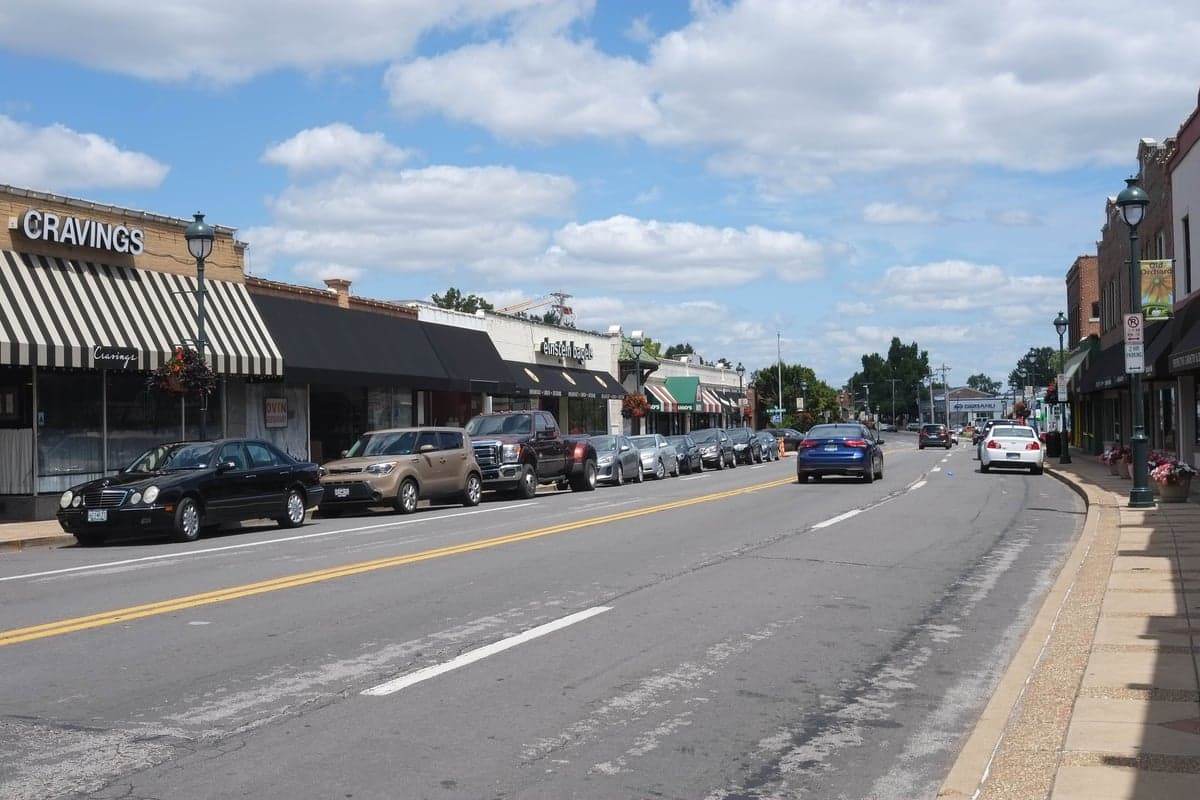
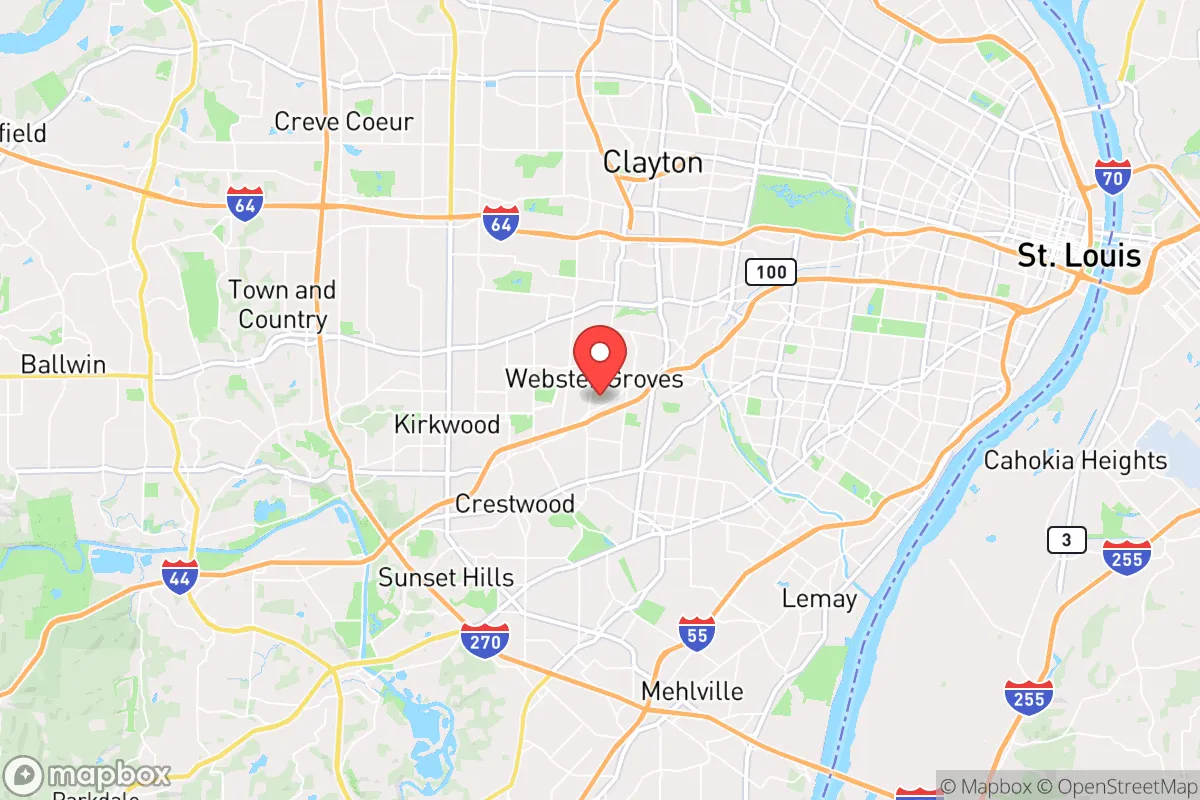
The people of Webster Groves, Missouri, today form a highly educated, predominantly white community of 23,771 residents, with a distinctive character shaped by its historic streetcar suburbs and strong local identity. The city is notably homogeneous: 80.6% white, with a foreign-born population of just 0.8%, and 68.8% of adults holding a college degree—nearly double the national average. This is a place where generational roots run deep, and newcomers often arrive specifically for the acclaimed public schools and walkable, tree-lined neighborhoods like Old Webster and Lockwood.
How the city was settled and grew
Webster Groves was not a pioneer settlement but a planned streetcar suburb that grew after the Civil War, drawing its first wave of residents from St. Louis’s German and Protestant middle class. The city was incorporated in 1896, and its early growth was fueled by the Missouri Pacific Railroad and the Webster College (now Webster University), which attracted faculty and professionals. The Old Webster neighborhood, centered around the historic train depot, became the original commercial and residential core, settled by merchants and railroad workers. Meanwhile, the Lockwood district developed along the streetcar line, drawing upper-middle-class families who built large Victorian and Craftsman homes. A second wave came in the 1920s and 1930s, when the Bristol Heights and Glen Park neighborhoods were platted, attracting white-collar commuters who worked in downtown St. Louis but wanted suburban space. The city remained overwhelmingly white and Protestant through the mid-20th century, with restrictive covenants that excluded Black and Jewish families until the 1960s.
Modern era (post-1965)
After the 1965 Hart-Cellar Act and the end of restrictive covenants, Webster Groves saw modest diversification, though it remains far less diverse than St. Louis County as a whole. The North Webster area, historically the city’s only Black neighborhood due to redlining, saw some growth as middle-class Black families moved in during the 1970s and 1980s, but the overall Black share of the population peaked at around 8% in 2000 and has since declined to 5.6%. The city’s Asian population (East and Southeast Asian) stands at just 0.7%, and the Indian subcontinent population at 0.8%, both concentrated in newer subdivisions like Edgar Place and Hickory Ridge, where professional families have bought homes for access to the Webster Groves School District. Hispanic residents make up 3.1%, a slight increase from 2% in 2010, with most settling in the South Webster area near Big Bend Road. The dominant trend since 2000 has been the return of white, college-educated families—often from the city of St. Louis—who are drawn by the historic housing stock and the district’s reputation for academic excellence.
The future
The population of Webster Groves is likely to remain stable and homogeneous over the next decade, with modest growth driven by infill development and the conversion of older homes into multi-family units. The city’s extremely low foreign-born share (0.8%) and high housing costs (median home value over $350,000) create a high barrier to entry for immigrant and lower-income families. The Old Webster and Lockwood neighborhoods are likely to become even more affluent as older homes are renovated and sold at a premium. The North Webster area, which has seen some reinvestment, may see a slight increase in Black and Hispanic families if affordable housing initiatives succeed, but the overall demographic trajectory is toward a whiter, wealthier population. The city’s school district, which draws families from across the region, will continue to be the primary driver of in-migration, but the pool of prospective residents is limited to those who can afford the premium.
For a conservative-leaning individual or parent considering a move, Webster Groves is becoming a place of increasing homogeneity and high social capital—a stable, safe, and academically rigorous community where property values are likely to appreciate. The trade-off is limited diversity and a high cost of entry, but for those who prioritize school quality and a strong sense of local identity, the city offers a proven track record. The next 20 years will likely see Webster Groves solidify its position as an elite inner-ring suburb, with little demographic change beyond the gradual replacement of older residents with younger, similarly educated families.

* Values derived from national, state, county, city and local statistics and may differ in a specific area. Last updated: 2026-04-30T00:09:53.000Z
Narrative content on this page is AI-generated and may contain mistakes. Verify any details that matter before acting on them.
ReloMaps may earn a commission from affiliate links at no extra cost to you.

