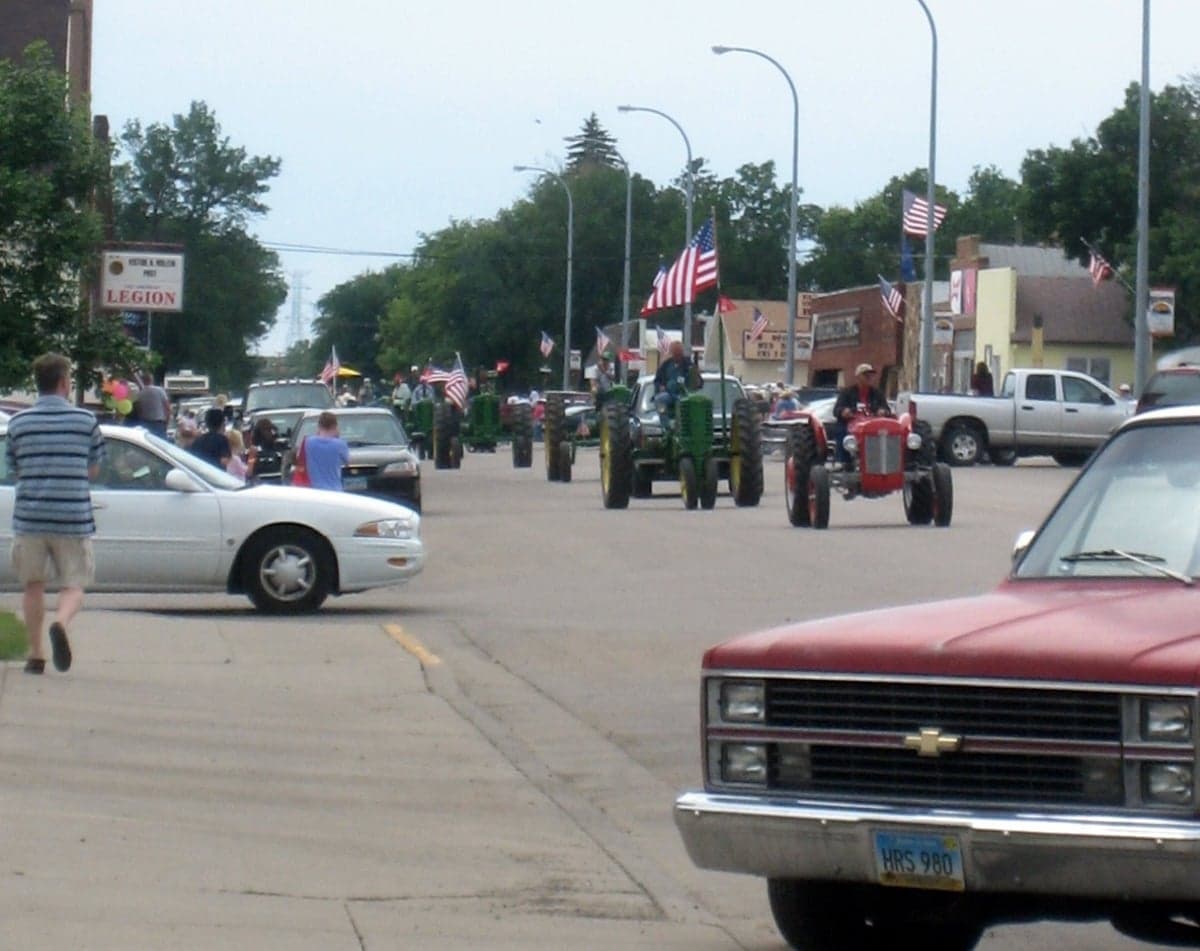
Photo: Wikipedia
Demographics of Washburn, ND
Affluence Level in Washburn, ND
An upper-middle-class area. Household wealth, education levels, and homeownership run ahead of national benchmarks.
People of Washburn, ND
Washburn, North Dakota, is a small, tight-knit community of 1,434 residents that remains overwhelmingly white (97.4%) and native-born, with a foreign-born population of just 0.3%. The city’s identity is rooted in its agricultural and railroad heritage, with a population density that fosters neighborly familiarity but limited ethnic diversity. Its people are predominantly working-class, with 23.5% holding a college degree, and the community is characterized by a stable, family-oriented culture centered on local schools, churches, and the Missouri River.
How the city was settled and grew
Washburn’s human history begins with the arrival of European settlers in the late 19th century, drawn by the promise of fertile land along the Missouri River and the expansion of the Northern Pacific Railway. The city was officially founded in 1882 as a railroad town and agricultural service center. The first wave of settlers were predominantly German and Scandinavian immigrants, who established farms and small businesses. These early families built their homes in what is now known as Old Town Washburn, the original plat along Main Street near the river, where many of the city’s oldest homes and the historic McLean County Courthouse still stand. A second wave of Norwegian and Russian-German homesteaders arrived in the 1890s and early 1900s, settling in the South Side neighborhood, an area of modest single-family homes south of the railroad tracks. The city’s growth peaked in the 1910s and 1920s, driven by wheat farming and the railroad, but population stagnated after the Dust Bowl and Great Depression, as many families left for larger cities.
Modern era (post-1965)
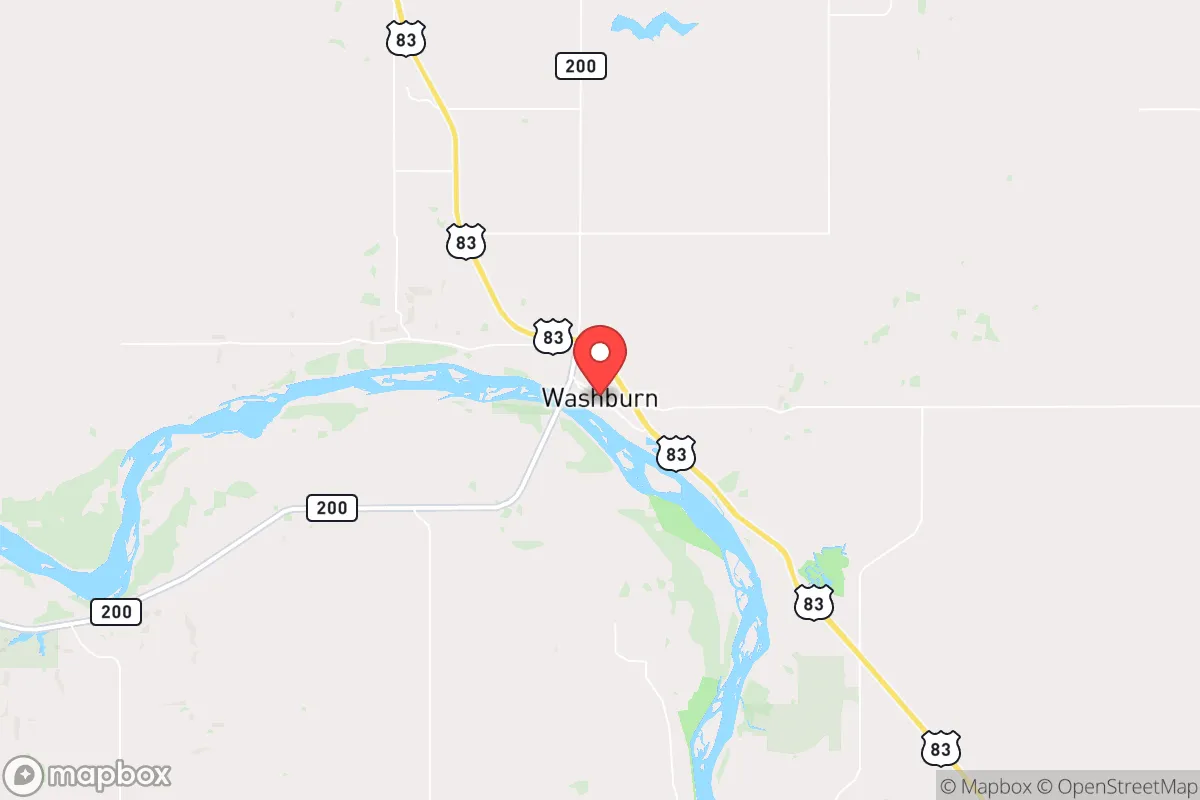
After the 1965 Immigration and Nationality Act, Washburn saw virtually no new international immigration. The foreign-born population today is negligible (0.3%), and the city’s racial composition has remained static: 97.4% white, 0.5% Hispanic, 0.1% Black, and no recorded East/Southeast Asian or Indian subcontinent residents. Domestic in-migration has been limited, mostly consisting of retirees and families moving from nearby rural areas or from larger North Dakota cities like Bismarck (about 30 miles south). These newcomers have concentrated in the River Ridge Addition, a newer subdivision developed in the 1990s and 2000s on the city’s northwest edge, featuring larger lots and newer homes. The Hilltop District, a small cluster of homes on the bluffs overlooking the river, has attracted a mix of long-time residents and a few out-of-state retirees seeking quiet, scenic living. The city’s population has been slowly declining from a peak of around 1,600 in the 1980s, as younger adults leave for education and jobs in larger metro areas.
The future
Washburn’s population is projected to continue a slow decline or remain flat over the next 10–20 years, with no major economic drivers to attract new residents. The city is homogenizing rather than diversifying, as the small Hispanic and Black populations show no signs of growth, and the foreign-born share is effectively zero. The community is not tribalizing into distinct ethnic enclaves; instead, it is becoming more uniformly white and older, with a median age likely rising as younger families move away. The East End, a neighborhood of older homes near the high school, is seeing some reinvestment from local families, but new construction is rare. For someone moving in now, Washburn offers a stable, safe, and culturally homogeneous environment—ideal for those seeking a quiet, rural lifestyle with strong community ties, but with limited diversity and few opportunities for demographic change.
Washburn is becoming a quieter, older, and more insular community, shaped by its agricultural roots and lack of new immigration. For a conservative-leaning individual or family seeking a low-crime, family-oriented town with a strong sense of place and minimal cultural flux, it remains a viable choice—but one with a shrinking population and limited economic dynamism.

* Values derived from national, state, county, city and local statistics and may differ in a specific area. Last updated: 2026-04-19T08:25:01.000Z
Narrative content on this page is AI-generated and may contain mistakes. Verify any details that matter before acting on them.
ReloMaps may earn a commission from affiliate links at no extra cost to you.

