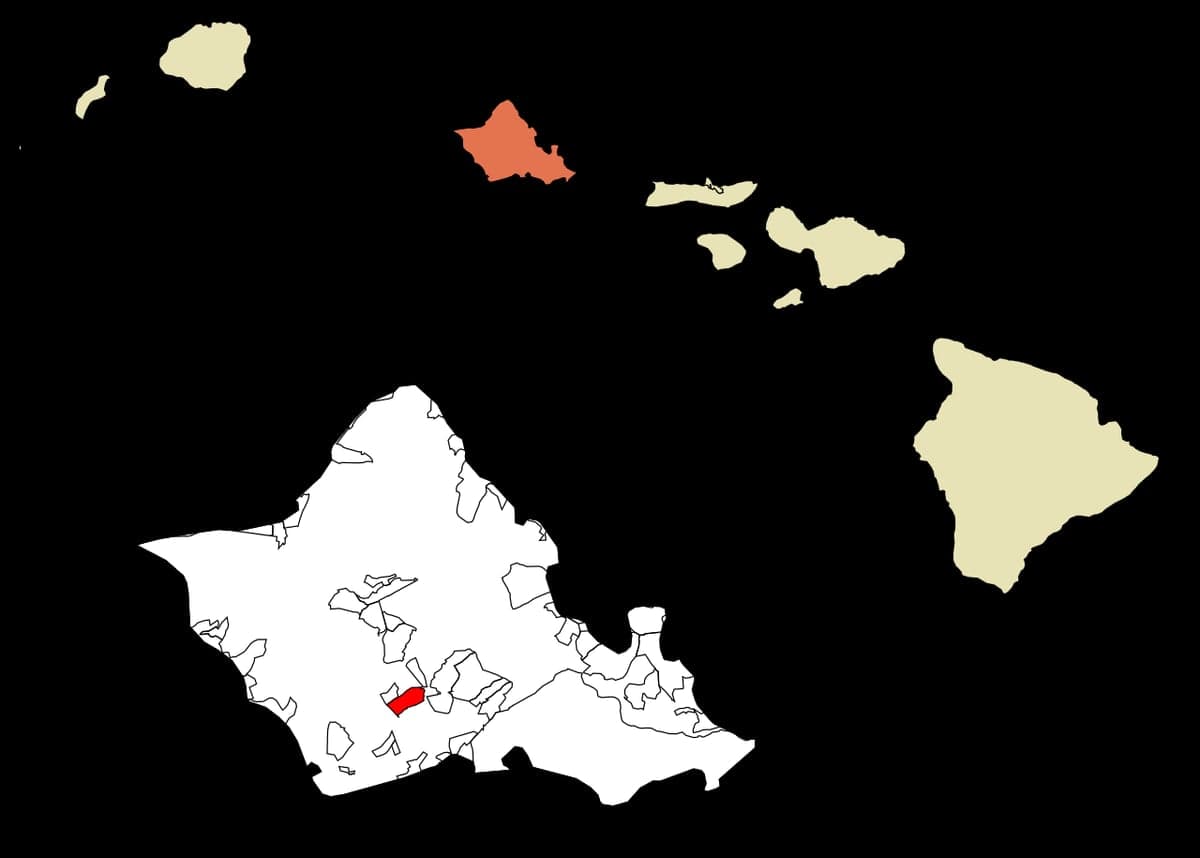
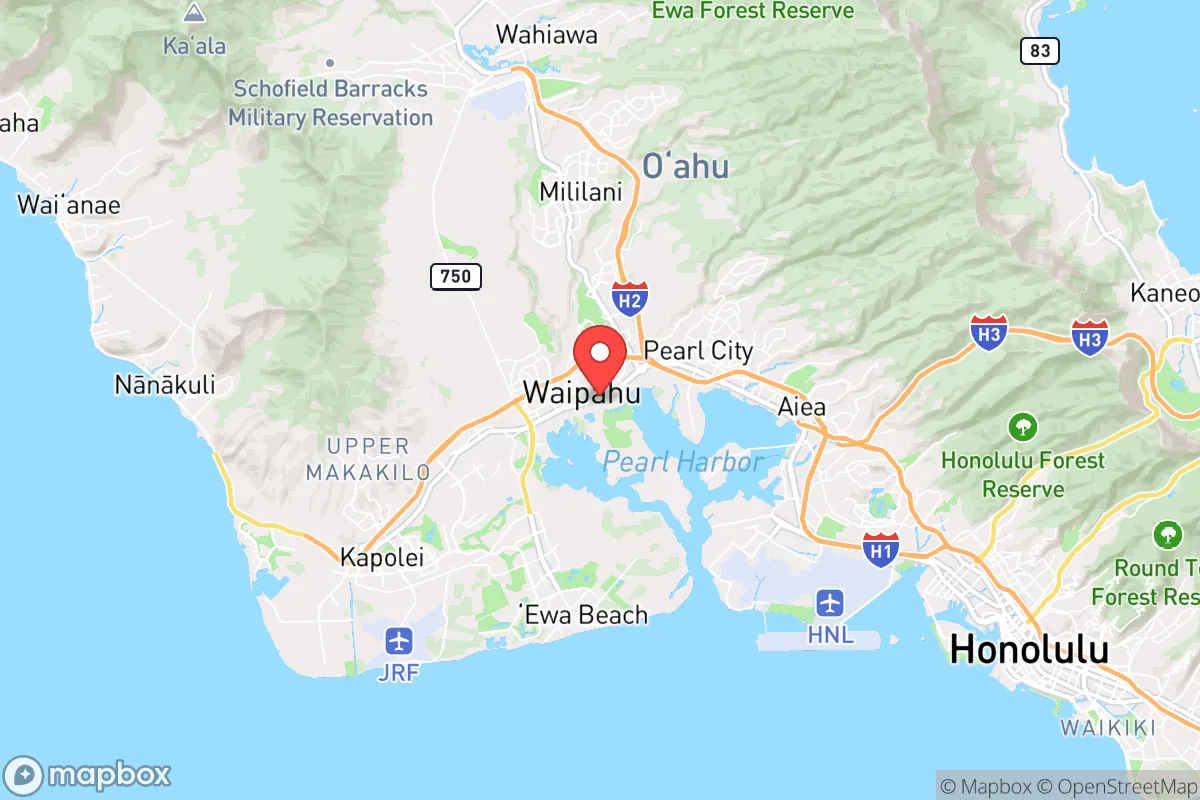
Photo: Wikipedia
Demographics of Waipahu, HI
Affluence Level in Waipahu, HI
An upper-middle-class area. Household wealth, education levels, and homeownership run ahead of national benchmarks.
People of Waipahu, HI
Waipahu is a dense, working-class community of 39,871 residents on the island of Oahu, where East and Southeast Asian groups—predominantly Filipino, Japanese, and Chinese—make up 66.9% of the population, giving it a distinctly Asian-Pacific character. With only 2.8% of residents identifying as White and a foreign-born share of 16.8%, Waipahu feels more like a transplanted Asian town than a typical American suburb. The city’s identity is rooted in its plantation past, and today it is known for its tight-knit neighborhoods, strong family networks, and a slower, more local pace of life compared to Honolulu just 12 miles away.
How the city was settled and grew
Waipahu’s population history begins not with indigenous Hawaiian settlement—though the area was used for taro farming—but with the sugar industry. In the 1890s, the Oahu Sugar Company established a massive plantation here, and the company built the first permanent housing for its workforce. The original population was almost entirely male contract laborers from Japan, China, and later Portugal and Puerto Rico, who arrived between 1900 and 1920. These workers were housed in ethnically segregated camps, many of which became the city’s earliest neighborhoods. Camp 1 (near modern-day Waipahu Depot Road) housed Japanese families, while Camp 5 (around what is now Mokuola Street) was home to Filipino laborers who began arriving in large numbers after 1909. By the 1930s, the plantation workforce had stabilized into a multi-ethnic but stratified society, with Japanese and Chinese workers forming the core of the skilled labor force and Filipinos filling the lowest-paid field jobs. The plantation era ended in the 1950s, but the neighborhoods it created—Waipahu Town proper, Waipahu Heights, and the old Camp 2 area near Paiwa Street—remained the city’s demographic anchors.
Modern era (post-1965)
The 1965 Hart-Cellar Act transformed Waipahu by opening immigration from Asia, particularly the Philippines. Between 1970 and 2000, the Filipino share of Waipahu’s population surged from roughly 25% to over 50%, as chain migration brought entire extended families to neighborhoods like Waipahu Gardens and Waikele (the latter technically a separate census-designated place but functionally part of Waipahu’s social geography). Japanese and Chinese residents, many of whom had moved to more affluent suburbs like Pearl City or Mililani, were gradually replaced by newer Filipino arrivals. The city’s White population, never large, declined from about 8% in 1980 to 2.8% today. The Hispanic share (6.2%) is small but growing, driven by Puerto Rican and Mexican families moving from the mainland. The Black population remains negligible at 0.2%, and Indian-subcontinent residents are also 0.2%. Today, Waipahu Town remains the commercial and cultural heart, with Filipino-owned businesses, bakeries, and churches lining Farrington Highway, while Waipahu Uka—a hillside neighborhood above the town—has attracted a mix of Filipino and Japanese families seeking newer single-family homes. The college-educated share is just 18.6%, reflecting the city’s blue-collar character; many residents work in construction, hospitality, and service jobs in Honolulu or at the nearby Pearl Harbor naval base.
The future
Waipahu’s population is likely to continue its slow homogenization around Filipino identity, though with increasing diversity from other Asian groups. Filipino immigration has plateaued since 2010, but the community’s high birth rate—among the highest in Honolulu County—means the Filipino share will remain dominant. The Japanese and Chinese populations, now mostly elderly, are shrinking as younger generations move to mainland cities or more expensive Oahu suburbs. The Hispanic and Indian populations are too small to alter the city’s character in the next decade. The biggest demographic shift may be economic: rising home prices in Honolulu are pushing younger, more diverse families—including some White and mixed-race households—into Waipahu’s older housing stock, particularly in Waipahu Town and Waipahu Heights. This could slowly raise the college-educated share and bring new retail and dining options, but the city’s core identity as a Filipino working-class enclave is unlikely to change significantly by 2035.
For a conservative-leaning individual or family moving to Waipahu today, the city offers a stable, family-oriented environment where community ties are strong and crime rates are moderate—lower than Honolulu’s but higher than nearby Mililani. The population is overwhelmingly Asian and foreign-born, so newcomers should expect a culture where English is often a second language and local customs (like respect for elders and close-knit extended family networks) dominate daily life. Waipahu is not a melting pot in the mainland sense; it is a place where one ethnic group—Filipino—sets the tone, and newcomers will integrate into that existing fabric rather than reshape it.

* Values derived from national, state, county, city and local statistics and may differ in a specific area. Last updated: 2026-04-24T00:04:23.000Z
Narrative content on this page is AI-generated and may contain mistakes. Verify any details that matter before acting on them.
ReloMaps may earn a commission from affiliate links at no extra cost to you.

