
Photo by Daniel Halseth on Unsplash
Strategic Assessment of Virginia Beach City County
Multiple tactical vulnerabilities. Population density, target proximity, or disaster risk are likely compounding. A retreat property and exit planning is required.
What does the Strategic Assessment tell us?
Our Strategic Assessment grades tactical survivability of an area. Major population centers, military targets, fallout zones, natural disasters, and border exposure all drive risk — lower exposure means a more defensible position in a crisis.
This is heavily inspired by Joel Skousen's Strategic Relocation book. Highly recommended you checkout the book ($)What does this tell us?
Our Strategic Assessment grades tactical survivability of an area. Major population centers, military targets, fallout zones, natural disasters, and border exposure all drive risk — lower exposure means a more defensible position in a crisis.
This is heavily inspired by Joel Skousen's Strategic Relocation book. Highly recommended you checkout the book ($)Strategic Pillars

Key Distances
Strategic Assessment Analysis
Virginia Beach City County occupies a unique strategic position in southeastern Virginia, combining the natural resilience of a coastal location with the inherent vulnerabilities of a major metropolitan area and military hub. For the relocation-minded reader weighing disaster readiness and long-term stability, the area presents a complex calculus: its geographic advantages are real, but its exposure to both natural hazards and man-made risks—particularly from its role as a global military center—demands careful consideration. This assessment breaks down the key factors that matter most for a conservative-leaning individual or family thinking seriously about preparedness and self-sufficiency.
Geographic position and natural advantages for long-term stability
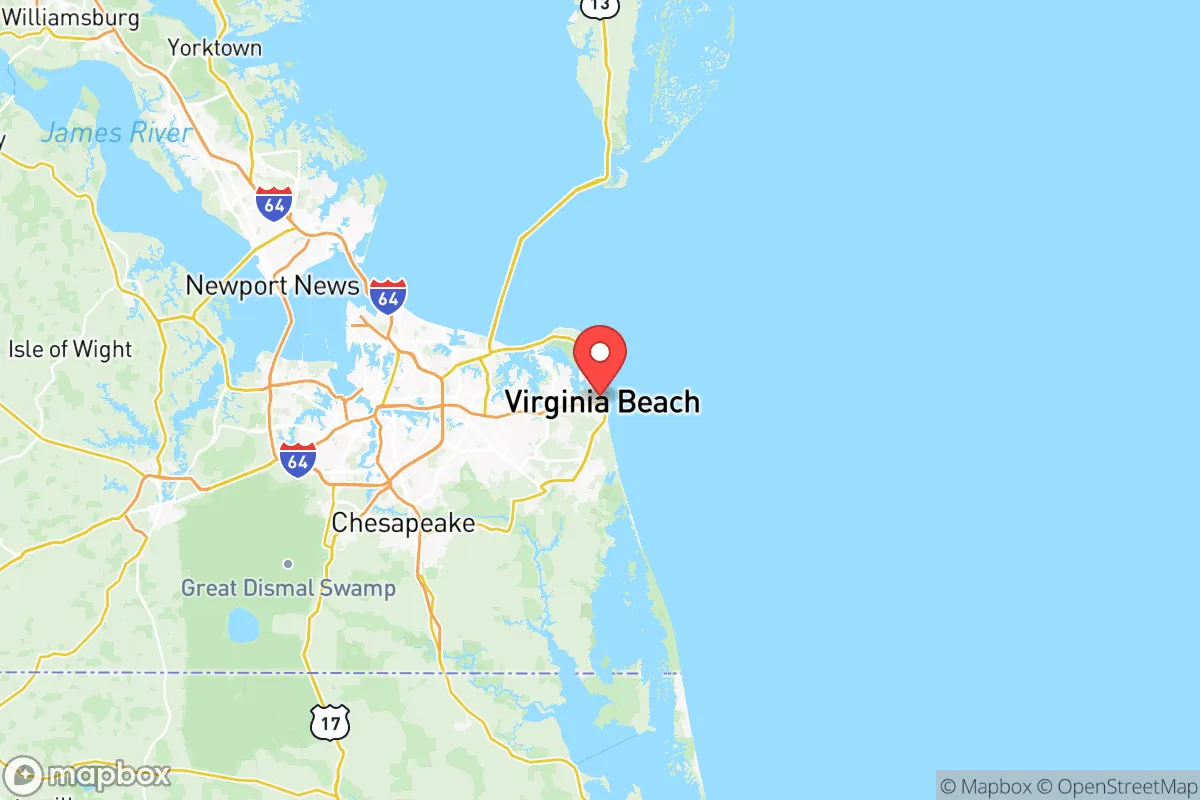
Virginia Beach sits at the southeastern tip of the state, bordered by the Atlantic Ocean to the east and the Chesapeake Bay to the north. This coastal position provides a moderating maritime climate that reduces temperature extremes, which is a genuine advantage for agriculture and outdoor self-sufficiency efforts. The area's flat, low-lying terrain is part of the larger Coastal Plain, and the region benefits from a relatively high water table and abundant rainfall—averaging roughly 45 inches annually—which supports local food production and private well viability in outlying areas. The city's position at the mouth of the Chesapeake Bay also places it at the terminus of the Intracoastal Waterway, a protected inland navigation route that runs from Norfolk to the Florida Keys. For a relocator thinking about supply chain resilience or alternative transportation, this waterway access is a tangible asset. The nearby Great Dismal Swamp and the Back Bay National Wildlife Refuge provide significant natural buffers to the south and east, offering both ecological stability and a degree of physical separation from the densest urban corridors. However, it's critical to note that Virginia Beach is not isolated—it is the eastern anchor of the Hampton Roads metropolitan area, a region of roughly 1.8 million people that includes Norfolk, Chesapeake, Newport News, and Hampton. This density is a double-edged sword: it provides economic opportunity and infrastructure, but it also concentrates risk.
Risks, exposures, and proximity to fallout-relevant landmarks
The most significant strategic vulnerability of Virginia Beach is its role as the home of Naval Air Station Oceana, the U.S. Navy's master jet base for the East Coast. Oceana is the largest employer in the city and a primary training and operational hub for F/A-18 squadrons. In any major conflict scenario—conventional or nuclear—this base is a high-value target. The base is located in the central part of the city, surrounded by residential and commercial development, meaning a strike or accident would have immediate and severe consequences for a large civilian population. Additionally, the broader Hampton Roads region hosts the world's largest naval base, Naval Station Norfolk, just across the water in Norfolk. This concentration of military power makes the entire area a Tier-1 target in any peer-level conflict. Beyond military risks, the city faces significant natural hazards. Hurricane and storm surge exposure is the primary natural threat. Virginia Beach sits directly in the path of Atlantic hurricane tracks, and its low elevation—much of the city is less than 20 feet above sea level—makes it vulnerable to flooding from both storm surge and heavy rainfall. The 2020s have seen an increase in "sunny day" flooding in coastal neighborhoods, a trend that will likely accelerate with sea-level rise. The city's proximity to the Port of Virginia in Norfolk, one of the largest and deepest ports on the East Coast, is another double-edged factor: it drives economic activity but also represents a critical infrastructure node that could be a target or a chokepoint in a crisis. For the relocator concerned about fallout from industrial or nuclear incidents, the Surry Nuclear Power Plant, located roughly 40 miles northwest across the James River, is a relevant consideration, though its distance and prevailing wind patterns somewhat mitigate direct risk.
Practical resilience for a relocator: food, water, energy, and defensibility
For a family or individual serious about self-sufficiency, Virginia Beach offers a mixed picture. On the positive side, the region's agricultural capacity is real but limited. The city itself is largely developed, but the surrounding counties—Checksfield and Isle of Wight to the west, and Northampton County on the Eastern Shore—have active farming operations. The growing season is long, typically from April to October, and the sandy loam soils are workable for home gardens. Water availability is generally good: the city draws from Lake Gaston via a pipeline, and private wells are common in the more rural western parts of the county. However, the water table is shallow and can be vulnerable to saltwater intrusion in coastal areas, so well placement matters. Energy resilience is a concern. The grid in Hampton Roads is aging and has been tested by hurricanes; power outages after storms are common and can last days. Solar potential is moderate—the region gets about 200 sunny days per year, which is below the national average but workable with proper system sizing. Natural gas infrastructure is widespread in the city but less so in outlying areas. Defensibility is the weakest point. Virginia Beach is a densely populated city of roughly 460,000 people, with a built-up urban core and sprawling suburban development. There are no natural chokepoints or defensible terrain features within the city limits. The major evacuation routes—Interstate 264, US Route 58, and US Route 44—are prone to congestion during emergencies, as seen during hurricane evacuations. For a relocator prioritizing security and isolation, the city's density and lack of natural barriers are significant drawbacks. The most defensible properties would be on larger lots in the western part of the county, near the Pungo and Blackwater areas, where agricultural zoning and larger parcels provide more buffer.
The overall strategic picture for Virginia Beach is one of high capability paired with high exposure. The area's economic strength, military presence, and coastal location provide a robust infrastructure and a strong sense of community, but those same factors create concentrated risks that a preparedness-minded relocator cannot ignore. For someone who values access to military resources, a strong local economy, and a moderate climate, and who is willing to invest in home hardening, backup power, and a well-thought-out evacuation plan, Virginia Beach can work. But for those seeking true isolation, low target value, and natural defensibility, the city's density and its role as a strategic military hub make it a less ideal choice. The best approach for a relocator here is to treat Virginia Beach as a base of operations with a clear plan for temporary relocation during high-risk periods, rather than as a permanent redoubt. The western rural fringe offers the best balance of access and resilience, but even there, the shadow of Oceana and the broader Hampton Roads target set remains a constant factor in any serious strategic assessment.

* Values derived from national, state, county, city and local statistics and may differ in a specific area. Last updated: 2026-08-23T15:06:34.000Z
Narrative content on this page is AI-generated and may contain mistakes. Verify any details that matter before acting on them.
ReloMaps may earn a commission from affiliate links at no extra cost to you.

