Quality of Life in Norfolk City County
A livable area that tracks near national norms for affordability, walkability, and neighborhood health.
What does Quality of Life tell us?
Quality of Life measures an area by evaluating factors like cost of living, nearby amenities, country club access, airport proximity, socioeconomic signals and neighborhood character. For large states, this is a general average — quality of life can vary dramatically between metro areas, suburbs, and rural communities within the same state.
What does this tell us?
Quality of Life measures an area by evaluating factors like cost of living, nearby amenities, country club access, airport proximity, socioeconomic signals and neighborhood character. For large states, this is a general average — quality of life can vary dramatically between metro areas, suburbs, and rural communities within the same state.
Cost of Living
3% above national average
82%
The Real Cost of Living in Norfolk City County for 2026
| Tier | Individual | Family (4) |
|---|---|---|
| Survival | $20k | $37k |
| Comfortable | $53k | $78k |
| Luxury | $116k+ | $179k+ |
| Elite (Top 5%) | $144k+ | $223k+ |
Quality-of-Life Analysis
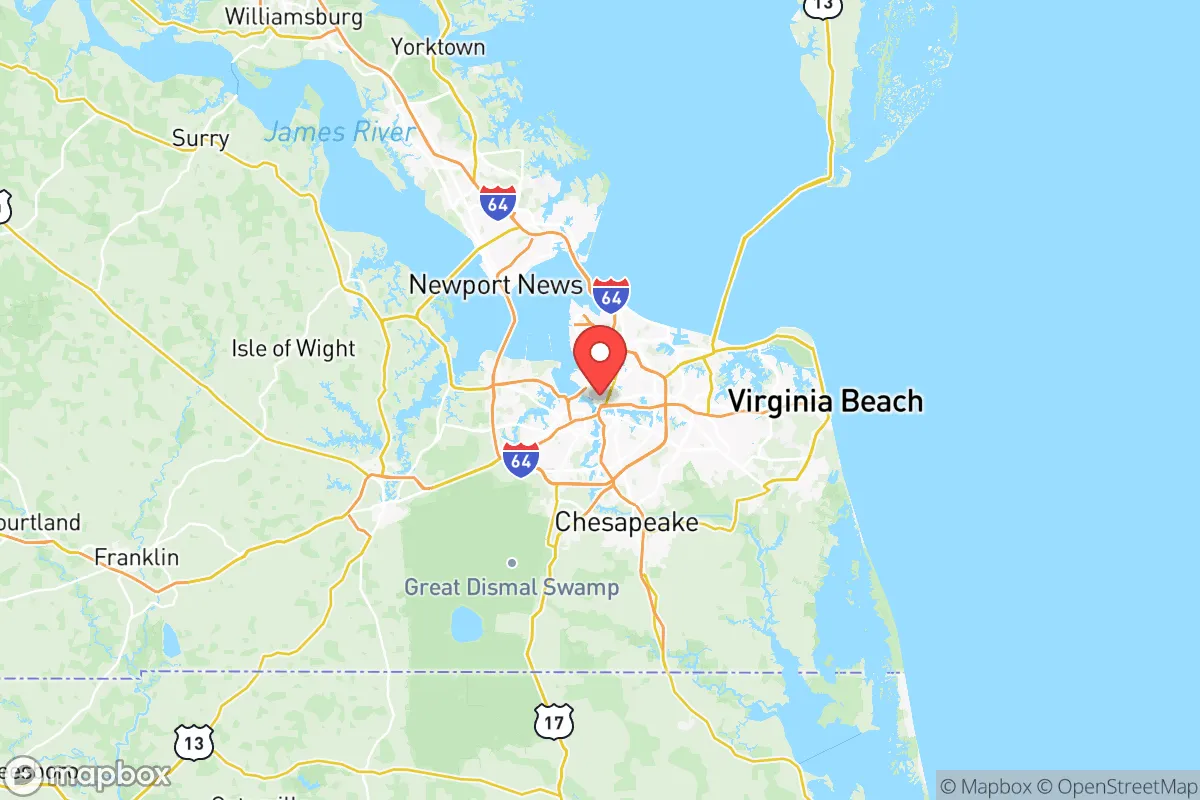
Norfolk City County, Virginia, is a unique jurisdiction in the Hampton Roads region because it is entirely consolidated with the independent city of Norfolk, meaning there are no separate towns, villages, or unincorporated rural areas within its boundaries. The entire county is the city itself, a dense, urban port municipality of roughly 238,000 residents. This eliminates the traditional urban-to-rural spectrum found in most counties; instead, the quality-of-life options range from high-density downtown living to quieter, established residential neighborhoods and waterfront enclaves, all within a compact 54-square-mile footprint. The people drawn to Norfolk include military personnel and defense contractors tied to Naval Station Norfolk, healthcare and maritime professionals, students at Old Dominion University and Norfolk State University, and creatives seeking an affordable coastal city with a gritty, authentic character.
Largest town(s) & population centers
As a consolidated city-county, Norfolk has no separate towns. Its primary population centers are distinct neighborhoods that function as urban villages. Downtown Norfolk is the central business and entertainment hub, home to the Waterside District, the Chrysler Museum of Art, and the Norfolk Scope arena. Daily life here is walkable and apartment-centric, with a growing number of luxury high-rises and converted lofts catering to young professionals and empty nesters. Ghent, a historic neighborhood just west of downtown, is the city's cultural and social heart, known for its tree-lined streets of Victorian homes, independent boutiques, and a vibrant restaurant scene centered on Colley Avenue and 21st Street. Ocean View, along the Chesapeake Bay, offers a more relaxed, beach-town atmosphere with a mix of older cottages, new townhomes, and waterfront parks, attracting families and retirees who want bay access without the resort prices of Virginia Beach. Wards Corner and Military Circle serve as major commercial and transit nodes, with a more suburban feel of strip malls and mid-century ranch homes, popular with military families stationed at nearby Naval Station Norfolk or Joint Expeditionary Base Little Creek.
Smaller towns & rural pockets
Because Norfolk City County is entirely urbanized, there are no smaller towns or rural pockets within its borders. The closest approximations to a "small-town feel" are the city's distinct residential neighborhoods that offer a quieter pace. Larchmont and Lafayette Shores are leafy, established enclaves of single-family homes with strong neighborhood associations and access to the Lafayette River, appealing to families seeking a suburban-like atmosphere inside the city. East Beach, a newer planned community in the Ocean View area, mimics a coastal village with its own town center, parks, and a mix of housing types. For true rural or small-town living, residents must look to adjacent counties like Chesapeake (which has extensive agricultural areas) or Virginia Beach (which has rural southern sections near the North Carolina border), but these are separate jurisdictions, not part of Norfolk City County.
Cost & lifestyle range
Norfolk's cost of living index of 103 (slightly above the national average) and median home value of $271,900 place it as one of the more affordable urban options in the Hampton Roads region, especially compared to Virginia Beach (median home value around $380,000). The median rent of $1,246 is competitive for a mid-sized East Coast city. The lifestyle range is defined by neighborhood density and access. At the higher-cost, urban end is Ghent and Downtown, where walkability, nightlife, and cultural amenities command a premium; a two-bedroom apartment in a renovated Ghent Victorian can easily exceed $1,800. At the more affordable, family-oriented end are neighborhoods like Norview and Campostella, where older single-family homes can be found for under $250,000, offering larger yards and quieter streets but requiring a car for most errands. The average commute of 22.9 minutes is notably shorter than the national average of 26 minutes, a significant advantage for workers at the naval base or downtown offices, as traffic congestion is less severe than in neighboring Virginia Beach or Chesapeake.
Norfolk City County is best suited for people who want an authentic, walkable urban lifestyle with strong maritime and military roots, without the high costs of larger East Coast cities. It thrives for young professionals, students, and military personnel who value cultural density, waterfront access, and a short commute. Families and retirees seeking more space and a traditional suburban or rural setting will find those options limited within the county's borders and may prefer the adjacent cities of Chesapeake or Virginia Beach. The county's strength lies in its concentrated, diverse neighborhoods that offer a genuine city experience on the Chesapeake Bay, all within a compact, navigable footprint.

Crime in Norfolk City County
Generally safer than 61% of comparable U.S. locations.
Violent CrimeViolent Crime Analysis
Property CrimeProperty Crime Analysis
Crime Analysis
Norfolk City County, Virginia, presents a complex safety picture that requires careful examination. With a violent crime rate of 203 per 100,000 residents and a property crime rate of 1,344.2 per 100,000, the city's overall crime index sits significantly above both the Virginia state average and national benchmarks. These figures place Norfolk in a higher-risk category compared to many of its Hampton Roads neighbors, though the distribution of crime is far from uniform across the city's distinct neighborhoods and districts.
Crime in context
Norfolk's violent crime rate of 203 per 100,000 is roughly 40% higher than the national average of approximately 145 per 100,000 and well above the Virginia state average of about 110 per 100,000. Property crime in Norfolk, at 1,344.2 per 100,000, also exceeds the national average of roughly 1,200 per 100,000 and the Virginia average of approximately 1,000 per 100,000. These numbers place Norfolk in a similar crime tier to other mid-sized Virginia cities like Richmond and Portsmouth, but notably higher than safer Hampton Roads suburbs such as Virginia Beach (which reports violent crime rates around 90 per 100,000) and Chesapeake (around 110 per 100,000). The city's status as a major port, naval hub, and urban center with a population of roughly 240,000 contributes to these elevated figures, as does the presence of a progressive district attorney's office that has implemented several reform-oriented policies in recent years.
What residents experience
For residents, the daily reality of crime in Norfolk is heavily shaped by location and time of day. The downtown area and neighborhoods along the Ocean View corridor experience higher concentrations of property crime, including vehicle break-ins and theft from porches. The Ghent district, while popular for its walkability and historic homes, sees elevated rates of larceny and occasional burglaries. Violent crime, particularly aggravated assault and robbery, is more concentrated in areas like Park Place and Huntersville, where socioeconomic challenges intersect with gang-related activity. The city's progressive judicial approach, including diversion programs and reduced sentencing for certain non-violent offenses, has drawn criticism from some residents who feel it has not adequately deterred repeat offenders. Norfolk's Commonwealth's Attorney has prioritized alternatives to incarceration, which advocates argue reduces recidivism but critics contend has contributed to a perception of leniency that emboldens property criminals.
Neighborhood-level variation is stark. Safer enclaves include Larchmont, Lafayette Shores, and parts of East Beach, where violent crime rates are a fraction of the citywide average and property crime is more manageable. These areas benefit from active civic leagues, private security patrols, and proximity to Naval Station Norfolk, which brings a stable military population. In contrast, the Young Terrace and Calvert Square public housing communities report violent crime rates that can exceed 500 per 100,000. Residents considering a move to Norfolk should research specific census tracts and consult the Norfolk Police Department's crime mapping tool, as the difference between a block in Ghent and a block in Park Place can be the difference between feeling safe and feeling at risk. The city's overall safety trajectory will depend heavily on whether the current progressive justice reforms produce measurable reductions in recidivism or simply shift crime patterns to adjacent neighborhoods.
* Values derived from national, state, county, city and local statistics and may differ in a specific area. Last updated: 2026-08-25T02:10:12.000Z
Narrative content on this page is AI-generated and may contain mistakes. Verify any details that matter before acting on them.
ReloMaps may earn a commission from affiliate links at no extra cost to you.

