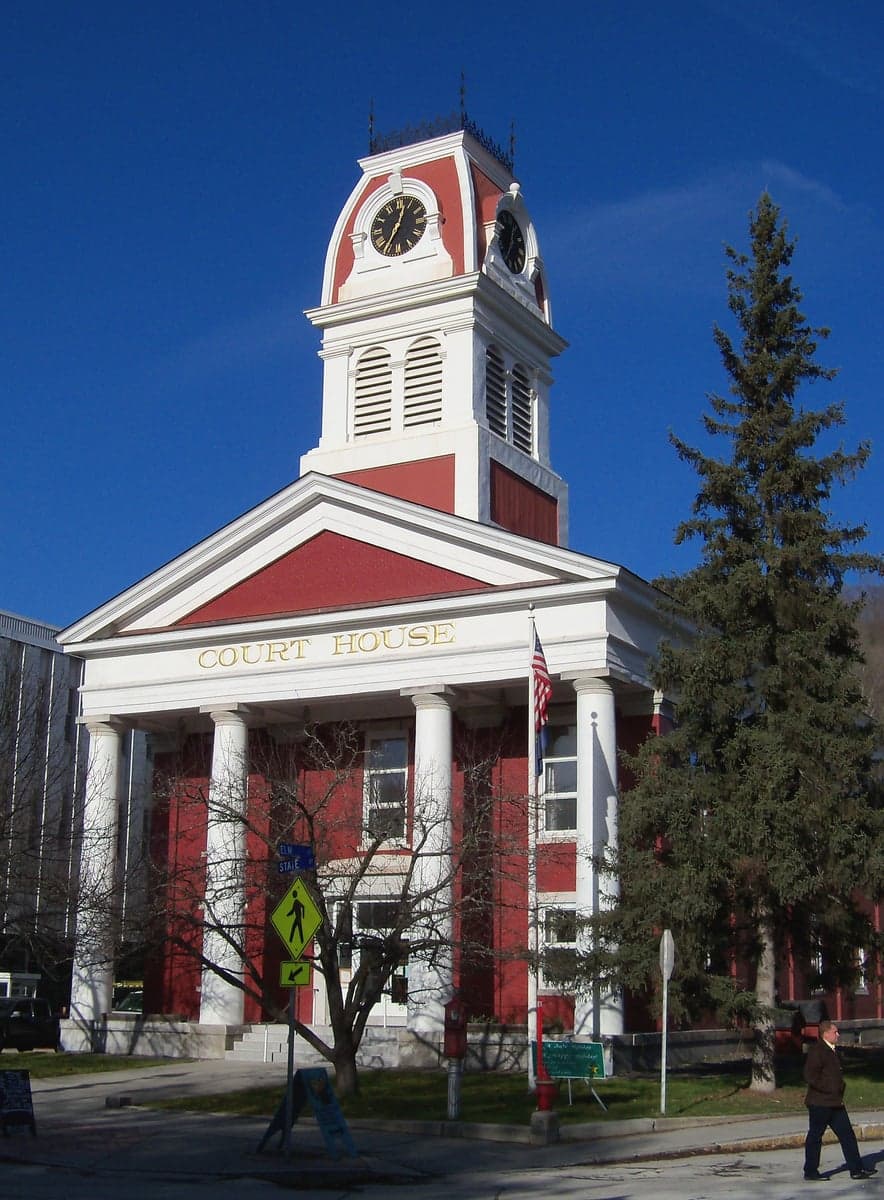
Photo: Wikipedia
Personal Sovereignty in Washington County
Moderate friction. Expect trade-offs in some aspect of personal liberty and independence.
What does Personal Sovereignty tell us?
Personal Sovereignty measures your capacity for self-reliance and independence with minimal government friction. Higher scores mean fewer barriers between you and the way you want to live... but it assumes you have the space you need and good neighbors.
What does this tell us?
Personal Sovereignty measures your capacity for self-reliance and independence with minimal government friction. Higher scores mean fewer barriers between you and the way you want to live... but it assumes you have the space you need and good neighbors.
State Policy
Energy independence: Importer (15% of energy produced in-state)
Personal Liberty
Homesteading

Personal Liberty Analysis
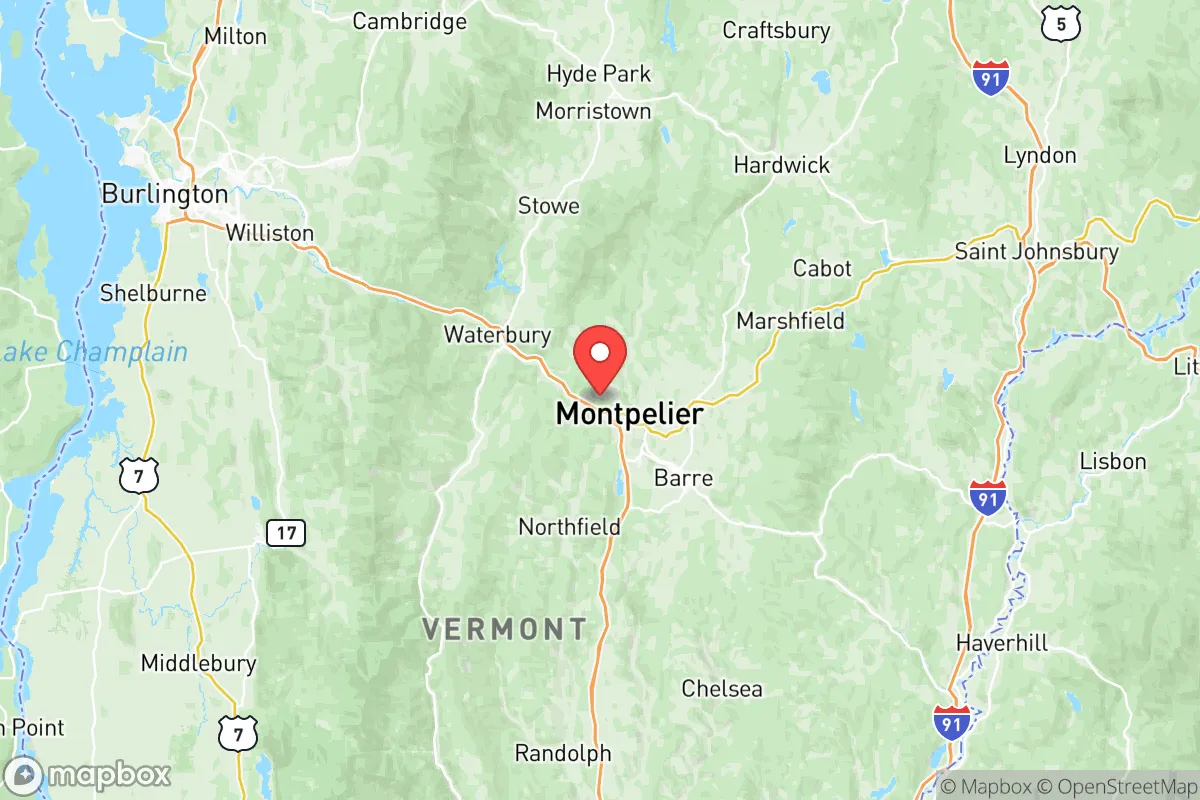
Washington County, Vermont offers a nuanced personal sovereignty environment that appeals to those seeking a balance between rural self-reliance and the practical constraints of living in a state with a strong regulatory tradition. While Vermont as a whole leans left politically, Washington County—stretching from the state capital of Montpelier to smaller towns like Northfield, Barre, and Waitsfield—presents a more mixed picture. The county’s autonomy landscape is shaped by its mix of working-class communities, agricultural valleys, and mountain towns, where local culture often prioritizes individual responsibility over government intervention, even as state-level policies can feel restrictive to those with a survivalist or prepper mindset. For single individuals and parents evaluating relocation, the key is understanding where local enforcement and community norms create pockets of greater freedom, particularly in areas like Cabot, Marshfield, and Plainfield, where off-grid living and self-sufficiency are more culturally accepted than in the more regulated downtowns of Montpelier or Barre City.
Tax burden and regulatory posture: How state policies affect your wallet and freedom
Vermont’s tax burden is among the highest in the nation, and Washington County is no exception. The state’s income tax ranges from 3.35% to 8.75%, and property taxes—funding education and municipal services—average around 1.8% of assessed home value in the county, with Montpelier and Barre City seeing slightly higher rates due to urban services. For a conservative-leaning audience, this is a significant consideration: high taxes fund a robust state bureaucracy that extends into land use, building codes, and environmental regulations. The state’s Act 250, a land-use law, applies to larger developments and can complicate homesteading or off-grid projects, especially in towns like Waitsfield and Moretown, where scenic corridor designations add extra review layers. However, smaller towns like Cabot and Marshfield have more permissive local zoning, often allowing accessory dwelling units, tiny homes, and agricultural structures with minimal red tape. The regulatory posture in Washington County is best described as state-heavy but locally variable—a savvy relocator can find towns where the tax dollar goes further in terms of services (e.g., good roads, emergency services) while avoiding the most restrictive local ordinances. For parents, the high property taxes fund well-regarded school districts like Montpelier’s and Harwood Union (in Waitsfield), but those seeking lower overhead may prefer the more rural, less service-intensive towns like Calais or East Montpelier, where tax rates are slightly lower and self-reliance is more expected.
Self-defense and gun law specifics: What you can and cannot do in Washington County
Vermont is a constitutional carry state, meaning no permit is required to carry a concealed firearm for anyone 18 or older who can legally possess a gun. This is a strong point for personal sovereignty advocates. However, the state has tightened regulations in recent years. Since 2023, Vermont bans the sale of magazines holding more than 10 rounds for long guns and 15 rounds for handguns, and it requires background checks on all firearm sales, including private transfers. In Washington County, enforcement of these laws is uneven. In rural towns like Cabot and Marshfield, gun culture is deeply embedded—hunting, target shooting, and self-defense are common topics at local gatherings, and law enforcement tends to focus on violent crime rather than magazine capacity. In Montpelier and Barre City, however, police may be more proactive in enforcing state restrictions, especially in public spaces. Stand-your-ground laws do not exist in Vermont; the state requires a duty to retreat if safe to do so, which is a notable limitation for those prioritizing self-defense rights. For parents, this means teaching children about firearm safety is culturally acceptable in most of the county, but the legal landscape is less permissive than in states like New Hampshire or Maine. The practical takeaway: Washington County is gun-friendly in culture but increasingly restrictive in law, with the best environment for gun owners found in the smaller, more rural towns where local norms outweigh state statutes.
Self-reliance and homesteading viability: Lot sizes, zoning, and off-grid feasibility
For those with a prepper or homesteading mindset, Washington County offers significant opportunities, but the feasibility varies sharply by town. Minimum lot sizes in unzoned towns like Cabot, Marshfield, and Calais can be as small as 1-2 acres for a single-family home, but for true self-sufficiency—gardens, livestock, woodlots—5-10 acres is more realistic. Towns with zoning, like Montpelier, Barre City, and Waitsfield, often require larger lots (2-5 acres minimum) and have stricter building codes, including septic system approvals and energy efficiency standards. Off-grid living is legally possible but requires navigating state health regulations for water and waste. Composting toilets and solar panels are permitted, but you must meet Vermont’s residential building energy code, which can add costs. In towns like Plainfield and East Montpelier, the local culture is more accepting of alternative housing—yurts, tiny homes, and even converted school buses—as long as they meet basic safety standards. Water rights are a key consideration: Vermont follows a reasonable-use doctrine for groundwater, but surface water (streams, ponds) is state-owned, so you cannot divert it without a permit. For parents, homesteading in towns like Cabot or Marshfield means access to strong community networks of like-minded families, but also longer drives to schools and healthcare. The best bet for off-grid viability is to target towns with minimal zoning and a history of self-reliance, such as Calais, Cabot, and parts of Northfield, where neighbors are more likely to help than report you to code enforcement.
Personal liberties: Parental rights, medical autonomy, speech, and property
Washington County’s personal liberties landscape is a mixed bag for conservative-leaning individuals. On parental rights, Vermont law gives parents broad authority over their children’s education, including homeschooling and private school options. The state does not require parents to register with the local school district for homeschooling, but they must submit an annual enrollment notice and provide a curriculum outline. In towns like Waitsfield and Moretown, homeschooling is common, and local support groups are active. Medical autonomy is more restricted: Vermont has strict vaccine mandates for school attendance (including COVID-19 vaccines for healthcare workers, though not for K-12 students as of 2026), and the state’s universal healthcare push has limited private insurance options. Medical freedom advocates will find the environment challenging, especially in Montpelier, where the state health department is headquartered. Speech and assembly rights are protected under the First Amendment, but local ordinances in Barre City and Montpelier can restrict large gatherings without permits. Property rights are generally strong, but Act 250 and local zoning can limit what you build or how you use your land. For example, in Waitsfield, the scenic corridor overlay restricts signage and building height, which can frustrate those wanting to run a home business or build a workshop. The most liberty-friendly towns for property rights are those with no zoning at all, like Calais and Cabot, where you can build a fence, keep livestock, or erect a radio tower without asking permission. For parents, the key is choosing a town where the school board and local government align with your values—rural towns tend to be more hands-off, while Montpelier and Barre City have more progressive policies on everything from library books to public health mandates.
Overall, Washington County offers a moderate level of personal sovereignty compared to other parts of the Northeast. It is far more liberty-oriented than Massachusetts or New York, but less so than New Hampshire or Maine. The county’s strength lies in its local variation: a relocator can find towns like Cabot or Calais where self-reliance, gun ownership, and homesteading are respected, while avoiding the more regulated urban centers of Montpelier and Barre City. For a survivalist or prepper mindset, the key is to accept that Vermont’s state-level policies will always lean left, but the county’s rural character and community norms provide a buffer. The best strategy is to target towns with minimal zoning, strong local gun culture, and a history of self-sufficiency—places where the state’s reach feels distant and personal responsibility is the default. For parents, the trade-off is clear: you gain a safe, community-oriented environment with good schools and low crime, but you must navigate higher taxes and some state-level restrictions on medical and educational autonomy. Washington County is not a libertarian paradise, but for those willing to work within its framework, it offers a viable base for a self-reliant life.

* Values derived from national, state, county, city and local statistics and may differ in a specific area. Last updated: 2026-05-14T12:19:19.000Z
Narrative content on this page is AI-generated and may contain mistakes. Verify any details that matter before acting on them.
ReloMaps may earn a commission from affiliate links at no extra cost to you.

