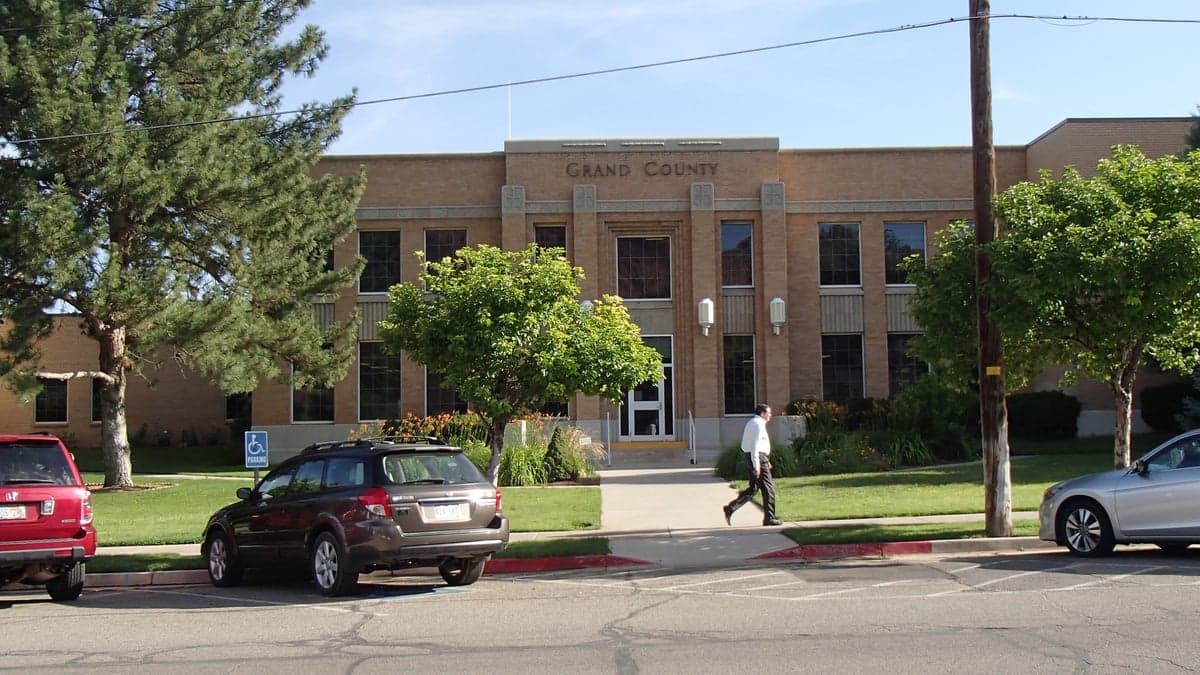
Photo: Wikipedia
Demographics of Grand County
Affluence Level in Grand County
A middle-class area roughly in line with national averages across income, home values, education, and employment.
People of Grand County
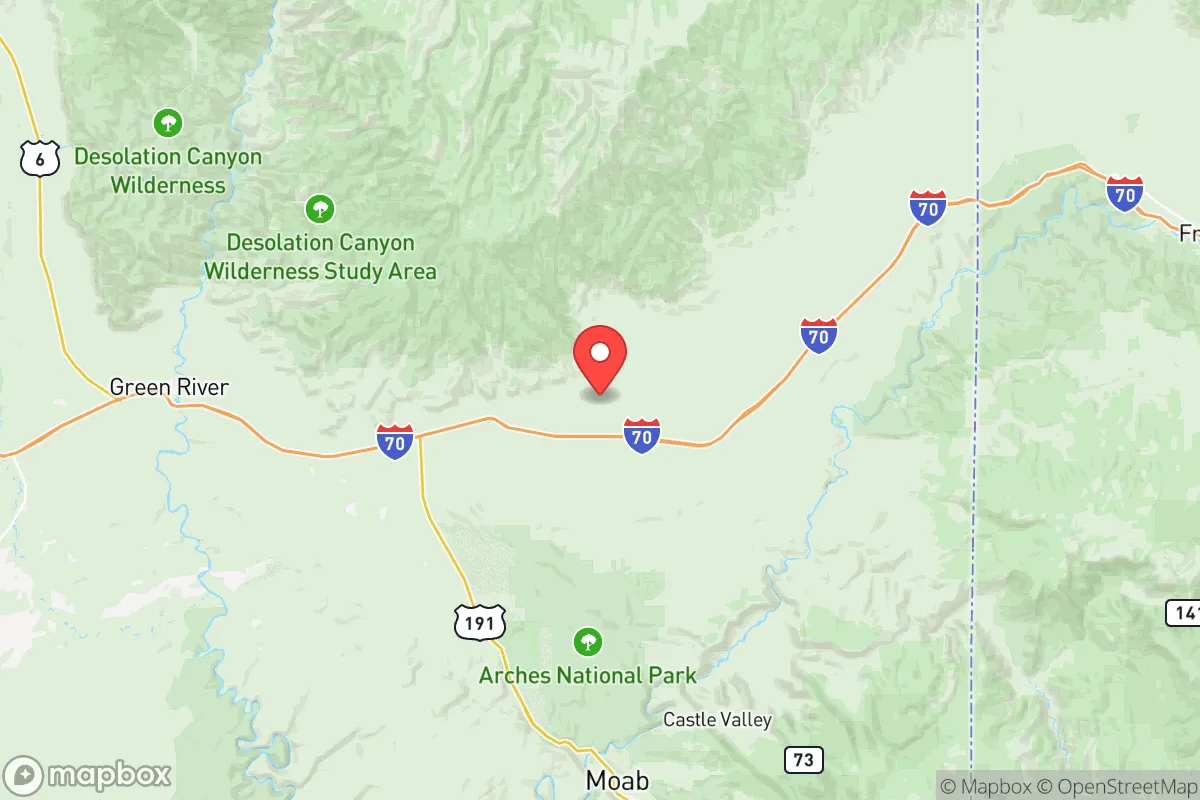
Grand County, Utah, is a place of stark beauty and sparse population, home to just 9,697 residents who are overwhelmingly native-born and predominantly white (78.7%). Its character is defined by the dramatic red-rock landscapes of Moab and the Colorado River corridor, a hub for outdoor recreation that draws a transient workforce and a small, stable year-round community. The county’s distinctive identity is a blend of old ranching and mining roots, a newer tourism-driven economy, and a libertarian-leaning independence that resists heavy government oversight, making it a unique pocket within conservative Utah.
Settlement & growth (pre-1960)
Long before any permanent American settlement, the land now known as Grand County was home to the Ute and Paiute peoples, who lived a nomadic lifestyle across the Colorado Plateau for centuries. Spanish explorers, including the Domínguez–Escalante expedition of 1776, passed through the region but left no permanent settlements. The first sustained American presence came in the 1850s, when Mormon pioneers from the Church of Jesus Christ of Latter-day Saints began exploring the area for potential settlement and grazing land. However, the rugged terrain and arid climate made large-scale farming difficult, and the region remained sparsely populated for decades.
The first significant wave of permanent settlement began in the late 1870s and 1880s, driven by the discovery of valuable minerals. Prospectors and miners, many of them Anglo-American migrants from the eastern United States and Europe, flocked to the area. The town of Moab, founded in 1878 as a Mormon agricultural settlement, became the county seat and the primary hub. The discovery of uranium in the 1940s and 1950s triggered a boom, with miners and speculators pouring into Moab and the surrounding area, including the small community of Castle Valley. This period also saw the establishment of ranching operations, with cattle and sheep grazing on the vast public lands. The population remained small and almost entirely white, with a strong Mormon influence, though the mining boom brought a more transient, non-Mormon element. By 1960, Grand County’s population was roughly 6,000, with Moab as the dominant center.
Modern era (post-1965)
The 1965 Hart-Cellar Act, which fundamentally reshaped U.S. immigration, had a minimal direct impact on Grand County. The foreign-born population today stands at just 4.2%, a figure that has remained low and stable. The county did not experience the large-scale immigration from Asia, Latin America, or the Indian subcontinent that transformed many other parts of the United States. The Hispanic population, currently 12.5%, is the largest minority group, but its growth has been gradual and largely driven by domestic migration from other parts of the Southwest, rather than direct immigration from Mexico or Central America. These Hispanic residents are concentrated in Moab, where they work in the tourism, hospitality, and construction industries.
The most transformative demographic shift in the modern era has been domestic in-migration, beginning in the 1970s and accelerating through the 1990s and 2000s. The rise of Moab as a world-class destination for mountain biking, hiking, and off-roading attracted a wave of outdoor enthusiasts, entrepreneurs, and retirees from across the United States. This influx, often referred to as "amenity migration," brought a more educated and politically diverse population. The percentage of college-educated adults is now 34.7%, a figure that reflects the draw of the area for professionals who can work remotely or run tourism-related businesses. These new residents have settled primarily in Moab, but also in the smaller communities of Spanish Valley and Thompson Springs, creating a cultural divide between the older, more conservative ranching and mining families and the newer, more environmentally conscious and libertarian-leaning arrivals. The East/Southeast Asian population is a tiny 1.1%, and the Indian subcontinent population is 0.0%, reflecting the county’s limited economic draw for immigrant communities.
The future
Grand County’s population is projected to grow slowly but steadily, driven by continued amenity migration and the expansion of the tourism economy. The county is not homogenizing into a single cultural bloc; rather, it is tribalizing into distinct enclaves. The older, Mormon-rooted ranching community remains strong in the outlying areas, while Moab itself is becoming increasingly dominated by a transient, recreation-focused population that is more secular and politically independent. The Hispanic community is likely to grow as a share of the population, but it will remain integrated into the local workforce rather than forming a separate enclave. The foreign-born population is expected to remain low, as the county lacks the industrial or agricultural base that attracts large-scale immigration. The cultural identity of Grand County is being reshaped by in-migration, but the newcomers are largely being absorbed into the existing libertarian and outdoor-oriented ethos, rather than replacing it. The next 10-20 years will likely see a continuation of these trends: a slow-growing, predominantly white population, with a growing Hispanic minority and a small but influential cohort of remote workers and retirees.
For someone moving in now, Grand County offers a community that is both deeply rooted in its Western heritage and increasingly defined by its natural amenities. It is a place where a conservative, independent spirit is the norm, but where the politics are more about land use and local control than national culture wars. The population is stable, educated, and engaged, but the economy is heavily dependent on tourism, which brings seasonal volatility and a high cost of living relative to local wages. It is a good fit for those who value solitude, outdoor recreation, and a small-town atmosphere, but it is not a place of rapid demographic change or cultural diversity.

* Values derived from national, state, county, city and local statistics and may differ in a specific area. Last updated: 2026-06-05T03:25:14.000Z
Narrative content on this page is AI-generated and may contain mistakes. Verify any details that matter before acting on them.
ReloMaps may earn a commission from affiliate links at no extra cost to you.

