
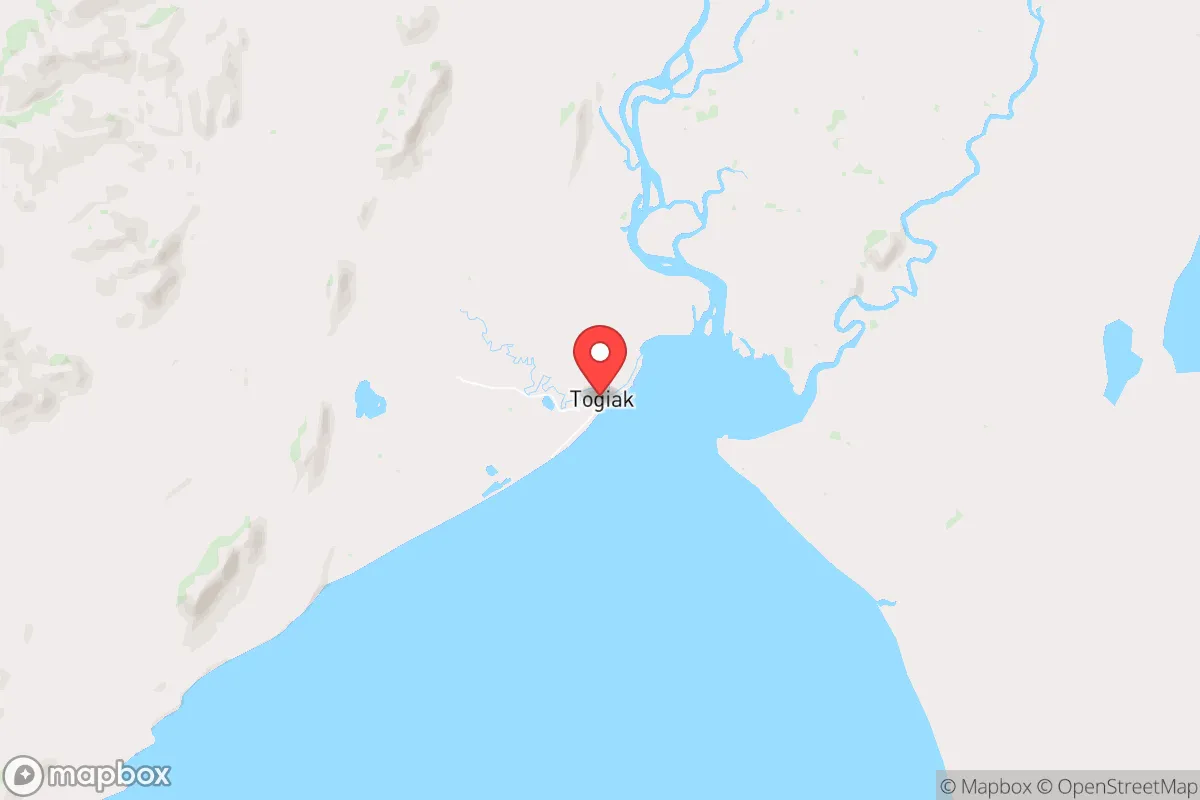
Photo by Clay Knight on Unsplash
Strategic Assessment of Togiak, AK
Strong survivability profile. Good buffer from population centers, with manageable environmental and tactical risks.
What does the Strategic Assessment tell us?
Our Strategic Assessment grades tactical survivability of an area. Major population centers, military targets, fallout zones, natural disasters, and border exposure all drive risk — lower exposure means a more defensible position in a crisis.
This is heavily inspired by Joel Skousen's Strategic Relocation book. Highly recommended you checkout the book ($)What does this tell us?
Our Strategic Assessment grades tactical survivability of an area. Major population centers, military targets, fallout zones, natural disasters, and border exposure all drive risk — lower exposure means a more defensible position in a crisis.
This is heavily inspired by Joel Skousen's Strategic Relocation book. Highly recommended you checkout the book ($)Strategic Pillars

Key Distances
Regional Safe Places
Below is our recommended "safe zones" in Alaska and the surrounding area based on our strategic heuristics. For most people, it's unrealistic to live in a “safe zone” full-time due to work, family or other personal reasons. They tend to be more rural. However, many of these areas are perfect for second homes and retreat properties that double as a vacation home or even a short-term rental.
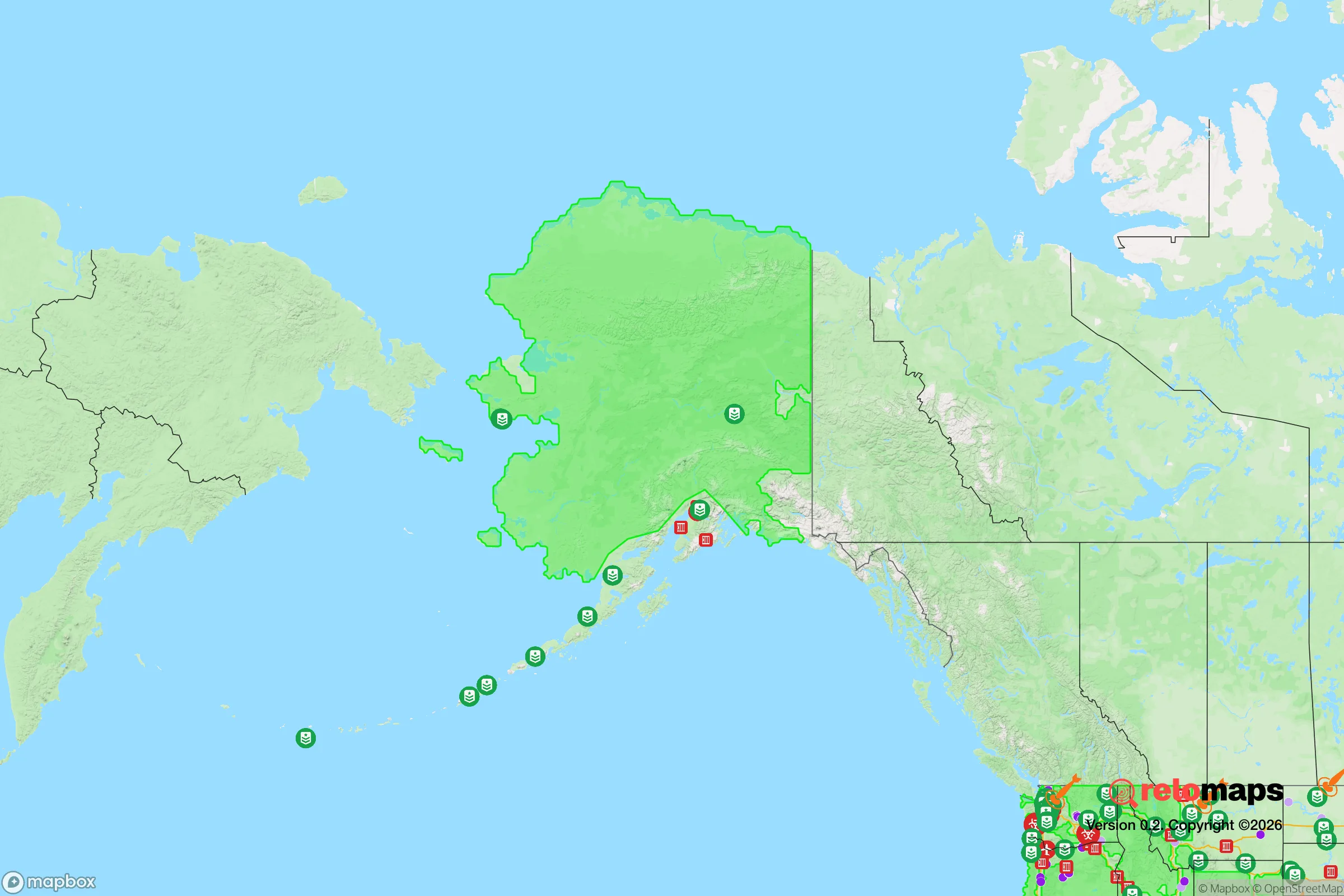
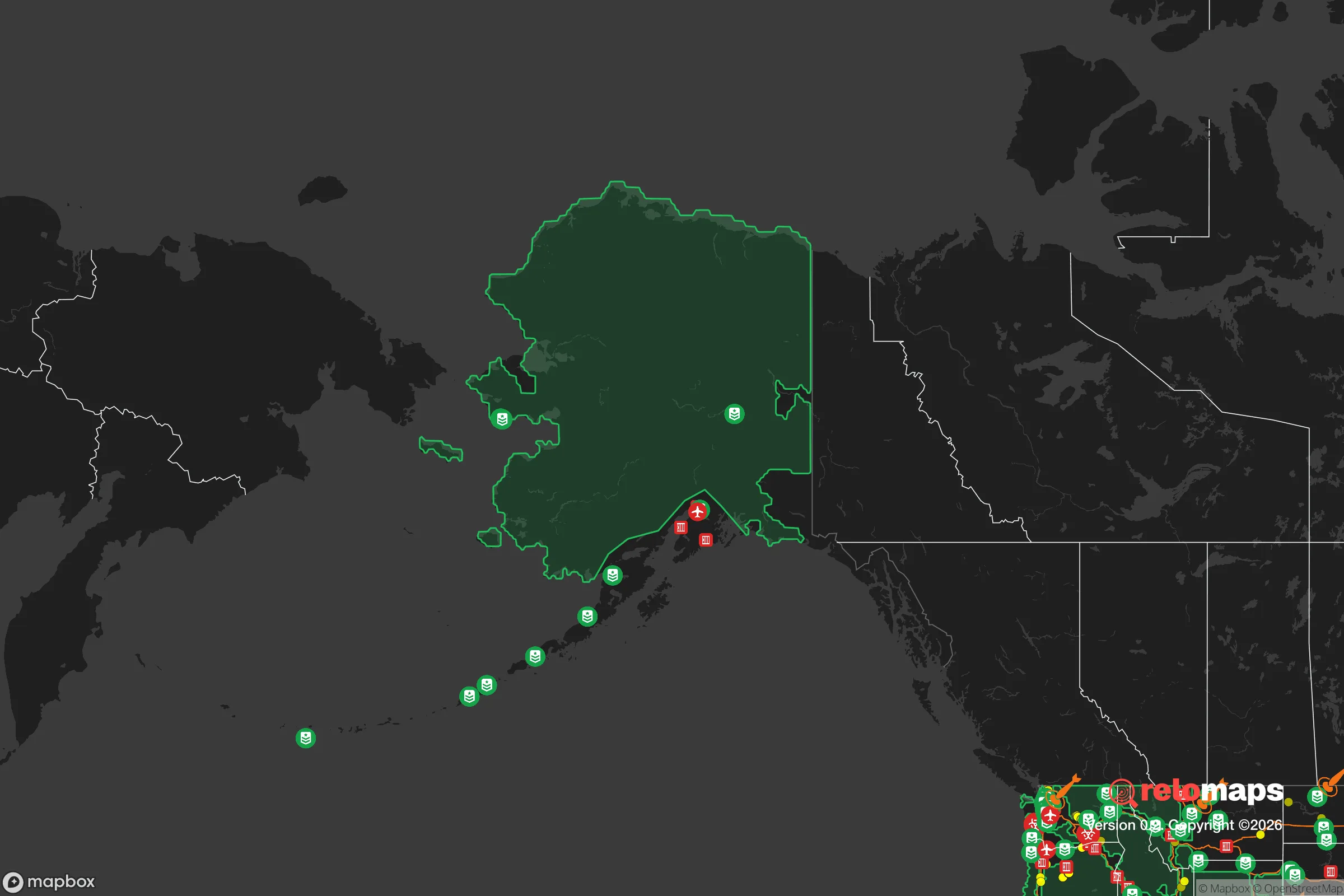


Important Note: For informational purposes only. This does not mean nothing bad ever happens in the green zones. Please use common sense. This is based on public data and modeled with AI. We tried to take a conservative approach but mistakes happen. We update this regularly as new information becomes available.
Solar Generator Recommendations
Backup power matters more here than in safer locations. We've picked three solar generators across budgets and capacity tiers — start with the budget unit if you only need a few essentials, or step up if you want to run a fridge and HVAC for days at a time.

Jackery Portable Power Station Explorer 300
Budget OptionPower on the Go: Weighing only 11 lbs, it's convenient to set up and store with book-sized foldable solar panels

BLUETTI Portable Power Station AC180
Designed for both indoor and outdoor scenarios, AC180 is highly capable as it has a robost capacity and continuous output power.

EF ECOFLOW DELTA Pro Ultra Power Station
Upgraded PickEcoFlow DELTA Pro Ultra is a whole-home energy system designed to grow with your family. Integrated with the Smart Home Panel 2, it scales to meet your evolving energy needs — keeping your home powered, intelligent, and secure through every stage of life.
We earn a commission, at no additional cost to you.
Strategic Assessment Analysis
Togiak, Alaska, offers a strategic relocation option for those prioritizing resilience and self-sufficiency in an increasingly uncertain world. Situated on the shores of Togiak Bay in Bristol Bay, this remote community of roughly 800 people is accessible only by air or water, providing a natural buffer against the chaos of urban collapse, supply chain disruptions, and mass casualty events. Its location—hundreds of miles from any major city and far from the fallout dangers of nuclear targets—makes it a strong candidate for those seeking to weather civic unrest or large-scale disasters with minimal external interference.
Geographic isolation and natural defensive advantages
Togiak’s primary strategic asset is its extreme remoteness. The nearest city of any size, Dillingham, is about 70 miles east by air, but even that is a small hub of around 2,000 people. Anchorage, the state’s largest population center and a likely target in a major conflict or terrorist event, lies over 350 miles away. This distance means Togiak is far outside the blast radius, fallout zones, and secondary chaos of any attack on critical infrastructure. The surrounding terrain—tundra, wetlands, and the rugged Ahklun Mountains—creates a natural defensive perimeter. In a grid-down scenario, the lack of road access (no highways connect Togiak to the rest of Alaska) forces any potential threat to arrive by boat or small plane, both of which are easily monitored and intercepted by a prepared community. The Bering Sea to the west also provides a vast, inhospitable barrier, reducing the risk of seaborne incursions from unstable regions.
Risks, exposures, and proximity to fallout-relevant landmarks
No location is without vulnerabilities, and Togiak has specific exposures that a relocator must weigh. The area sits in a seismically active zone; the Bristol Bay region experiences frequent earthquakes, and a major quake could disrupt the already fragile supply chain for fuel, food, and medical supplies. Tsunami risk is moderate, though Togiak Bay’s shallow waters and protected inlet reduce the worst-case wave heights. More critically, the community is heavily dependent on external fuel deliveries for heating and power generation. In a prolonged national emergency, fuel shortages could become a life-threatening issue. There are no major military bases, nuclear power plants, or high-value industrial targets within 200 miles, which is a positive for fallout avoidance. However, the nearby Dillingham airport and the Port of Bristol Bay could become secondary targets or staging areas for government or military activity during a crisis, potentially drawing unwanted attention. The closest significant fallout-relevant landmark is Joint Base Elmendorf-Richardson near Anchorage, but prevailing winds from the south-southeast typically carry fallout away from Togiak, though this is not guaranteed in all weather patterns.
Practical resilience for a relocator: food, water, energy, and defensibility
For a prepper or survivalist, Togiak offers strong foundations for long-term self-reliance. Food security is the standout advantage: the Bristol Bay watershed is one of the world’s richest salmon fisheries, and subsistence fishing, hunting (caribou, moose, waterfowl), and berry picking are deeply embedded in local culture. A relocator with fishing gear, a smokehouse, and knowledge of preserving meat can secure a year-round protein supply. Water is abundant from Togiak River and local lakes, but treatment is essential—boiling or filtration systems are a must, as surface water carries parasites. Energy is the weak link. The village relies on diesel generators for electricity and heating oil for homes. Solar panels are viable only in summer (long daylight), but winter brings near-total darkness. A serious prepper would need to invest in a backup wood stove, a stockpile of fuel, and possibly a small wind turbine. Defensibility is high: the community is tight-knit, and outsiders are immediately noticed. Building relationships with locals is critical—this is not a place for a lone wolf. The lack of law enforcement presence (a single Alaska State Trooper covers a vast area) means that community watch and personal preparedness are the real security. In a collapse scenario, Togiak’s small population and shared subsistence culture could foster cooperation, but a relocator must bring skills, not just supplies.
The overall strategic picture for Togiak is one of high reward paired with high logistical challenge. For a conservative-minded individual or family seeking to escape the vulnerabilities of urban life—riots, supply chain failures, nuclear threats—this is one of the most secure locations in the United States. The isolation that makes it safe also makes it difficult to establish a foothold: land ownership is limited (most is Native corporation or federal land), housing is scarce and expensive, and the climate is harsh. But for those willing to adapt, learn subsistence skills, and integrate into a resilient community, Togiak offers a genuine off-grid option that few other places can match. It is not a retreat for the unprepared, but for the serious strategist, it represents a viable long-term hedge against the instability of the modern world.

* Values derived from national, state, county, city and local statistics and may differ in a specific area. Last updated: 2026-04-19T19:38:30.000Z
Narrative content on this page is AI-generated and may contain mistakes. Verify any details that matter before acting on them.
ReloMaps may earn a commission from affiliate links at no extra cost to you.

