Photo: Wikipedia
Demographics of Thibodaux, LA
Affluence Level in Thibodaux, LA
A below-average socioeconomic profile. Incomes, home values, and educational attainment trail the U.S., with higher poverty and unemployment.
People of Thibodaux, LA
The people of Thibodaux, Louisiana, today form a predominantly White (65.8%) and Black (24.5%) community of 15,792 residents, marked by a deeply rooted Cajun and Creole cultural identity and a very low foreign-born population of just 1.0%. The city is a regional hub for healthcare, education, and oil-and-gas support services, with a college-educated rate of 37.5% that exceeds the national average for a city its size. Its population density is moderate, concentrated around the historic downtown and spreading into quieter residential subdivisions, giving Thibodaux a small-city feel with strong ties to its bayou geography. The city’s identity is distinctly Louisiana—Catholic, family-oriented, and politically conservative—with a social fabric woven from generations of French-speaking Acadian settlers, enslaved Africans and their descendants, and a modest but notable Indian-subcontinent community of 1.2% that has arrived more recently.
How the city was settled and grew
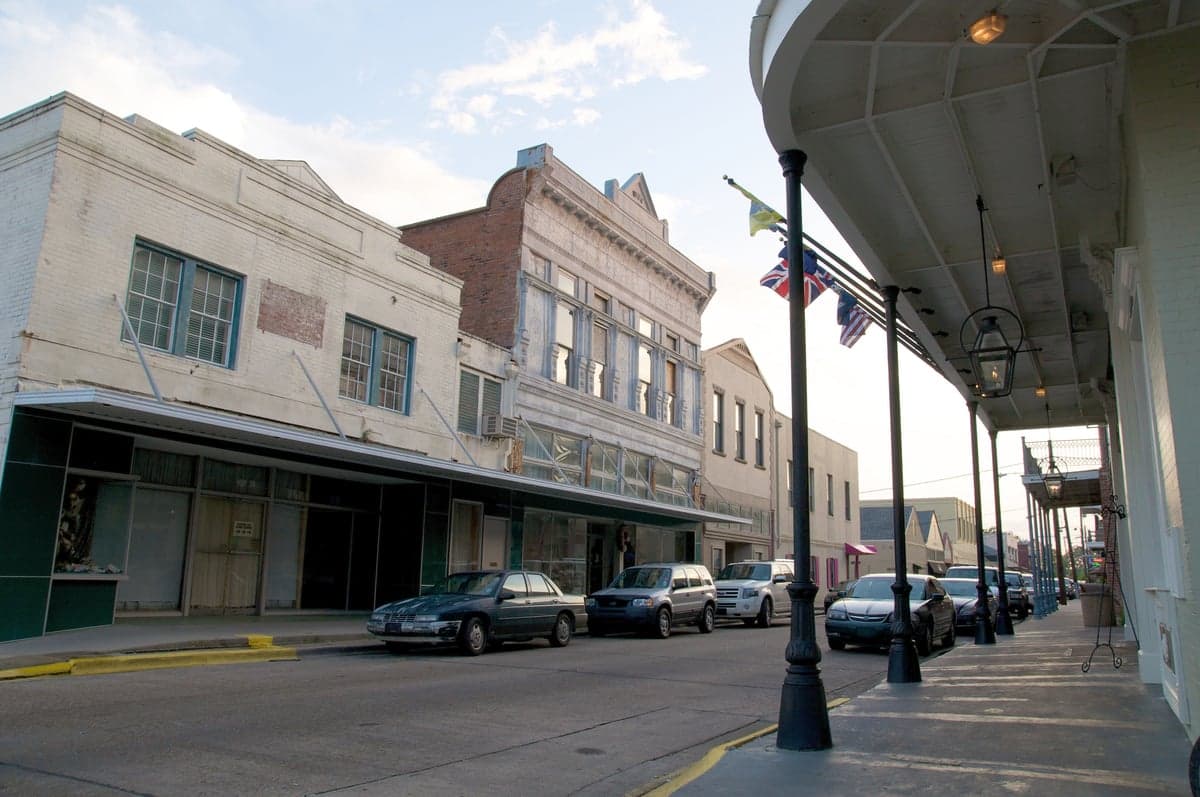
Thibodaux’s population history begins with French and Acadian settlers in the late 18th and early 19th centuries, drawn by Spanish land grants along Bayou Lafourche. The town was officially founded in 1830 as a sugar-plantation hub, and the original population was a mix of French-speaking planters, their enslaved Black laborers, and a small number of free people of color. The historic Downtown Thibodaux district, centered on West Main Street and the Lafourche Parish Courthouse, was built by these early French and Creole families, who erected the antebellum homes and commercial buildings that still define the area. After the Civil War, freed Black families established their own neighborhoods, most notably Shady Oaks and the area around St. Joseph’s Catholic Church, where a historically Black congregation formed. The late 19th and early 20th centuries saw the arrival of Italian and German immigrants, who worked in the sugar mills and opened small businesses, settling in the East Thibodaux corridor along Canal Boulevard. The city’s growth remained steady through the mid-20th century, driven by the expansion of Nicholls State University (founded 1948) and the rise of the oil-and-gas industry in the 1950s and 1960s, which drew White Cajun families from rural bayou communities into town.
Modern era (post-1965)
After the 1965 Hart-Cellar Act, Thibodaux saw minimal international immigration, consistent with its current 1.0% foreign-born share. The most notable post-1965 demographic shift was domestic: the growth of the Indian-subcontinent community, which now stands at 1.2% of the population. These families—primarily professionals in healthcare and engineering at Thibodaux Regional Medical Center and Nicholls State—settled in the newer subdivisions of South Thibodaux, particularly around the La. 308 corridor near the hospital. The East/Southeast Asian population remains effectively zero (0.0%), and the Hispanic share is modest at 4.3%, concentrated in the North Thibodaux area near the sugar mills, where seasonal agricultural labor has drawn a small but stable Latino workforce. The Black population, which declined slightly from historic highs during the Great Migration out of the rural South, remains concentrated in the Shady Oaks and St. Joseph’s neighborhoods, though younger Black families have moved into newer subdivisions like Acadian Hills. Suburbanization since the 1980s has pushed White families into developments such as Bayou Oaks and Woodlawn Estates, reinforcing a pattern of modest residential clustering by income and race, though without the stark segregation of larger Southern cities.
The future
Thibodaux’s population is projected to remain stable or decline slightly over the next 10–20 years, mirroring trends across rural Louisiana. The city is not homogenizing into a single identity; rather, it is likely to maintain its current racial and ethnic structure, with the White and Black shares holding steady and the Indian-subcontinent community growing slowly as Nicholls State and the medical center recruit specialized professionals. The Hispanic population may increase modestly as sugar and seafood industries continue to draw labor, but the city’s low foreign-born rate suggests this growth will be gradual. The most significant demographic pressure is out-migration of young adults—both White and Black—who leave for Baton Rouge, New Orleans, or Houston after college, a trend that will keep the population aging and the growth rate near zero. New residential development is concentrated in South Thibodaux and along the La. 20 bypass, where subdivisions are attracting retirees and commuters who work in Houma or Morgan City, but these are largely White and middle-class enclaves.
For someone moving in now, Thibodaux is a stable, culturally cohesive small city where the population is neither rapidly diversifying nor shrinking dramatically. The community remains defined by its Cajun and Creole heritage, a strong Catholic institutional presence, and a conservative social ethos. New arrivals—especially professionals—will find a welcoming but insular environment, where social networks are built through church, university, and local festivals, and where the low crime rate and good schools (Lafourche Parish public schools) are primary draws. The city is not a melting pot; it is a place where distinct groups coexist with clear historical roots and neighborhood patterns, and where the future looks much like the present.

* Values derived from national, state, county, city and local statistics and may differ in a specific area. Last updated: 2026-10-10T16:29:11.000Z
Narrative content on this page is AI-generated and may contain mistakes. Verify any details that matter before acting on them.
ReloMaps may earn a commission from affiliate links at no extra cost to you.

