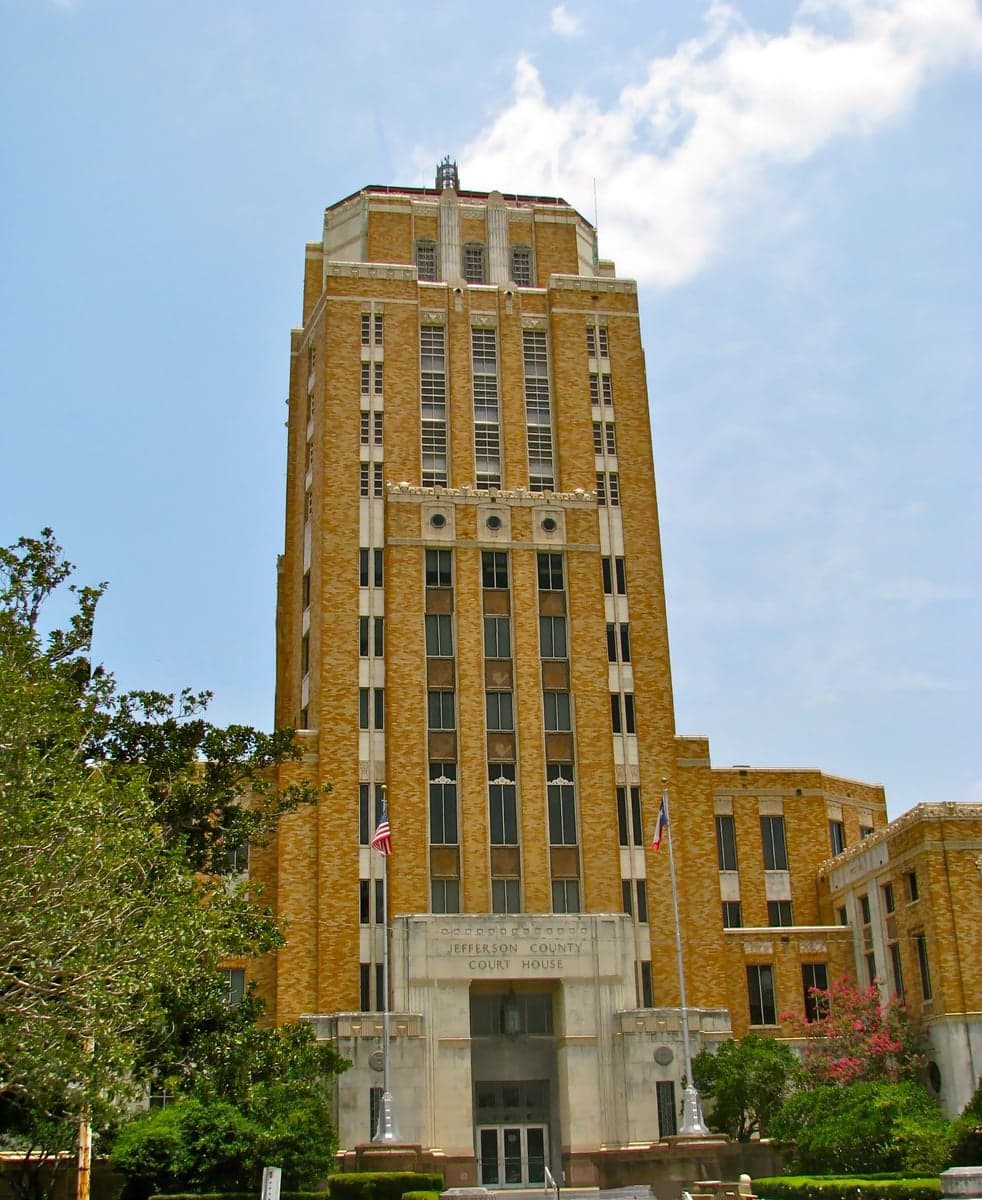
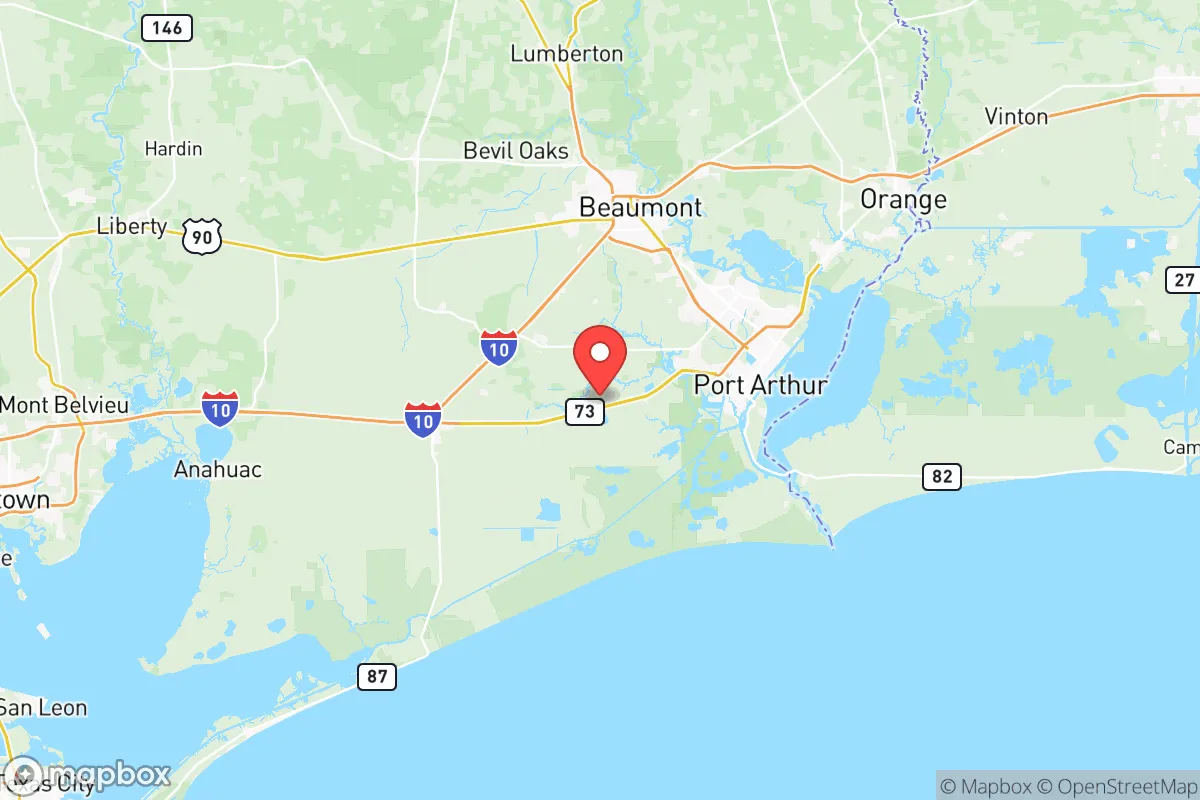
Photo: Wikipedia
Demographics of Jefferson County
Affluence Level in Jefferson County
A below-average socioeconomic profile. Incomes, home values, and educational attainment trail the U.S., with higher poverty and unemployment.
People of Jefferson County
Jefferson County, Texas, is a deeply rooted, majority-minority community of 253,939 residents where Black and white populations each hold significant shares, alongside a growing Hispanic presence. The county’s identity is shaped by its industrial Gulf Coast heritage—anchored by the petrochemical and port economies of Beaumont and Port Arthur—and by a history of boom-and-bust cycles that have created a resilient, working-class character. Distinctive markers include a strong union legacy, a vibrant Creole and Cajun cultural influence from nearby Louisiana, and a population that remains more racially diverse than much of Southeast Texas, though it is less educated (19.4% college educated) and more economically challenged than the state average.
Settlement & growth (pre-1960)
Long before European contact, the Atakapa people inhabited the coastal prairies and bayous of what is now Jefferson County, living in small, mobile bands sustained by fishing, hunting, and gathering. Spanish explorers passed through in the 16th and 17th centuries, but no permanent Spanish settlements took root in the area. The first sustained non-Native presence came after the 1821 Mexican independence, when Anglo-American settlers—primarily from the U.S. South—began arriving under Mexican land grants. These early settlers were largely subsistence farmers and cattle rancers, establishing small communities along the Neches and Sabine rivers.
The county’s population exploded after the 1901 Spindletop oil strike near Beaumont, which transformed the region overnight. The boom drew a massive, multi-ethnic wave of job seekers: thousands of white migrants from the rural South and Midwest (often called “boomers”), Black laborers from the Deep South seeking escape from sharecropping and Jim Crow, and European immigrants—particularly Italians, Greeks, and Lebanese—who settled in Beaumont and Port Arthur to work in the refineries and support industries. The city of Beaumont became the county’s commercial and industrial hub, while Port Arthur, founded in 1895 by Arthur Stilwell, grew as a deepwater port and refinery center. Smaller settlements like Nederland (founded by Dutch immigrants in 1897) and China (a farming community named for its rice fields) reflected the county’s early ethnic diversity. By 1930, Jefferson County’s population had surged past 100,000, with a substantial Black minority (roughly 25%) and a small but visible Hispanic community, mostly of Mexican descent, working in agriculture and railroads.
The post-World War II era brought another wave of domestic migration. The expansion of the petrochemical industry—driven by wartime demand and the rise of synthetic rubber—pulled in white and Black workers from Louisiana, Arkansas, and East Texas, many of whom settled in the suburbs of Beaumont and the growing town of Groves. The county’s population peaked at around 245,000 in 1960, with a heavily industrial, unionized workforce and a rigidly segregated social structure that would soon be challenged by the Civil Rights Movement.
Modern era (post-1965)
The 1965 Hart-Cellar Act had a modest but noticeable impact on Jefferson County. Unlike major Texas cities, the county did not see a massive influx of new immigrants from Asia or Latin America. Instead, the most significant demographic shift came from domestic migration patterns. The decline of the oil industry in the 1980s triggered a population exodus—the county lost roughly 10% of its residents between 1980 and 1990—as white and Black families left for Houston, Dallas, and other Sun Belt growth centers. This outmigration disproportionately affected the white population, which fell from a majority to a plurality by the 2000s.
The Hispanic population grew steadily, rising from about 5% in 1980 to 23.5% today, driven by both natural increase and immigration from Mexico and Central America. These newer residents concentrated in Beaumont’s south and west sides, as well as in Port Arthur, where they found work in construction, services, and the still-operating refineries. The Black population, at 32.9%, remained stable in share but shifted geographically, with many middle-class families moving to suburban neighborhoods in Beaumont’s west end and the city of Nederland. The East/Southeast Asian community (2.6%) is small but notable, with Vietnamese and Filipino families concentrated in Port Arthur, where they work in the fishing and healthcare industries. The Indian subcontinent population (1.1%) is a recent arrival, mostly professionals in medicine and engineering, living in Beaumont near Baptist and Christus hospitals.
Suburbanization reshaped the county’s geography. The unincorporated areas around Lumberton and Sour Lake grew as bedroom communities for Beaumont commuters, attracting white families seeking larger lots and lower crime rates. Meanwhile, Port Arthur experienced population decline and economic distress, losing a quarter of its residents between 1980 and 2020, as the refining industry automated and hurricanes (notably Rita in 2005 and Harvey in 2017) devastated housing stock.
The future
Jefferson County’s population is slowly aging and stabilizing after decades of decline. The county is projected to remain near its current size through 2030, with modest growth driven by Hispanic natural increase and some return migration from Houston as housing costs there rise. The white population will continue its gradual decline as older residents pass away and younger families leave for larger metros. The Black population is likely to hold steady, with some suburbanization into Nederland and Lumberton. The Hispanic share will continue to grow, potentially reaching 30% by 2040, and will become more geographically dispersed beyond traditional enclaves.
The county is not tribalizing into distinct enclaves so much as slowly homogenizing into a tri-ethnic mix, with less racial polarization than in the Jim Crow era but persistent economic stratification. Immigrant communities—Hispanic, Vietnamese, and Indian—are assimilating into the broader working-class and professional cultures, though language retention remains high among first-generation Hispanic residents. The biggest wildcard is the energy transition: if the petrochemical industry contracts significantly, the county could face another population exodus; if carbon capture and hydrogen projects take root, it could attract a new wave of skilled workers.
For someone moving in now, Jefferson County offers a low-cost, deeply Southern environment where community ties remain strong and racial diversity is a daily reality, not an abstraction. The population is becoming more Hispanic and more suburban, but the core identity—industrial, resilient, and shaped by the boom-and-bust cycles of oil—remains intact. It is a place for those who value affordability and authenticity over rapid growth and cosmopolitan amenities.

* Values derived from national, state, county, city and local statistics and may differ in a specific area. Last updated: 2026-06-06T16:30:44.000Z
Narrative content on this page is AI-generated and may contain mistakes. Verify any details that matter before acting on them.
ReloMaps may earn a commission from affiliate links at no extra cost to you.

