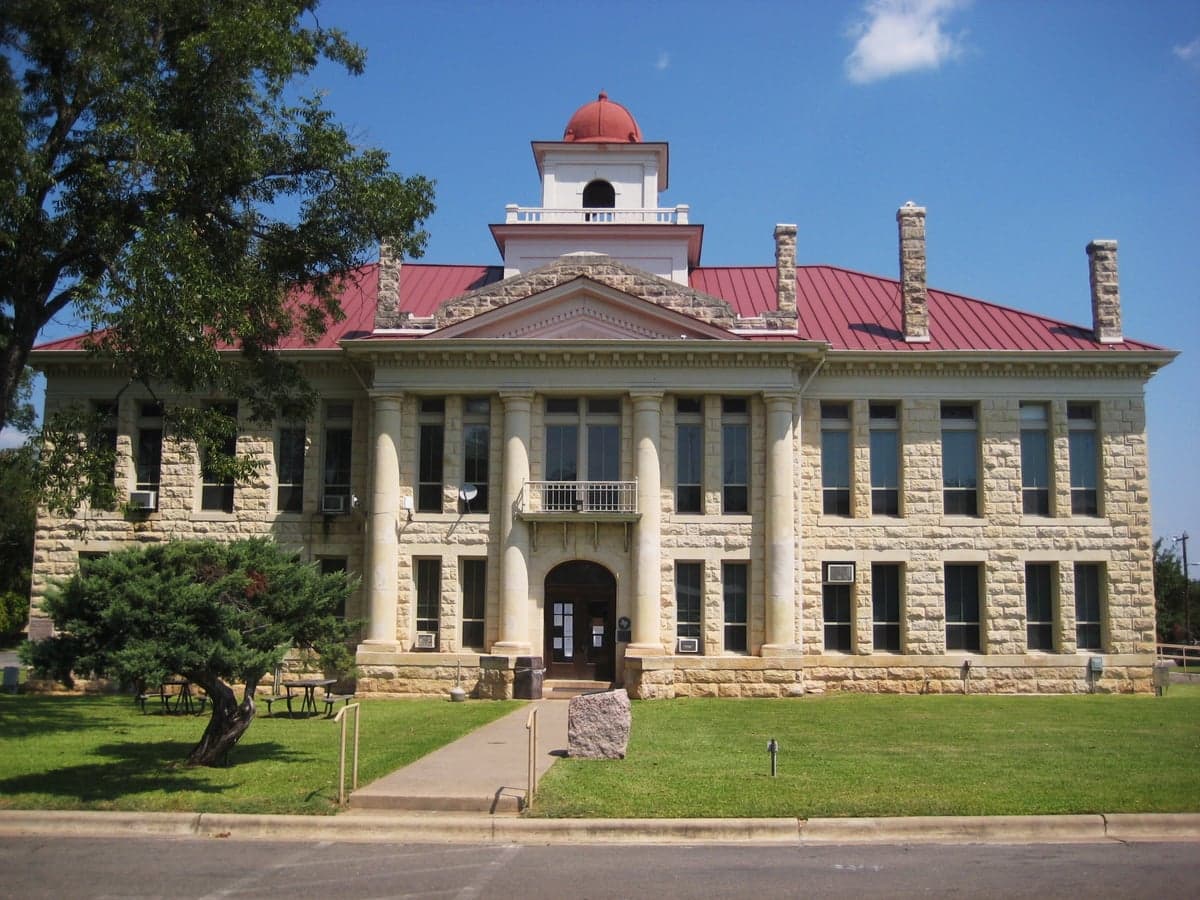
Photo: Wikipedia
Quality of Life in Blanco County
A livable area that tracks near national norms for affordability, walkability, and neighborhood health.
What does Quality of Life tell us?
Quality of Life measures an area by evaluating factors like cost of living, nearby amenities, country club access, airport proximity, socioeconomic signals and neighborhood character. For large states, this is a general average — quality of life can vary dramatically between metro areas, suburbs, and rural communities within the same state.
What does this tell us?
Quality of Life measures an area by evaluating factors like cost of living, nearby amenities, country club access, airport proximity, socioeconomic signals and neighborhood character. For large states, this is a general average — quality of life can vary dramatically between metro areas, suburbs, and rural communities within the same state.
Cost of Living
4% above national average
77%
The Real Cost of Living in Blanco County for 2026
| Tier | Individual | Family (4) |
|---|---|---|
| Survival | $15k | $28k |
| Comfortable | $77k | $113k |
| Luxury | $145k+ | $226k+ |
| Elite (Top 5%) | $171k+ | $265k+ |
Quality-of-Life Analysis
Blanco County, Texas, offers a quality-of-life spectrum that ranges from the amenity-rich, growing town of Blanco to the deeply rural, unincorporated communities like Sandy and Twin Sisters, attracting everyone from Austin-commuting professionals to ranching families and weekenders seeking Hill Country solitude. The county’s character is defined by this contrast: the eastern edge, closer to the I-35 corridor, sees more development and commuter traffic, while the western half remains sparsely populated with large ranches and state parks. Residents choose the county for its balance of scenic landscapes, lower property taxes than Travis County, and a pace of life that slows considerably just a few miles off the main highways.
Largest town(s) & population centers
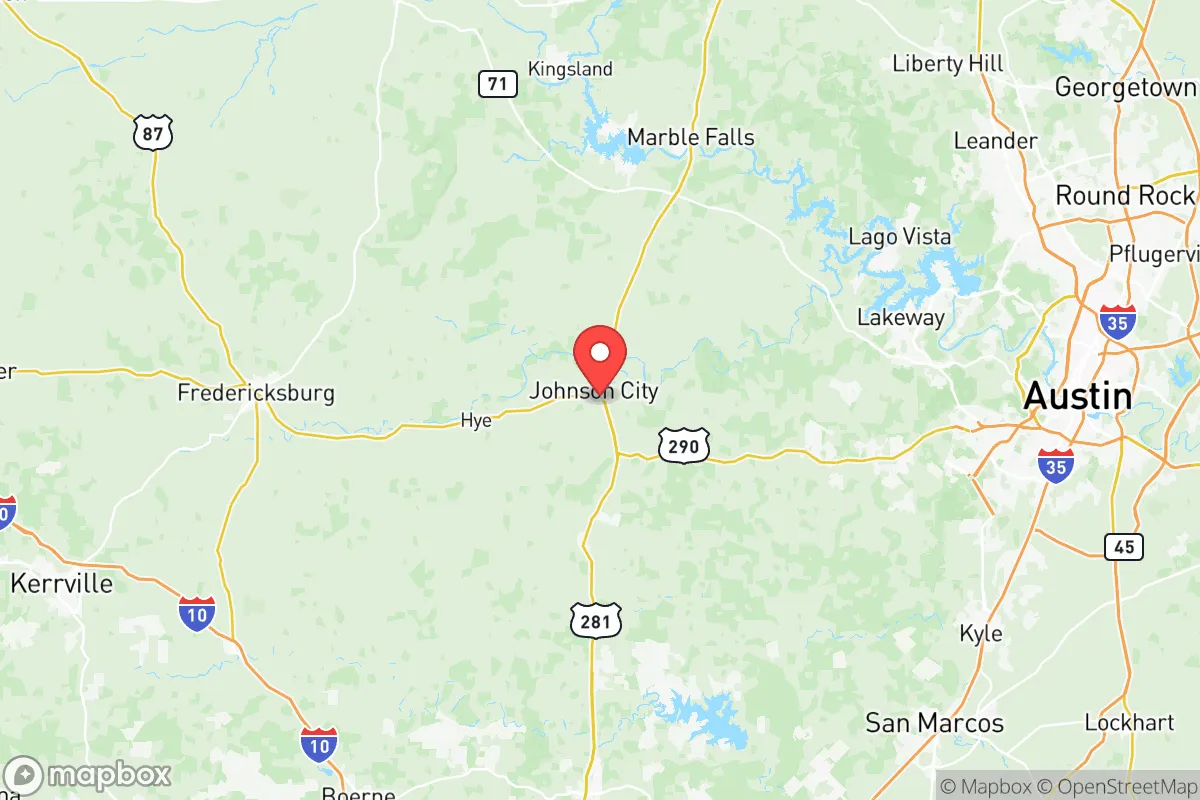
The county seat and largest incorporated town is Blanco (pop. ~2,500), which serves as the commercial and civic hub. Daily life here centers around the historic town square, with local eateries, antique shops, and the Blanco State Park offering swimming and camping along the Blanco River. The town has seen steady growth, with new subdivisions appearing on its outskirts, but it retains a small-town feel where the weekly farmers market and high school football games are community anchors. The only other incorporated municipality is Johnson City (pop. ~1,700), the birthplace of Lyndon B. Johnson and home to the LBJ National Historical Park. Johnson City is quieter than Blanco, with a slower commercial core and a stronger emphasis on heritage tourism and ranching. Both towns provide essential services—grocery stores, hardware stores, medical clinics—but residents typically drive to San Marcos (30 minutes east) or Austin (50 minutes east) for major shopping, healthcare, and employment. The average commute across the county is 28 minutes, a figure that masks a wide range: many residents in eastern Blanco County commute daily to jobs in Kyle, Buda, or Austin, while those in the western part often work locally in agriculture or tourism.
Smaller towns & rural pockets
Beyond the two towns, Blanco County is dotted with unincorporated communities that define its rural character. Round Mountain, a tiny crossroads settlement along US-281, is known for its historic dance hall and proximity to Pedernales Falls State Park. Hye, little more than a post office and a few homes, sits at the intersection of US-290 and RR 290, surrounded by vineyards and wedding venues. Stonewall, just west of Johnson City, is the heart of the county’s wine country and the site of the LBJ Ranch; it has no commercial district but draws visitors to its tasting rooms and the Sauer-Beckmann Living History Farm. Sandy and Twin Sisters are deeply rural areas with no services, characterized by large ranch properties, low traffic, and dark night skies. These pockets appeal to buyers seeking acreage and privacy, often at prices significantly below the countywide median home value of $396,200.
Cost & lifestyle range
The cost of living index for Blanco County is 104 (slightly above the US average), but this figure masks a wide internal spread. At the higher end, newer subdivisions near Blanco and Johnson City—especially those with river access or Hill Country views—can push home prices above $500,000, while the median rent of $920 reflects a mix of older rental stock in town and a few newer apartment complexes. At the lower end, raw land in western areas like Sandy or Twin Sisters can be found for under $10,000 per acre, and older homes on small lots in Johnson City’s historic district occasionally sell below $300,000. Lifestyle varies accordingly: residents in town enjoy walkable access to the square, public water and sewer, and faster internet, while those in rural pockets rely on wells, septic systems, and satellite internet, trading convenience for space and quiet. Property taxes in Blanco County are moderate by Texas standards (roughly 1.8-2.2% of assessed value), and there is no city property tax in unincorporated areas, which can lower annual costs for rural landowners.
Blanco County is best suited for those who value Hill Country scenery, a slower pace, and a mix of small-town amenities and genuine rural isolation. Commuters willing to drive 30-50 minutes to Austin or San Marcos find affordable housing and land that is increasingly scarce closer to the metro. Retirees and second-home buyers are drawn to the wineries, state parks, and low crime rates, while ranching families continue to work the same land their predecessors did a century ago. The county’s challenge is managing growth: as more people discover its affordability and beauty, the tension between development and preservation will shape its character for years to come.

Crime in Blanco County
Crime rates similar to the national median for U.S. locations.
Violent CrimeViolent Crime Analysis
Property CrimeProperty Crime Analysis
Crime Analysis
Blanco County, Texas, presents a mixed safety profile that is notably safer than major urban centers but still warrants careful attention from prospective residents. With a violent crime rate of 344.4 per 100,000 residents and a property crime rate of 1,791.9 per 100,000, the county sits below the Texas state averages but above the safest rural counties in the Hill Country. The county seat of Johnson City and the larger town of Blanco are the primary population centers, while smaller communities like Round Mountain and Hye see far fewer incidents.
Crime in context
Blanco County's violent crime rate is roughly 15% lower than the Texas state average of approximately 410 per 100,000, but it is nearly double the rate of neighboring Gillespie County (home to Fredericksburg). Property crime in Blanco County is closer to the state norm, though still elevated compared to the safest rural counties in the region. For context, the national violent crime rate in 2024 was approximately 380 per 100,000, placing Blanco County slightly below that benchmark. However, these county-wide averages mask significant variation: the unincorporated areas around Fischer and Wimberley (the latter partially in Hays County) report far fewer incidents than the more populated corridors along US-281 and US-290.
What residents experience
Property crime—particularly theft from vehicles, burglary, and occasional agricultural equipment theft—is the most common concern for Blanco County residents. The county's rural character means many homes are isolated, and response times from the Blanco County Sheriff's Office can exceed 20 minutes in outlying areas. In Johnson City, the largest town with roughly 2,000 residents, residents report occasional vandalism and vehicle break-ins near the downtown square and along US-281. Blanco, the second-largest town, sees similar issues concentrated around the Blanco River recreational areas and the Blanco State Park. Violent crime is rare but not absent: the county has experienced isolated incidents of aggravated assault and domestic violence, with the 33rd Judicial District Attorney's office (covering Blanco, Burnet, Llano, and San Saba counties) prosecuting these cases. The district attorney's office in this region is generally considered conservative and tough on crime, which provides some reassurance to residents concerned about progressive prosecutorial policies seen in larger Texas counties like Travis or Harris.
Residents should be aware that the county's proximity to Austin (about 50 miles east) and San Antonio (about 60 miles south) means that some property crime is linked to transient populations traveling the major highways. The Blanco County Sheriff's Office has noted that thefts from vehicles and mail theft often spike during holiday weekends and major events at the nearby Lucky Arrow Retreat or Blanco River access points. Neighborhood watch programs are active in the more established subdivisions around Horseshoe Bay (partially in Llano County) and the gated communities near Canyon Lake (in Comal County), but are less common in the open ranchlands that dominate the county's western half.
For those considering relocation, the safest areas within Blanco County are generally the smaller, unincorporated communities like Round Mountain and Hye, where violent crime is virtually nonexistent and property crime is limited to occasional rural theft. The more populated areas around Johnson City and Blanco require standard precautions—locking vehicles, securing outbuildings, and installing outdoor lighting—but do not present the elevated risks associated with larger Texas cities. The county's conservative judicial environment, with a district attorney focused on prosecution rather than diversion, is a significant factor in maintaining these relatively low crime rates compared to more progressive jurisdictions elsewhere in the state.
* Values derived from national, state, county, city and local statistics and may differ in a specific area. Last updated: 2026-06-07T17:41:09.000Z
Narrative content on this page is AI-generated and may contain mistakes. Verify any details that matter before acting on them.
ReloMaps may earn a commission from affiliate links at no extra cost to you.

