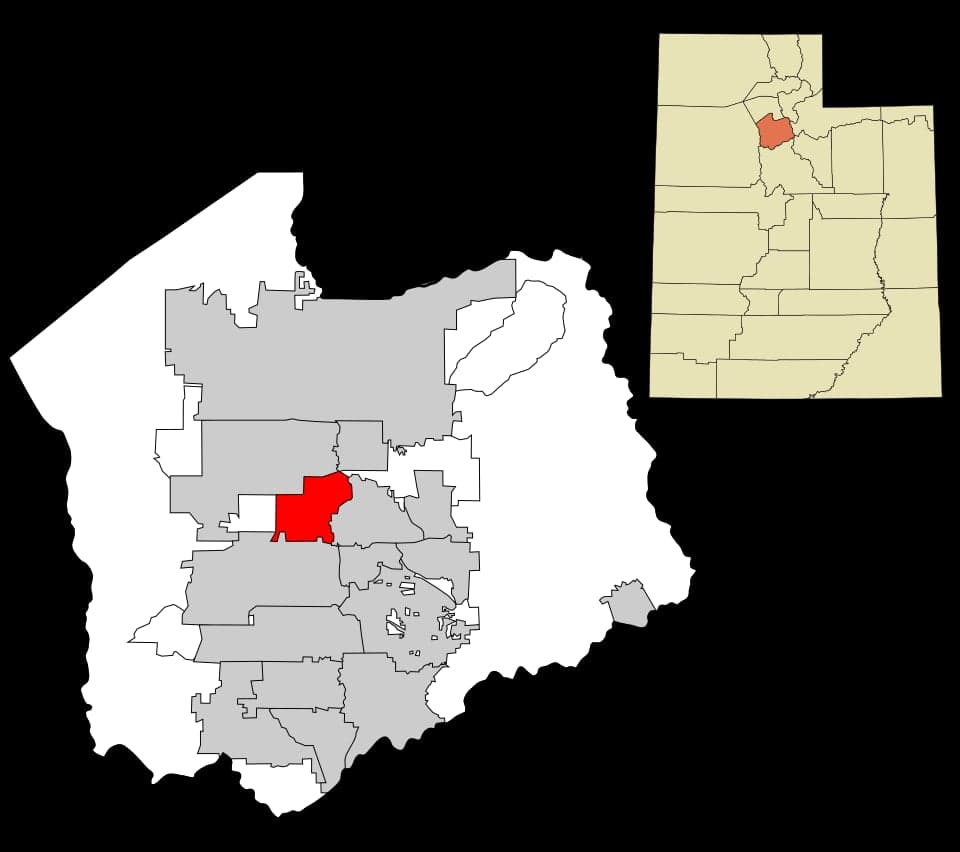
Photo: Wikipedia
Strategic Assessment of Taylorsville, UT
Workable tactical position. Some exposure to population density or targets, but generally defensible in a crisis.
What does the Strategic Assessment tell us?
Our Strategic Assessment grades tactical survivability of an area. Major population centers, military targets, fallout zones, natural disasters, and border exposure all drive risk — lower exposure means a more defensible position in a crisis.
This is heavily inspired by Joel Skousen's Strategic Relocation book. Highly recommended you checkout the book ($)What does this tell us?
Our Strategic Assessment grades tactical survivability of an area. Major population centers, military targets, fallout zones, natural disasters, and border exposure all drive risk — lower exposure means a more defensible position in a crisis.
This is heavily inspired by Joel Skousen's Strategic Relocation book. Highly recommended you checkout the book ($)Strategic Pillars

Key Distances
Regional Safe Places
Below is our recommended "safe zones" in Utah and the surrounding area based on our strategic heuristics. For most people, it's unrealistic to live in a “safe zone” full-time due to work, family or other personal reasons. They tend to be more rural. However, many of these areas are perfect for second homes and retreat properties that double as a vacation home or even a short-term rental.


Important Note: For informational purposes only. This does not mean nothing bad ever happens in the green zones. Please use common sense. This is based on public data and modeled with AI. We tried to take a conservative approach but mistakes happen. We update this regularly as new information becomes available.
Solar Generator Recommendations
Backup power matters more here than in safer locations. We've picked three solar generators across budgets and capacity tiers — start with the budget unit if you only need a few essentials, or step up if you want to run a fridge and HVAC for days at a time.

Jackery Portable Power Station Explorer 300
Budget OptionPower on the Go: Weighing only 11 lbs, it's convenient to set up and store with book-sized foldable solar panels

BLUETTI Portable Power Station AC180
Designed for both indoor and outdoor scenarios, AC180 is highly capable as it has a robost capacity and continuous output power.

EF ECOFLOW DELTA Pro Ultra Power Station
Upgraded PickEcoFlow DELTA Pro Ultra is a whole-home energy system designed to grow with your family. Integrated with the Smart Home Panel 2, it scales to meet your evolving energy needs — keeping your home powered, intelligent, and secure through every stage of life.
We earn a commission, at no additional cost to you.
Strategic Assessment Analysis
Taylorsville, Utah, sits in a precarious but potentially workable position for those serious about long-term preparedness. Its location within the Salt Lake Valley offers immediate access to resources and infrastructure, but that very proximity to a major metropolitan area introduces significant vulnerabilities. For the strategic relocator thinking in terms of decades, not years, Taylorsville is less a final redoubt and more a forward operating base—a place to build capital, skills, and networks before a potential move to more defensible terrain, or a location to fortify in place if your career or family ties demand it. The key is understanding that this is not a remote survivalist haven; it is a suburban node with specific, calculable risks and advantages.
Geographic position and natural advantages for a prepper household
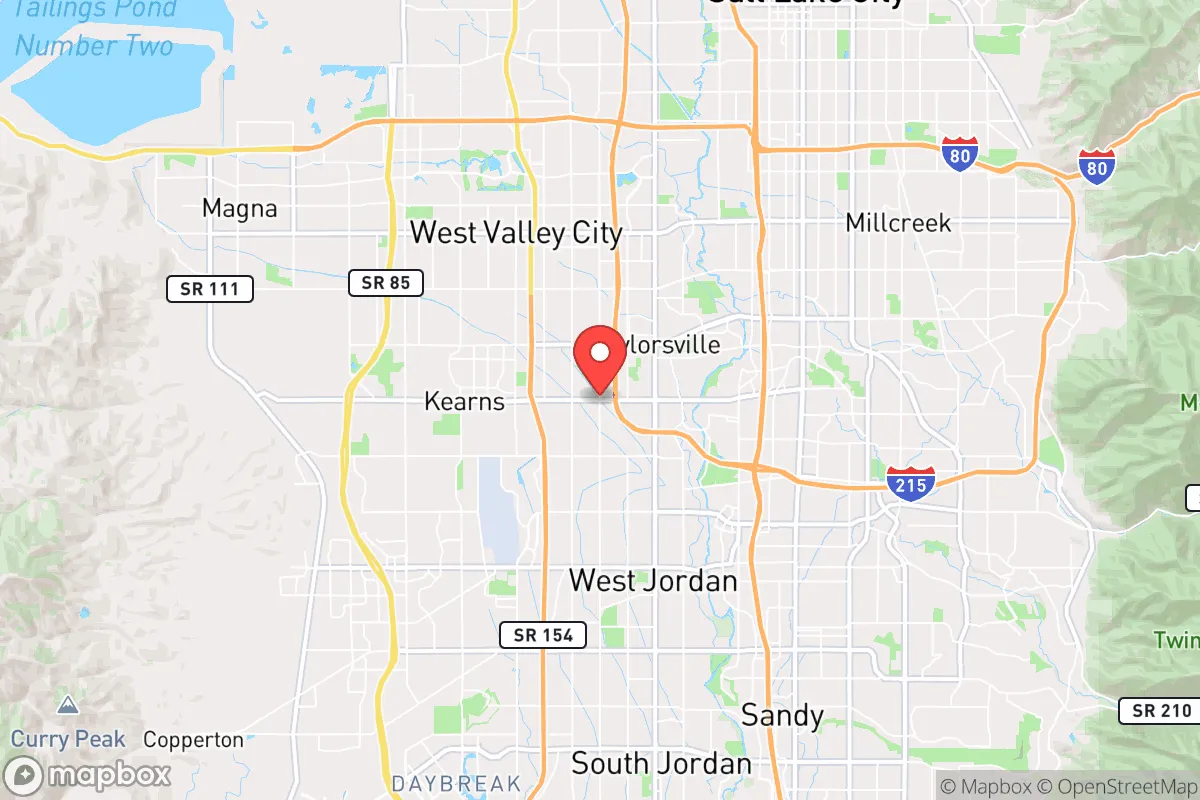
Taylorsville’s primary strategic asset is its position within the Wasatch Front, a corridor that concentrates population, industry, and government infrastructure. For a prepper, this means immediate access to the region’s medical centers, including Intermountain Medical Center and the University of Utah Hospital, both within a 20-minute drive. The city itself sits on the relatively flat floor of the Salt Lake Valley, which is a double-edged sword: it provides easy transportation and construction, but offers zero natural defensibility. The nearby Wasatch and Oquirrh mountain ranges, however, provide a critical buffer. In a scenario of widespread unrest, the canyons (Big Cottonwood, Little Cottonwood, Parleys) offer potential escape routes into high-elevation terrain, though they are choke points that could be blocked. The Jordan River runs through the western edge of the city, providing a water source, but it is heavily managed and polluted in its urban stretches. The valley’s aquifer is the real prize—deep groundwater that, with proper filtration, could sustain a household, but drilling a well in a suburban subdivision is often legally and practically impossible. The climate is arid, with only about 16 inches of precipitation annually, meaning long-term water storage is non-negotiable. For a family, the nearby Uinta-Wasatch-Cache National Forest offers hunting, foraging, and timber, but it’s a 45-minute drive from Taylorsville proper, and those areas will be heavily contested in a crisis.
Risks, exposures, and proximity to fallout-relevant landmarks
The most glaring vulnerability for Taylorsville is its proximity to Hill Air Force Base, located about 30 miles north. Hill AFB is a primary target for any strategic strike, and its destruction would generate a massive electromagnetic pulse (EMP) and potential fallout plume that could sweep south over the entire Salt Lake Valley depending on wind patterns. The city is also within 10 miles of the Salt Lake City International Airport, a major logistics hub that would be a focal point for federal response—or a target for civil unrest. The Utah State Capitol and the LDS Church headquarters in downtown Salt Lake City (12 miles north) are symbolic targets that would draw chaos. On the ground, Taylorsville is bisected by Interstate 215 and State Route 201, which are evacuation corridors that will become parking lots in a crisis. The city’s population density of roughly 3,200 people per square mile means that in a grid-down scenario, you will be competing with 60,000 neighbors for the same limited resources. The 2020 census showed a population that is 75% white, with a significant Pacific Islander and Hispanic minority, which is less relevant than the fact that the area is overwhelmingly LDS (Mormon)—a cultural factor that can be either a strength (tight-knit community, strong family networks) or a weakness (outsiders may be viewed with suspicion). Earthquake risk is real: the Wasatch Fault runs directly through the valley, and a major quake (magnitude 7.0 or higher) would level unreinforced masonry homes and rupture gas lines, creating fire hazards that could overwhelm a suburban fire department.
Practical resilience for a relocator: food, water, energy, and defensibility
For a single individual or family willing to invest heavily in hardening a suburban property, Taylorsville offers some workable options, but they require significant capital and community buy-in. Water is the single biggest constraint: the city’s municipal supply comes from the Jordan Valley Water Conservancy District, which relies on surface water from the Provo River and Deer Creek Reservoir. In a drought or contamination event, that tap goes dry. A household would need at least 55 gallons per person for a two-week supply, plus a Berkey or similar gravity filter for the Jordan River (which requires pre-sedimentation). Rainwater collection is legal in Utah but limited to 2,500 gallons per property without a permit—enough for gardening, not drinking. Food storage is culturally normalized here; many LDS families keep a year’s supply of grains, beans, and canned goods, and you can buy bulk at the LDS Home Storage Center in Salt Lake City. Energy resilience is achievable: solar panels with battery backup (e.g., Tesla Powerwall or DIY LiFePO4) are common in the valley, and net metering is favorable, but a grid-down scenario means your panels are useless without a charge controller and inverter that can island from the grid. Natural gas is the primary heating fuel, and the pipeline network is vulnerable to earthquake damage; a backup propane tank (250+ gallons) and a vent-free heater are wise. Defensibility is poor: most homes are on 0.1-0.25 acre lots with neighbors 15 feet away. A corner lot with a block wall fence and a metal roof is the best you can do. The real play is community: form a neighborhood watch or mutual assistance group (MAG) with 3-5 like-minded households, sharing tools, medical skills, and security rotations. The Taylorsville Police Department has about 50 sworn officers for 60,000 residents—response times will be measured in hours, not minutes, during a crisis.
In the final strategic picture, Taylorsville is a calculated compromise. It offers the economic and social advantages of a major metro area—jobs at companies like eBay, Overstock.com, and the University of Utah—while sitting within striking distance of the mountain redoubts that will be necessary for long-term survival. For a relocator with a prepper mindset, the smart play is to treat Taylorsville as a 5- to 10-year staging ground: build your skills (EMT training, ham radio license, welding), stockpile supplies in a climate-controlled basement or garage, and establish relationships with rural property owners in Cache Valley or the Uinta Basin who can offer a bug-out location. The city itself will not be defensible in a prolonged collapse—too many people, too few resources, too many choke points. But as a base for earning income, accessing medical care, and networking with other prepared individuals, it is one of the better options in the Intermountain West. The key is to never mistake convenience for security. Taylorsville is a place to prepare from, not a place to prepare for.

* Values derived from national, state, county, city and local statistics and may differ in a specific area. Last updated: 2026-05-03T20:37:38.000Z
Narrative content on this page is AI-generated and may contain mistakes. Verify any details that matter before acting on them.
ReloMaps may earn a commission from affiliate links at no extra cost to you.

