 Popular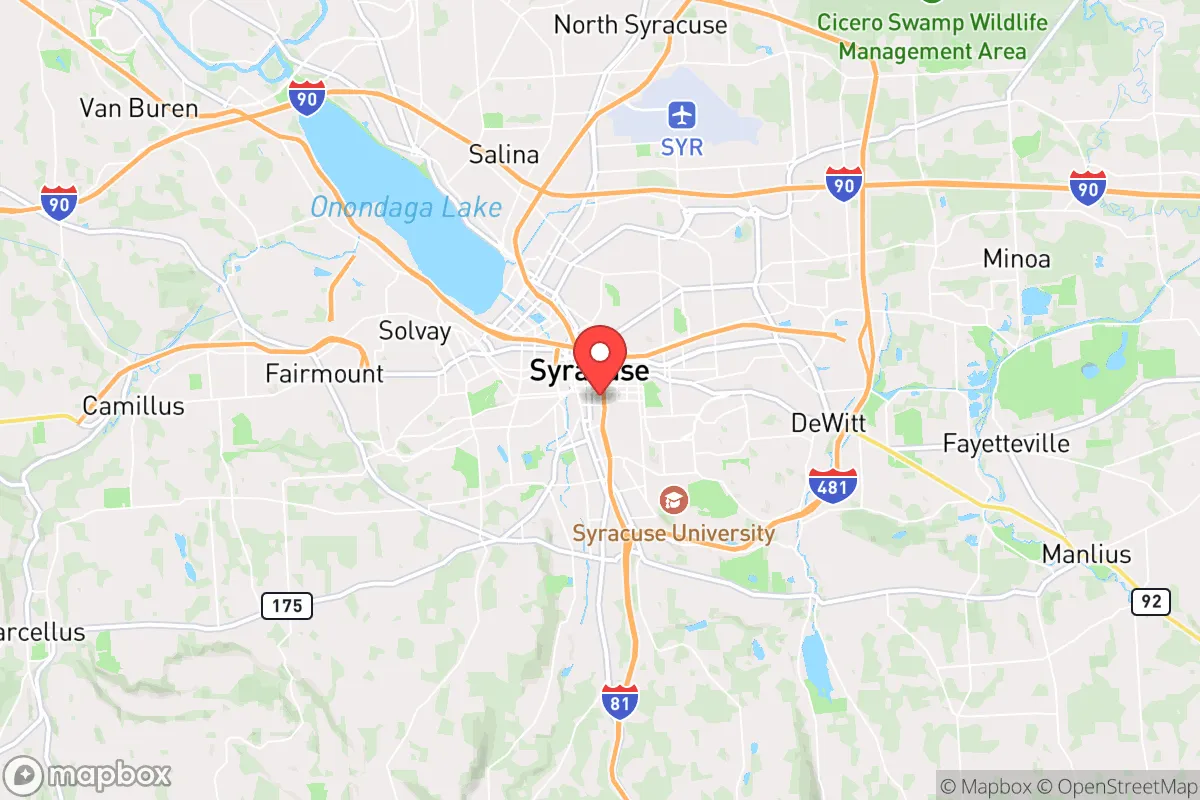
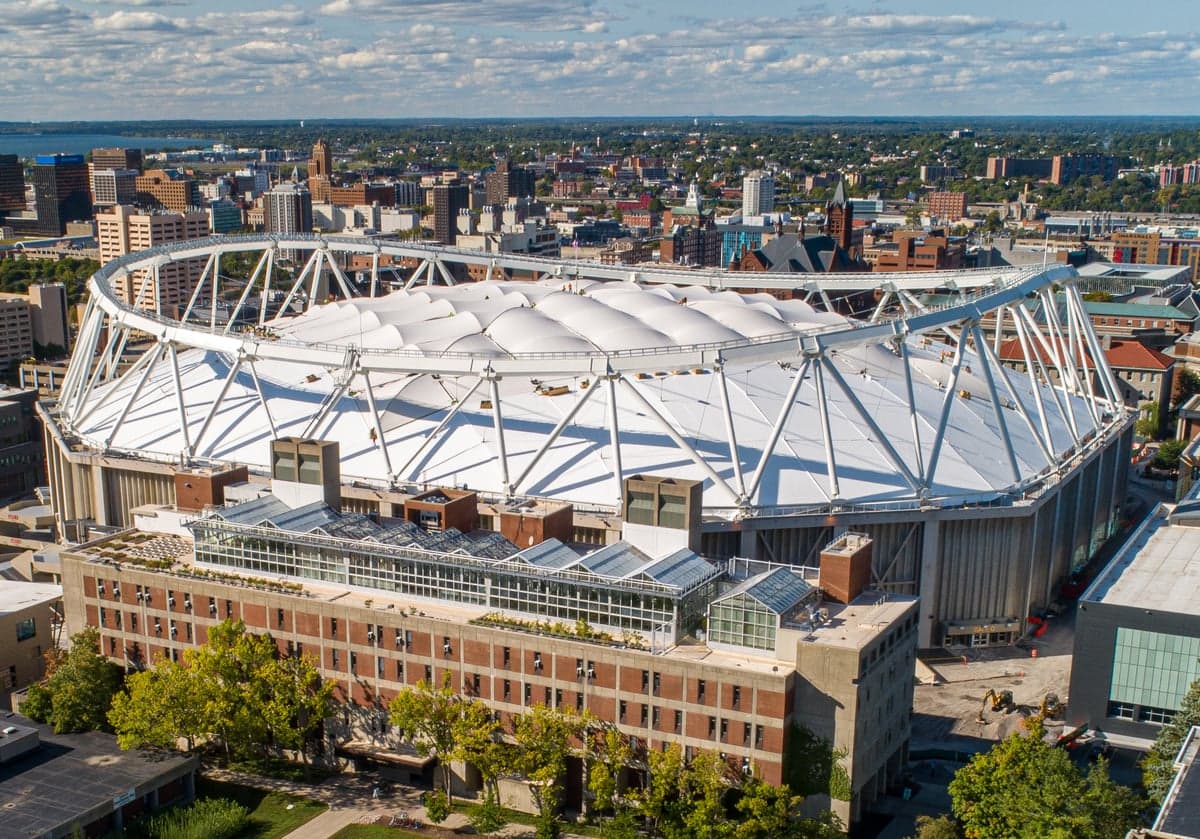
Photo: Wikipedia
Strategic Assessment of Syracuse, NY
Multiple tactical vulnerabilities. Population density, target proximity, or disaster risk are likely compounding. A retreat property and exit planning is required.
What does the Strategic Assessment tell us?
Our Strategic Assessment grades tactical survivability of an area. Major population centers, military targets, fallout zones, natural disasters, and border exposure all drive risk — lower exposure means a more defensible position in a crisis.
This is heavily inspired by Joel Skousen's Strategic Relocation book. Highly recommended you checkout the book ($)What does this tell us?
Our Strategic Assessment grades tactical survivability of an area. Major population centers, military targets, fallout zones, natural disasters, and border exposure all drive risk — lower exposure means a more defensible position in a crisis.
This is heavily inspired by Joel Skousen's Strategic Relocation book. Highly recommended you checkout the book ($)Strategic Pillars

Key Distances
Regional Safe Places
Below is our recommended "safe zones" in New York and the surrounding area based on our strategic heuristics. For most people, it's unrealistic to live in a “safe zone” full-time due to work, family or other personal reasons. They tend to be more rural. However, many of these areas are perfect for second homes and retreat properties that double as a vacation home or even a short-term rental.
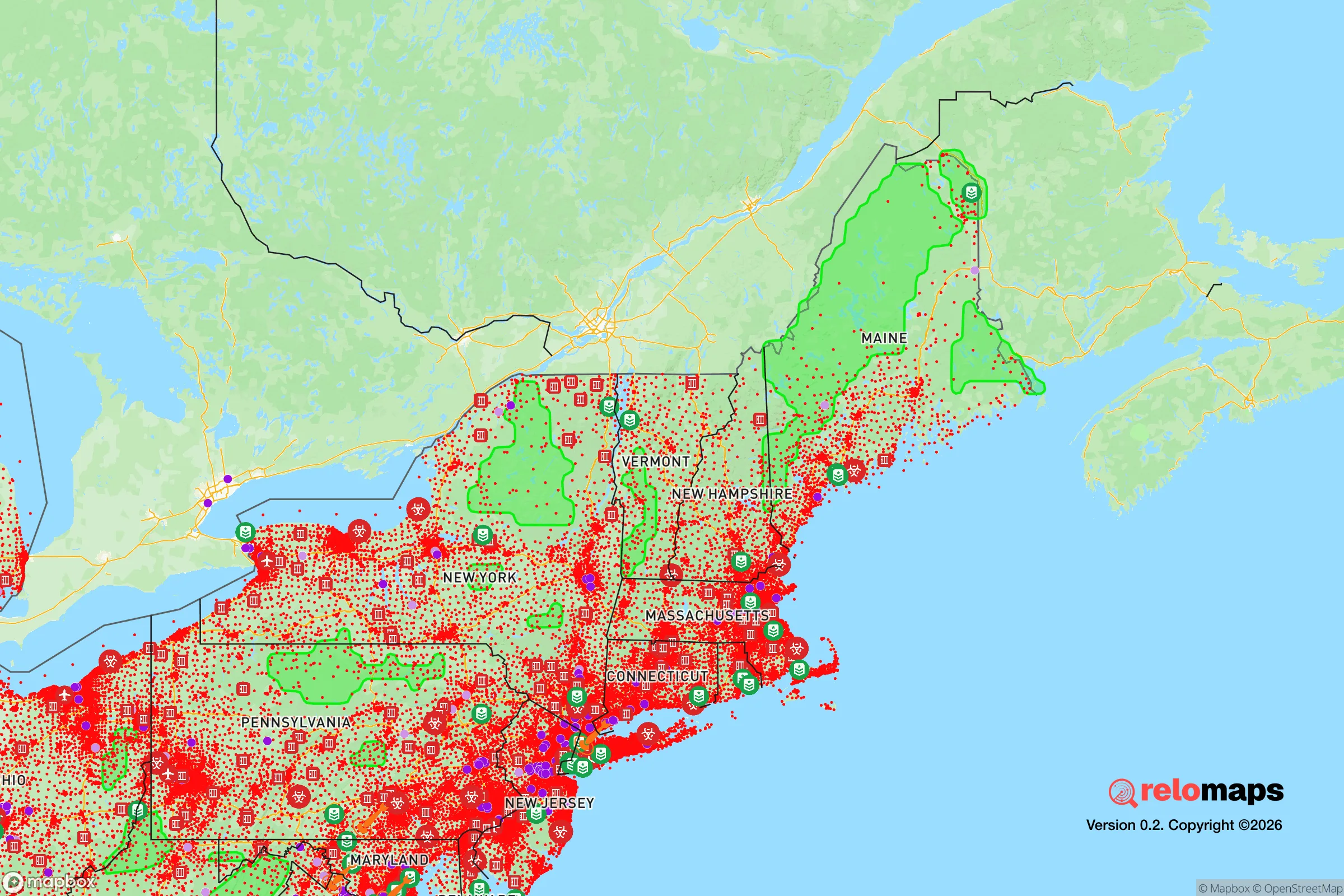
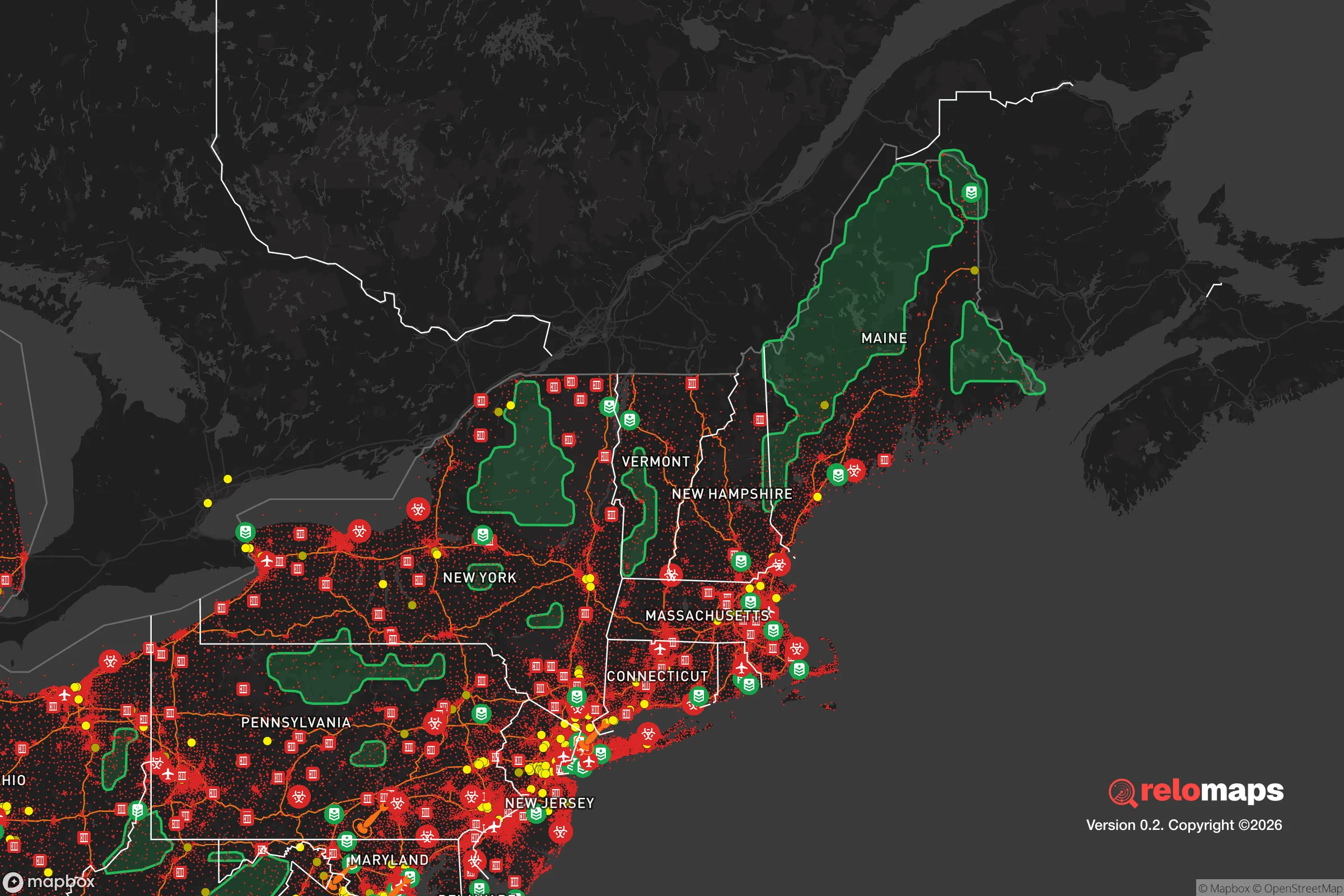


Important Note: For informational purposes only. This does not mean nothing bad ever happens in the green zones. Please use common sense. This is based on public data and modeled with AI. We tried to take a conservative approach but mistakes happen. We update this regularly as new information becomes available.
Solar Generator Recommendations
Backup power matters more here than in safer locations. We've picked three solar generators across budgets and capacity tiers — start with the budget unit if you only need a few essentials, or step up if you want to run a fridge and HVAC for days at a time.

Jackery Portable Power Station Explorer 300
Budget OptionPower on the Go: Weighing only 11 lbs, it's convenient to set up and store with book-sized foldable solar panels

BLUETTI Portable Power Station AC180
Designed for both indoor and outdoor scenarios, AC180 is highly capable as it has a robost capacity and continuous output power.

EF ECOFLOW DELTA Pro Ultra Power Station
Upgraded PickEcoFlow DELTA Pro Ultra is a whole-home energy system designed to grow with your family. Integrated with the Smart Home Panel 2, it scales to meet your evolving energy needs — keeping your home powered, intelligent, and secure through every stage of life.
We earn a commission, at no additional cost to you.
Strategic Assessment Analysis
Syracuse, New York, presents a mixed strategic picture for the conservative prepper or survivalist. Its primary advantage is a location that is far enough from the immediate blast zones of major East Coast targets like New York City, Boston, and Washington D.C., while still being within a day's drive of critical infrastructure and supply chains. The city's long-term resilience is undermined by its deep-blue governance, high tax burden, and a struggling economic base that could collapse under the strain of a major national crisis. For a relocator, Syracuse offers a buffer zone with access to fresh water and farmland, but it requires a clear-eyed assessment of its political and logistical vulnerabilities.
Geographic position and natural advantages for long-term survival
Syracuse sits at the eastern end of the Finger Lakes region, a geographic asset that is hard to overstate for a prepper. The area is surrounded by over 11,000 square miles of the Great Lakes watershed, providing an almost limitless supply of fresh water from Lake Ontario and the Finger Lakes themselves. This is a critical advantage in a grid-down scenario where municipal water systems fail. The region's fertile glacial soils, part of the Ontario Lowlands, support robust agriculture—dairy, apples, corn, and soybeans—meaning local food production is viable even without industrial supply chains. The city's position at the intersection of Interstates 81 and 90 (the New York State Thruway) gives it a logistical spine for moving goods, but in a crisis, these same highways become choke points for refugees fleeing the coastal cities. The surrounding terrain is gently rolling, not mountainous, which limits natural defensibility but offers ample space for dispersed, off-grid homesteading in the rural counties of Onondaga, Madison, and Cayuga.
Risks, exposures, and proximity to fallout-relevant landmarks
The most significant risk for Syracuse is its proximity to multiple high-value targets within a 200-mile radius. Rome, New York, home to the Griffiss Business and Technology Park (formerly Griffiss Air Force Base), is only 50 miles east and houses the Air Force Research Laboratory's information directorate—a likely target in a conflict with a peer adversary. The New York City metro area, a primary target for a nuclear or EMP attack, is roughly 250 miles southeast, placing Syracuse well within the fallout plume zone depending on wind patterns. The city itself hosts the Hancock Field Air National Guard Base, a minor but still relevant military installation. Additionally, the New York State Canal System, which runs through Syracuse, includes locks and dams that could be sabotaged or fail, causing localized flooding. The region's heavy reliance on natural gas for heating (over 60% of homes) means a prolonged winter power outage could be lethal without a backup wood or propane supply. The risk of civil unrest is moderate; Syracuse has a history of racial tension and economic disparity, and a collapse of food distribution could trigger localized violence in the urban core.
Practical resilience for a relocator: food, water, energy, and defensibility
For a relocator, Syracuse offers a workable but not ideal baseline for practical resilience. Water is abundant and accessible—the city's municipal supply comes from Skaneateles Lake, one of the cleanest in the country, and rural properties can easily tap into wells or surface water from the numerous creeks and ponds. Food security is strong if you are willing to garden or hunt; deer are plentiful, and the Finger Lakes region has a thriving network of farmers' markets and u-pick operations. Energy is a weak point. The grid is aging and vulnerable to ice storms and cyberattacks. Solar potential is mediocre due to cloud cover (Syracuse averages only 160 sunny days per year), so a prepper should prioritize a wood stove, propane generator, or small-scale hydro if near a stream. Defensibility is poor in the city itself—dense housing, limited egress routes, and a high crime rate (Syracuse's violent crime rate is roughly 2.5 times the national average). The better play is to buy 20–40 acres in the rural townships like Fabius, Tully, or Cazenovia, where you can establish a retreat with good sightlines and limited road access. The local political climate is hostile to gun ownership relative to the South or Midwest, but New York's SAFE Act is poorly enforced in the rural counties, and a determined prepper can still maintain a reasonable arsenal with proper paperwork.
The overall strategic picture for Syracuse is one of a high-risk, moderate-reward relocation option. Its water and agricultural advantages are genuine and rare for a city of its size in the Northeast. However, the combination of a blue-state regulatory environment, proximity to multiple military and civilian targets, and a struggling urban core that could become a flashpoint in a crisis makes it a less attractive choice than more remote, politically aligned areas like upstate New York's Adirondack region or the rural Midwest. For a single individual or family willing to live off-grid in the surrounding countryside and maintain a low profile, Syracuse can work as a base of operations. But for those seeking a truly resilient, defensible, and politically friendly location, the trade-offs here are significant. The smart play is to treat Syracuse as a supply hub and medical access point, not as your primary retreat.

* Values derived from national, state, county, city and local statistics and may differ in a specific area. Last updated: 2026-05-01T21:55:59.000Z
Narrative content on this page is AI-generated and may contain mistakes. Verify any details that matter before acting on them.
ReloMaps may earn a commission from affiliate links at no extra cost to you.

