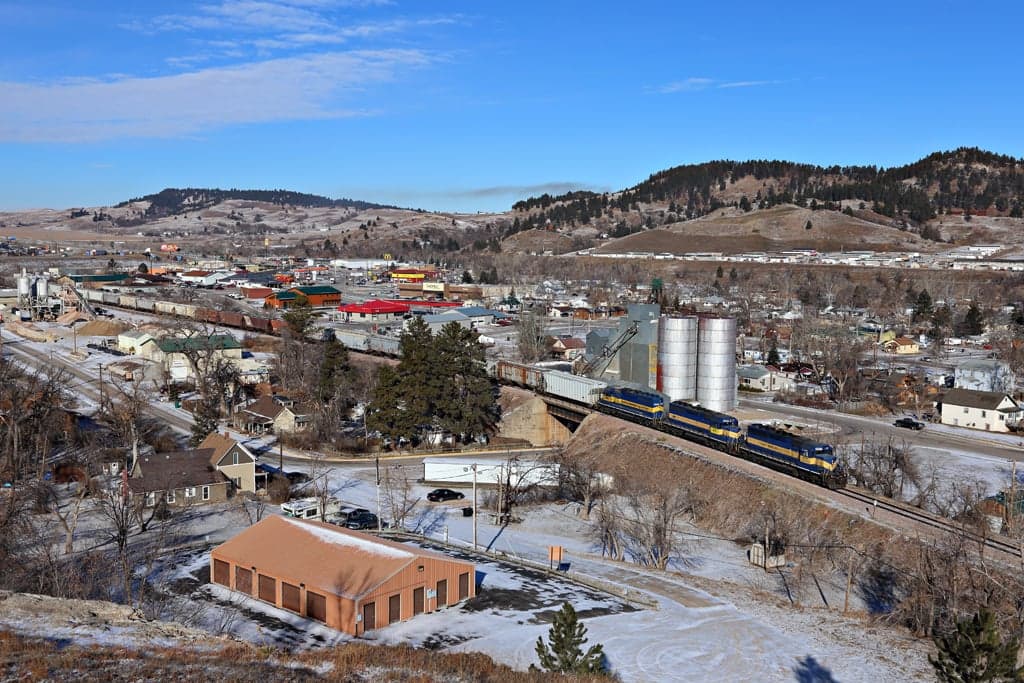
Photo: Wikipedia
Political ClimatePolitical Climate in Sturgis, SD
District shown is the primary district for this city’s centroid. Cities may span multiple districts.
Inherited from parent state — no local data available.
Local Political AnalysisPolitical Analysis of Sturgis, SD
Sturgis, South Dakota, is about as rock-ribbed conservative as it gets, with a Cook PVI of R+15 that puts it right in line with the rest of the state. That number isn't just a statistic—it reflects a community that has long valued personal responsibility, limited government, and the Second Amendment as a way of life. The annual Sturgis Motorcycle Rally, which draws hundreds of thousands of visitors, is a testament to the area's independent spirit, but the politics run deeper than any one event. For decades, this has been a place where folks expect to be left alone to live their lives, and that sentiment hasn't wavered much, even as the rest of the country has gotten more polarized.
How it compares
When you compare Sturgis to the rest of South Dakota, you're really splitting hairs. The entire state carries that same R+15 PVI, so there's no dramatic urban-rural divide like you'd see in, say, Colorado or Oregon. But there are subtle differences worth noting. Rapid City, just a few miles south, leans a bit more moderate—it's a bigger city with more government jobs and a slightly younger demographic, so you'll occasionally hear talk of bike lanes or diversity initiatives that would get laughed out of a Sturgis city council meeting. Meanwhile, towns like Deadwood and Lead, with their tourism and mining histories, tend to be more libertarian than conservative—they'll vote Republican, but they're also fine with legalized gambling and a looser approach to liquor laws. Sturgis, by contrast, is more traditional: church-going, family-oriented, and deeply skeptical of any new tax or regulation. The surrounding Meade County is even more conservative than the city itself, with a strong ranching and agricultural base that views federal land management as a constant overreach.
What this means for residents
For someone living in Sturgis, the political climate means you can generally count on local government to stay out of your business. Property taxes are low, there's no state income tax, and the city council isn't itching to impose new ordinances on short-term rentals or noise complaints—even during rally season, the attitude is more "let people have their fun" than "let's regulate this." That said, there are signs of change that give longtime residents pause. The state legislature in Pierre has seen a few bills in recent years aimed at expanding background checks or restricting certain firearms, and while none have passed, the fact that they're introduced at all is a red flag. The bigger concern is the influx of out-of-state retirees and remote workers, many from blue states, who bring different expectations about public services and land use. So far, Sturgis has absorbed them without shifting left, but if that trend accelerates, the local culture could start to feel the pressure.
Culturally, Sturgis remains a place where the American flag flies high, the local schools teach traditional values, and the biggest political fights are over things like county road maintenance or water rights—not social issues. The rally itself is a powerful symbol of that independence, drawing riders from all over who come for the open road and the lack of hassle. But there's a quiet worry among folks who've been here a while: if the federal government keeps pushing mandates on everything from environmental regulations to vaccine requirements, and if the state ever caves to that pressure, Sturgis will be one of the last holdouts. For now, it's a safe haven for conservative values, but keeping it that way means staying vigilant about who gets elected and what laws get passed. The best advice from a local: keep your ear to the ground, vote in every primary, and don't let anyone tell you that your way of life needs "updating."

State Political ClimatePolitical Climate in South Dakota
State Political AnalysisPolitical Environment in the State
South Dakota is one of the most reliably conservative states in the union, with a Cook Partisan Voting Index of R+15, meaning it votes about 15 points more Republican than the national average. The dominant coalition is a blend of rural agricultural interests, small-government libertarians, and a growing number of conservative transplants fleeing higher-tax states. Over the past 20 years, the state has shifted further right, driven by in-migration to places like Rapid City and Sioux Falls, while the Democratic presence has shrunk to a handful of tribal areas and a few college towns. The last time South Dakota voted for a Democratic presidential candidate was 1964, and the state legislature has been under Republican supermajority control for over a decade.
Urban vs. rural divide
The political map of South Dakota is starkly divided between a few small urban centers and vast rural expanses. Sioux Falls, the largest city, is the state's economic engine and a moderate-to-conservative hub; it tends to vote Republican but with a slightly softer margin than the rest of the state, as its growing tech and healthcare sectors attract some younger, more moderate professionals. Rapid City, the second-largest city, is a conservative stronghold, anchored by Ellsworth Air Force Base and a strong ranching culture. The rural counties—like Harding, Perkins, and Ziebach—are overwhelmingly Republican, often voting 80% or more for GOP candidates. The notable exception is the Pine Ridge Indian Reservation and other tribal lands, which lean heavily Democratic due to federal funding and sovereignty issues. Brookings, home to South Dakota State University, is a rare blue dot, with a younger, more liberal population that occasionally flips local races. The divide is less about urban vs. rural in the traditional sense and more about the contrast between the state's small, growing cities and its vast, depopulating countryside.
Policy environment
South Dakota's policy environment is a model of limited government, which is a major draw for conservative relocators. There is no state income tax, no corporate income tax, and no personal property tax on vehicles or business inventory. The state sales tax is 4.5%, with local options pushing it to around 6.5% in some cities. Property taxes are relatively low, averaging about 1.1% of assessed value. Education policy is decentralized, with school choice options including charter schools and open enrollment, though the state has resisted voucher programs. Healthcare is a mixed bag: the state expanded Medicaid under the Affordable Care Act in 2023 via a ballot initiative, which was a rare progressive win, but the legislature has since imposed work requirements. Election laws are among the most secure in the nation—voter ID is required, same-day registration is not allowed, and absentee voting requires an excuse. The state has no sanctuary city policies; in fact, Sioux Falls and Rapid City cooperate fully with federal immigration enforcement. The regulatory environment is business-friendly, with minimal zoning restrictions outside of city limits and a right-to-work law that keeps union influence low.
Trajectory & freedom
South Dakota is trending more free in most respects, especially compared to neighboring states. The 2023 legislative session saw the passage of HB 1080, which expanded gun rights by allowing permitless carry for anyone 18 or older, and SB 53, which prohibited any state enforcement of federal gun laws that violate the Second Amendment. Parental rights were strengthened with HB 1105, which requires school districts to notify parents of any curriculum involving sexuality or gender identity and allows them to opt their children out. The state also passed SB 46, which bans gender transition procedures for minors—a major win for medical autonomy and parental rights. On the taxation front, the legislature has been slowly reducing the state sales tax on groceries, from 4.5% to 4.2% in 2024, with a goal of eliminating it entirely. However, there are concerning trends: the 2023 expansion of Medicaid, while popular, introduced a new entitlement that could grow over time. Additionally, the state has seen a push for more centralized control over local land use, particularly around the Black Hills, where environmental groups have sued to limit development. Overall, the trajectory is toward greater personal liberty, but the state's growing population—especially in Sioux Falls—could bring pressure for more government services and regulation.
Civil unrest & political movements
South Dakota is remarkably stable compared to coastal states, but it has seen its share of political flashpoints. The most visible is the ongoing tension over the Dakota Access Pipeline, which sparked protests in 2016-2017 near the Standing Rock Reservation. While the pipeline was completed, the movement left a legacy of activism among tribal communities, who continue to push for greater sovereignty and environmental protections. On the right, the state has a strong Second Amendment movement, with groups like the South Dakota Shooting Sports Association actively lobbying against any new restrictions. There have been no significant secession or nullification movements, though the state's "sanctuary" laws for gun rights and unborn life signal a willingness to defy federal overreach. Election integrity is a non-issue here—the state's small population and paper ballot system have produced no major controversies. A new resident would notice a general lack of visible political activism outside of the occasional rally at the state capitol in Pierre. The culture is one of live-and-let-live, with most political disagreements handled through the ballot box rather than the streets.
Projection
Over the next 5-10 years, South Dakota is likely to become even more conservative, but with a growing libertarian streak. The primary driver is in-migration from states like California, Illinois, and Minnesota, where people are fleeing high taxes, crime, and progressive policies. These newcomers tend to be conservative or libertarian-leaning, and they are settling in Sioux Falls, Rapid City, and the Black Hills region. The state's population is projected to grow by about 10% by 2030, which will put pressure on housing and infrastructure but also reinforce the political status quo. The biggest risk is that the state's growing urban centers—especially Sioux Falls—could eventually moderate the legislature, as they attract more diverse populations. However, the rural counties still hold disproportionate power in the state senate, and the Republican supermajority is unlikely to be threatened. Expect continued tax cuts, further expansion of school choice, and a hardening of the state's stance on federal overreach. The wildcard is the tribal vote, which could become more organized and influential, but it remains a small fraction of the electorate.
Bottom line for a new resident: If you're moving to South Dakota, you're coming to a state that values personal freedom, low taxes, and limited government. You'll find a political culture that is deeply conservative but not hostile—people are polite, and political disagreements are rare in daily life. The state is trending in the right direction on most issues that matter to conservatives, but keep an eye on the growth of Sioux Falls and the potential for Medicaid expansion to creep into other programs. For now, it's one of the best places in the country to live free from government overreach.
* Values derived from national, state, county, city and local statistics and may differ in a specific area. Last updated: 2026-05-05T15:16:01.000Z
Narrative content on this page is AI-generated and may contain mistakes. Verify any details that matter before acting on them.
ReloMaps may earn a commission from affiliate links at no extra cost to you.

