 Popular
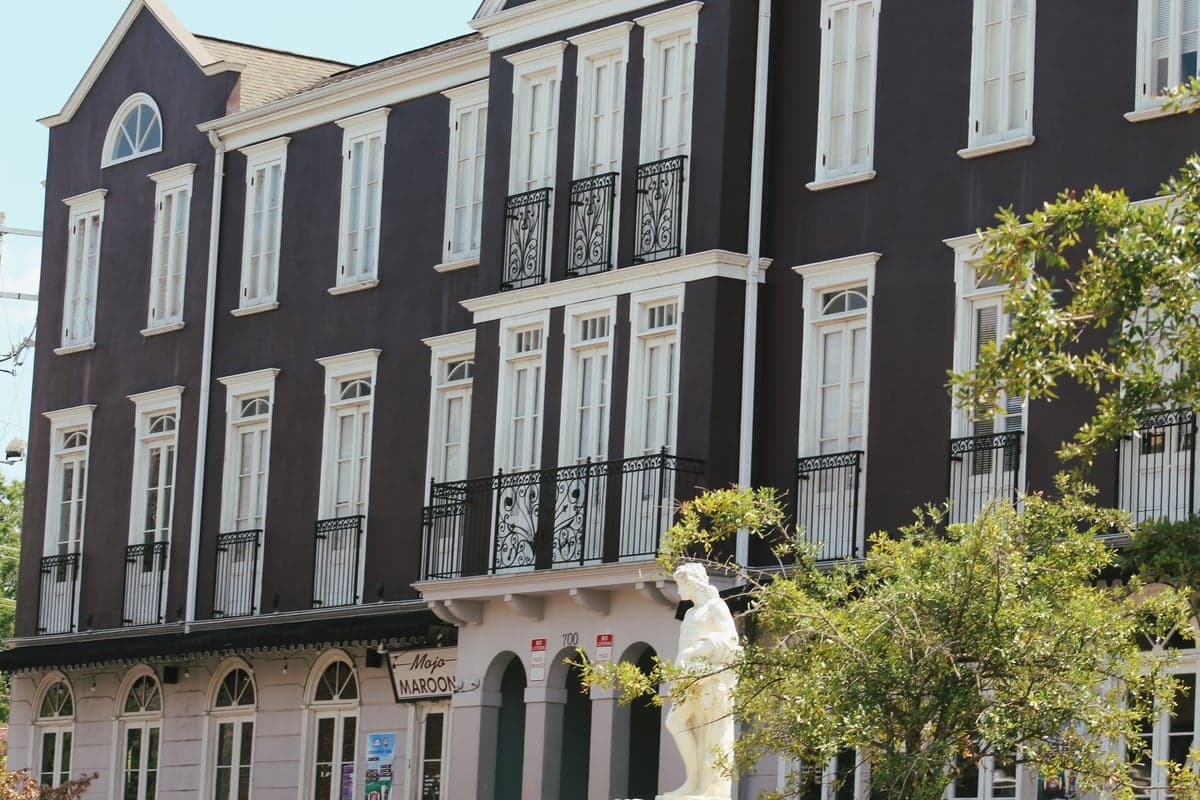
Photo: Wikipedia
Demographics of Starkville, MS
Affluence Level in Starkville, MS
A middle-class area roughly in line with national averages across income, home values, education, and employment.
People of Starkville, MS
Starkville, Mississippi, is a college town of 25,611 residents where the presence of Mississippi State University shapes nearly every aspect of daily life. The city is predominantly White (58.9%) with a significant Black population (31.9%), and a smaller but growing mix of Hispanic (3.4%), East/Southeast Asian (2.5%), and Indian-subcontinent (1.2%) residents. With over half the population holding a college degree (50.9%), Starkville is more educated than the state average, giving it a professional, transient character that blends longtime local families with a steady flow of students, faculty, and research staff.
How the city was settled and grew
Starkville began as a railroad town in the 1830s, originally called Boardtown for the lumber trade that drew early settlers from the Carolinas and Tennessee. The arrival of the Mobile and Ohio Railroad in the 1850s cemented its role as a regional trading hub, and the founding of Mississippi A&M (now Mississippi State University) in 1878 transformed the town’s trajectory. The university drew faculty and students from across the South, but the population remained overwhelmingly native-born White and Black through the early 1900s. The historic Oscaloosa neighborhood, just north of downtown, was built by working-class White families who worked in the rail yards and lumber mills. Greensboro, a historically Black neighborhood southeast of the university, grew during Reconstruction as freedmen established churches, schools, and small businesses. The Old West Side, near the railroad tracks, housed a mix of White and Black laborers in modest shotgun houses. By 1950, Starkville’s population hovered around 7,000, with the university as the dominant employer and a rigidly segregated social structure.
Modern era (post-1965)
The 1965 Immigration and Nationality Act had a modest direct effect on Starkville compared to larger cities, but the post-1965 era brought two major shifts: the desegregation of Mississippi State University (starting in 1965) and the expansion of the university’s research mission. The university began recruiting international graduate students and faculty, particularly in engineering and agriculture. The University Estates neighborhood, developed in the 1970s west of campus, became home to many White faculty and professionals. The North Hills subdivision, built in the 1980s and 1990s, attracted a mix of White and Black middle-class families, including university staff and local business owners. The Black population, which had been concentrated in Greensboro and the South Side near the old cotton gin, began dispersing into newer subdivisions like Fox Run as housing discrimination eased. The foreign-born share remained low—under 3% as late as 2000—but has since risen to 4.8%, driven primarily by East/Southeast Asian (2.5%) and Indian-subcontinent (1.2%) professionals in STEM fields at the university and the nearby Thad Cochran Research Park. Hispanic residents (3.4%) have grown more slowly, largely through construction and service jobs tied to the university’s expansion.
The future
Starkville’s population is trending toward greater educational and professional stratification rather than racial homogenization. The university’s continued growth—enrollment topped 23,000 in 2024—will sustain demand for housing and services, but the city is not experiencing rapid immigration-driven diversification. The East/Southeast Asian and Indian-subcontinent communities, while small, are highly concentrated in professional roles and tend to live in newer subdivisions near campus, such as The Cottages at Starkville and Choctaw Ridge. These groups are likely to grow slowly as the university recruits internationally, but assimilation into the broader White professional class is common. The Black population, stable at around 32%, is increasingly suburbanized, with younger families moving to South Montgomery and Eastwood neighborhoods. The White population, while still a majority, is aging and being replenished by transient students and faculty. Over the next 10–20 years, Starkville will likely remain a bifurcated town: a highly educated, transient university core and a more stable, locally rooted population of White and Black families. The city is not tribalizing into ethnic enclaves but is instead sorting by income and education, with the university’s gravitational pull keeping the professional class clustered near campus.
For someone moving in now, Starkville offers a safe, educated, and politically moderate environment—unusual for Mississippi—where the university provides cultural amenities and economic stability. The trade-off is a limited private-sector job market outside academia and a social scene that revolves heavily around the university calendar. New arrivals will find a town that is neither rapidly diversifying nor stagnating, but steadily professionalizing, with the university as the anchor of both identity and opportunity.

* Values derived from national, state, county, city and local statistics and may differ in a specific area. Last updated: 2026-05-03T06:45:51.000Z
Narrative content on this page is AI-generated and may contain mistakes. Verify any details that matter before acting on them.
ReloMaps may earn a commission from affiliate links at no extra cost to you.

