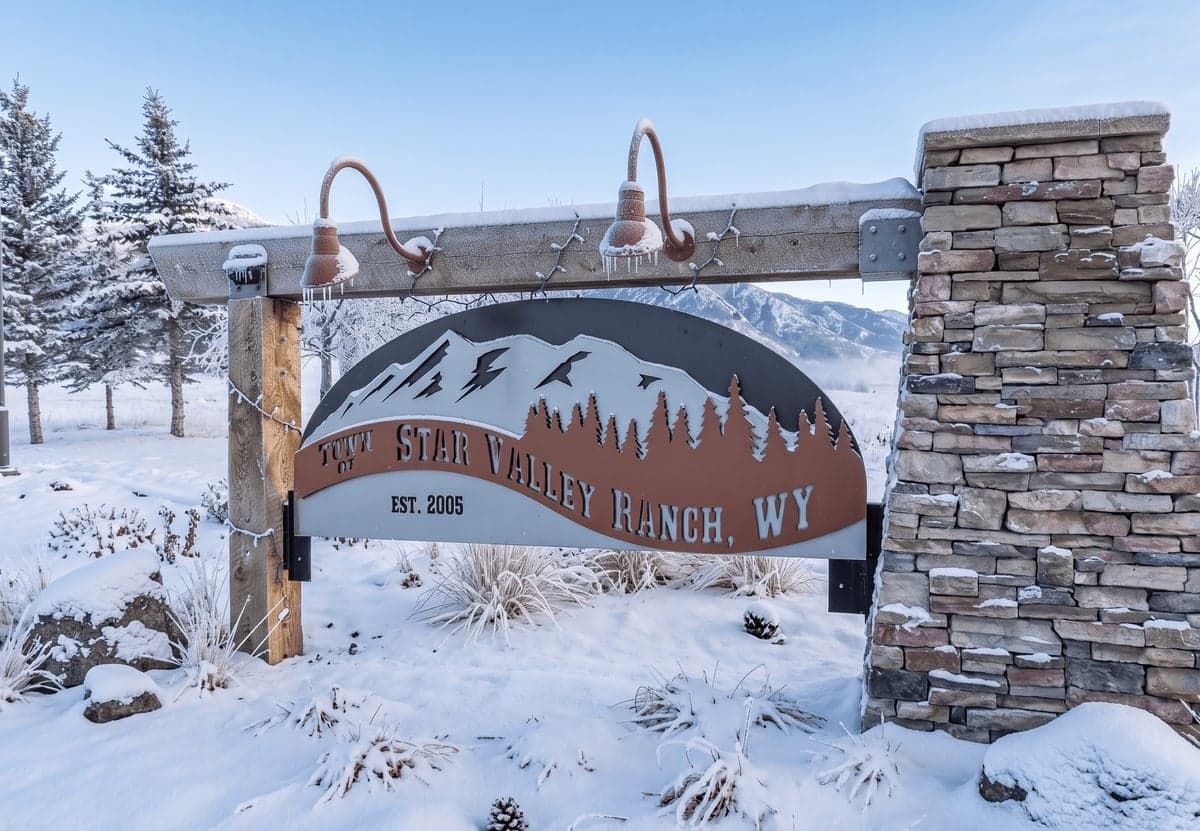
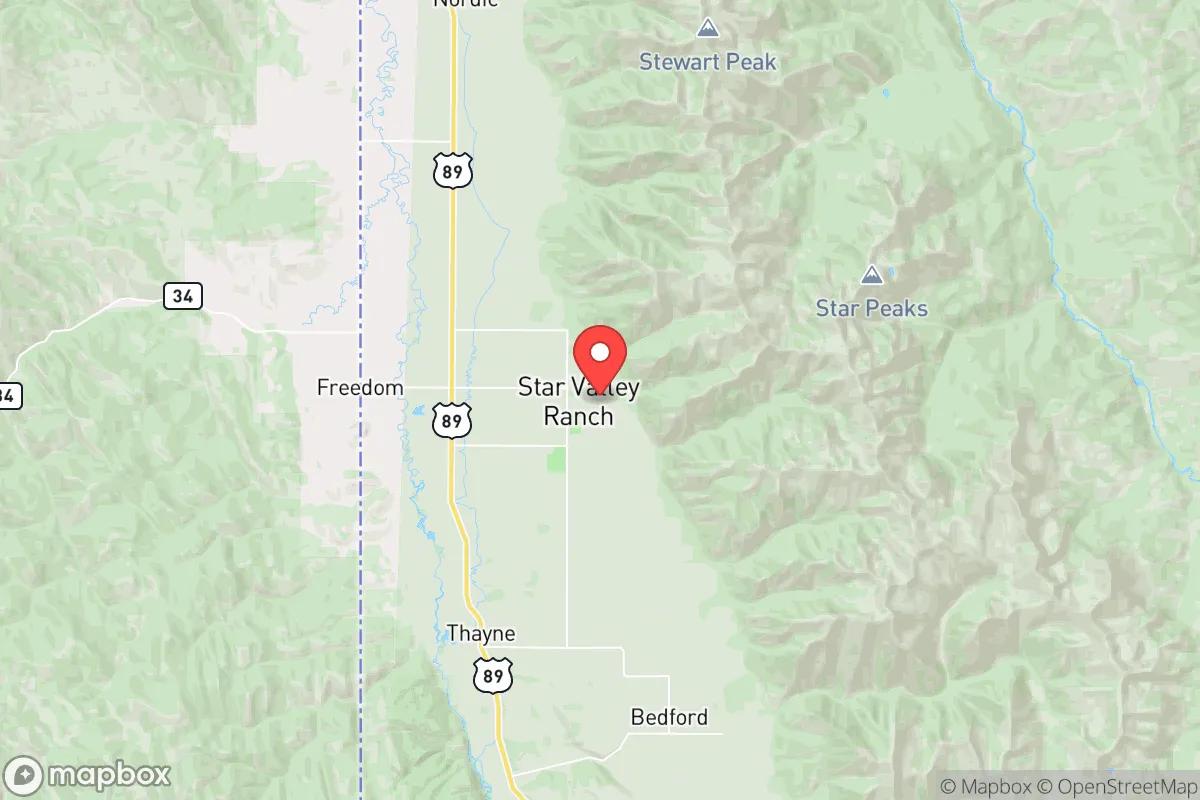
Strategic Assessment of Star Valley Ranch, WY
Strong survivability profile. Good buffer from population centers, with manageable environmental and tactical risks.
What does the Strategic Assessment tell us?
Our Strategic Assessment grades tactical survivability of an area. Major population centers, military targets, fallout zones, natural disasters, and border exposure all drive risk — lower exposure means a more defensible position in a crisis.
This is heavily inspired by Joel Skousen's Strategic Relocation book. Highly recommended you checkout the book ($)What does this tell us?
Our Strategic Assessment grades tactical survivability of an area. Major population centers, military targets, fallout zones, natural disasters, and border exposure all drive risk — lower exposure means a more defensible position in a crisis.
This is heavily inspired by Joel Skousen's Strategic Relocation book. Highly recommended you checkout the book ($)Strategic Pillars

Key Distances
Regional Safe Places
Below is our recommended "safe zones" in Wyoming and the surrounding area based on our strategic heuristics. For most people, it's unrealistic to live in a “safe zone” full-time due to work, family or other personal reasons. They tend to be more rural. However, many of these areas are perfect for second homes and retreat properties that double as a vacation home or even a short-term rental.
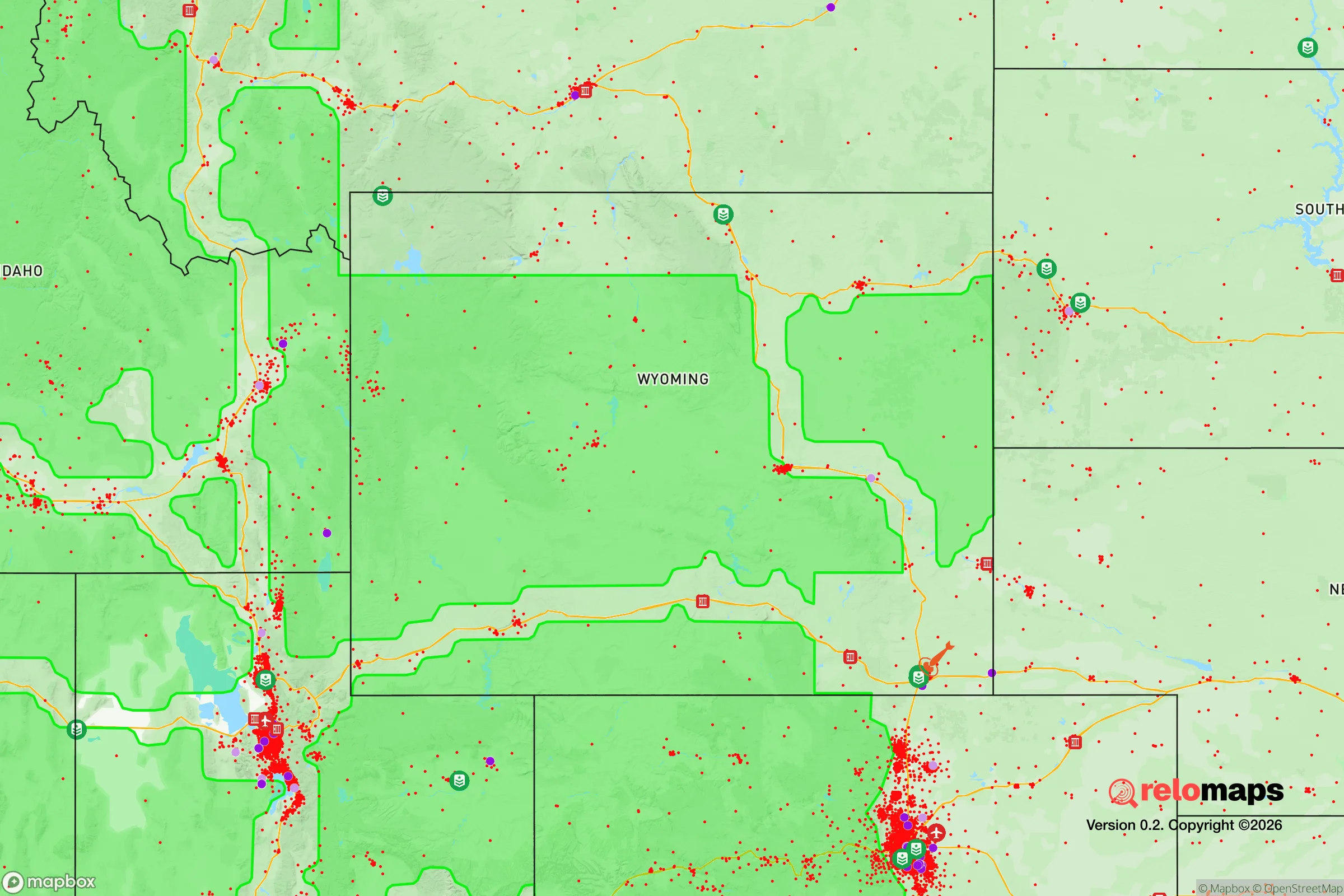
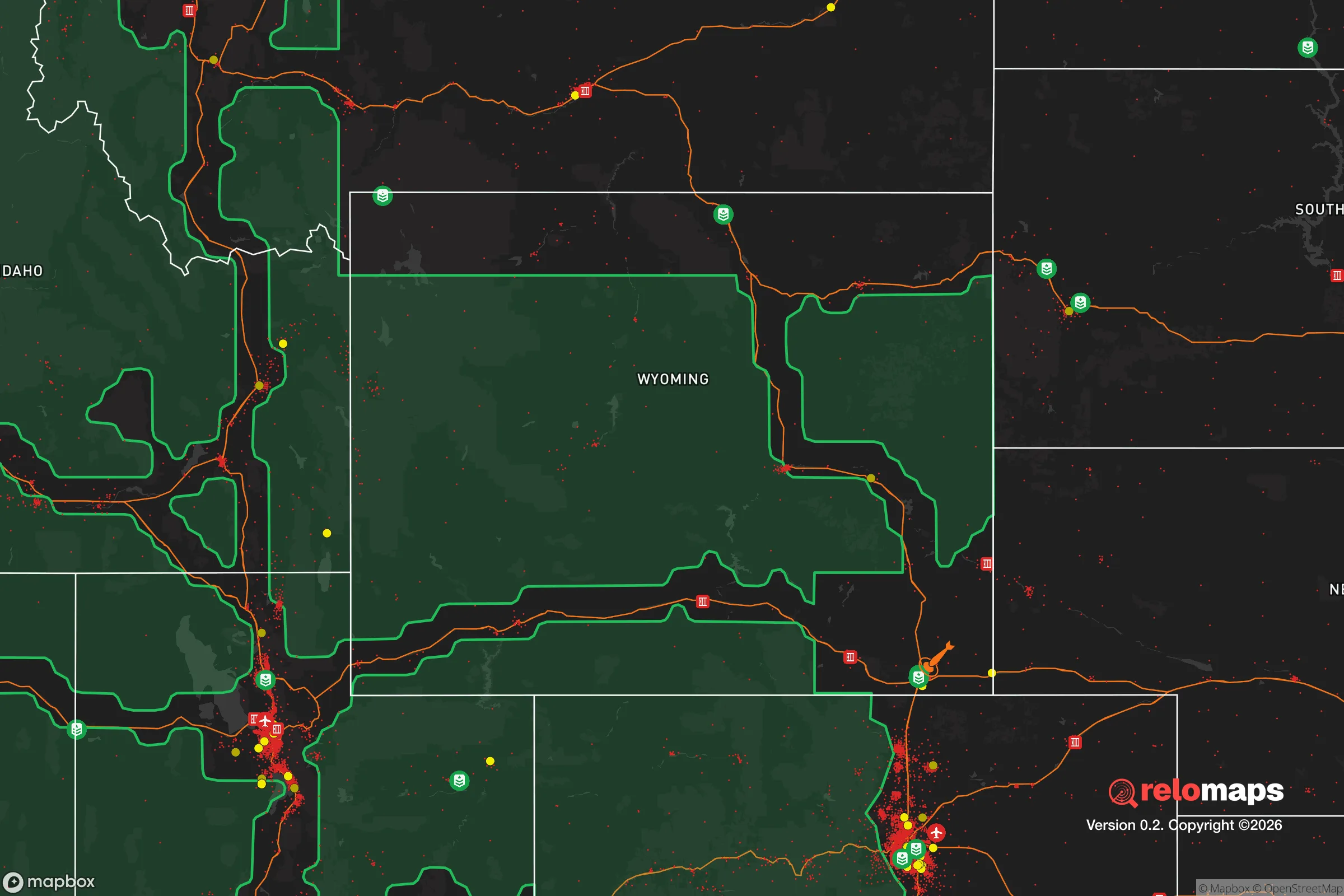


Important Note: For informational purposes only. This does not mean nothing bad ever happens in the green zones. Please use common sense. This is based on public data and modeled with AI. We tried to take a conservative approach but mistakes happen. We update this regularly as new information becomes available.
Solar Generator Recommendations
Backup power matters more here than in safer locations. We've picked three solar generators across budgets and capacity tiers — start with the budget unit if you only need a few essentials, or step up if you want to run a fridge and HVAC for days at a time.

Jackery Portable Power Station Explorer 300
Budget OptionPower on the Go: Weighing only 11 lbs, it's convenient to set up and store with book-sized foldable solar panels

BLUETTI Portable Power Station AC180
Designed for both indoor and outdoor scenarios, AC180 is highly capable as it has a robost capacity and continuous output power.

EF ECOFLOW DELTA Pro Ultra Power Station
Upgraded PickEcoFlow DELTA Pro Ultra is a whole-home energy system designed to grow with your family. Integrated with the Smart Home Panel 2, it scales to meet your evolving energy needs — keeping your home powered, intelligent, and secure through every stage of life.
We earn a commission, at no additional cost to you.
Strategic Assessment Analysis
Star Valley Ranch, Wyoming, offers a compelling combination of geographic isolation and natural resource abundance that makes it a strong candidate for a strategic relocation, particularly for those prioritizing long-term resilience and self-sufficiency. Nestled in the Salt River Range of western Wyoming, this community sits roughly 30 miles south of Jackson Hole and 60 miles north of Logan, Utah, placing it far from major metropolitan centers while still providing access to regional supply chains. The area’s low population density—around 2,000 residents in the town proper—combined with its high elevation (over 6,000 feet) and surrounding national forest land, creates a natural buffer against the cascading effects of civic unrest, supply chain disruptions, or mass casualty events that might plague more densely populated regions. For a conservative-leaning individual or family concerned about the trajectory of the country, Star Valley Ranch represents a place where the physical and social landscape still rewards preparedness and self-reliance.
Geographic position and natural advantages for long-term security
Star Valley Ranch’s location is its primary strategic asset. The town sits in a broad, fertile valley flanked by the Salt River Range to the east and the Caribou-Targhee National Forest to the west, creating a natural fortress of mountains and public lands that are difficult to traverse without local knowledge. This isolation means that in the event of a major disaster—whether economic collapse, civil unrest, or a pandemic—the area would be largely insulated from the chaos that would engulf cities like Salt Lake City (250 miles south) or Denver (500 miles southeast). The valley’s agricultural capacity is significant: the surrounding area is known for its hay and cattle production, and the Salt River provides abundant water for irrigation and drinking. The climate, while harsh in winter (average January lows near 0°F), also discourages transient populations and ensures that only those truly committed to the lifestyle will settle here. For a relocator, this means a lower risk of sudden population surges during a crisis, as the cold and remote nature of the region acts as a natural filter.
Risks, exposures, and proximity to fallout-relevant landmarks
No location is without vulnerabilities, and Star Valley Ranch has several that a strategic planner must weigh. The most significant risk is its proximity to Jackson Hole, a major tourist destination and gateway to Grand Teton and Yellowstone National Parks. Jackson Hole is a high-profile target for terrorism or civil unrest due to its concentration of wealthy visitors and symbolic status as a luxury enclave. While Star Valley Ranch is 30 miles south, the road corridor (US-89) is a single two-lane highway that could become a chokepoint for refugees fleeing Jackson or Yellowstone in a crisis. Additionally, the area lies within 100 miles of the Idaho National Laboratory (INL), a nuclear research facility near Idaho Falls. While INL has a strong safety record, any major incident there—whether accidental or targeted—could pose a fallout risk, especially given prevailing wind patterns that can carry particulates eastward. The valley’s mountain geography may offer some shielding, but it’s not a zero-risk scenario. Finally, the region’s reliance on tourism and seasonal employment means that a prolonged economic downturn could strain local resources, though the agricultural base provides a buffer that many resort towns lack.
Practical resilience for a relocator: food, water, energy, and defensibility
For a prepper-minded individual or family, Star Valley Ranch scores well on the basics of long-term survival. Water is abundant: the Salt River and its tributaries run year-round, and groundwater is accessible via wells, though drilling depths can exceed 200 feet in some areas. The town’s municipal water system is fed by mountain springs, but a private well with a hand pump or solar-powered backup is a wise investment for redundancy. Food production is feasible, with a growing season of roughly 90–110 days (June to September) that supports cold-hardy crops like potatoes, carrots, kale, and root vegetables. The valley’s hay fields and cattle ranches mean that livestock is a viable option, though newcomers should plan for winter feeding costs. Local hunting and fishing are excellent—elk, mule deer, and trout are abundant in the surrounding national forests—but a family should not rely solely on wild game for protein. Energy resilience is a mixed bag: the grid is served by Rocky Mountain Power, which has a decent reliability record, but winter storms can knock out power for days. Solar panels are viable (the area gets over 200 sunny days per year), but snow cover in winter requires regular clearing. A backup generator with a propane or diesel tank is nearly mandatory. Defensibility is strong due to the valley’s geography: the single main road (US-89) can be monitored from multiple vantage points, and the surrounding mountains provide natural barriers. However, the town itself is spread out, so a relocator should choose a property with clear sightlines and a defensible perimeter—ideally on a hillside overlooking the valley floor. The local sheriff’s office is small (fewer than a dozen deputies for the entire county), so community watch and mutual aid networks are essential. The population is predominantly conservative, Mormon, and family-oriented, which means a high degree of social cohesion and a shared distrust of federal overreach—factors that can be invaluable in a crisis.
In the overall strategic picture, Star Valley Ranch offers a rare combination of isolation, natural resources, and a like-minded community that aligns with a conservative, self-reliant worldview. It is not a bug-out location for a weekend warrior; it is a place to build a life that is already resilient by design. The trade-offs are real—harsh winters, limited medical facilities (the nearest hospital is in Afton, 15 miles north, with a Level IV trauma center), and the need for significant upfront investment in off-grid infrastructure. But for those who are serious about weathering the storms ahead—whether economic, political, or environmental—this valley provides a solid foundation. The key is to move early, establish roots, and integrate into the local community before the next crisis hits. Star Valley Ranch won’t save you from everything, but it will give you a fighting chance.

* Values derived from national, state, county, city and local statistics and may differ in a specific area. Last updated: 2026-04-21T10:51:55.000Z
Narrative content on this page is AI-generated and may contain mistakes. Verify any details that matter before acting on them.
ReloMaps may earn a commission from affiliate links at no extra cost to you.

