Photo: Wikipedia
Political ClimatePolitical Climate in St. George, UT
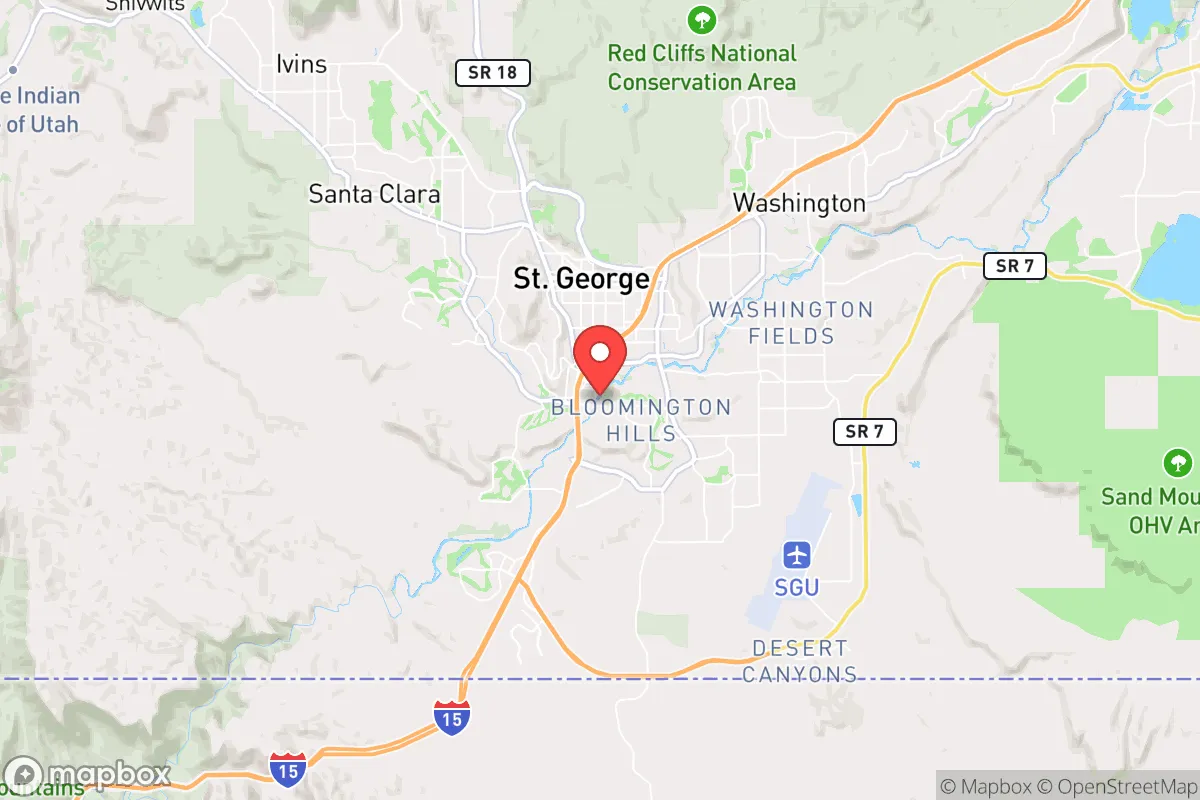
District shown is the primary district for this city’s centroid. Cities may span multiple districts.
Local Political AnalysisPolitical Analysis of St. George, UT
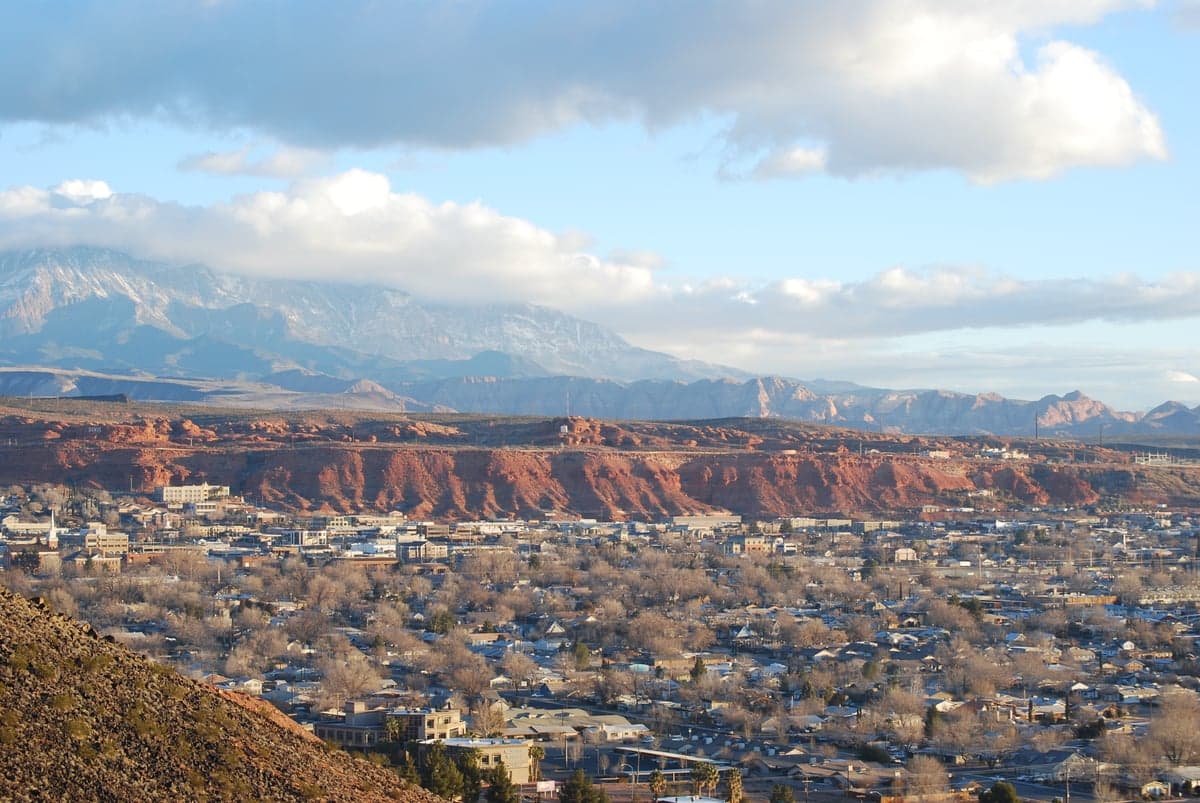
St. George, Utah, has long been a deeply conservative stronghold, and that hasn't changed much despite the area's rapid growth. The Cook PVI of R+10 tells you the baseline, but it doesn't capture the cultural feel: this is a place where traditional values, self-reliance, and a healthy skepticism of government overreach are still the norm. You'll find a strong LDS influence, a pro-business attitude, and a general wariness of anything that smells like progressive ideology creeping in from the coasts.
How it compares
Drive 45 minutes north to Cedar City, and you'll find a similar conservative vibe, though it's a bit more blue-collar and less affluent. The real contrast is heading west to Las Vegas or south to Mesquite, Nevada—both are worlds apart politically, with much looser regulations and a far more transient, libertine culture. Within Washington County itself, the smaller towns like Hurricane and Washington City are even more staunchly conservative than St. George proper, often voting further right. The real shift you see is in the newer master-planned communities like Desert Color or the area around the Tech Ridge campus, where you get a slightly younger, more moderate crowd—but still overwhelmingly Republican. It's not a blue wave by any stretch, but you do see a few more "Live and Let Live" bumper stickers than you did a decade ago.
What this means for residents
For folks who value personal freedom and limited government, St. George is still a pretty good place to be. Property taxes are low, zoning is generally business-friendly, and you won't find the kind of heavy-handed local ordinances you see in Salt Lake City or Park City. That said, the rapid growth has brought some growing pains. The city council and county commission have mostly held the line on new taxes and regulations, but you can feel the pressure from developers and outside interests who want to bring in more "progressive" planning ideas—like higher density mandates or stricter environmental rules that can feel like government overreach. The real concern among long-time residents is that as more people move in from California and other high-tax states, they'll bring their voting habits with them. So far, the local culture has absorbed them, but it's something to keep an eye on.
One thing that sets St. George apart is its strong sense of community and civic involvement. People here actually show up to city council meetings and school board hearings, and they're not shy about voicing concerns over things like mask mandates or land-use restrictions. The local paper, The Spectrum, covers these issues closely, and you'll see a lot of letters to the editor pushing back against any hint of progressive overreach. Culturally, the area is still very family-oriented, with a focus on outdoor recreation, faith, and self-sufficiency. If you're looking for a place where the government mostly stays out of your way and your neighbors share your values, St. George is hard to beat—just don't expect it to stay exactly the same forever. The key is to stay engaged and make sure the next wave of newcomers understands why this place works the way it does.

State Political ClimatePolitical Climate in Utah
State Political AnalysisPolitical Environment in the State
Utah is one of the most reliably Republican states in the nation, with a partisan lean that has only deepened over the past two decades. The state voted for Donald Trump by 20 points in 2024, and the GOP holds every statewide office, a supermajority in the legislature, and all four congressional seats. But beneath that red veneer, the political climate is more complex than the raw numbers suggest—driven by a powerful Latter-day Saint cultural influence, a booming tech economy, and a growing divide between the Wasatch Front corridor and the rural hinterlands. For a conservative considering relocation, Utah offers a policy environment that is broadly friendly to traditional values, but with emerging fault lines around education, land use, and the pace of change.
Urban vs. rural divide
The political map of Utah is defined by the Wasatch Front—a 100-mile stretch from Ogden in the north through Salt Lake City and down to Provo in the south. This corridor holds roughly 80% of the state’s population and is where most of the economic and political power resides. Salt Lake County, the state’s most populous, has been trending purple for a decade: it voted for Hillary Clinton in 2016 and Joe Biden in 2020, though it swung back to Trump in 2024 by a narrow 2-point margin. The city of Salt Lake itself is a blue island, with progressive enclaves like the Avenues and Sugar House, while the suburbs—Sandy, Draper, South Jordan—remain reliably red. Meanwhile, Utah County, anchored by Provo and Lehi, is the heart of conservative LDS culture and a GOP stronghold that routinely delivers 70%+ margins. Rural Utah—places like Moab, Cedar City, and Vernal—is deeply red, with some counties voting 80%+ Republican. The urban-rural split is less about ideology and more about intensity: the Wasatch Front is pragmatic, business-friendly conservatism, while the rural areas are more libertarian and suspicious of federal land management.
Policy environment
Utah’s policy environment is a mixed bag for conservatives. On taxes, the state is a clear winner: no personal income tax on retirement income, a flat 4.65% income tax rate, and a state sales tax of 4.85% (local options push it higher). Property taxes are low, with a median effective rate of 0.56%—well below the national average. The regulatory posture is generally light, especially for business, though the state has been aggressive in zoning and water-use restrictions as growth strains infrastructure. Education policy is a flashpoint: Utah has a robust school choice program, including a new universal education savings account (HB 215, 2023) that lets parents use state funds for private school or homeschooling. But the state also mandates a controversial "sensitive materials" review in school libraries (HB 374, 2022) and has banned classroom instruction on sexual orientation and gender identity (HB 261, 2024). On healthcare, Utah expanded Medicaid under the Affordable Care Act in 2019, a move that rankled some conservatives, but the state also passed a near-total abortion ban (trigger law, 2020) that took effect after Dobbs. Election laws are secure: voter ID is required, same-day registration is allowed, and the state uses a hybrid mail-in/ in-person system that has drawn praise for integrity. Overall, the policy environment is conservative but not libertarian—the state is willing to use government power to enforce social norms, particularly around family and education.
Trajectory & freedom
Utah is becoming more free in some areas and less in others, and the trend is worth watching. On the plus side for conservatives: the state passed constitutional carry (permitless concealed carry) in 2021 (HB 60), and has a strong castle doctrine and stand-your-ground law. Parental rights were strengthened with the passage of HB 243 in 2023, which requires schools to notify parents of any curriculum changes involving sexuality or gender. Property rights are generally respected, though the state’s rapid growth has led to increased zoning restrictions in cities like Park City and St. George, where housing costs have soared. On the concerning side: the state has expanded its public health powers significantly since COVID, including a 2023 law (SB 105) that gives the health department broad authority to mandate vaccines for school attendance—a move that alarmed medical freedom advocates. The legislature also passed a data privacy law (HB 313, 2024) that some worry could be used to surveil online speech. The biggest freedom concern is land use: the federal government controls 63% of Utah’s land, and the state’s ongoing lawsuit (the "Utah Public Lands Transfer Act" push) seeks to wrest control from Washington. For now, the trajectory is mixed—Utah is expanding gun rights and school choice while tightening public health mandates and land-use restrictions.
Civil unrest & political movements
Utah is not a hotbed of civil unrest, but there are visible political movements that a new resident would notice. The most prominent is the Utah Parents United movement, which mobilized in 2021-2022 against critical race theory and LGBTQ curriculum in schools—this group successfully pushed for the "sensitive materials" law and the ban on classroom gender identity instruction. On the left, the Utah Democratic Party is weak but active in Salt Lake City, with regular protests on issues like abortion access and climate change. Immigration politics are relatively quiet: Utah has a "compact" with the federal government that allows local law enforcement to cooperate with ICE, but the state has not passed a strict sanctuary-city ban like Texas or Florida. There is a small but vocal secessionist movement in rural counties—the "Greater Idaho" movement has some support in eastern Utah, where residents feel ignored by Salt Lake City. Election integrity is not a major controversy here; the state’s mail-in system has bipartisan support, and there have been no significant fraud allegations. The most visible flashpoint is the Bear River Migratory Bird Refuge land dispute, where federal management of public lands has sparked protests from ranchers and off-road vehicle users. For a new resident, the political climate is stable but not sleepy—the culture war is real, especially in school board meetings and city council chambers.
Projection
Over the next 5-10 years, Utah will likely become more conservative in some ways and more divided in others. The in-migration wave—driven by tech workers from California and the Pacific Northwest—is bringing a mix of libertarian-leaning professionals and left-leaning creatives. The Wasatch Front will continue to purple, with Salt Lake County possibly becoming a swing county by 2030. But the rural areas will push back, and the legislature will likely pass preemption laws to limit local control on issues like housing, land use, and education. The biggest wildcard is the LDS Church: as its membership becomes more diverse and less monolithic, its political influence may wane, opening space for more libertarian or even populist strains of conservatism. Expect more school choice expansion, more fights over public lands, and a growing tension between the state’s pro-business ethos and its social conservatism. For someone moving in now, the Utah of 2035 will likely be redder than the national average but less uniformly so—a place where the culture war is fought in school boards and city councils, not just on cable news.
For a conservative relocating to Utah, the bottom line is this: you will find a state that broadly shares your values on taxes, guns, and family, but you will also encounter a government that is not afraid to use its power to enforce those values—sometimes in ways that feel overbearing. The Wasatch Front offers economic opportunity and a high quality of life, but the political climate is not libertarian; it is communitarian, rooted in LDS culture and a belief in collective moral standards. If you value low taxes, strong gun rights, and school choice, Utah is a good bet. If you are skeptical of government overreach in health mandates or land use, you will need to stay engaged. The state is changing fast, but for now, it remains one of the safest bets for a conservative lifestyle in the West.
* Values derived from national, state, county, city and local statistics and may differ in a specific area. Last updated: 2026-04-22T01:36:39.000Z
Narrative content on this page is AI-generated and may contain mistakes. Verify any details that matter before acting on them.
ReloMaps may earn a commission from affiliate links at no extra cost to you.

