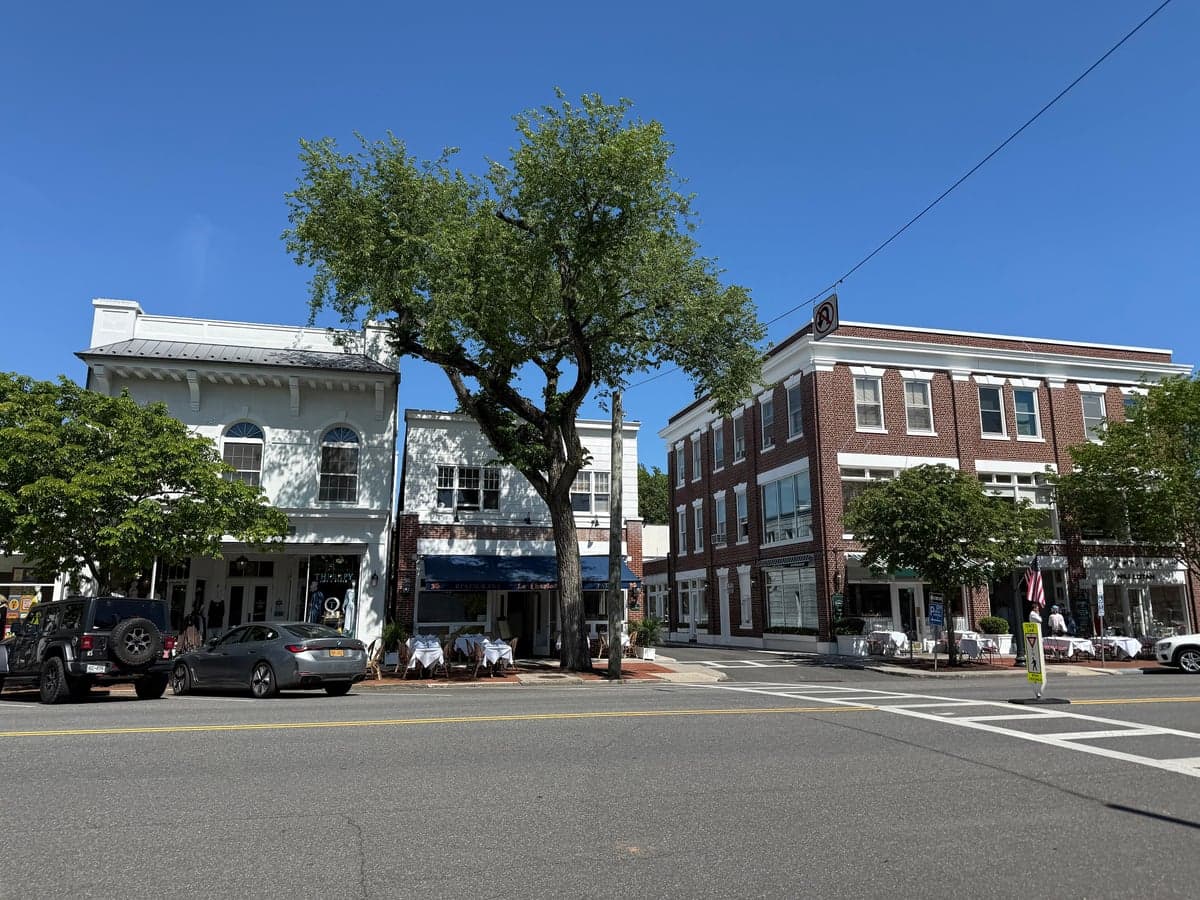
Photo: Wikipedia
Personal Sovereignty in Southampton, NY
Moderate friction. Expect trade-offs in some aspect of personal liberty and independence.
What does Personal Sovereignty tell us?
Personal Sovereignty measures your capacity for self-reliance and independence with minimal government friction. Higher scores mean fewer barriers between you and the way you want to live... but it assumes you have the space you need and good neighbors.
What does this tell us?
Personal Sovereignty measures your capacity for self-reliance and independence with minimal government friction. Higher scores mean fewer barriers between you and the way you want to live... but it assumes you have the space you need and good neighbors.
State Policy
Energy independence: Importer (12% of energy produced in-state)
Personal Liberty
Homesteading

Personal Liberty Analysis
Southampton, New York, presents a complex and often contradictory environment for personal sovereignty, where the natural advantages of rural Long Island are heavily offset by one of the most assertive state-level governance structures in the nation. For the strategic relocator with a survivalist or prepper mindset, the area offers genuine assets—ample space, proximity to maritime resources, and a relatively low population density compared to New York City—but these are purchased at the price of constant friction with Albany’s regulatory apparatus. The core tension here is between the physical autonomy of a large property and the legal constraints that limit what you can do with it, making Southampton a location that demands careful, defensive planning rather than offering a straightforward haven of liberty.
Tax burden and regulatory posture: the cost of living under Albany’s thumb
The financial and bureaucratic weight of New York State is the single greatest threat to personal sovereignty in Southampton. Property taxes are among the highest in the nation, with the effective rate on a typical home hovering around 1.7% to 2.0% of assessed value annually, meaning a $1.5 million property could carry a $30,000 yearly tax bill before you even turn on the lights. This is not a tax-friendly environment for anyone seeking to minimize government dependency; the state’s income tax is progressive, topping out at 10.9% for high earners, and estate taxes kick in at a relatively low threshold, making generational wealth transfer a challenge. On the regulatory side, New York’s building codes, environmental review processes, and land-use laws are notoriously strict. The Long Island Pine Barrens Protection Act and the Town of Southampton’s own zoning code severely limit what you can build, clear, or alter on your property. If your plan involves constructing a bunker, a large workshop, or even a substantial shed, expect months of permitting delays and potential legal fees. The state’s energy policies also mean that new construction must meet stringent energy codes, and off-grid solar installations require interconnection agreements with PSEG Long Island, effectively tying you to the grid even if you produce your own power. For the prepper, this regulatory posture means that every step toward self-sufficiency is a bureaucratic negotiation, not a simple act of will.
Self-defense and gun law specifics: navigating the SAFE Act and local realities
New York’s gun laws are among the most restrictive in the country, and Southampton residents are not exempt. The SAFE Act of 2013 remains the baseline, requiring a pistol permit for any handgun, a process that involves background checks, character references, and a mandatory 16-hour safety course. The state’s recent “Concealed Carry Improvement Act” (CCIA) further tightened rules, designating “sensitive locations” where firearms are banned—including parks, public transportation, and private businesses unless the owner explicitly posts a sign allowing carry. In practice, this means that even with a permit, your ability to carry a firearm for self-defense is heavily circumscribed. Long guns, including AR-15-style rifles, are legal but subject to a 10-round magazine limit and a ban on “assault weapons” as defined by the state’s feature-based test. The Suffolk County Police Department, which handles permitting in Southampton, is known for a slow and often adversarial process; wait times for initial pistol permits can exceed 12 months. For the survivalist, this creates a stark reality: you can own firearms for home defense, but your capacity to carry them off your property is legally risky. The local sheriff’s office has publicly stated it will not enforce certain parts of the CCIA, but that offers little protection if a state trooper or a county officer decides otherwise. If self-defense is a core priority, Southampton is a location where you must be prepared to navigate a hostile legal landscape, possibly investing in legal defense funds or safe storage solutions that comply with the state’s stringent requirements.
Self-reliance and homesteading viability: lot sizes, zoning, and off-grid feasibility
The physical landscape of Southampton offers genuine potential for self-reliance, but the legal framework imposes sharp limits. Minimum lot sizes in the town’s agricultural and rural zones are typically 2 to 5 acres, with some areas requiring 10 acres for subdivision, which provides the space for gardens, small livestock, and water catchment. However, the Town of Southampton’s zoning code explicitly prohibits “commercial” agriculture on residential lots, and keeping chickens, goats, or bees requires permits and adherence to setback rules. Off-grid living is effectively illegal: the town requires connection to public water and sewer where available, and even in remote areas, a septic system must meet county health department standards. Solar panels are allowed but must be grid-tied; battery storage is permitted but subject to fire code restrictions that can be costly. Rainwater harvesting is legal for non-potable uses, but any system for drinking water must be approved by the Suffolk County Department of Health Services, a process that often requires a drilled well and filtration system. For the prepper, the practical takeaway is that you can achieve a high degree of self-sufficiency—growing food, raising animals, storing water—but you cannot disconnect from the grid or operate entirely outside the regulatory system. The area’s coastal location also means that flood insurance is mandatory in many zones, adding another layer of government-mandated expense. Homesteading here is possible, but it is a managed, permitted, and taxed activity, not a libertarian frontier.
Personal liberties: parental rights, medical autonomy, speech, and property
New York State’s posture on personal liberties is generally expansive in some areas and restrictive in others, creating a mixed bag for the conservative relocator. Parental rights are a flashpoint: the state mandates that public schools follow a curriculum that includes comprehensive sex education and social-emotional learning standards, and parents do not have a blanket right to opt their children out of specific lessons. However, homeschooling is legal and relatively straightforward, requiring only a notice of intent and an annual assessment, which gives parents a clear path to opt out of the public system entirely. Medical autonomy is heavily constrained: New York has broad vaccine mandates for school attendance, and the state’s COVID-era policies set a precedent for government intervention in health decisions. The state also has a “red flag” law that allows courts to temporarily seize firearms from individuals deemed a risk, a process that can be initiated by family members or law enforcement without a criminal charge. On speech and property, the First Amendment is generally protected, but the state’s hate crime laws and anti-discrimination statutes can be used to regulate certain forms of expression in public accommodations. Property rights are the weakest link: the state’s eminent domain powers are broad, and the Town of Southampton’s community preservation fund uses tax revenue to purchase development rights, effectively limiting what you can do with your land even if you own it outright. For the strategic relocator, the key insight is that personal liberties in Southampton are conditional—they exist within a framework of state oversight that can be invoked at any time, requiring constant vigilance and a willingness to engage with the legal system to protect your rights.
In the broader landscape of American sovereignty, Southampton ranks as a location where personal autonomy is a constant negotiation rather than a given. Compared to states like Texas, Florida, or New Hampshire, where property rights, gun laws, and regulatory burdens are far more favorable to the prepper mindset, Southampton offers a trade-off: genuine physical space and natural resources in exchange for a heavy tax and regulatory load. For the single individual or family willing to invest in legal compliance, defensive planning, and a robust network of local allies, it is possible to carve out a high degree of self-reliance here. But for those seeking a low-friction environment where government overreach is minimal and personal sovereignty is the default, the Hamptons are not that place. The area is best suited for the strategic relocator who values coastal access and rural space enough to accept the constant cost—in time, money, and legal attention—of living under one of the most assertive state governments in the union.

* Values derived from national, state, county, city and local statistics and may differ in a specific area. Last updated: 2026-04-24T01:45:23.000Z
Narrative content on this page is AI-generated and may contain mistakes. Verify any details that matter before acting on them.
ReloMaps may earn a commission from affiliate links at no extra cost to you.

