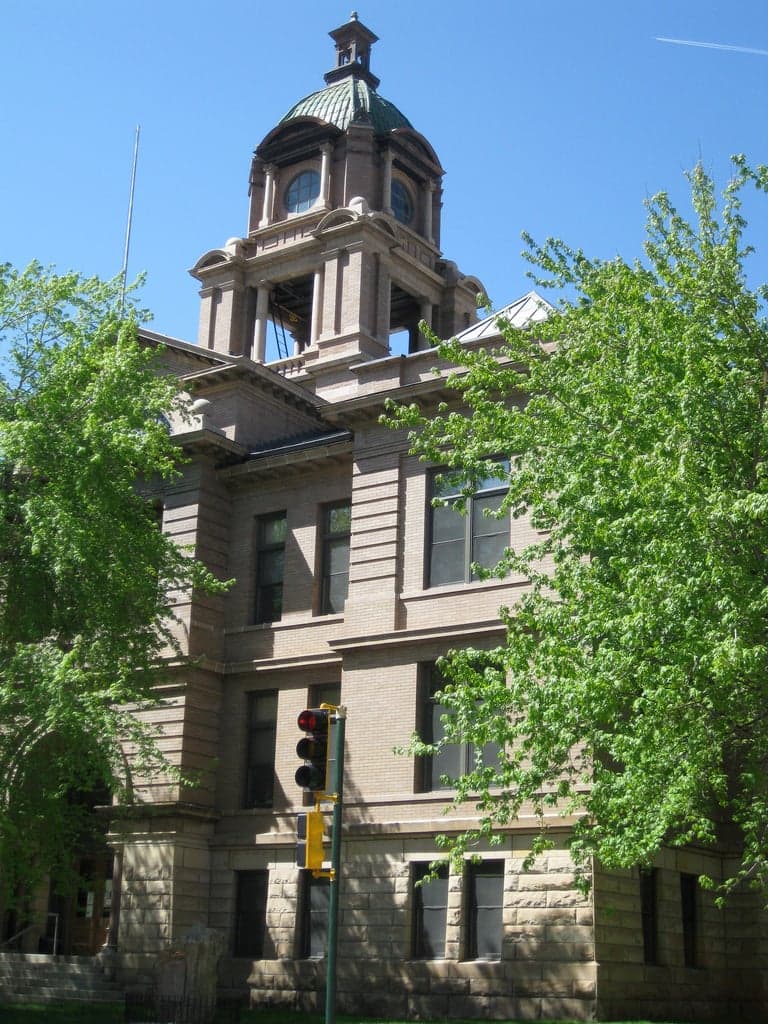
Photo: Wikipedia
Demographics of Lawrence County
Affluence Level in Lawrence County
A middle-class area roughly in line with national averages across income, home values, education, and employment.
People of Lawrence County
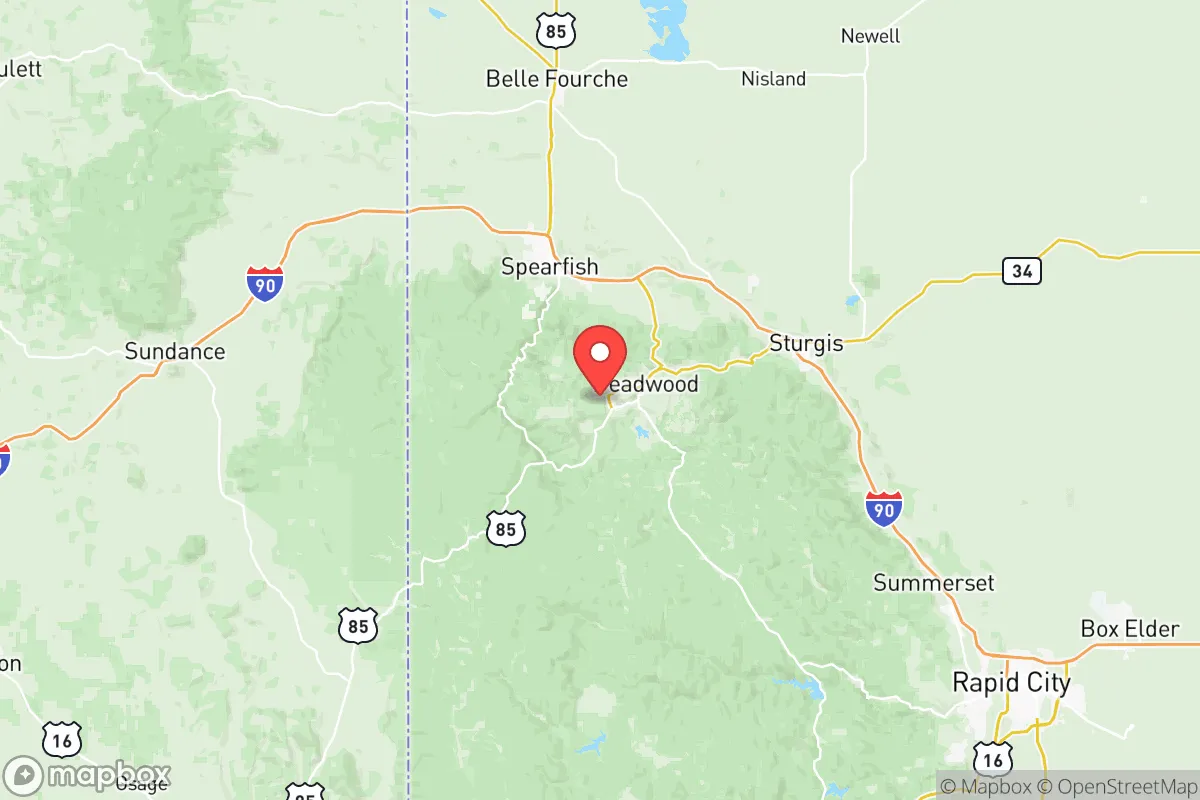
The people of Lawrence County, South Dakota, today are predominantly white, native-born, and rooted in a deep history of gold rush settlement and European immigration, with a population of 26,574 that remains 89.3% white and only 1.2% foreign-born. The county’s character is defined by its historic mining towns—Spearfish, Deadwood, Lead, and the county seat of Deadwood—where a blend of frontier independence, outdoor recreation, and a small but growing Hispanic community (3.7%) shapes daily life. With 34.1% of adults holding a college degree, the population is more educated than the state average, reflecting the presence of Black Hills State University in Spearfish and a regional economy tied to tourism, healthcare, and mining. This is a place where the past is still visible in the architecture and annual events, yet the demographic profile is slowly shifting as younger families and remote workers arrive.
Settlement & growth (pre-1960)
Long before European settlement, the area now known as Lawrence County was part of the traditional territory of the Lakota Sioux, particularly the Oglala and Miniconjou bands, who used the Black Hills for hunting, ceremony, and seasonal camps. The 1868 Treaty of Fort Laramie guaranteed the Black Hills to the Lakota, but the discovery of gold in 1874 by George Armstrong Custer’s expedition triggered an illegal influx of prospectors. The first permanent American settlement was Deadwood, founded in 1876 in a narrow gulch after gold was found in Deadwood Creek. The town exploded into a lawless mining camp of thousands, drawing fortune seekers from across the United States and Europe—mostly Cornish, Irish, German, and Scandinavian immigrants, along with a significant number of Chinese laborers who worked placer claims and established a small Chinatown in Deadwood.
By the 1880s, the Homestake Mine in Lead (pronounced “Leed”) became the largest and deepest gold mine in the Western Hemisphere, pulling in waves of miners from Cornwall, England, as well as Italians, Finns, and Eastern Europeans. The town of Spearfish, settled in 1876 as an agricultural community, grew more slowly as a supply center for the mining districts, drawing German-Russian and Scandinavian farmers to its fertile valley. Whitewood and Sturgis (the latter technically in Meade County but closely tied to Lawrence County’s early rail and timber economy) served as railroad and lumber hubs. The Chinese population, which once numbered several hundred in Deadwood, largely dispersed after the 1882 Chinese Exclusion Act, and by 1900 the county was overwhelmingly white. The Homestake Mine operated continuously until 2001, anchoring the economy and population of Lead and nearby Central City through booms and busts, while Deadwood’s legalization of gambling in 1989 revived its historic district as a tourist destination.
Modern era (post-1965)
The 1965 Hart-Cellar Act had minimal direct impact on Lawrence County, as the region never attracted large-scale post-1965 immigration. The foreign-born population today stands at just 1.2%, far below the national average. Instead, the county’s modern demographic story is one of domestic migration and suburbanization. Since the 1970s, Spearfish has emerged as the county’s largest and fastest-growing city, driven by the expansion of Black Hills State University (enrolling about 3,500 students) and an influx of retirees and remote workers drawn to the Black Hills’ scenery and lower cost of living. The Hispanic population, now 3.7%, has grown modestly since the 1990s, primarily through Mexican and Central American immigrants working in construction, hospitality, and agriculture in Spearfish and Deadwood. These families tend to be dispersed rather than forming a distinct ethnic enclave, though a small Spanish-language church and a few Latino-owned businesses exist in Spearfish.
The Asian population (East/Southeast Asian) is 0.5%, largely composed of Vietnamese and Hmong families who arrived as secondary migrants from larger Midwest communities, plus a small number of Korean and Filipino professionals connected to the university and regional hospital. The Black population (0.4%) and Indian subcontinent population (0.0%) are negligible. The most notable domestic migration trend since 2000 has been the arrival of conservative-leaning families from California, Colorado, and the Pacific Northwest, seeking lower taxes, gun-friendly laws, and a slower pace of life. These newcomers have concentrated in new subdivisions around Spearfish and the Northern Hills area near Deadwood, contributing to a housing shortage and rising home prices that have pushed some longtime residents to outlying areas like Nemo and Roubaix.
The future
Lawrence County’s population is projected to grow modestly, likely reaching 28,000–30,000 by 2035, driven by continued in-migration of domestic remote workers and retirees rather than international immigration. The county is not tribalizing into distinct ethnic enclaves; instead, it is slowly homogenizing as newcomers—overwhelmingly white and college-educated—absorb into the existing cultural fabric. The Hispanic community will likely grow to 5–6% over the next decade, but remains too small to form a politically or culturally distinct bloc. The East/Southeast Asian population will probably plateau near 1%, sustained by university and medical employment. The most significant cultural shift is the tension between longtime ranching and mining families—who value land-use freedom and limited government—and newer arrivals who support conservation, outdoor recreation infrastructure, and more restrictive development. This dynamic is most visible in Spearfish, where city council debates over short-term rentals and trail access reflect a growing urban-rural divide within the county.
For a conservative-leaning individual or family moving in now, Lawrence County offers a stable, safe, and culturally familiar environment with low crime, strong schools in Spearfish and Lead-Deadwood, and a political climate that leans Republican (Lawrence County voted +31 for Trump in 2020). The population is aging—the median age is 42.5—but the presence of the university and a growing number of young families in Spearfish is keeping the demographic profile from tilting entirely toward retirement. The county is becoming more educated, more amenity-focused, and slightly more diverse, but the core identity—white, native-born, and rooted in the gold rush and frontier legacy—remains intact.
Lawrence County is becoming a destination for those who want mountain scenery, conservative governance, and a small-town feel without the cultural upheaval of a booming Sun Belt suburb. The population is slowly diversifying at the margins, but the dominant story is one of selective in-migration by people who already share the county’s values, reinforcing rather than transforming its character. For a relocating conservative, this is a place where the past is still present, and the future looks much like the present—only with better internet and more espresso shops.

* Values derived from national, state, county, city and local statistics and may differ in a specific area. Last updated: 2026-05-16T10:35:59.000Z
Narrative content on this page is AI-generated and may contain mistakes. Verify any details that matter before acting on them.
ReloMaps may earn a commission from affiliate links at no extra cost to you.

