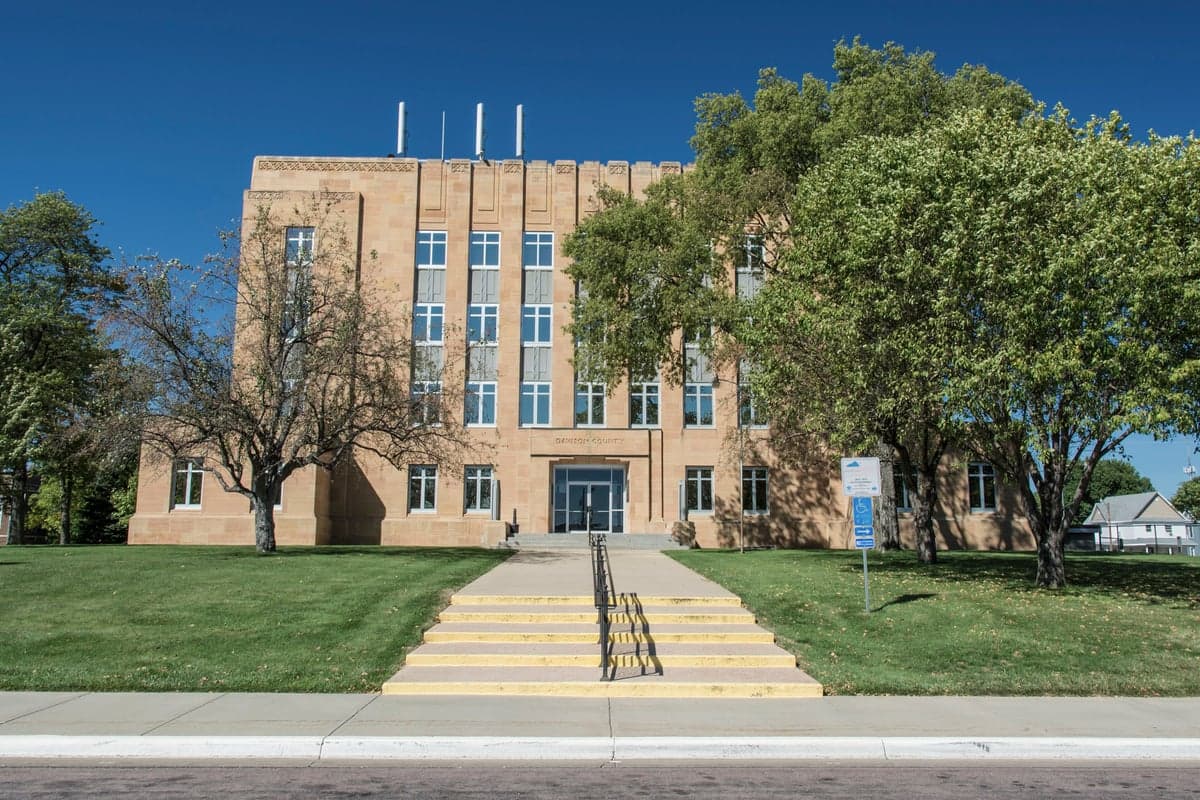
Photo: Wikipedia
Demographics of Davison County
Affluence Level in Davison County
A middle-class area roughly in line with national averages across income, home values, education, and employment.
People of Davison County
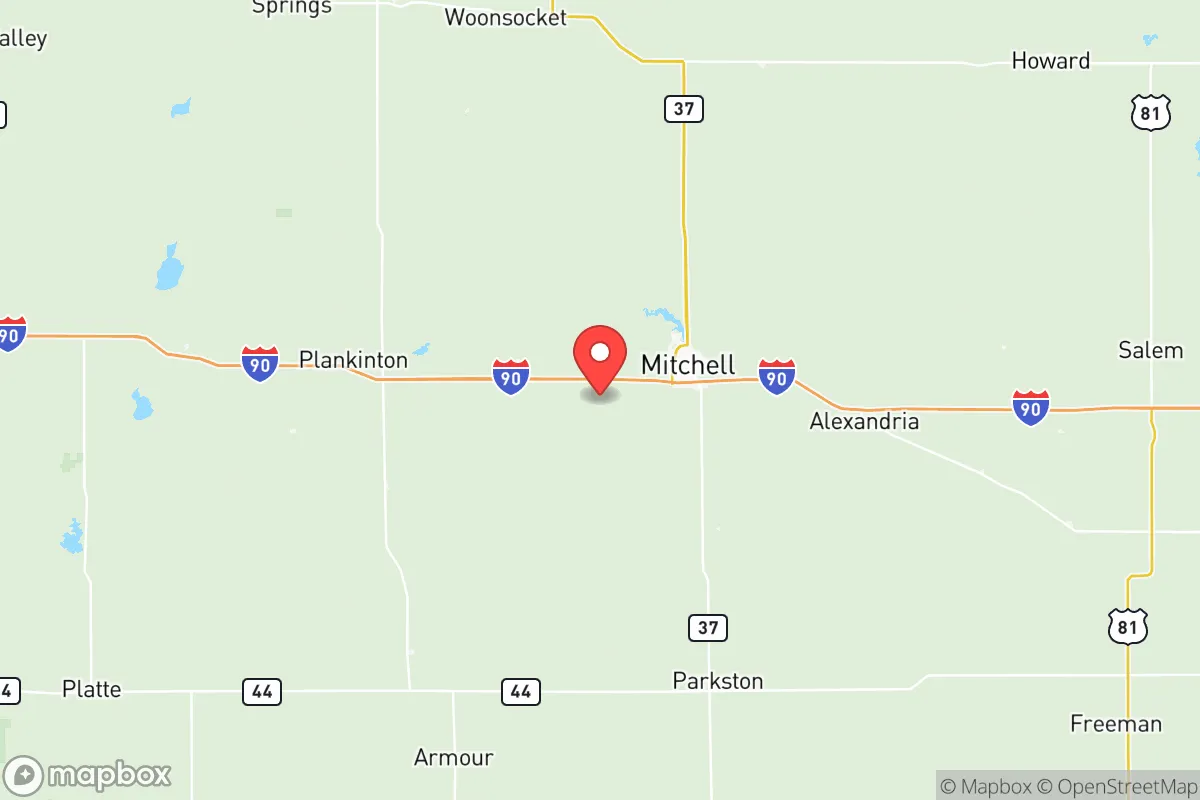
Davison County, South Dakota, is home to 19,936 residents, a population that is 88.8% white and notably homogenous, with only 1.3% foreign-born. The county’s identity is rooted in its agricultural heritage and the regional hub of Mitchell, the county seat and home to the iconic Corn Palace. This is a community shaped by successive waves of European settlement, primarily from Germany and Scandinavia, and today it remains a stable, family-oriented area with a modest but growing Hispanic presence.
Settlement & growth (pre-1960)
Before American settlement, the area now known as Davison County was part of the traditional territory of the Sioux (Lakota) people, who followed bison herds across the plains. The first non-Native presence came with French fur traders in the 18th century, but permanent American settlement did not begin until after the 1862 Homestead Act and the forced removal of Native tribes. The county was officially organized in 1874, named after a Union Civil War officer, and the railroad’s arrival in 1879 was the true catalyst for growth.
The first major wave of settlers were Yankee migrants from New England and the Upper Midwest, drawn by cheap land and the promise of wheat farming. They founded the town of Mitchell in 1879, which quickly became the county’s commercial and transportation center. Almost simultaneously, a large influx of German immigrants arrived in the 1880s and 1890s, fleeing economic hardship and seeking farmland. They established farming communities like Mount Vernon and Ethan, where German was spoken in homes and churches well into the 20th century. A smaller but significant wave of Scandinavian immigrants—Norwegians and Swedes—also settled in the county, particularly around Loomis and Dimock, bringing Lutheran traditions and a strong cooperative farming ethic.
By 1900, Davison County’s population had surged past 10,000, driven by the railroad and the agricultural boom. The 1920s and 1930s brought the Dust Bowl and the Great Depression, which slowed growth but did not reverse it. The county’s population remained overwhelmingly white and native-born, with the foreign-born share peaking around 15% in 1910 and then declining due to immigration restrictions in the 1920s. The post-World War II era saw modest suburbanization around Mitchell, but the county’s rural character persisted.
Modern era (post-1965)
The 1965 Hart-Cellar Act had a minimal direct impact on Davison County, as the area did not attract the large-scale immigration seen in coastal cities. The foreign-born population today is just 1.3%, a figure that has remained stable for decades. The most notable demographic shift since the 1960s has been the gradual growth of the Hispanic population, now at 4.7% of the county. This growth is driven primarily by domestic migration from other U.S. states, particularly Texas and California, as well as some direct immigration from Mexico and Central America. These families have concentrated in Mitchell, where they work in meatpacking plants, construction, and agriculture. The town of Mitchell has seen the opening of Spanish-language services at some churches and a small but visible Hispanic business presence.
The East/Southeast Asian community is very small at 0.5%, with no significant enclave. The Black population is 0.6%, and the Indian subcontinent population is effectively 0.0%. The county has not experienced the Rust Belt-to-Sun Belt migration that reshaped other regions; instead, it has seen a slow, steady out-migration of young adults seeking opportunities in larger cities like Sioux Falls, Minneapolis, or Denver. This has led to an aging population, with a median age of 40.9, slightly above the state average. Suburbanization has been limited, with most growth occurring on the fringes of Mitchell, particularly in the Lake Mitchell area, where newer subdivisions have attracted retirees and commuters.
The college-educated share of the population is 25.0%, below the national average of 33%, reflecting the county’s blue-collar and agricultural economic base. The Dakota Wesleyan University in Mitchell provides a modest educational anchor, but many graduates leave the county after earning their degrees.
The future
Davison County’s population is projected to remain stable or grow slowly, with the Hispanic share likely to increase gradually as families already in the area have children and attract chain migration. The county is not homogenizing into a single melting pot; rather, it is seeing a slow diversification within a still-overwhelmingly white majority. The Hispanic community is growing but remains largely integrated into the broader economy, with no signs of forming a separate enclave. The white population is aging, and the county will need to attract younger families—whether from within the state or from other regions—to maintain its population base.
The next 10-20 years will likely see Davison County become slightly more diverse, with the Hispanic share potentially reaching 8-10% by 2040. However, the county will remain culturally conservative and agriculturally oriented, with Mitchell continuing to serve as the regional hub for retail, healthcare, and education. In-migration from other parts of the Midwest may bring some new residents, but the county is unlikely to experience the rapid growth seen in South Dakota’s Black Hills or Sioux Falls metro area.
For someone moving in now, Davison County offers a stable, safe, and family-friendly environment with strong community ties and a low cost of living. The population is overwhelmingly white and native-born, with a small but growing Hispanic community that is gradually adding to the area’s cultural fabric. The county is not a destination for immigrants or for those seeking a diverse urban experience, but it is a place where traditional values and agricultural roots remain central to daily life. The future is one of slow, manageable change rather than dramatic transformation.

* Values derived from national, state, county, city and local statistics and may differ in a specific area. Last updated: 2026-05-28T12:23:57.000Z
Narrative content on this page is AI-generated and may contain mistakes. Verify any details that matter before acting on them.
ReloMaps may earn a commission from affiliate links at no extra cost to you.

