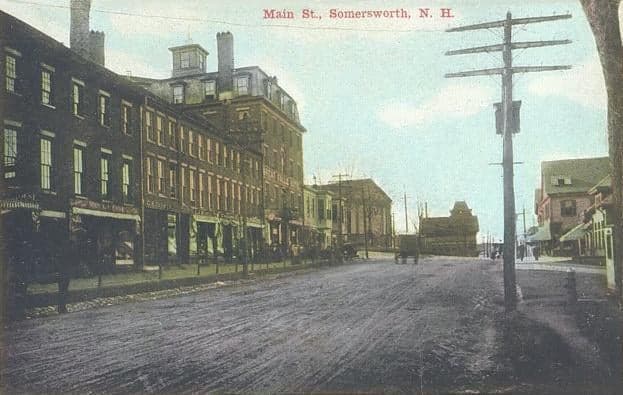
Photo: Wikipedia
Political ClimatePolitical Climate in Somersworth, NH
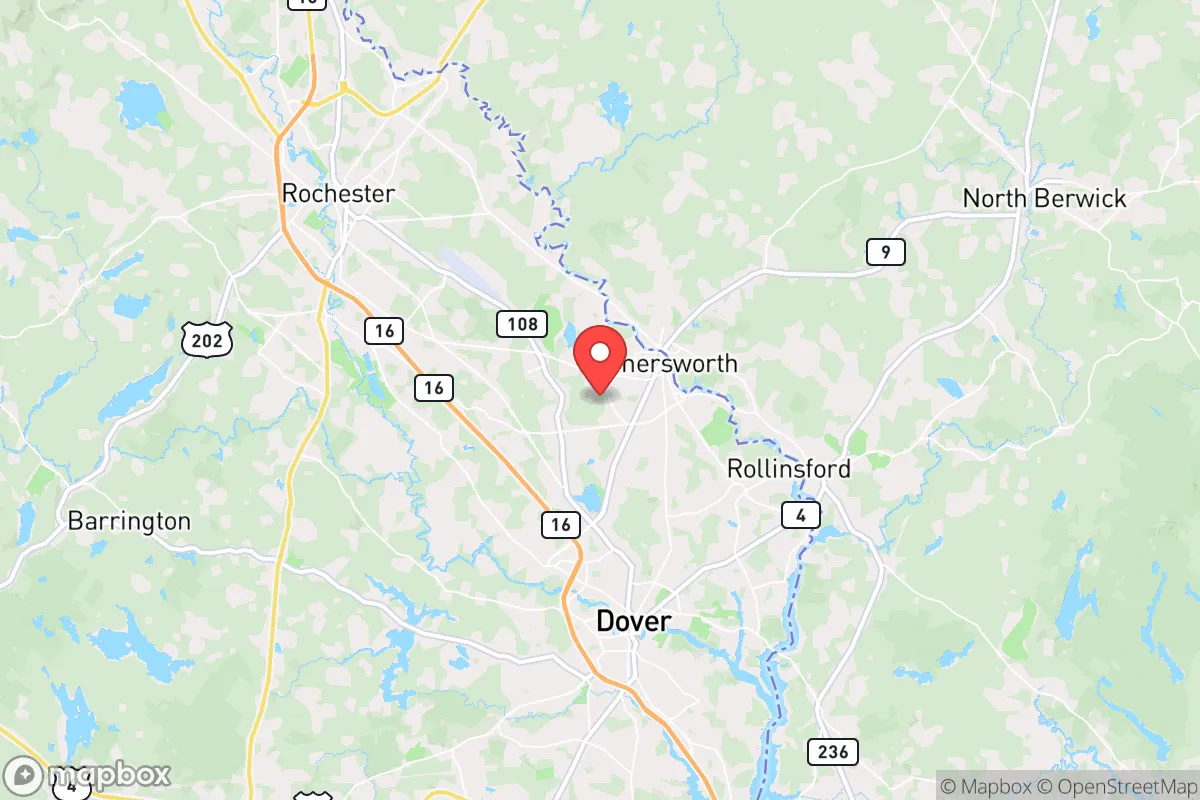
District shown is the primary district for this city’s centroid. Cities may span multiple districts.
Local Political AnalysisPolitical Analysis of Somersworth, NH
Somersworth, New Hampshire, has a Cook PVI of D+2, meaning it leans slightly Democratic compared to the national average, but don't let that number fool you into thinking it's a solid blue stronghold. This town has historically been a working-class, independent-minded place where folks valued their privacy and didn't want the government poking its nose into their business. Over the last decade or so, though, you've seen a slow but steady shift toward more progressive policies, especially as younger families and out-of-staters move in from places like Portland or Boston, bringing their politics with them. It's not a radical change overnight, but the trajectory is concerning if you value limited government and personal freedoms.
How it compares
To really understand Somersworth, you have to look at its neighbors. Just a few miles west, you've got Rochester, which leans more conservative and has a stronger "live free or die" vibe, with local officials often pushing back on state-level mandates. Head north into Berwick, Maine, and you're in a different state entirely, but the political culture there is more mixed, with a libertarian streak that still values gun rights and local control. Meanwhile, Somersworth itself is sandwiched between Dover (D+5) to the south and the more moderate Strafford County towns. The contrast is stark: Dover's city council has been pushing things like sanctuary city policies and higher density zoning, and Somersworth is starting to follow that playbook. If you're a conservative, you'd feel more at home in a town like Farmington or even parts of Barrington, where the tax burden is lower and the government stays out of your way.
What this means for residents
For the average resident, this political drift means you're seeing more regulations creep into daily life. The city council has been flirting with inclusionary zoning mandates and density bonuses, which sound nice on paper but often lead to higher property taxes and less say for homeowners over their own neighborhoods. There's also been talk of creating a "housing commission" that could override local zoning decisions, which is a classic example of government overreach. On the fiscal side, Somersworth's tax rate has been climbing, partly because of increased spending on social programs and administrative bloat. If you're a small business owner or a homeowner trying to keep your head above water, these trends are a red flag. The school board has also leaned into progressive curriculum changes, which has some parents worried about losing control over what their kids are taught.
One thing that hasn't changed much is the town's strong sense of community—people still look out for each other, and the local gun club and sportsmen's groups are active. But the cultural shift is real. You'll see more "In This House We Believe" signs than "Don't Tread on Me" flags these days, and that tells you something about where the wind is blowing. The long-term outlook? If the current trend holds, Somersworth could end up looking a lot like Dover in ten years—higher taxes, more regulations, and a government that thinks it knows better than you do. For now, it's still a decent place to live if you keep your head down and vote in local elections, but you'd better be paying attention.

State Political ClimatePolitical Climate in New Hampshire
State Political AnalysisPolitical Environment in the State
New Hampshire has long been known as a fiercely independent state, but its political lean has shifted noticeably over the past 20 years. Once a classic swing state that could go either way in presidential elections, it has trended steadily toward the Democratic column at the top of the ticket, voting for Hillary Clinton, Joe Biden, and Kamala Harris by margins of 2-7 points. However, the state legislature and governor’s office remain competitive, with Republicans holding the governor’s mansion since 2017 and controlling both chambers of the legislature for much of the last decade. The real story is a growing urban-rural split, with the southeastern corner and the Dartmouth-Lake Sunapee region pulling left, while the North Country, the Lakes Region, and the western border counties remain solidly red. For a conservative looking to relocate, the picture is mixed: low taxes and a live-free-or-die culture are still real, but the political winds are blowing in a direction that demands vigilance.
Urban vs. rural divide
The political map of New Hampshire is a tale of two states. The southeastern corner, anchored by Manchester, Nashua, and the Seacoast cities of Portsmouth and Dover, has become a Democratic stronghold. These areas have seen an influx of out-of-state transplants, many from Massachusetts, and their voting patterns reflect that. Hillsborough County, home to Manchester and Nashua, has gone blue in every presidential election since 2004, and Rockingham County, once reliably red, flipped to Biden in 2020 and stayed there in 2024. In contrast, the North Country—places like Berlin, Lancaster, and Colebrook—votes overwhelmingly Republican, often by 30-40 point margins. The Lakes Region, including Meredith and Wolfeboro, and the western border towns like Keene and Claremont are more mixed, but the rural precincts lean red. The divide isn’t just about population density; it’s about culture. The urban areas are increasingly progressive, with a focus on environmentalism, social justice, and government solutions, while the rural areas prize self-reliance, gun rights, and low taxes. A conservative moving here should understand that your vote will matter most in the state house races, where district lines still give rural voices a fighting chance.
Policy environment
On paper, New Hampshire’s policy environment is a conservative dream. There is no state income tax on wages or salaries, no state sales tax, and property taxes are high but locally controlled. The state’s motto, “Live Free or Die,” is still etched on license plates, and the regulatory climate is generally business-friendly. However, the reality is more nuanced. The state has expanded Medicaid under the Affordable Care Act, and the current governor, Chris Sununu, has been a moderate Republican who signed a paid family leave program into law in 2023—a move that rankled many fiscal conservatives. Education policy is a bright spot: New Hampshire has one of the strongest school choice programs in the nation, with Education Freedom Accounts (EFAs) that allow parents to use state funds for private school, homeschooling, or tutoring. This program, expanded in 2023, is a lifeline for conservative parents. Election laws are solid: voter ID is required, same-day registration is allowed but with proof of residency, and the state has resisted the push for universal mail-in voting that plagued other states in 2020. The state also has a part-time legislature, which keeps government close to the people and limits the damage a progressive majority can do in a single session.
Trajectory & freedom
The trajectory is concerning for those who value personal liberty. While New Hampshire remains freer than most states, the trend line is moving in the wrong direction. On gun rights, the state is still a haven—constitutional carry is the law, and there are no magazine capacity limits or “assault weapon” bans. But in 2023, the legislature passed a “red flag” law, allowing courts to temporarily seize firearms from individuals deemed a risk to themselves or others. This was a major crack in the armor of the state’s gun culture. On parental rights, the state has been a battleground. In 2024, the legislature passed a bill requiring schools to notify parents of any changes to a student’s health or well-being, but it was vetoed by Sununu. The fight continues. Medical autonomy took a hit with the 2021 law that removed religious and philosophical exemptions from school vaccine requirements, though it was later repealed after public outcry. Property rights remain strong, with no statewide zoning mandates, but local boards in progressive towns like Hanover and Durham are increasingly using land-use regulations to block development. The bottom line: the state is still free, but the freedom is being nibbled away at the edges, and it takes constant vigilance to hold the line.
Civil unrest & political movements
New Hampshire is not a hotbed of civil unrest, but there are visible flashpoints. The most organized movement on the right is the Free State Project, which has brought thousands of libertarian-leaning activists to the state since 2003, concentrating in the Manchester and Keene areas. These activists have been a force for limited government, pushing for the repeal of the red flag law and the expansion of school choice. On the left, the “No Coal” movement and environmental groups have been vocal, particularly around the Merrimack Station coal plant in Bow, which was finally shut down in 2024 after years of protests. Immigration politics are relatively quiet—New Hampshire is not a border state, and sanctuary policies are limited to a few cities like Portsmouth, which declared itself a “welcoming city” in 2019. Election integrity has been a hot topic since 2020, with the state’s same-day registration system drawing scrutiny. In 2022, the legislature passed a law requiring proof of residency for same-day registrants, but it was struck down by the state Supreme Court in 2024. The most visible flashpoint for a new resident would be the local school board meetings, where battles over curriculum, library books, and parental rights are intense, especially in the more progressive towns. It’s a state where politics is personal, and you’ll feel it at the town hall.
Projection
Looking ahead 5-10 years, the demographic trends are not favorable for conservatives. The southeastern corridor is growing fast, driven by remote workers and retirees from Massachusetts, and these newcomers tend to vote blue. The North Country is shrinking, losing population and political clout. The state’s electoral votes are likely to remain in the Democratic column for the foreseeable future. However, the state legislature is more resilient. The Free State Project and other grassroots movements have built a deep bench of activists who are winning local races, and the state’s small districts mean that a motivated minority can still hold power. The key battleground will be the governor’s office and the state house. If Republicans can hold the governor’s mansion and win back the legislature in 2026, they can slow the progressive agenda. But if Democrats take full control, expect a push for an income tax, stricter gun laws, and a rollback of school choice. A conservative moving here now should expect to be in a defensive posture, fighting to preserve the freedoms that are still here, rather than expanding them.
For a conservative considering a move to New Hampshire, the bottom line is this: you’re getting low taxes, strong gun rights, and a culture of independence that is still real, but you’re also moving into a state that is slowly shifting left. The best places to land are the rural towns in the North Country, the Lakes Region, or the western border—places like Moultonborough, Newport, or Pittsburg. Avoid the southeastern cities unless you’re ready for a political fight. Get involved in your local school board and town government immediately, because that’s where the real battles are won and lost. New Hampshire is still worth it for the freedom it offers, but it’s not a place to rest on your laurels. It’s a place to dig in and defend.
* Values derived from national, state, county, city and local statistics and may differ in a specific area. Last updated: 2026-05-01T08:42:49.000Z
Narrative content on this page is AI-generated and may contain mistakes. Verify any details that matter before acting on them.
ReloMaps may earn a commission from affiliate links at no extra cost to you.

